Merriam’s Turkeys in the Black Hills
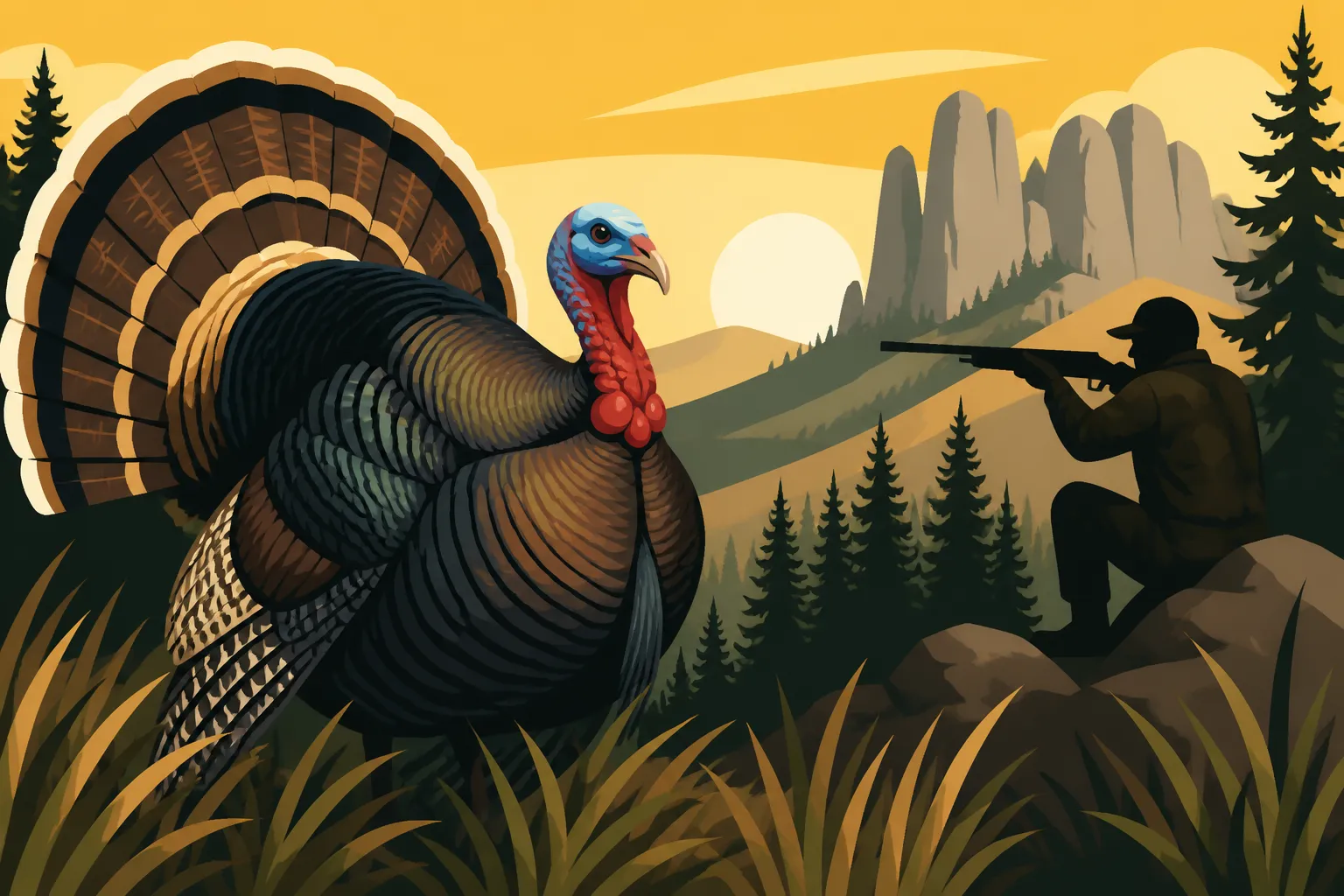
Hunting Merriam's turkeys in the breathtaking, yet challenging, Black Hills of South Dakota can feel like an entirely different ballgame than chasing Easterns in timber or Rio Grandes on the prairie. These mountain birds offer a unique set of puzzles, from their wide-ranging movements through the pines to their keen eyesight and vocalizations echoing off canyon walls. This guide is here to walk you through the specifics of targeting these incredible birds, ensuring you're as prepared as possible for the unforgettable experience the Black Hills offers.
The Unique Challenge of Merriam's Turkeys in the Black Hills
The Black Hills aren't just a pretty backdrop; they are an active player in how Merriam's turkeys behave and how you need to approach your hunt. Forget flat cornfields or rolling river bottoms – this is a landscape defined by elevation, dense timber, and surprising pockets of open ground.
The Black Hills Environment
Imagine endless stands of ponderosa pine, interspersed with aspen groves, oak brush, and deep, rugged canyons that seem to swallow sound whole. That's the Black Hills. Elevations can vary dramatically, and what might look like a gentle slope on a map can quickly turn into a lung-burning climb. Turkeys here have adapted to this environment, often roosting in the tallest pines, especially those along ridges or overlooking draws where they feel secure. Their feeding habits also reflect the terrain, as they'll forage for pine nuts, acorns, berries, and insects in both dense timber and more open, park-like settings. Understanding this vertical world is paramount to predicting their movements and finding their preferred haunts. You'll spend a lot of time looking up, both for roosted birds and for the subtle changes in cover that indicate a prime feeding flat or dusting area.
Navigating these hills isn't just about walking; it's about understanding how sound carries and how thermals shift. In the early morning, cool air sinks into the draws, pulling sound down with it. As the sun rises, the air warms and begins to climb, carrying calls upwards. This dynamic plays a huge role in how and when you call, and how you approach a bird that's gobbling at distance. It’s not uncommon to hear a distant gobble and then climb to a vantage point only to have the sound completely disappear as the thermals change, leaving you wondering if you imagined it. This is why patience and careful observation of wind and thermals are just as important as your calling technique. For more insights on this kind of terrain, you might find information on Black Hills Elk Hunting Tactics helpful, as the principles of navigating mountainous terrain are quite similar.
Merriam's Specific Behaviors and Habitat Preferences
Merriam's turkeys are often described as being a bit more "talkative" than other subspecies, and while that can be true, their vocalizations in the Black Hills can be tricky. Gobbles echo, making it hard to pinpoint a bird's exact location, especially if they're across a canyon. They tend to stick to the higher elevations and pine forests, often feeding in more open areas within these woods or along the fringes where the pines meet meadows or agricultural fields. These birds are also incredibly wary, with eyesight that seems to pick out the slightest movement. They prefer to strut in areas with good visibility but are always ready to dive back into the thick timber at the first sign of danger.
Their tendency to roost in tall pines makes early morning listening sessions crucial. You’ll want to be in position well before first light, listening for those initial tree gobbles that signal where they spent the night. Once on the ground, they can cover a surprising amount of ground, often working their way down from a ridge to feed, then back up to a mid-slope strutting zone before heading back to roost higher up. Their daily patterns are very much dictated by the sun, food availability, and terrain. Unlike some birds that might stick to a small patch of woods, Merriam's can roam widely, making tracking them a real exercise in patience and persistence. They often use old logging roads or game trails to move efficiently through the dense forest, so keeping an eye out for fresh tracks is always a good idea.
Scouting and Locating Merriam's in the Rugged Terrain
Finding a gobbler in the vastness of the Black Hills can feel like looking for a needle in a haystack, especially if you're not familiar with the area. But with strategic scouting and the right tools, you can significantly increase your odds.
Reading the Landscape for Roosts and Feed
Before you even step foot in the woods, spend time poring over maps – topographical maps are your best friend here. Look for high ridges with prominent, mature pine trees that could serve as roosting sites. Also, identify areas where dense timber breaks into more open patches, meadows, or even old burn areas; these transitional zones are often prime feeding grounds. Turkeys love to dust themselves in dry, soft earth, so look for open, sunny spots with loose soil, especially along trails or old logging roads. Water sources, while sometimes abundant in the Black Hills, are also key concentration points, particularly during drier periods. Any natural funnel or pinch point created by terrain features can be a high-traffic area.
Once you’re on the ground, the real work begins. Early morning and late evening are your best times for locating roosted birds by listening for gobbles. During the day, switch to looking for physical signs: tracks, droppings (larger and more coiled for gobblers), strut marks in soft dirt, and disturbed leaves or ground where they’ve been scratching for food. Don't forget to look up for actual roost trees – you can often spot droppings accumulated at the base of favorite trees. I’ve found some incredibly consistent roosts by simply hiking ridge lines and spotting these tell-tale signs. It's a bit like hunting deer in heavy cover; you're piecing together a puzzle of movement patterns. You can find more details on this kind of scouting in articles like Scouting South Dakota Public Ground Before the Season.
Using Technology and Traditional Scouting
In this modern age, we're lucky to have incredible mapping technology at our fingertips. An app like GoHunt can be invaluable for pinpointing property lines, identifying public access points, and marking potential roosts, feeding areas, or strut zones you discover during your scouting. You can use its satellite imagery to get a bird's-eye view of the terrain, identifying clearings, dense timber, and elevation changes that might not be obvious on a basic topo map. Dropping pins on gobbles you hear or sign you find allows you to build a comprehensive picture of turkey activity. This is especially helpful in the sprawling Black Hills National Forest where access points might be limited or difficult to discern.
| Scouting Method | Purpose | Best Time | Key Indicators |
|---|---|---|---|
| Pre-Season Mapping | Identify potential habitat features and access routes | Weeks/Months before the hunt | Dense timber, open meadows, water, logging roads, elevation |
| Early Morning Listening | Locate roosted birds | Before first light (30 min before sunrise) | Gobbles, fly-down cackles |
| Mid-day Walking | Find sign, dust bowls, feeding areas | Mid-morning to late afternoon | Tracks, droppings, scratch marks, dusting areas, shed feathers |
| Late Evening Listening | Pinpoint roosting sites for the next day | Hour before sunset until dark | Gobbles, fly-up cackles |
| Glassing | Spot birds from a distance in open country | Early morning, late evening, or open feeding areas | Movement, dark shapes, strutting |
Beyond the digital aids, don't neglect good old-fashioned boots-on-the-ground scouting. Hike those ridges, walk the trails, and spend time simply observing. Pay attention to small details – which way tracks are generally headed, the freshness of droppings, or where birds might be entering and exiting a particular patch of timber. Getting boots on the ground can help you understand subtle nuances that even the best digital map might miss, like recent logging activity that creates new openings or thickets that have grown in. You'll often find that the areas where Hunting Elk in Ponderosa Timber are prevalent also tend to hold turkeys, as they share similar habitat preferences in the Black Hills.
Effective Calling Strategies for Black Hills Merriam's
Calling Merriam's in the Black Hills is an art form, influenced heavily by the terrain and the birds' sometimes finicky nature. What works on flat ground might just get you ignored or, worse, busted in the mountains.
Adjusting Volume and Tone for the Hills
The Black Hills eat sound for breakfast. A soft cluck that might draw in an Eastern in dense hardwoods could go completely unheard by a Merriam's gobbler fifty yards away across a draw. You often need to be aggressive with your calling, especially initially, to get a bird to respond and help you pinpoint his location. Use loud, sharp yelps and cutts to really make your presence known. However, once a bird responds and you start to close the distance, gradually temper your volume. You don't want to blow him out when he's at fifty yards with the same call you used to get him to gobble at 300.
The terrain also means calls echo, making it sound like a gobbler is much closer or in a different direction than he actually is. Be patient and listen carefully for multiple gobbles to try and triangulate his position. Don't be afraid to move a bit, changing your vantage point to get a clearer read on the sound. Sometimes, a subtle, excited series of tree yelps right before fly-down can be the trick, especially if he roosted on a far ridge. Keep a variety of calls handy – friction calls (slate, glass, aluminum) are excellent for their volume and versatility, while a good diaphragm call allows for hands-free calling when a bird is closing in.
Decoy Setups in Open Pine Stands
Decoys can be a game-changer for Merriam's, especially in the more open pine stands of the Black Hills where visibility is good. These birds often like to see what they're coming to, and a visual cue can seal the deal. My go-to is usually a single hen decoy, or sometimes a hen and a jake. Position your decoy where it's visible from a distance but also gives you a clear shot when the gobbler commits. Think about the sun's position – you want the sun at your back, illuminating the decoy and making it easy for the gobbler to spot, while keeping you in the shadows.
However, be mindful of the terrain. Avoid placing decoys on the very top of a ridge if a gobbler needs to walk uphill to see them; they often prefer to approach from a position of dominance or at least on level ground. Instead, consider a slight dip or a flat shelf just below the ridge line. Movement can also be a huge attractor. Some hunters swear by a slight breeze giving the decoy subtle motion, or even using a fan-style decoy for a quick peak-a-boo if the situation allows. Just remember, once a gobbler spots the decoy, he'll likely be fixated, so be ready for the shot. In the challenging terrain where you might also be focused on Hunting Elk on Steep Black Hills Ridges, always ensure your decoy placement also provides you with safe shooting lanes.
Stalking and Ambush Tactics in the Black Hills Pines
Merriam's turkeys in the Black Hills are often on the move, covering vast distances. This means that sitting in one spot all day might not be the most effective strategy. Sometimes, you need to be just as mobile as they are, using the terrain to your advantage.
Utilizing Elevation and Cover
The Black Hills offer an incredible advantage for the hunter: elevation. Use those ridges and draws to conceal your approach. If a gobbler is on a far ridge, rather than trying to call him across a canyon, think about how you can use the terrain to get closer undetected. This often means making a wide loop, dropping into a draw, and then climbing the opposite slope to pop up closer to his suspected location. Always try to approach from a higher elevation, or at least on the same level, if possible. Turkeys don't like to walk downhill to investigate a call, as it puts them at a disadvantage.
Slow, deliberate movement is key. The pine needles underfoot can be surprisingly noisy, so pick your steps carefully. Move during moments when the bird is gobbling or otherwise distracted. Use the dense pine thickets, rock outcroppings, and even large downed timber as natural blinds as you advance. It's a game of inches sometimes, but every yard closer you get without being seen vastly improves your chances. Remember, patience is not just about waiting; it's about moving wisely. This tactical approach is also invaluable when pursuing other big game in the region, such as when employing Spot-and-Stalk Antelope Hunting in South Dakota or even West River Mule Deer Hunting in South Dakota.
Setting Up on Approaching Gobblers
Once a gobbler commits and starts heading your way, the pressure is on. First, find the nearest substantial cover – a cluster of pines, a large rock, or even a wide tree trunk. Position yourself so you have a clear shooting lane in the direction the bird is coming from, but also be aware of potential alternative approaches. Turkeys are notorious for circling, so having some cover to your sides is beneficial too. Get your gun up and settled, facing the direction of the expected approach. Minimize all movement from this point on.
The biggest mistake hunters make is trying to reposition or make last-minute adjustments as the bird closes in. Merriam's have incredible eyesight, and even a slight shift of your head can send them scattering. Sometimes, it's better to accept a less-than-perfect shot angle if it means not moving. If you're calling, switch to softer, subtle purrs and clucks to keep him interested without giving away your exact position with too much movement. Often, the silence after a soft call can be just as effective at drawing him in, making him think the hen is getting shy.
Essential Gear and Preparation for a Black Hills Merriam's Hunt
The ruggedness of the Black Hills demands proper preparation and the right gear. Coming ill-equipped can turn a dream hunt into a miserable experience.
Footwear and Clothing for Mountainous Terrain
Your feet are your most important tool in the Black Hills. Invest in high-quality, broken-in hiking boots with good ankle support and waterproof membranes. You'll be covering miles of uneven terrain, often climbing steep slopes covered in loose pine needles and rocks. Blisters will ruin your hunt faster than anything else. Carry moleskin or medical tape as a precaution.
For clothing, layering is non-negotiable. Black Hills weather can be incredibly unpredictable, with chilly mornings, warm afternoons, and sudden cold snaps or rain showers. Start with a moisture-wicking base layer, add an insulating mid-layer (fleece or down), and top it with a quiet, waterproof, and windproof outer shell. Camouflage patterns that mimic the pine forests are effective, but more importantly, ensure your clothing is quiet and allows for unrestricted movement. Don't forget a good hat for sun protection and warmth, and gloves to keep your hands comfortable and concealed.
Optics, Navigation, and Safety Gear
Beyond your shotgun and calls, several pieces of gear are absolutely essential for a successful and safe Black Hills Merriam's hunt.
- Optics: A good pair of binoculars (8×42 or 10×42) is invaluable for spotting turkeys at a distance, identifying potential roost trees, and scanning open areas without making unnecessary movements.
- Navigation: While a fully charged phone with a mapping app like GoHunt is a fantastic resource for Black Hills Forest Roads and Access and public land boundaries, always carry a physical map and compass as a backup. Cell service can be spotty in the more remote canyons. Know how to use them.
- First-Aid Kit: Small cuts, scrapes, and blisters are common. A compact first-aid kit with pain relievers, bandages, antiseptic wipes, and any personal medications is crucial.
- Water: Dehydration is a real risk when hiking in the mountains. Carry more water than you think you'll need, either in bottles or a hydration bladder.
- Headlamp: You'll be walking in before dawn and potentially out after dusk. A reliable headlamp with fresh batteries (and spares) is a must.
- Signaling Device: A whistle or small mirror can be vital if you get lost or need to signal for help.
- Knife: A good multi-tool or fixed-blade knife is always useful for various tasks in the field.
- Snacks: High-energy snacks will keep you fueled throughout the long days of climbing and walking.
Being prepared with this gear ensures you can focus on the hunt, knowing you're ready for whatever the Black Hills throws your way. You may also want to review resources about Hunting Near Custer and Hill City for specific insights on those areas.
Disclaimer
This article is for general informational purposes only and does not constitute professional advice. Laws, prices and regulations vary by location and change over time. Consult a qualified professional for guidance on your specific situation.