How Fast a Pronghorn Runs
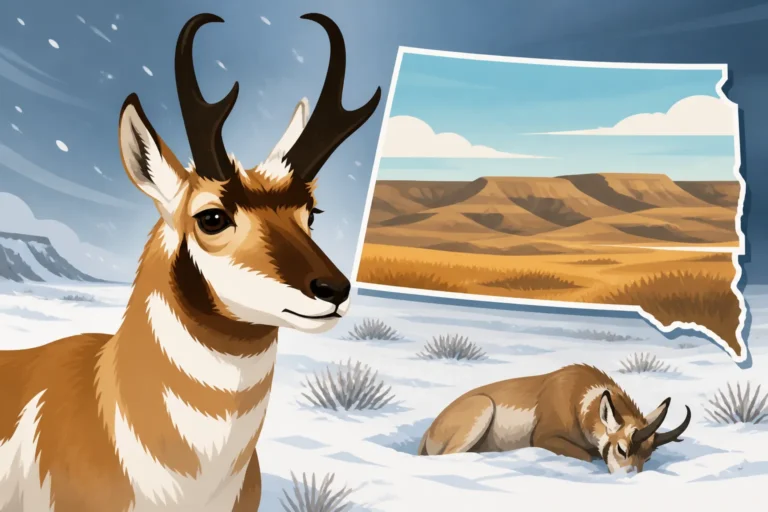
There's nothing quite like the sight of a pronghorn buck spotting you from a mile out, flicking its white rump patch, and then poof, it's gone in a blur across the vast South Dakota prairie. Many hunters, especially those new to hunting these incredible animals, seriously underestimate just how fast pronghorns truly are, making what seems like a simple stalk turn into a frustrating foot race you're bound to lose. This guide is all about understanding the blistering speed of the pronghorn, delving into why they're built for such incredible pace, and how that speed dictates every aspect of successfully hunting them on the open plains.
The Prairie Rocket: Deconstructing Pronghorn Speed
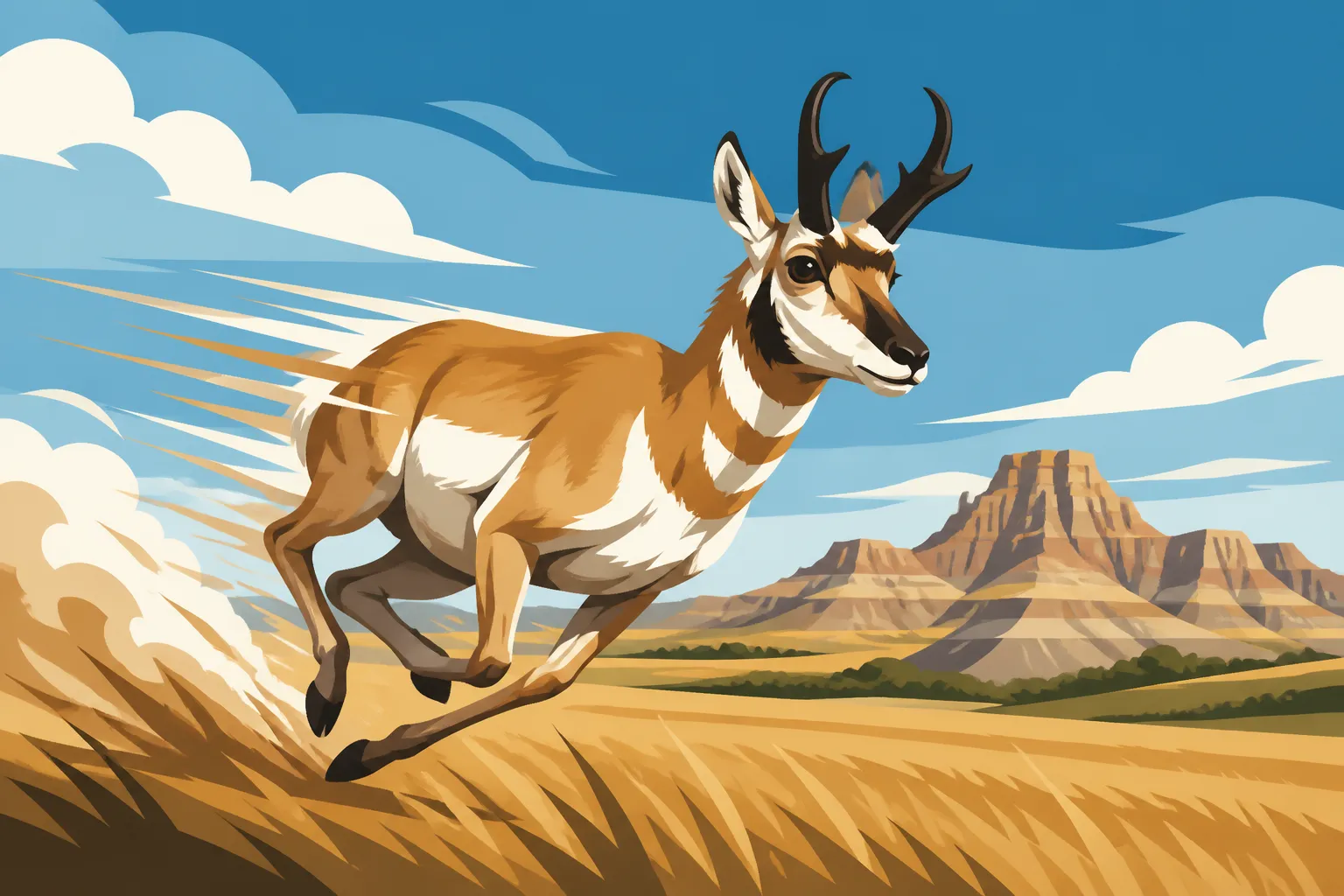
It's one thing to hear that an animal is fast; it's another entirely to witness a pronghorn cover ground when it decides to make tracks. They aren't just quick off the line; they maintain blistering speeds for incredible distances, leaving many a hunter scratching their head wondering if they even saw what they thought they saw. This isn't just about a burst of acceleration; it's about a sustained, high-octane performance that few other land animals can match.
Top Speeds and Unmatched Endurance
Let's talk numbers first, because they paint an impressive picture. Pronghorn are often cited as the fastest land animal in North America, with top speeds reported in the range of 55 to 60 miles per hour over short bursts. That's faster than most vehicles can go on a gravel two-track, and certainly faster than any human, no matter how fit, can hope to sprint. But where they truly shine is their endurance at high speeds. While a cheetah might hit higher speeds, it can only sustain that pace for a very short distance. A pronghorn, on the other hand, can maintain speeds of 30 to 40 miles per hour for miles on end, practically trotting along at a pace that would leave an Olympic marathoner gasping for air in minutes.
Imagine you've spotted a nice buck in a low draw, and you finally manage to crest a small rise only to spook him at 400 yards. That buck doesn't just run 100 yards and stop. He might put a full mile, maybe two, between himself and you in just a few minutes, never appearing to slow down. He's not just escaping; he's vanishing over the horizon with an effortless grace that belies the sheer energy he's expending. This sustained speed is a huge part of their survival strategy and what makes them such a formidable quarry.
Why Speed is Their Primary Defense Mechanism
To understand why pronghorns are so incredibly fast, we need to look at where they live and what used to hunt them. The South Dakota prairie, especially west of the Missouri River, is vast and open, offering precious little in the way of heavy cover for an animal to hide in. There are no thick forests to duck into, no dense undergrowth to melt away in. Their primary defense, therefore, evolved to be pure, unadulterated speed.
Historically, pronghorns shared the landscape with formidable predators like wolves and even cheetah-like animals that are now extinct. In such an environment, the slowest animal became dinner. Natural selection heavily favored individuals that could outrun their pursuers, and over millennia, the pronghorn became a finely tuned running machine. Their incredible eyesight, allowing them to spot danger from miles away, combined with their unmatched speed, means they can detect a threat and be a speck on the horizon before many predators even know they're there. It’s a classic example of adaptation to environment, where escape velocity is the ultimate survival tool.
Built for Blistering Pace: Pronghorn Physiology
It's not just about wanting to run fast; it's about having the physical machinery to do it. The pronghorn's body is a marvel of evolutionary engineering, perfectly adapted for explosive sprints and relentless, long-distance speed across challenging terrain. Every aspect of their anatomy, from their heart to their hooves, seems designed with one goal in mind: to outrun everything else on the prairie.
Unique Adaptations for Running
When you look at a pronghorn, you're looking at an athlete. Their internal organs are disproportionately large for their body size, especially their lungs and trachea, which allow for massive oxygen intake with every breath. Their heart is also much larger and more powerful than that of similarly sized animals, pumping that oxygen-rich blood efficiently to their muscles. This robust cardiovascular system is the engine that fuels their phenomenal endurance.
Their bones are incredibly lightweight, further reducing the energy needed for movement, and their leg muscles are long and powerful, designed for maximum stride length and quick recovery. Perhaps one of the most interesting adaptations is their hooves. Unlike deer, which have splayed hooves that can spread for traction in soft ground or offer stability on rocky terrain, pronghorns have smaller, harder hooves that are built like running shoes. They're designed for speed on firm, open ground, almost like having permanent track spikes. Their flexible spine also contributes, allowing for a greater range of motion and an extended stride, much like a cheetah.
Vision and Sensory Prowess
While speed is about physical movement, successfully using that speed relies heavily on keen senses. Pronghorn possess truly remarkable vision, which is another crucial adaptation for life on the open prairie. Their large eyes are set far back on their heads, giving them an incredibly wide field of view, almost 360 degrees, without having to move their heads much. More importantly, they have telescopic vision, meaning they can detect movement and detail at astonishing distances. A hunter might be glassing a distant ridge with high-powered binoculars, struggling to discern a pronghorn, while that very pronghorn has likely already seen the hunter, evaluated the threat, and plotted an escape route.
This superior vision gives them a massive head start. They're not waiting for a predator to be close; they're reacting when it's still far away, giving them ample time to reach and maintain top speed. Their large ears also provide excellent hearing, allowing them to pick up subtle sounds of approach. All these senses work in concert, making them incredibly difficult to sneak up on, effectively maximizing the utility of their speed as a primary defense. It’s a frustrating reality for any hunter trying to close the distance on a mature buck.
Hunting the Uncatchable: Speed's Impact on Stalking
Knowing how fast a pronghorn is changes everything about how you approach hunting them. It’s a constant chess match against an animal that can disappear in the blink of an eye. The challenges are real, and understanding their speed helps you formulate more effective strategies for a successful hunt on the plains.
The Ever-Present Challenge of Closing the Distance
The most common frustration for a pronghorn hunter is undoubtedly the moment when a carefully planned stalk falls apart. You've crawled on your belly for what feels like an hour, using every subtle fold in the landscape for cover, only to have the buck stand up, look directly at you from 300 yards, and then simply jog away, never truly breaking into a full sprint, yet putting so much ground between you that your efforts feel utterly wasted. This isn't just about them being fast; it's about their incredible ability to cover ground quickly even when they aren't panicked. A pronghorn "jog" can be 20-25 mph, a speed that will easily take them over the next ridge and out of sight before you can even stand up.
Because of this, shot distance becomes a critical factor. You need to be prepared for longer shots than you might be used to for other big game, or you need to be exceptionally patient and strategic in finding ways to get significantly closer. Understanding topographical maps, perhaps using a tool like GoHunt, can help you identify subtle draws or rises that might offer the concealment needed for a close approach, but even then, pronghorns have a knack for finding the smallest escape route. This is where patience truly becomes a virtue, and where the prairie often humbles even the most seasoned hunters.
Strategic Tactics for Outsmarting Speed
So, how do you hunt an animal that's essentially a blur on the horizon? It requires a different mindset and a reliance on tactics that exploit their habits rather than trying to beat them in a straight-up race.
Firstly, terrain is your best friend. Every small coulee, every gentle rise, every patch of sagebrush becomes a potential avenue for concealment. Instead of thinking about the fastest route to the animal, think about the most covered route. Sometimes, this means making a huge, circuitous loop that adds significant distance to your stalk, but keeps you out of sight. Remember that pronghorns prefer to run rather than jump obstacles, so fences, even low ones, can sometimes bottleneck their escape routes, though this is rare on the truly open plains.
Secondly, the wind is paramount. Not just for scent, which is important for any big game, but also because it affects sound and dust. Stalking into the wind can muffle your approach and prevent your scent from reaching their keen noses. In a crosswind, you might have to adjust your approach to account for their ability to pick up scent from surprisingly far away. Tools like GoHunt can help you visualize wind direction and how it interacts with the terrain.
Thirdly, be prepared for long-range shooting. While getting close is ideal, it's not always possible. Practicing your shooting skills at extended distances, understanding wind drift, and knowing your rifle's capabilities are crucial. Many successful pronghorn hunts involve shots that would be considered challenging for other species. Rifle Setup for South Dakota Open Country is a great resource to consider here.
Finally, consider decoying. Because pronghorns are naturally curious, a well-placed decoy, especially a silhouette of another pronghorn, can sometimes draw a buck closer, negating the need for an impossible stalk. This tactic directly counters their speed by bringing them to you, rather than trying to chase them down. You can find more specific advice in Decoying Antelope Over Water.
Respecting the Prairie's Ultimate Athlete
Ultimately, hunting pronghorns in South Dakota is a profound lesson in respect for the animal and its environment. Their speed isn't a flaw to be overcome; it's an intrinsic part of who they are, forged by millennia on the open prairie. Every successful hunt feels earned because you've had to outthink and outmaneuver an animal that is literally built to avoid capture.
It's a reminder that hunting is often less about brute force and more about understanding, patience, and adapting to the incredible capabilities of your quarry. The next time you watch a pronghorn disappear over the horizon, take a moment to appreciate that spectacular display of natural athleticism. It's a privilege to share the prairie with such magnificent, fast creatures.
Speed Comparison: Pronghorn vs. Other Prairie Animals
To truly appreciate the pronghorn's speed, it's helpful to see it in context with other animals you might encounter in South Dakota. While some species can sprint for a moment, none combine raw velocity with sustained endurance quite like the pronghorn.
| Animal | Top Speed (Approx. MPH) | Sustained Speed (Approx. MPH) | Primary Defense | Habitat |
|---|---|---|---|---|
| Pronghorn | 55-60 | 30-40 (for miles) | Speed | Open Prairies |
| Coyote | 35-40 | 15-20 (for a few miles) | Speed, cunning | Varied, including prairie |
| Mule Deer | 30-35 | 15-20 (shorter distances) | Speed, bounding | Breaks, hillsides |
| White-tailed Deer | 30-35 | 15-20 (shorter distances) | Speed, cover | Timber, river bottoms |
| Rabbit (Cottontail) | 18-20 | Short bursts | Speed, evasive | Brush, grasslands |
| Human (Sprinter) | 20-25 | Very short bursts | Tools, intellect | N/A |
This table clearly illustrates why trying to "run down" a pronghorn is a futile endeavor. They are simply in a league of their own when it comes to covering ground quickly and efficiently. For more on hunting these fleet-footed creatures, explore topics like Spot-and-Stalk Antelope Hunting in South Dakota or learn how to judge their racks in Judging a Pronghorn Buck in the Field. Understanding their habits, like why Pronghorn Do Not Jump Fences, can also give you a subtle edge. Always keep the wind in mind when stalking; Wind Direction on a Prairie Stalk is a critical factor. Knowing How Close You Can Stalk a Pronghorn before they spook can make or break your hunt, and learning to read the land with Using Draws to Hide a Stalk is indispensable.
Disclaimer
This article is for general informational purposes only and does not constitute professional advice. Laws, prices and regulations vary by location and change over time. Consult a qualified professional for guidance on your specific situation.