Why Pronghorn Do Not Jump Fences
It's a common observation that leaves many hunters scratching their heads: South Dakota's wide-open spaces are home to the incredible pronghorn, an animal built for speed, yet they seem utterly perplexed by something as simple as a fence. This isn't just a quirky habit; it's a deep-seated evolutionary trait that dictates how these unique creatures navigate their world and can significantly impact your hunting strategy. This guide will explore the fascinating reasons behind this behavior, delving into their biology, the historical context of their habitat, and the modern challenges they face.
The Pronghorn's Evolutionary Design: Built for Speed, Not Height
When you picture a pronghorn darting across the prairie, what comes to mind? Probably breathtaking speed, a blur of tan and white against the endless horizon. That's no accident; every fiber of a pronghorn's being is engineered for velocity and endurance over vast, flat terrain. Unlike deer or elk, which readily clear obstacles, the pronghorn's physical makeup prioritizes horizontal movement above all else. Understanding this fundamental design choice is key to grasping why they simply don't leap fences.
A Legacy of Wide-Open Spaces
Imagine North America's prairies tens of thousands of years ago. There were no barbed wire fences, no woven wire, no cattle guards. The landscape was an unbroken expanse, stretching for hundreds, even thousands, of miles. In this environment, the primary threat to pronghorn came from pursuit predators like now-extinct cheetahs and wolves. Survival hinged on outrunning danger across vast distances. There was little evolutionary pressure to develop the ability to jump high obstacles because, quite simply, there weren't any. The few natural barriers, like steep ravines or rivers, would have been navigated differently or avoided. This deep history means that vertical agility was never a survival advantage, and thus, it never became a dominant trait. They adapted to escape by simply running horizontally, making swift changes in direction rather than soaring over impediments.
Anatomical Adaptations for Burst Speed
Let's look at the pronghorn's incredible anatomy. Their legs are long and slender, with powerful muscles specifically designed for explosive acceleration and sustained high speeds. Their hooves are cushioned and broad, providing excellent traction on the often-loose prairie soil. Crucially, their skeletal structure, particularly around the shoulder and hip, is built for maximum stride length and efficiency in a straight line or broad curves. They have a remarkably large heart and lungs for their body size, allowing for incredible oxygen intake to fuel those high-speed sprints. This is why you can often see them traveling at incredible speeds when they need to cover ground. In fact, when considering a shot on one of these animals, it's vital to remember their propensity for speed, especially if you're attempting a shot placement on a pronghorn that might be running.
However, this specialization comes with a trade-off. Their leg and hip joints lack the extreme flexibility and muscle architecture necessary for powerful vertical leaps that characterize species like deer or elk. Deer, for instance, have strong, springy hindquarters designed to propel them upwards and over obstacles. Pronghorn simply aren't built that way. Their bodies are streamlined, almost torpedo-like, to cut through the air efficiently, rather than having the bulk and spring necessary for significant elevation. It's a classic example of evolution optimizing for a specific niche, and in their case, that niche was pure, unadulterated speed across flat terrain.
Fences as Barriers: A Modern Challenge
While pronghorn are marvels of speed, the modern landscape has thrown them a curveball in the form of fences. These seemingly innocuous structures, so common across agricultural and ranching lands, present a completely unnatural and often insurmountable challenge to an animal whose instincts tell it to either run around an obstacle or squeeze under it. This can create significant problems for their migration and access to vital resources.
The Impact of Barbed Wire on Pronghorn Movement
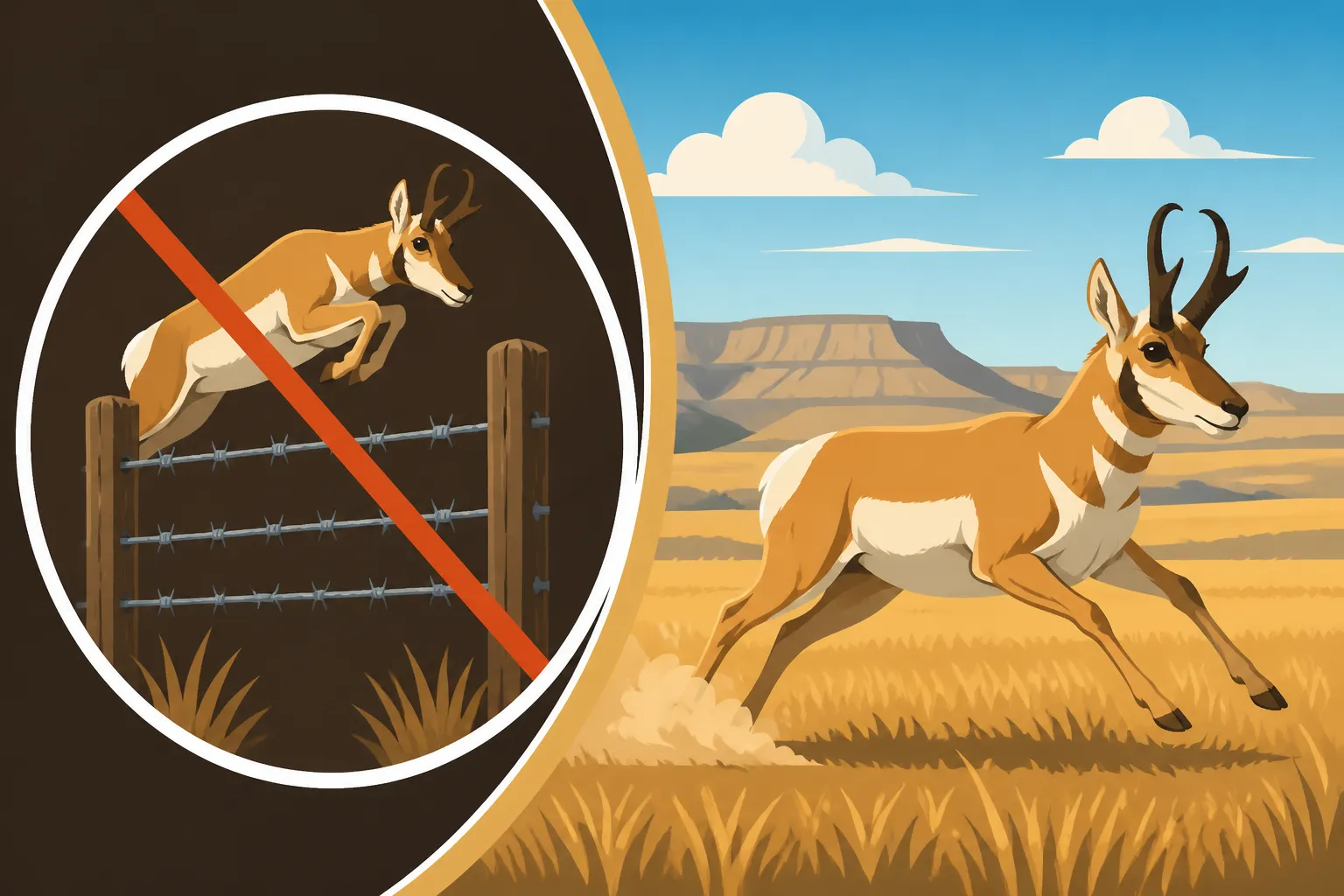
The advent of widespread ranching and agriculture in the West brought with it miles upon miles of fencing, particularly barbed wire. For an animal that does not naturally jump, barbed wire became an immediate and brutal barrier. Traditional barbed wire fences are usually constructed with the bottom strand relatively low to the ground – often 12 to 18 inches. While this is sufficient to contain cattle, it’s low enough to impede a pronghorn from crawling under without snagging its hide, and too high for its natural "crawl" instinct to navigate comfortably without injury.
This has had a profound impact on pronghorn populations, restricting their ability to access seasonal ranges, water sources, and critical forage. Imagine a herd of pronghorn, needing to move from a winter range to a summer range, only to find their path crisscrossed by impassable fences. This can lead to increased stress, delayed migrations, and even starvation or dehydration if they cannot reach necessary resources. Hunters often observe pronghorn pacing fences, desperately seeking a way through or under, a testament to the frustration these barriers cause. It's a stark reminder that even a subtle change to a landscape can have massive implications for wildlife, something serious hunters consider when scouting South Dakota public ground before the season or reading prairie coulees for mule deer.
Crawling Under and Through: The Pronghorn's Alternative
Given their anatomical limitations, pronghorn have developed a fascinating, albeit sometimes perilous, alternative to jumping: they crawl under fences. When faced with a fence, a pronghorn will often lower its head, flatten its body, and attempt to slide beneath the lowest wire. This behavior is a direct result of their evolutionary history, where low-lying brush or fallen logs might have been navigated by going under rather than over.
However, this isn't always a smooth process. A traditional barbed wire fence with a low bottom strand can cause injuries, snagging their fur or even tearing their skin as they try to squeeze through. You might see tell-tale tufts of hair caught on barbs where a pronghorn has managed to pass. They are incredibly persistent, though, and will often seek out the weakest points, such as where the fence dips into a shallow ditch or where a post has shifted, creating a slightly larger gap. This resourcefulness, while admirable, also highlights the vulnerability of these animals to human-made infrastructure. They're constantly looking for the path of least resistance, much like a hunter might use terrain to close on a mule deer. Tools like GoHunt can be invaluable for researching historical migration routes and identifying potential fence challenges within specific units, helping both hunters and conservationists understand the lay of the land better.
Conservation Efforts and Pronghorn-Friendly Fencing
Recognizing the significant challenges that traditional fencing poses to pronghorn, conservation organizations, landowners, and government agencies have been working together to implement solutions. These efforts focus on modifying existing fences and promoting wildlife-friendly construction practices for new ones, aiming to reconnect fragmented habitats and allow pronghorn to move freely across their historic range.
Modifying Fences for Wildlife Passage
One of the most effective strategies involves modifying existing fences to make them more permeable for pronghorn. The key is to raise the bottom wire to a height that allows pronghorn to crawl underneath comfortably and safely. A general guideline is to ensure the lowest wire is at least 18 inches, and ideally 24 inches, off the ground. Using smooth wire for the bottom strand, rather than barbed wire, also significantly reduces the risk of injury. This single change can make a world of difference.
Additionally, some initiatives involve replacing entire sections of traditional fencing with specialized wildlife-friendly designs. These might include designs that use smooth wire on all strands, or even "let-down" fences that can be temporarily lowered during migration periods. These modifications are not just beneficial for pronghorn; they often help other ground-dwelling species as well, promoting a healthier, more connected ecosystem across the prairie. It's a long-term investment in the health of the species, ensuring future populations of Pronghorn numbers across South Dakota can thrive.
The Role of Organizations and Hunters
Many dedicated organizations, often partnering with local ranchers and government entities like South Dakota Game, Fish and Parks (GFP), are at the forefront of these fence modification projects. Volunteers regularly participate in "fence pulls" or "fence modification days," where old barbed wire is replaced with wildlife-friendly alternatives. These grassroots efforts are crucial for implementing change on a large scale across vast private and public lands.
Hunters also play a vital role. By supporting conservation organizations financially and through volunteer efforts, hunters contribute directly to projects that improve habitat connectivity. Furthermore, being informed about pronghorn behavior and the impact of fencing can help hunters make responsible decisions when hunting in areas with high pronghorn density. Understanding these nuances not only aids in conservation but can also improve your chances of success during the South Dakota antelope season and draw, as you'll better anticipate where pronghorn might move or be held up. When you're using resources like GoHunt to e-scout an area, paying attention to the fencing visible on aerial imagery can give you a significant advantage, helping you locate travel corridors and potential bottlenecks.
Here’s a quick comparison of traditional vs. pronghorn-friendly fencing:
| Feature | Traditional Barbed Wire Fence | Pronghorn-Friendly Fence Modification |
|---|---|---|
| Bottom Wire Height | Typically 12-18 inches from ground | Minimum 18-24 inches from ground |
| Bottom Wire Type | Barbed wire | Smooth wire (non-barbed) |
| Pronghorn Passage | Difficult, high risk of injury, restricted | Easy, low risk of injury, promoted |
| Cattle Containment | Effective | Still effective with proper tension |
| Overall Wildlife Impact | Restricts movement for many species | Facilitates movement for many species |
Understanding why pronghorn don't jump fences is more than just a piece of trivia; it's a window into the delicate balance between wildlife and human development on our shared landscapes. Their unique adaptations, honed over millennia, make them incredibly efficient in their natural environment, but also uniquely vulnerable to modern barriers. As hunters and conservationists, our awareness and efforts to promote wildlife-friendly practices are essential to ensure these magnificent animals continue to grace the South Dakota prairie for generations to come.
Disclaimer
This article is for general informational purposes only and does not constitute professional advice. Laws, prices and regulations vary by location and change over time. Consult a qualified professional for guidance on your specific situation.