Black Hills Elk Herd History
For many, South Dakota brings to mind endless fields of pheasants or the vast prairies dotted with deer and antelope. But venture west into the rugged beauty of the Black Hills, and you'll discover a truly remarkable story of resilience and restoration: the tale of the Black Hills elk herd. These majestic creatures, once hunted to oblivion, have made a triumphant return, offering an unparalleled big game experience that's both challenging and deeply rewarding. This guide delves into the fascinating history of how elk reclaimed their rightful place in the Black Hills, the challenges they faced, and what their presence means for hunters and conservationists today.
The Echoes of a Vanished Past: Elk in the Early Black Hills
It's hard to imagine, given their current robust presence, that there was a time when elk were entirely absent from the Black Hills. Their history here is a microcosm of wildlife management challenges across the American West, marked by periods of abundance, severe decline, and eventually, the painstaking process of recovery. Understanding this past isn't just a historical exercise; it helps us appreciate the efforts that went into bringing these magnificent animals back.
Native American Era and Early Settlers
Long before European settlers arrived, elk thrived in the Black Hills, playing a vital role in the ecosystem and the lives of the indigenous peoples, particularly the Lakota. For these tribes, the "wapiti" (their name for elk) was more than just game; it was a source of food, clothing, tools, and spiritual significance. Their hunting practices, deeply intertwined with respect for nature, typically ensured sustainable populations. Elk were widespread, moving through the timbered slopes, open parks, and river valleys of the region, their bugles echoing across the landscape.
However, with the arrival of trappers, prospectors, and eventually permanent settlers in the mid-19th century, the balance began to shift. Initially, the impact was localized, but as more people moved into the area, driven by the lure of gold and land, pressure on wildlife intensified. Early settlers hunted for subsistence, but also for sport, with little regulation or foresight into the consequences of unregulated take. The sheer abundance of game initially masked the unsustainable trajectory that was beginning to unfold.
Market Hunting and Habitat Loss
The most significant driver of the elk's disappearance was the relentless wave of market hunting that swept across the American West in the late 1800s. Unlike subsistence hunting, market hunting was purely commercial, aimed at supplying growing urban populations with meat. Professional hunters, often operating without any legal constraints, slaughtered animals by the thousands. Elk hides, meat, and even their canine teeth (known as "ivories" and prized for jewelry) became valuable commodities. Trains and new roads made it easier to transport carcasses to distant markets, further fueling the demand and devastating large game populations.
Simultaneously, the development of the Black Hills for mining, logging, and ranching led to widespread habitat destruction and fragmentation. Forests were clear-cut, natural grasslands were converted to cattle pasture, and human settlements encroached upon traditional elk ranges. The combination of intense hunting pressure and diminishing suitable habitat proved to be a death knell for the Black Hills elk. They simply had nowhere left to go and no reprieve from the relentless pursuit.
Local Extirpation and the Empty Hills
By the turn of the 20th century, the once-thriving Black Hills elk herds had been completely extirpated. This wasn't a gradual decline over decades, but a rapid and brutal obliteration in a relatively short period. The last native elk in the Black Hills were believed to have been killed around 1880, leaving a profound void in the ecosystem and a stark reminder of unchecked human impact. The majestic bugle of the bull elk, a sound that had defined the autumn air for millennia, was silenced.
This period serves as a crucial lesson in wildlife management: without regulation, habitat protection, and public awareness, even seemingly endless resources can be depleted. The absence of elk wasn't just a loss for hunters; it was an ecological wound that removed a keystone species, altering the landscape and its delicate balance. It was a wake-up call that eventually spurred early conservation efforts and laid the groundwork for future reintroduction programs, which would eventually bring the elk back from the brink in South Dakota.
The Return of the Wapiti: Reintroduction and Growth
The early 20th century brought with it a burgeoning conservation movement, fueled by the stark realities of species loss like that of the Black Hills elk. Visionaries understood that if these iconic animals were ever to roam the hills again, deliberate and sustained effort would be required. The story of the Black Hills elk reintroduction is a testament to this enduring commitment to wildlife.
The Custer State Park Cornerstone
The true genesis of the modern Black Hills elk herd lies within Custer State Park. In a groundbreaking move, the park initiated the first reintroduction efforts in 1912, bringing in 15 elk from Wyoming. This initial herd was carefully protected and managed within the park's boundaries, providing a safe haven for them to reproduce and establish a new foothold. The challenging terrain of the park offered refuge, and stringent rules prevented hunting, allowing the small population to flourish without immediate pressure. This sanctuary served as a critical incubator for the species.
Over the next few decades, the herd within Custer State Park grew steadily. The park's diverse habitats, from open grasslands to dense timber, provided ideal conditions for the elk. This success proved that with proper management and protection, elk could indeed thrive once more in the Black Hills. The park became a living laboratory, offering invaluable insights into elk biology, behavior, and the habitat requirements necessary for a successful reintroduction. It laid the foundation for expanding the elk population beyond the park's fences.
Early Translocations and Growth
As the Custer State Park herd prospered, the South Dakota Game, Fish and Parks (GFP) realized the potential to re-establish elk across a wider range of the Black Hills National Forest. Beginning in the mid-20th century, typically in the 1960s and 70s, the park became a source for transplanting elk into other suitable areas. These early translocations involved carefully capturing elk from Custer State Park and relocating them to various release sites within the surrounding Black Hills National Forest, particularly in areas like the northern and central Black Hills.
These new herds faced their own challenges, but with continued protection and improved habitat management, they too began to grow. The strategy was to create several distinct populations that could eventually merge and expand, reducing the risk of a single catastrophic event wiping out the entire herd. This period also saw the development of the first limited hunting seasons, allowing for controlled harvest that aimed to manage herd numbers while providing highly coveted hunting opportunities. Hunters seeking these tags often spend years building preference points through draws, a process that GoHunt can help clarify with its detailed draw odds and unit breakdowns.
Expanding the Range and Modern Distribution
The success of these initial efforts led to further expansion of elk range throughout the Black Hills. Today, elk are found across much of the forested areas of the Black Hills, from the northern reaches around Spearfish and Lead, through the central areas near Custer and Hill City, and into parts of the southern hills. While Custer State Park still holds a significant and well-known herd, the majority of the huntable population resides on National Forest lands and private timber.
The widespread distribution is a testament to the biological success of the reintroduction program and the elk's adaptability. They have learned to utilize both dense timber for bedding and security and the numerous meadows, forest openings, and riparian areas for forage. This successful re-establishment has not only brought a magnificent game species back to the state but has also played a role in restoring the ecological integrity of the Black Hills ecosystem. The story of the elk's return is truly one of the crowning achievements of South Dakota's wildlife conservation efforts.
Navigating Modern Challenges in Herd Management
The return of elk to the Black Hills has been a monumental success, but it hasn't been without its ongoing challenges. Managing a thriving population of large herbivores in a mixed-use landscape requires constant vigilance, scientific understanding, and adaptive strategies. The South Dakota Game, Fish and Parks (GFP) works tirelessly to balance the needs of the elk, the ecosystem, and the diverse interests of landowners, recreationists, and hunters.
Disease Concerns: CWD and Brucellosis
Like many big game populations across the country, the Black Hills elk herd faces the looming threat of disease. Chronic Wasting Disease (CWD) is a persistent and growing concern. CWD is a fatal neurological disease that affects cervids (deer, elk, moose) and can spread through direct animal-to-animal contact or indirectly through environmental contamination. While South Dakota has implemented extensive monitoring and testing programs, including voluntary hunter submissions, CWD remains a management priority. Containing its spread and understanding its long-term impacts are critical.
Another disease of concern, though less prevalent in South Dakota's elk herds compared to other western states, is brucellosis. This bacterial disease can cause abortions in elk, bison, and cattle, leading to potential transmission to livestock. While the Black Hills are not a known brucellosis hot zone for elk, constant surveillance and understanding migration patterns, particularly at the periphery of elk range near ranching operations, are important. The GFP regularly samples harvested animals and monitors herd health to quickly identify and respond to any disease outbreaks, working to prevent widespread issues that could impact herd stability or agricultural interests.
Habitat Preservation and Expansion
Maintaining and expanding quality habitat is fundamental to the long-term health and growth of the Black Hills elk herd. Elk require a mosaic of cover types: dense timber for thermal regulation and security, open meadows and clearings for foraging on grasses and forbs, and riparian areas for water and succulent vegetation. The Black Hills National Forest, as a multi-use landscape, presents complex challenges. Timber harvesting, wildfire management, and recreational development all have an impact on elk habitat.
The GFP, in partnership with the U.S. Forest Service and private landowners, engages in habitat improvement projects. These can include prescribed burns to rejuvenate forage, thinning dense timber to create browse and increase forage production, and managing invasive species. Ensuring connectivity between different habitat patches is also vital, allowing elk to move freely between seasonal ranges without encountering significant barriers. Protecting winter range, where elk concentrate and are most vulnerable, is particularly important for herd survival, especially during harsh Black Hills winters.
Balancing Recreation and Conservation
The success of the Black Hills elk herd has created incredible recreational opportunities, primarily for hunting and wildlife viewing. However, balancing these uses with conservation goals and other human activities is a delicate act. For hunters, the Black Hills offer some of the most challenging and rewarding elk hunting in the Midwest. Tags are limited and highly sought after, often requiring years of applying through the draw system. Resources like the South Dakota Big Game Draws and How to Apply guide can be very helpful here.
The GFP uses hunting as a primary tool for population management, ensuring herd numbers remain within ecological carrying capacity and mitigate potential conflicts with landowners, particularly agricultural damage. The specific units and tag types available are carefully determined each year based on population surveys, harvest data, and habitat conditions. While hunting pressure exists, particularly on public lands like the Black Hills National Forest Hunting areas, careful management aims to distribute hunters and maintain a high-quality experience. Simultaneously, providing ample opportunities for wildlife viewing, photography, and other non-consumptive uses is also a key objective, ensuring that all residents and visitors can appreciate these magnificent animals.
The Modern Black Hills Elk Herd: A Thriving Legacy
Today, the Black Hills elk herd stands as a remarkable conservation success story. From complete extirpation to a thriving population, their journey reflects persistent effort and smart management. For those unfamiliar with South Dakota Elk in the Black Hills and Prairie, it's important to understand the current dynamics of this healthy and robust herd.
Current Population Estimates and Trends
The South Dakota Game, Fish and Parks (GFP) regularly monitors the Black Hills elk population through aerial surveys, ground observations, and harvest data. While exact numbers fluctuate annually based on calving success, hunter harvest, and winter severity, the herd is generally considered stable and healthy, often numbering in the thousands. These estimates are crucial for setting harvest quotas and managing unit-specific tag allocations.
Historically, the herd has shown remarkable resilience, recovering from tough winters and adapting to changes in habitat. While growth has stabilized in recent years, this is largely due to effective management strategies designed to keep the herd within the carrying capacity of its habitat, preventing overgrazing or excessive damage to private property. The GFP's careful tracking ensures that the herd maintains a robust age structure and good bull-to-cow ratios, which are indicators of a healthy and productive population.
Distribution Across the Black Hills
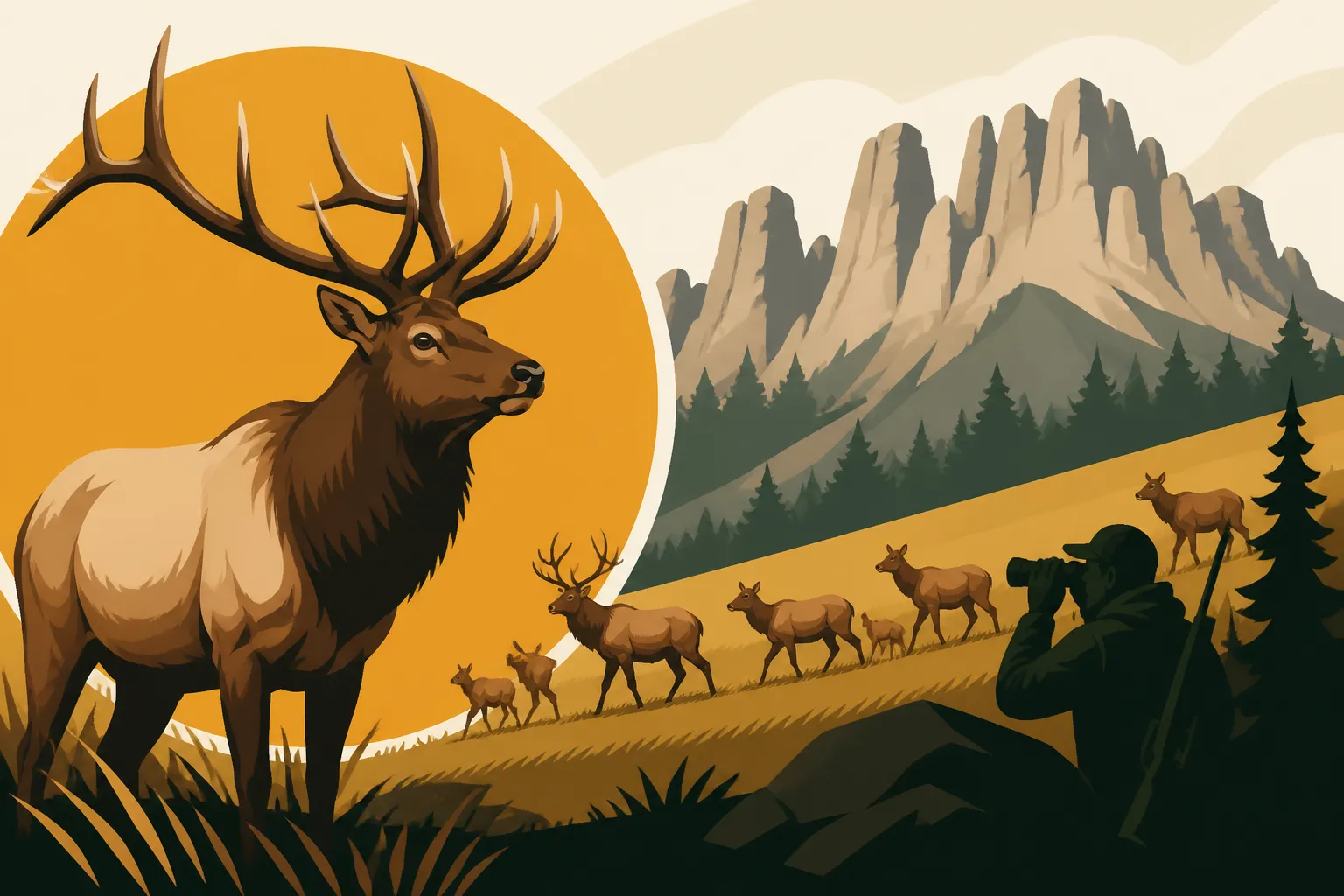
The Black Hills elk are not uniformly distributed; rather, they tend to concentrate in areas that offer the best combination of food, water, and cover. Key areas include the dense timber and secluded draws of the Black Hills National Forest, as well as the diverse landscapes of Custer State Park. Hunters and wildlife enthusiasts will find elk in areas with a mix of ponderosa pine forests, aspen groves, open meadows, and riparian corridors.
While elk are primarily found within the forest boundaries, smaller, often transient herds can occasionally be found on adjacent private lands, particularly where timbered draws meet agricultural fields. These movements can be seasonal, driven by forage availability or hunting pressure. Understanding these movement patterns is key for those interested in Elk Calving and Summer Range, which often sees them utilizing different parts of the habitat throughout the year.
Hunting Opportunities and Success Rates
Hunting the Black Hills elk is widely considered one of South Dakota's premier big game pursuits. The GFP offers a limited number of firearm, archery, and muzzleloader tags each year, divided into various units and season dates. Drawing an elk tag in the Black Hills is highly competitive for both residents and non-residents, often requiring multiple years of accumulating preference points. For those serious about applying, platforms like GoHunt provide detailed information on draw odds, unit boundaries, and historical success rates, which can be invaluable for strategizing applications.
Success rates for Black Hills elk hunters are respectable, particularly for those who put in the effort to scout, understand elk behavior, and are prepared for the challenging terrain. It's not uncommon for hunts to require significant physical exertion, covering miles of rugged ground. Many hunters also find success by focusing on Black Hills Elk Hunting Tactics that involve patience and calling, particularly during the September archery season when the rut is often in full swing. Hunters looking to harvest a bull or cow in the Black Hills should be prepared for a true backcountry hunting experience, a far cry from a typical pheasant hunt.
Here’s a snapshot of typical Black Hills elk hunt characteristics:
| Characteristic | Description |
|---|---|
| Terrain | Rugged, mountainous, dense Ponderosa pine forests, steep draws, open parks. Often requires significant physical exertion. |
| Season Dates | Archery seasons typically in September/early October during the rut. Rifle seasons often in late October/November, sometimes extending into December. Muzzleloader seasons vary. Specific dates are set annually by GFP. |
| Tag Allocation | Limited draw system (lottery with preference points). Tags are unit-specific and weapon-specific (e.g., bull-only, any-elk, cow-only). Non-resident tags are extremely limited and difficult to draw. |
| Success Rates | Variable, but generally good for those who are prepared and persistent. Archery success can be lower due to the challenge, while rifle success tends to be higher. Often around 20-30% for all tags, but highly unit-dependent. |
| Hunting Methods | Spot-and-stalk, still hunting, calling (bugling and cow calls), particularly effective during the rut. Hunters often focus on Calling Elk in Black Hills Timber to bring bulls in close. |
| Access | Primarily on Black Hills National Forest lands, Custer State Park (draw-only), and some private lands. Hunting Elk on Steep Black Hills Ridges is common, requiring good boots and navigation. |
| Physical Demands | High. Hunters should be in good physical condition to traverse steep, uneven terrain at elevation. Field dressing and packing out an elk can be extremely arduous. |
The Unique Influence of Custer State Park
Custer State Park stands as a jewel in the Black Hills, and its role in the story of the South Dakota elk herd is simply unparalleled. More than just a scenic drive or a place to see buffalo, the park has been the enduring heart of elk restoration and continues to play a vital role in the species' future. It's a testament to dedicated management and a unique model for wildlife conservation.
The Park as a Core Herd Area
From the very first reintroductions in 1912, Custer State Park has served as the foundational refuge for Black Hills elk. Its boundaries encompass a diverse landscape of mountains, canyons, timbered hillsides, and open meadows – ideal elk habitat. The park's management philosophy prioritizes wildlife, providing the elk with consistent protection from excessive human disturbance and, crucially, from year-round hunting pressure. This sanctuary environment allows elk populations to remain robust, serving as a stable source for the wider Black Hills ecosystem.
The core herd within the park provides a genetic reservoir for elk throughout the region. While some animals migrate seasonally out of the park, and others are transplanted, the park's resident herd ensures a consistent presence and contribution to the overall Black Hills population. Observing these animals in Custer State Park is often the easiest way for visitors to experience elk up close, offering a unique opportunity to witness their natural behaviors without the intense pressure often found in other areas. It's not uncommon to hear elk bugling from the park roads during the fall rut, a truly unforgettable experience.
Genetic Diversity and Health Contributions
The longevity and stability of the Custer State Park elk herd have been critical for maintaining genetic diversity within the broader Black Hills population. While the initial stock came from Wyoming, generations of elk breeding within the park have adapted to the local environment. This healthy genetic pool is vital for the herd's resilience against disease and environmental changes. The park's continuous monitoring of animal health, including disease surveillance and regular population assessments, helps ensure the vitality of these core animals.
In addition to contributing genetically, the park also acts as a natural laboratory. Researchers and wildlife managers can study elk behavior, herd dynamics, and the impacts of various management techniques in a relatively controlled environment. This research provides invaluable data that informs wider elk management strategies across the Black Hills. By understanding how elk interact with their habitat, predators, and other species (including the park's iconic Bison in Custer State Park), managers can make more informed decisions for the benefit of the entire regional herd.
Public Viewing and Education
Beyond its biological contributions, Custer State Park provides an incredible public interface for elk. Unlike many other areas where elk are elusive and require significant effort to find, the park offers readily accessible viewing opportunities. The wildlife loop road and various scenic drives provide visitors with chances to spot elk in their natural environment, often at dawn or dusk. This accessibility fosters appreciation and understanding of these majestic animals among the general public, many of whom might not otherwise encounter wild elk.
The park also plays a significant educational role. Interpretive programs, signage, and ranger talks help visitors learn about elk biology, history, and ongoing conservation efforts. This public engagement is crucial for building support for wildlife conservation and ensuring that future generations understand the value of healthy ecosystems and thriving wildlife populations. For those considering Custer State Park Hunting Rules, it's important to remember that hunting opportunities are extremely limited and part of a specific draw, highlighting the park's primary role as a sanctuary for both wildlife and public enjoyment.
The Future of Black Hills Elk: Conservation and Stewardship
The story of the Black Hills elk is one of triumph, but it's a story that continues to be written. Ensuring a healthy, sustainable future for these magnificent animals requires ongoing dedication, adaptive management, and the cooperation of many stakeholders. The challenges ahead are real, but so is the commitment to conservation in South Dakota.
Ongoing Research and Monitoring
The South Dakota Game, Fish and Parks (GFP) maintains a robust program of research and monitoring for the Black Hills elk herd. This isn't a "set it and forget it" situation; wildlife populations are dynamic and require constant attention. Techniques include aerial surveys to estimate population numbers and bull-to-cow ratios, ground surveys to assess calf recruitment, and tracking studies using GPS collars to understand movement patterns, habitat use, and migratory corridors. Harvest data collected from hunters also provides invaluable information on population health, age structure, and hunter success.
These scientific efforts are critical for making informed management decisions. For example, understanding Black Hills Elk Herd Size fluctuations helps determine annual tag allocations, ensuring that hunting pressure remains sustainable. Monitoring for diseases like CWD is also an ongoing priority, with sampling efforts focused on early detection and mitigation. By investing in sound science, the GFP aims to detect potential issues early and adapt management strategies before they become widespread problems, ensuring the long-term health and stability of the herd.
Collaborative Conservation Efforts
No single entity can ensure the future of a large, migratory species like elk. Successful conservation relies on a collaborative approach involving state and federal agencies, private landowners, non-profit organizations, and engaged citizens. In the Black Hills, the GFP works closely with the U.S. Forest Service, which manages the vast majority of elk habitat, on matters such as timber sales, prescribed burning, and road management. These partnerships are vital for creating and maintaining suitable habitat across the landscape.
Private landowners also play a crucial role, particularly as elk occasionally move onto private property, which can lead to conflicts over crop damage or fence destruction. The GFP has programs in place to assist landowners with elk depredation issues, aiming to foster coexistence. Additionally, conservation groups contribute through fundraising, volunteer efforts, and advocating for policies that benefit wildlife. This shared responsibility ensures a holistic approach to elk management, recognizing that the elk herd is a shared resource that benefits from collective stewardship.
Sustainable Hunting Practices
Hunting will continue to be an essential tool in managing the Black Hills elk herd, ensuring that populations remain in balance with their habitat and within social tolerances. Sustainable hunting practices are at the core of this strategy. The limited draw system for tags, which often sees hunters applying for years, ensures that only a specific number of animals are harvested annually. This careful control prevents overharvest and allows the herd to maintain a healthy population structure. For serious hunters, detailed analysis found on sites like GoHunt can help plan South Dakota Elk Draw and Units applications, improving chances of drawing a tag.
Education for hunters is also a key component. Hunter education programs emphasize ethical hunting, shot placement, and responsible behavior in the field. Hunters are encouraged to participate in harvest reporting and disease sampling programs, directly contributing to the data used for management. The legacy of the Black Hills elk herd is intertwined with the legacy of responsible hunting, demonstrating how regulated harvest can be a powerful force for conservation, helping to maintain healthy ecosystems and provide unique recreational opportunities for generations to come.
Disclaimer
The information provided in this article is for general informational purposes only and does not constitute official legal or regulatory advice. Hunting regulations, season dates, and licensing requirements in South Dakota are subject to change. Always consult the most current South Dakota Game, Fish and Parks (GFP) regulations and official publications before planning any hunting activity.