Sandhill Cranes Over South Dakota
For many hunters and nature enthusiasts, the sight and sound of sandhill cranes passing over South Dakota is nothing short of awe-inspiring. These magnificent birds, often mistaken for other waterfowl, present a unique hunting opportunity and a breathtaking natural phenomenon. This guide will walk you through everything you need to know about sandhill cranes in our great state, from their epic migration to the thrilling challenge of hunting them responsibly.
The Majestic Migration: Sandhill Cranes Over South Dakota
South Dakota plays a crucial role in the annual pilgrimage of sandhill cranes, serving as a vital stopover point on their incredible journey. If you've ever heard their distinct, rattling call echoing from high above, you know it's a sound that truly defines the change of seasons on the prairie. It's not just a fly-over state for these birds; it's a place where they rest, refuel, and gather strength before continuing thousands of miles.
The Central Flyway's Aerial Highway
Sandhill cranes are masters of the sky, traveling vast distances between their breeding grounds in the northern reaches of Canada and Alaska, and their wintering havens in the southern United States and Mexico. South Dakota sits squarely within the Central Flyway, one of North America's four major migratory bird routes. This makes our state a prime location for observing and, for those with the right permits, pursuing these grand birds. You’ll often see them flying in massive V-formations, a testament to their incredible navigational instincts and endurance. It’s a truly humbling experience to look up and see thousands of these birds stretched across the sky, a living river of wings making their way south.
Think of it like an aerial interstate, and South Dakota is a major service plaza. The cranes aren't just passing through; they're actively using our landscape. They're looking for places to feed, to roost safely, and to just generally break up their journey. This is why knowing their habits here is so crucial for anyone hoping to interact with them, whether through binoculars or a shotgun. The sheer volume of birds that move through our state during peak migration is something you really have to see to believe, making it a bucket list item for many wildlife enthusiasts.
When and Where to Witness the Spectacle
While sandhill cranes might pop up almost anywhere across the state during migration, there are definitely hotspots where your chances of seeing or hearing them are significantly higher. Spring migration typically peaks in March and April as they head north to their breeding grounds. Fall migration, which is when hunting opportunities open up, usually kicks into gear around late September and continues through October, sometimes even into early November, depending on weather patterns and the timing of cold fronts.
Look to the larger agricultural areas, especially those with expansive grain fields, as well as areas near major river systems like the Missouri, and large bodies of water. These provide both the food resources and safe roosting areas the cranes absolutely need. The eastern part of the state, with its rich farmlands, and areas further west around reservoirs can be excellent spots. Tools like GoHunt can be incredibly useful for scouting these locations, as their mapping features often highlight agricultural fields and water sources, giving you a head start on where to focus your attention. You’re looking for that combination of food, water, and security.
Feeding and Roosting Habits During Migration
Understanding what sandhill cranes need is key to finding them. During their stopovers in South Dakota, these birds are primarily focused on two things: eating and resting. They are omnivores, but their diet during migration largely consists of waste grain found in agricultural fields. Corn, wheat, and sorghum fields are absolute magnets for them. You'll often see them walking methodically through harvested fields, picking up any spilled kernels.
For roosting, sandhill cranes prefer shallow water bodies, often large wetlands, river sandbars, or even open water in reservoirs. These watery roosts offer a measure of protection from terrestrial predators. They will fly from their feeding grounds to these roosts in the evenings, creating truly spectacular aerial ballets as thousands of birds descend upon a single location. In the mornings, they reverse the process, heading back to the fields to feed. This predictable pattern of movement between feeding and roosting sites is something hunters definitely key into. Without these crucial resources, the cranes wouldn't be able to make their incredible journey.
Identifying Sandhill Cranes and Their Unique Calls
Before you can think about hunting sandhill cranes, it's absolutely vital to be able to identify them correctly in the field. They are large birds, but they can be confused with other species, especially if seen at a distance or in challenging light. Knowing their unique characteristics and calls is not just for conservation; it's also a legal requirement to ensure you're targeting the right species.
Key Physical Characteristics
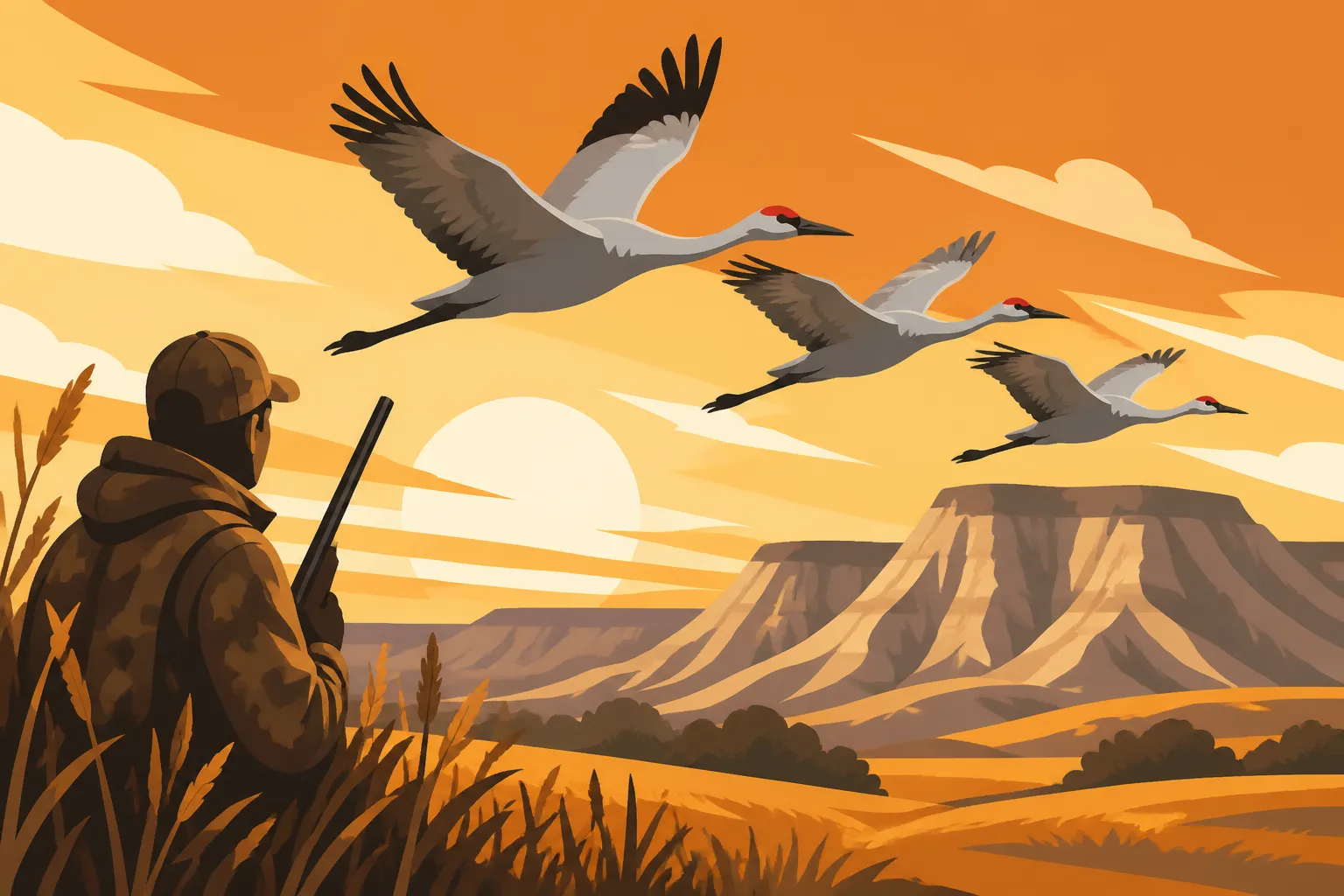
Sandhill cranes are truly imposing birds, standing quite tall, often up to four feet with a wingspan that can reach six to seven feet. Their overall plumage is typically a grayish-brown, sometimes appearing rusty or reddish-brown due to iron staining from the wetlands they inhabit. What really sets them apart is their distinctive head: they have a bald, red patch of skin on their forehead and crown, which becomes much more vibrant during breeding season, but is still visible during migration. Their long legs are dark, and their bills are long, straight, and pointed.
In flight, they hold their long necks and legs straight out, a key difference from herons, which typically fly with their necks tucked in an S-curve. Their wings beat with slow, powerful strokes. When observed on the ground, they have a somewhat elegant, stately walk. Their impressive size and shape, particularly that striking red patch on their head, are the primary visual cues to look for. You really can't mistake them once you know what you're looking for; they just have a presence about them that is unique.
The Unmistakable "Trumpet" Call
Perhaps even more distinctive than their appearance is the sandhill crane's call. It's a loud, guttural, rattling bugle or trumpet that can carry for miles, especially on a still morning or evening. This call is produced by their unusually long trachea, which coils into their sternum like a French horn. It’s often described as a "ker-r-r-o-o-o" or "gar-oo-oo-a" sound, and it's unlike any other bird call you'll hear on the South Dakota prairie.
They use these calls for a variety of purposes: to communicate with flock members, to warn of danger, and to reinforce pair bonds. When a large flock is approaching or leaving a roost, the cacophony of thousands of these calls is absolutely unforgettable. Learning to recognize this call by ear is a crucial skill for any hunter or bird watcher. Often, you'll hear them long before you see them, especially when they're high in the sky. This auditory cue is often the first indication that a group of cranes is in the vicinity, prompting you to scan the horizon.
Differentiating From Other Large Birds
In South Dakota, there are a few other large birds that could, at a quick glance, be mistaken for sandhill cranes. The most common confusion arises with Canada geese and great blue herons.
Let's break down the differences:
| Feature | Sandhill Crane | Canada Goose | Great Blue Heron |
|---|---|---|---|
| Size & Build | Very tall, slender body, long neck/legs | Stocky, shorter neck/legs | Tall, slender body, long neck/legs |
| Color | Grayish-brown, rusty tints, red crown | Brown body, black neck/head, white chinstrap | Bluish-gray, white head |
| Head/Neck in Flight | Neck and legs extended straight | Neck extended, legs tucked | Neck tucked in S-curve, legs extended |
| Call | Loud, rattling bugle/trumpet | Honking, squawking | Hoarse croak |
| Habitat | Agricultural fields, wetlands, shallow water | Fields, open water, urban areas | Shallow water, marshes, shorelines |
Canada geese are much stockier, have shorter legs, and their prominent black neck and white chinstrap are unmistakable. Their calls are a familiar honk, not the crane's trumpet. Great blue herons, while tall with long legs, have a more slender body, a bluish-gray color, and as mentioned, fly with their necks tucked back. They are also typically found actively fishing in shallower waters, whereas cranes are often feeding in fields. Always take a moment to confirm identification, especially if you're carrying a firearm. Proper identification is not only about following the law but also about respecting our diverse wildlife.
South Dakota Sandhill Crane Hunting: Regulations and Opportunities
Hunting sandhill cranes in South Dakota offers a unique and challenging experience. However, it's crucial to understand the specific regulations and licensing requirements to ensure a legal and ethical hunt. Unlike pheasants or deer, crane hunting has its own set of rules that you absolutely need to follow.
Seasons, Zones, and Permit Requirements
South Dakota participates in a federally regulated sandhill crane season, which typically runs for a limited period during the fall migration. The state is divided into specific hunting zones for sandhill cranes, usually mirroring the federal management units. It's imperative to consult the current year's South Dakota Game, Fish and Parks (GFP) hunting handbook for the precise season dates and zone boundaries, as these can change annually based on population surveys and federal guidelines.
In addition to your regular hunting license and federal duck stamp, sandhill crane hunters are often required to possess a special sandhill crane permit. This permit is usually free but mandatory and helps wildlife agencies track harvest data. You might register for this permit when purchasing other licenses, or it might be a separate registration process. Make sure you don't overlook this critical step, as hunting without the proper permit, even with all other licenses in order, is a violation. Programs like South Dakota Waterfowl Seasons and Zones will help you get an overview, but for cranes, always check the specific crane regulations.
Daily Bag and Possession Limits
Like all migratory bird hunts, sandhill cranes have strict daily bag and possession limits. The daily bag limit specifies how many cranes you can harvest in a single day, while the possession limit dictates the maximum number of cranes you can have in your possession at any given time, including those already taken home and stored. These limits are set to ensure sustainable populations and can vary from year to year.
Typically, the daily bag limit for sandhill cranes is modest, often around two or three birds per hunter. The possession limit is usually two or three times the daily limit. It's vital to count your birds carefully and adhere strictly to these numbers. Over-bagging is a serious offense with significant penalties. Always know your limits before you head out, and if you're hunting with a group, keep track of the combined harvest to avoid any accidental violations. There's no pride in taking more than your fair share; ethical hunting means respecting the resource.
Essential Licenses and Stamps
To legally hunt sandhill cranes in South Dakota, you'll need several key items beyond just the special crane permit:
- South Dakota Hunting License: This is your basic state hunting license. Non-residents will need a nonresident hunting license, which often covers small game and allows you to add migratory bird endorsements.
- Federal Duck Stamp: While sandhill cranes are not ducks, they are managed under the Migratory Bird Treaty Act, and therefore, a current Federal Migratory Bird Hunting and Conservation Stamp (often called a "Duck Stamp") is required for all hunters 16 years of age or older.
- South Dakota Migratory Bird Certification (HIP Registration): All migratory bird hunters in South Dakota, regardless of species, must register with the Harvest Information Program (HIP). This is a free registration that helps gather crucial data on migratory bird harvest numbers. You typically complete this when purchasing your state hunting license or other migratory bird permits. South Dakota HIP Registration is mandatory.
- Habitat Stamp: South Dakota also requires a state habitat stamp, which contributes to vital habitat conservation efforts across the state. This is usually purchased alongside your other licenses.
These requirements ensure that hunters are contributing to conservation efforts and that wildlife agencies have the necessary data to manage populations effectively. Neglecting any of these steps could result in fines or loss of hunting privileges, so double-check everything before you leave for your hunt. Websites like GoHunt can often help you navigate the various license requirements and ensure you're covered for your specific hunt plan, often linking directly to state GFP resources.
Strategies for a Successful Sandhill Crane Hunt
Hunting sandhill cranes requires a blend of scouting, preparation, and patience. They are incredibly wary birds, with excellent eyesight and a strong flight pattern. Success often hinges on understanding their routines and setting up in just the right spot. It's an active hunt, but one that rewards meticulous planning.
Decoy Spreads and Blind Concealment
Setting up an effective decoy spread is fundamental to a successful crane hunt. Since cranes are very large, you'll need large, realistic decoys. Full-body decoys are often preferred, but silhouette decoys can also be effective, especially if you have a large spread. The key is quantity and realism. Cranes are social birds, and a large spread signals safety and a good food source. Place your decoys in an open field, mimicking feeding or resting cranes. Often, hunters will create a 'landing zone' or gap in the middle of their spread where they expect the cranes to approach.
Concealment is equally critical. Cranes have exceptional eyesight, and they will flare at the slightest hint of danger. Layout blinds, similar to those used for goose hunting on Layout Blinds on South Dakota Stubble, are highly effective in open fields. Ensure your blind is thoroughly brushed in with local vegetation to break up its outline. Natural cover like pivot corners, tree lines, or elevated field edges can also work, but always prioritize blending in. A well-placed blind that is completely hidden is often the difference between cranes circling warily and committing to your spread. Remember, they are constantly scanning for threats from their lofty position.
Calling Techniques That Bring Them In
Just as important as decoys is the ability to call sandhill cranes effectively. Crane calls, often electronic, mimic their natural rattling bugle. The goal is to replicate the sounds of a contented flock feeding and interacting. Unlike duck or goose calling, which can involve aggressive hail calls, crane calling is often more about rhythm and realism to convey safety and invitation.
Listen to real crane calls and try to imitate their cadence. You'll want to use calls to get their attention when they're distant, then switch to softer, more contented calls as they approach, signaling that everything is safe. Sometimes, less is more; too much erratic calling can spook them. Observing how real cranes communicate on the ground or in the air will be your best teacher. Practice is key, as is knowing when to call and when to be silent. The combination of realistic calling and a convincing decoy spread creates an irresistible illusion for passing cranes.
Shot Selection and Ammunition
When it comes to ammunition for sandhill cranes, you'll need something with enough power and pellet size to bring down these large, hardy birds. Steel shot is typically required for migratory bird hunting, so lead shot is generally off-limits. Common choices include steel shot in sizes BB, 1, or 2, in larger gauge shotguns like 12-gauge, and sometimes even 10-gauge. High-velocity loads are preferred to ensure sufficient energy transfer at typical shooting distances.
Choke selection is also important. Modified or improved modified chokes often provide a good balance between pattern density and spread, effective for birds that can come in fast and often offer limited shooting windows. Remember, these are big birds, and clean kills are paramount. Don't take marginal shots; wait for cranes to commit to your spread and offer a clear, ethical shot. It’s also wise to practice shooting at moving targets to get comfortable with leading these fast-flying birds. While you might use a Rifle Calibers for South Dakota Antelope for big game, a shotgun is the only legal and ethical tool for cranes.
Scouting for Prime Crane Country
Effective scouting is the bedrock of any successful sandhill crane hunt. You can’t just show up on opening day and expect to find birds. Cranes are creatures of habit during migration, often using the same fields and roosting areas day after day until weather or hunting pressure changes their patterns. Start your scouting well before the season, identifying key feeding fields and potential roosting sites. Drive rural roads, use binoculars, and look for concentrations of birds.
Pay close attention to recently harvested corn or grain fields. Look for crane tracks or droppings, which indicate recent use. Observe their flight paths in the mornings and evenings, noting where they fly from and to. This will help you pinpoint their travel corridors. Once you've identified a promising area, secure permission from landowners if it's private land. If you're on public ground, use resources like the South Dakota Public Hunting Atlas or apps like GoHunt to identify Walk-In Areas or Game Production Areas that offer the necessary habitat and are open to hunting. Hunting Food Plots and Corn Edges is a good read, as similar principles apply to crane scouting. Being on the ground and watching their movements is irreplaceable.
Disclaimer
This article is for general informational purposes only and does not constitute professional advice. Laws, prices and regulations vary by location and change over time. Consult a qualified professional for guidance on your specific situation.