South Dakota Wildlife Violation Penalties
There’s nothing quite like the dream of a South Dakota hunt, whether it's chasing pheasants across golden stubble or glassing for mule deer on the breaks. But that dream can turn into a nightmare if you stumble into a wildlife violation. Navigating the rules and regulations can feel like a labyrinth, and the consequences for even a seemingly small misstep are far more severe than many realize. This guide will walk you through the types of violations, the penalties you face, and the broader impact a single mistake can have on your hunting future.
Understanding the Legal Landscape of South Dakota Hunting
Hunting in South Dakota isn't just a pastime; it's a privilege, and with that privilege comes a significant responsibility to understand and abide by the laws designed to protect wildlife and ensure fair chase. Many hunters, especially those new to the state or non-residents, can feel overwhelmed by the sheer volume of regulations, from licensing requirements to specific season dates and bag limits. The South Dakota Game, Fish and Parks (GFP) department is the authority, and they don't take violations lightly. It's not enough to think you know the rules; you need to know them, definitively.
The Critical Role of GFP Conservation Officers
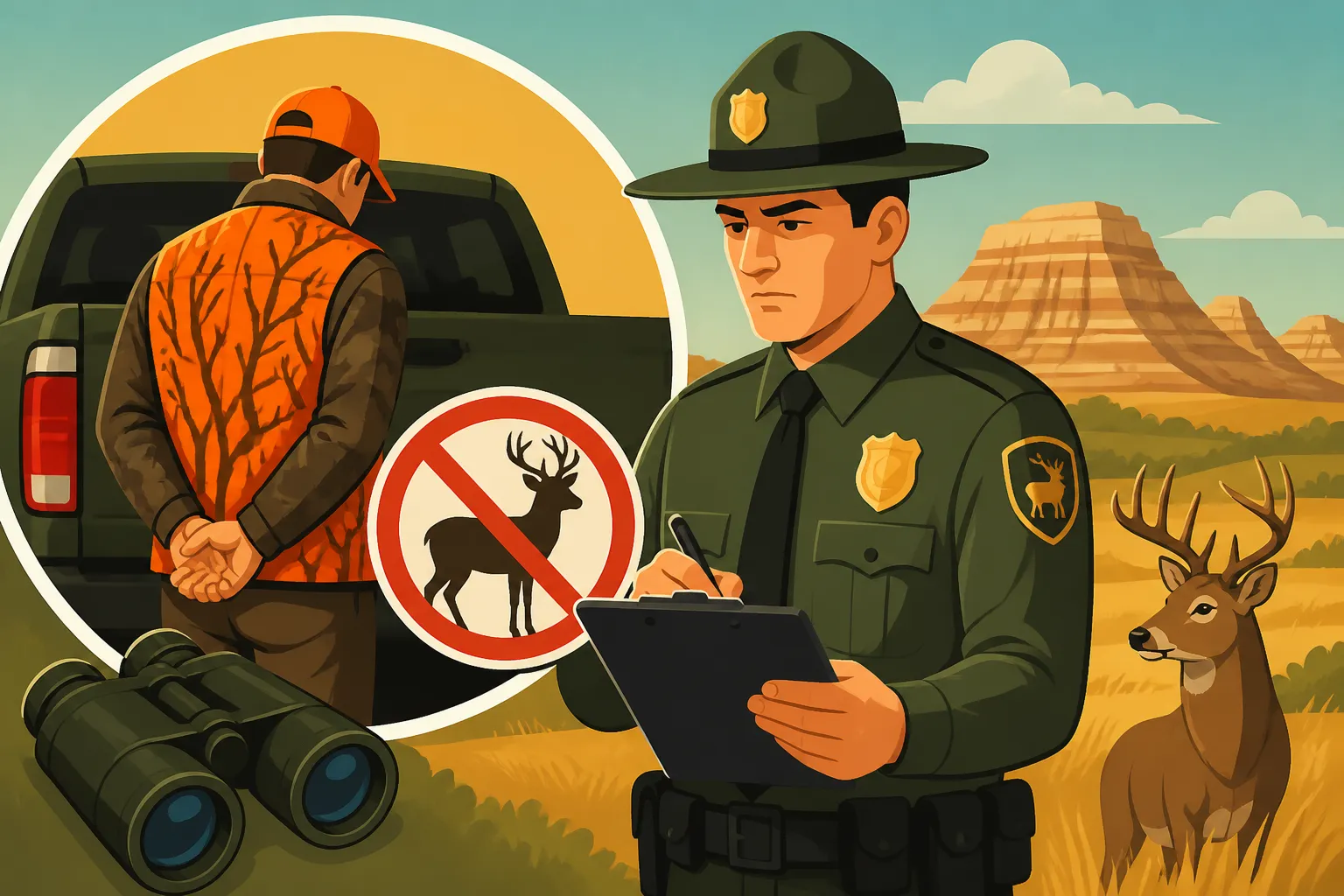
Think of South Dakota's Conservation Officers (COs) as the guardians of the state's natural resources. Their job isn't just to catch lawbreakers; it's to educate the public, manage wildlife, and enforce all hunting, fishing, and boating regulations. When a CO encounters a potential violation, they are authorized to investigate, issue warnings, write citations, seize evidence, and even make arrests. They are highly trained professionals who know the law inside and out, and they are acutely aware of the nuances that differentiate an honest mistake from blatant disregard or, worse, intentional poaching. An encounter with a CO should always be treated with respect and honesty, as your demeanor can sometimes influence the outcome of a situation. They are often the first line of defense against habitat destruction and illegal hunting practices that can severely impact wildlife populations.
Where to Find Official Regulations and Stay Informed
The single most important document for any hunter in South Dakota is the annual Hunting Handbook, published by the GFP. This isn't just a suggestion; it's your primary resource. You can pick up a physical copy at GFP offices and many retailers, or access the digital version on the GFP website. It contains all the updated season dates, bag limits, licensing requirements, and specific regulations for each game species. While online forums and word-of-mouth advice can be tempting, they are no substitute for the official word.
Beyond the handbook, the GFP website is a treasure trove of information, offering detailed legal statutes, press releases about regulation changes, and FAQs. Staying current is crucial, as regulations can change from year to year, especially concerning drought conditions, disease outbreaks, or population fluctuations. For those who want to dive even deeper into understanding draw odds and season specifics across various states, using a comprehensive platform like GoHunt can be invaluable for cross-referencing information and ensuring you're fully prepared before you even apply for a license. Always double-check any information with the official GFP sources to avoid potential misunderstandings. Ignorance of the law is never a valid defense.
Common Wildlife Violations and Their Initial Penalties
Many violations stem from a lack of attention to detail or simply not understanding a specific regulation. While some are more egregious than others, even minor infractions can carry significant penalties, leading to fines, restitution, and the suspension of hunting privileges. It’s imperative to treat every hunt with diligence and respect for the rules.
Licensing and Tagging Infractions
One of the most straightforward, yet frequently violated, rules involves proper licensing and tagging. Simply put, if you’re hunting, you need the correct license for the game you're pursuing and the proper tags if required.
- Hunting Without a Proper License: This is a big one. Whether it’s hunting out of state as a resident, hunting big game without a valid tag, or simply forgetting to purchase your basic small game license, the consequences are severe. You'll face substantial fines, often in the hundreds of dollars, and potentially have your hunting privileges suspended for a period of time. Imagine planning a trip for South Dakota Pheasant Season and Licences and realizing you bought the wrong type of license – that dream hunt could end before it even begins.
- Failure to Tag or Improper Tagging: Once you harvest a big game animal in South Dakota, proper tagging is legally mandated. This typically involves attaching your tag to the animal immediately, validating it, and ensuring it stays with the carcass until processed. Forgetting to tag, improperly validating, or losing your tag and not reporting it can lead to fines, confiscation of the animal, and potential license suspension. The GFP takes accurate harvest reporting seriously, as it's crucial for wildlife management, and incorrect tagging disrupts that process. Make sure you understand the specific rules for South Dakota Harvest Reporting Rules for each species.
Bag Limit and Season Violations
These violations directly impact wildlife populations and are treated with considerable gravity. Respecting bag limits and season dates is fundamental to sustainable hunting.
- Exceeding Daily or Possession Limits: Every species has specific daily and possession limits. For pheasants, it might be three roosters daily and fifteen in possession. For ducks, it's a specific number of various species. Taking more than the legal limit, even accidentally, is a violation. The penalty usually involves fines, the forfeiture of all illegally taken game, and a suspension of hunting privileges. If you take an extra rooster, not only will you be fined, but that bird will be confiscated, and you could lose the ability to hunt for a season or more.
- Hunting Out of Season: This means pursuing game outside of the designated hunting dates. Whether it's a week too early for deer or a day after the duck season closes, hunting out of season is a serious offense. This often results in higher fines than bag limit violations, forfeiture of any harvested animals, and lengthy license suspensions. The seasons are set after extensive biological study, and hunting outside them can disrupt breeding cycles or disproportionately impact vulnerable populations. For detailed information on specific season dates, consulting the South Dakota Hunting Handbook Release is always your best bet.
Trespassing and Public Land Misuse
Accessing hunting grounds legally is paramount. Respect for private property and proper use of public lands are non-negotiable aspects of ethical hunting.
- Hunting on Private Land Without Permission: South Dakota has vast amounts of private land, and much of its best hunting opportunities lie there. However, hunting on private property without express permission from the landowner is illegal. This isn't just a civil matter; it's a criminal offense. Penalties include significant fines, potential jail time, and the complete loss of hunting privileges. Always secure South Dakota Landowner Permission Basics before you step foot on private ground. Even if it's "just a corner" or a small strip, if it's not yours and you don't have permission, you're trespassing.
- Unauthorized Vehicle Use on Public Land: Public hunting areas like Game Production Areas or National Grasslands often have specific rules regarding vehicle access. Driving off-road, blocking access roads, or using motorized vehicles in designated "walk-in only" areas are common violations. These can result in fines, damage to habitat, and even the impoundment of your vehicle. Be sure to check maps and signage carefully when hunting areas like South Dakota Game Production Areas or Walk-In Areas to understand vehicle restrictions.
Road Hunting and Shooting from Vehicles
These are among the most dangerous and unethical violations, posing risks to public safety and fair chase principles.
- Shooting From or Across a Public Highway/Roadway: South Dakota has specific laws regarding shooting from a vehicle, on a roadway, or across a roadway. This is a public safety issue, as projectiles can travel far and unexpectedly, endangering homes, livestock, and other people. Violations carry hefty fines, potential jail time, and license revocation. Always exit your vehicle and ensure you are well clear of any roadway or right-of-way before taking a shot. Familiarize yourself with all South Dakota Road Hunting Laws to avoid accidental infractions.
Summary of Common Violations and Penalties
To give you a clearer picture, here's a table outlining some common violations and the typical range of penalties. Keep in mind that these are general guidelines; actual penalties can vary based on circumstances, judge discretion, and any aggravating factors.
| Violation Type | Typical Fines (First Offense) | License Suspension (First Offense) | Additional Consequences |
|---|---|---|---|
| Hunting Without Proper License | $200 – $500+ | 1-3 years | Forfeiture of game, hunting equipment may be seized |
| Failure to Tag Big Game | $150 – $400+ | 1 year | Forfeiture of game |
| Exceeding Daily Bag Limit | $100 – $300+ per animal | 6 months – 2 years | Forfeiture of illegally taken game |
| Hunting Out of Season | $300 – $1,000+ | 2-5 years | Forfeiture of game, hunting equipment seized |
| Trespassing to Hunt | $200 – $500+, potential jail time | 1-3 years | Civil damages, landowner's request for no-trespass order |
| Shooting From/Across Roadway | $300 – $1,000+ | 1-3 years | Public safety charges, potential jail, weapon seizure |
| Unauthorized Vehicle Use on Public Land | $100 – $300+ | None (typically) | Vehicle impoundment, habitat damage fines |
Aggravating Factors and Escalated Consequences
While the baseline penalties for many violations are already stiff, certain factors can drastically escalate the severity of the consequences. This is where a simple mistake can quickly spiral into a life-altering legal battle. Understanding these aggravating factors is crucial for anyone who ventures into the field.
Intent and the Serious Crime of Poaching
The law often differentiates between an accidental violation and an intentional act. An honest mistake, while still punishable, might be treated differently than a deliberate attempt to break the law. Poaching, by definition, is the illegal killing or removal of wildlife. In South Dakota, poaching is not just a misdemeanor; depending on the species and the number of animals involved, it can quickly become a felony offense.
Imagine a scenario where a hunter "accidentally" shoots an antlerless deer during a buck-only season, or perhaps exceeds the bag limit for pheasants. While not good, these might be classified as misdemeanors. Now, consider a group that intentionally hunts at night with spotlights, using illegal methods, or kills multiple trophy bucks and leaves them to rot. That's poaching, and the consequences are brutal. Felony poaching charges can lead to:
- Massive Fines: We're talking thousands, even tens of thousands of dollars.
- Restitution: Beyond fines, you'll be ordered to pay restitution to the state for the fair market value of the animals illegally taken. A trophy elk could easily carry a restitution value in the five-figure range.
- Extended Jail or Prison Time: Felony poaching can result in years behind bars, not just a few days.
- Lifetime License Revocation: For serious offenses, South Dakota, like many states, can permanently revoke all hunting, fishing, and trapping privileges. This means your hunting career, forever, is over.
Cases involving protected species, such as Black Hills elk or mountain goats, or incidents where multiple animals are taken, are almost always treated as the most severe forms of poaching. The state invests heavily in wildlife, and they are fiercely protective of these resources. If you spot any suspicious activity, remember that you can Reporting Poaching in South Dakota through the Turn In Poachers (TIP) program.
Prior Offenses and Interstate Compacts
Your past record matters, not just in South Dakota but potentially across state lines. A hunter with a clean record might receive more leniency for a minor infraction than someone who has multiple previous violations. Prior offenses clearly indicate a pattern of disregard for wildlife laws, and judges will often impose maximum penalties.
Furthermore, South Dakota is part of the Wildlife Violator Compact. This agreement means that if you lose your hunting privileges in South Dakota due to a violation, those privileges are also suspended in the 48 other member states (and growing!). This compact was established to ensure that wildlife criminals couldn't simply cross state lines to continue their illegal activities. So, if you're a resident of Michigan and you lose your hunting license in South Dakota for five years, you can't hunt in Michigan, or any other compact state, for those same five years. This effectively means a single, serious violation can end your hunting opportunities across the vast majority of the country. This is a major deterrent and a powerful tool for conservation officers. For those interested in how these broad regulations affect application strategies, platforms like GoHunt also offer detailed information on draw odds and regulations, which can help prevent inadvertent violations.
Equipment Forfeiture
One of the most immediate and often painful consequences of a serious wildlife violation is the forfeiture of your hunting equipment. This isn't just a minor inconvenience; it can mean losing thousands of dollars worth of gear.
- Firearms and Vehicles: In cases of egregious poaching, or repeated serious offenses, law enforcement has the authority to seize firearms, vehicles (trucks, ATVs, UTVs), and even boats used in the commission of the crime. Once forfeited, these items are often sold at auction or repurposed by the state. Imagine losing your prized hunting rifle, your ATV used for access, or even your pickup truck because of a poor decision in the field. This loss adds a significant financial blow on top of fines and legal fees.
- Other Gear: Optics, decoys, game calls, and other hunting accessories can also be seized if directly used in the violation. This acts as a powerful disincentive and serves as a tangible reminder of the cost of breaking wildlife laws.
The state's ability to seize property is a testament to how seriously they view wildlife crime. It’s a direct financial punishment that can hit harder than a fine for some hunters, representing not just money but cherished tools of their passion.
The Broader Impact of a Wildlife Violation
The ramifications of a wildlife violation extend far beyond the courtroom and your wallet. They can touch every aspect of your life, from your finances and reputation to the very future of hunting itself. It's not just about what happens to you personally; it's about the bigger picture.
The Financial and Legal Burden
Let's be clear: a wildlife violation in South Dakota is expensive. It's not just the initial fine you see on the ticket. The financial burden can quickly spiral out of control.
- Fines and Restitution: As discussed, fines can range from a few hundred dollars to many thousands, especially for serious poaching offenses. On top of that, restitution for the market value of illegally taken animals must be paid. A big game animal, particularly a trophy, can carry a restitution value that rivals a down payment on a house.
- Court Costs and Legal Fees: If you contest the charge or if it's a serious enough offense to warrant a court appearance, you'll incur court costs. Hiring an attorney, especially one specializing in environmental or wildlife law, can cost thousands more. These fees add up incredibly quickly.
- Lost Wages and Travel: Dealing with a violation means time away from work for court dates, meetings with lawyers, or even mandatory hunter education courses. If you're an out-of-state hunter, this also means travel expenses to return to South Dakota for legal proceedings.
- Impact on Employment/Reputation: For individuals in professions requiring licenses (e.g., commercial drivers, realtors, teachers), a criminal conviction, even for a wildlife violation, could jeopardize their professional standing. Furthermore, an online search of public records could reveal your conviction, potentially impacting future employment opportunities or personal reputation. It's not just a hunter's issue; it's a citizenship issue.
The Stinging Loss of Hunting Privileges
For many of us, hunting isn't just a hobby; it's a fundamental part of our identity, a connection to nature, and a cherished tradition. The loss of hunting privileges can be devastating.
- Duration of Revocation: Suspensions can range from one year for minor infractions to a lifetime ban for severe poaching. Imagine being told you cannot hunt for five years, or ever again. This means no more pheasant seasons, no more deer hunts, no more chasing Spot-and-Stalk Antelope Hunting in South Dakota. It's a complete severance from a passion.
- Nationwide Impact via Compacts: As mentioned, the Wildlife Violator Compact means this loss isn't confined to South Dakota. Your ability to hunt in most other states will also be revoked. This is a far-reaching consequence that often takes hunters by surprise, suddenly realizing their hunting opportunities across the entire country are gone. Even something as seemingly minor as failing to report an animal or missing an application deadline for South Dakota Deer Application Deadline can contribute to a pattern that, if repeated, could jeopardize your future hunting opportunities.
Damage to Hunter Image and Conservation Efforts
Every hunter has a role to play in upholding the positive image of hunting and contributing to conservation. A violation, especially a public one, damages this collective effort.
- Erosion of Public Trust: When news of poaching or severe violations breaks, it fuels anti-hunting sentiment and erodes the public's trust in hunters as ethical conservationists. It plays into negative stereotypes and makes it harder for wildlife agencies to gain support for vital management programs.
- Funding for Conservation: Hunting license sales and excise taxes on hunting equipment (through the Pittman-Robertson Act) are the primary funding mechanisms for wildlife conservation in the U.S. When hunters lose their privileges, they stop buying licenses and equipment, directly reducing the funds available for habitat preservation, species management, and law enforcement. Every license purchase, including for things like South Dakota Nonresident Licence Costs, directly contributes to these funds.
- Strain on Resources: GFP resources are finite. Investigations into violations divert time and money that could otherwise be spent on habitat improvement projects, population surveys, or youth education programs. This means less for everyone.
- The Ethical Imperative: Beyond the legal aspects, there's an ethical responsibility. True hunters respect the game, the land, and the rules. A violation betrays that ethos and harms the community of responsible hunters. It’s why understanding the rules, especially on complex issues like Hunting Pressure Patterns on Walk-In Areas or South Dakota Trapping and Furbearer Seasons, is not just about avoiding fines, but about being a good steward of the resource.
Ultimately, a South Dakota wildlife violation is never "just a ticket." It's a cascade of consequences that impacts your finances, your freedom, your passion, and the very future of hunting for everyone. Understanding these potential outcomes should reinforce the importance of meticulous preparation, unwavering ethics, and diligent adherence to every rule and regulation.
Disclaimer
The information provided in this guide is for general informational purposes only and does not constitute legal advice. Wildlife laws and penalties can change, and individual circumstances can significantly affect outcomes. Always consult the official South Dakota Game, Fish and Parks regulations and, if facing a legal issue, seek advice from a qualified legal professional specializing in wildlife law.