Shooting From a Vehicle in South Dakota
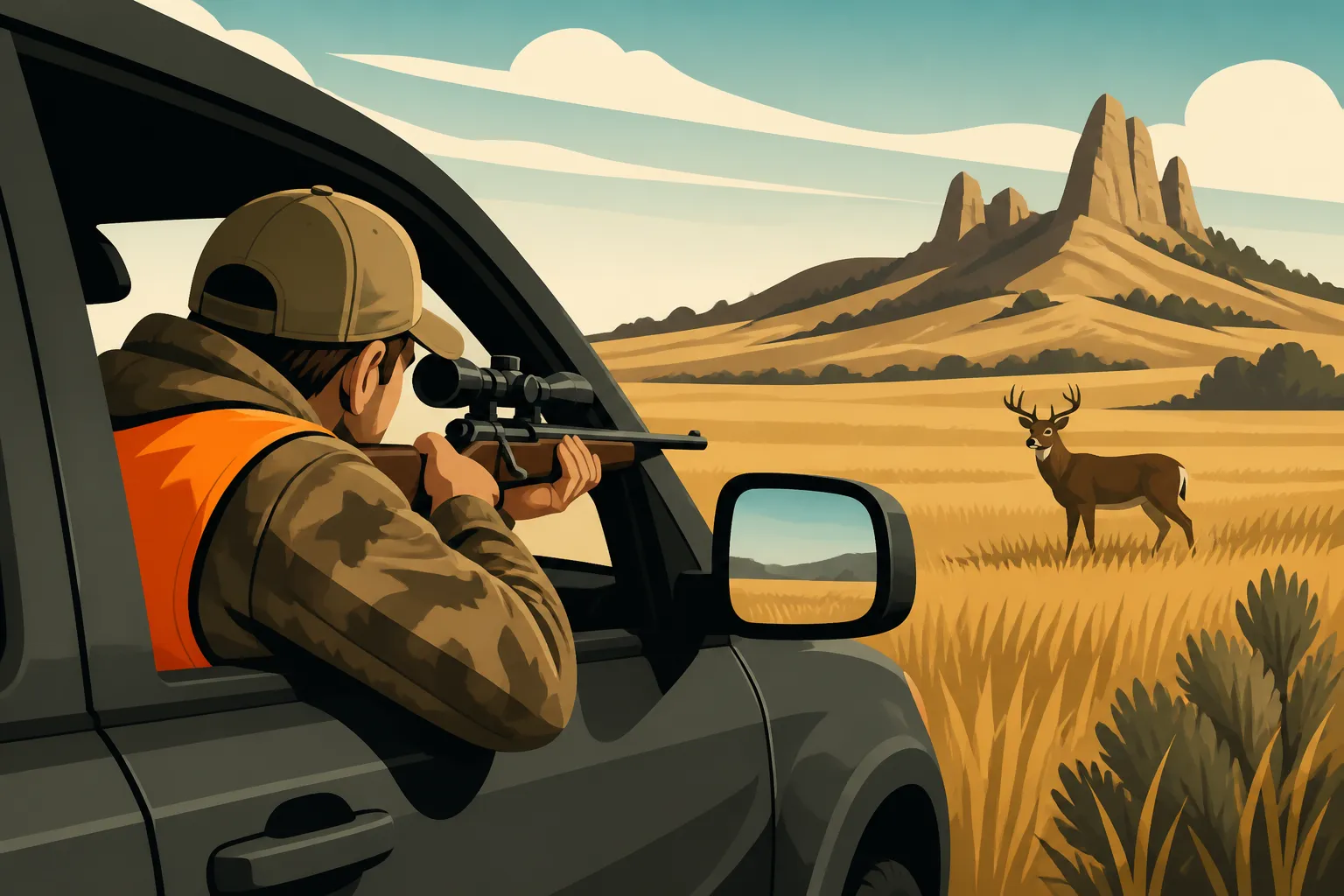
It’s a scenario many of us have faced in the field: you’re driving down a gravel road in South Dakota, scanning the ditch or a field edge, and suddenly you spot a rooster pheasant or a whitetail buck. Your heart jumps, and the immediate thought is often, “Can I just jump out and shoot from here?” The rules around shooting from a vehicle in South Dakota can be confusing, steeped in local lore and often misunderstood. This guide is here to untangle those complexities, ensuring you stay legal, ethical, and safe while hunting our beautiful state.
The Basics of South Dakota's Road Hunting Laws
South Dakota, with its vast network of gravel roads crisscrossing agricultural fields and open prairies, presents unique challenges and temptations when it comes to hunting near roadways. The key to understanding what's permissible revolves around grasping the concept of "road right-of-way" and distinguishing between different game animals.
Understanding the Road Right-of-Way
When you're out hunting in South Dakota, it's crucial to understand what exactly constitutes a public road and its associated right-of-way. Generally, a public road includes not just the paved or graveled driving surface, but also the ditches, shoulders, and sometimes a strip of land beyond. The exact width can vary by county and road type, but typically extends 33 feet from the centerline on each side for most rural roads. This means that even if you're standing in what looks like a ditch, you might still be within the legal road right-of-way.
The law in South Dakota is quite clear: it is illegal to shoot a firearm from within the right-of-way of any public highway, or to shoot across a public highway, whether it's paved, graveled, or simply a graded dirt track. This often catches hunters off guard, especially those new to the state or those who have heard old tales of "ditch hunting." The popular image of a hunter stepping out of a truck and taking a shot from the roadside is, in almost all cases, illegal. The intent behind this rule is primarily public safety, preventing bullets from traveling unpredictably and hitting other vehicles, homes, or people who might be using the road or adjacent properties. It also serves to prevent game animals from being taken too easily, maintaining a fair chase standard.
One of the most common mistakes I’ve seen over the years is hunters assuming that because a ditch isn't "private land," it must be fair game. While a ditch might technically be public right-of-way, it falls under the same restrictions as the road surface itself. Always assume that if you are standing on or immediately next to the road, you are within the restricted zone for shooting. When scouting a new area, understanding the nuances of how a county defines its section lines is vital, and resources like the South Dakota Hunting Atlas or a mapping app such as GoHunt can be invaluable in visualizing these boundaries. To dive deeper into specific land definitions, you might find more helpful information on "Road Right-of-Way Width on South Dakota Roads".
Specifics for Different Game Animals
The rules around shooting from a vehicle, or more precisely, within the road right-of-way, generally apply across the board for all game animals in South Dakota, with no real exceptions for small game. This is a point of frequent misunderstanding, especially for pheasant hunters. There is no special "ditch hunting" provision for pheasants, grouse, or any other small game that allows you to shoot from the road or its immediate vicinity.
For big game like deer, antelope, or elk, the prohibition is just as strict, if not more so, given the larger caliber firearms involved and the potential for longer-range shots. You simply cannot use a vehicle as a shooting platform or shoot from the roadside when pursuing big game. This emphasizes ethical hunting practices and ensures that animals are pursued fairly, away from the immediate hazards of public thoroughfares. Imagine a deer running across a busy road after being shot from a truck – it’s a recipe for disaster.
The key takeaway here is consistency: South Dakota wants hunters to be off the road, out of the right-of-way, and safely established in legitimate hunting areas before taking a shot. This protects the public, the animals, and the integrity of hunting. If you’re ever in doubt, the safest and most legal action is always to get out of your vehicle, move a significant distance from the road, confirm you are on land where you have permission to hunt, and then proceed.
Why These Rules Exist and What They Protect
These laws aren't just arbitrary lines drawn on a map; they are rooted in fundamental principles of public safety, ethical hunting, and respect for private property. Understanding the "why" behind these regulations can help hunters appreciate their importance and adhere to them more conscientiously.
Public Safety and Ethical Hunting
The most immediate and critical reason for prohibiting shooting from or across a public road is public safety. Think about the trajectory of a bullet: once fired, it can travel significant distances, often far beyond the intended target. When shooting from a vehicle, especially on a relatively flat prairie, there's a serious risk of a bullet ricocheting or simply continuing its path into unseen hazards—another vehicle, a farmstead, livestock, or even innocent bystanders.
Beyond the obvious dangers, these regulations also uphold the spirit of ethical hunting and fair chase. Hunting from a vehicle or immediately adjacent to a road often gives a hunter an unfair advantage, reducing the challenge and inherent sportsmanship of the pursuit. It can turn a hunt into less of a skill-based endeavor and more of a drive-by shooting opportunity, which is simply not what responsible hunting is about. We, as hunters, have a duty to ourselves, the game, and the non-hunting public to conduct ourselves with the highest standards of ethics. When considering the long-term sustainability of hunting, maintaining a positive public image is paramount, and safe, ethical practices are a cornerstone of that.
Furthermore, neglecting these safety measures can lead to tragic accidents. Every year, across the country, incidents occur because hunters fail to correctly identify their target or their backstop. Shooting from a roadside, where the environment is constantly changing with passing vehicles and unpredictable human activity, dramatically increases this risk. The state wants to minimize any chance of accidental injury or death related to hunting, and these rules are a direct response to that need. It’s about ensuring that everyone, hunter and non-hunter alike, can enjoy South Dakota's outdoors safely.
Protecting Private Property and Landowner Relations
South Dakota is predominantly private land, and the relationship between hunters and landowners is a delicate and vital one. Road hunting laws play a crucial role in protecting private property rights and fostering good relations with the agricultural community. Shooting from a road right-of-way means that a hunter is very close to, if not directly on, private land. This proximity inherently increases the risk of inadvertently shooting onto private property, potentially damaging buildings, fences, or injuring livestock. Even if no damage occurs, simply having bullets flying over or near a landowner’s property without permission is a serious breach of trust and respect.
Imagine being a farmer and constantly worrying about hunters shooting towards your house or your cattle from the road. It would be incredibly frustrating and damaging to your sense of safety and property rights. These laws act as a buffer, creating a clear demarcation where hunting activity, especially the discharge of firearms, is generally prohibited. This helps to prevent accidental trespass, which is a major concern for landowners. Even retrieving a downed animal from private land requires permission, and knowing "South Dakota Trespass Law and Posted Land" is critical for every hunter.
The health of our hunting traditions in South Dakota relies heavily on the goodwill of landowners. When hunters respect boundaries and adhere to regulations designed to protect private property, it builds trust and makes it more likely that landowners will continue to welcome ethical hunters onto their ground or participate in programs like the Walk-In Area program. Conversely, careless or illegal actions by a few can quickly sour relationships for many. It's a collective responsibility to ensure we are always aware of our surroundings, our position relative to roads and property lines, and to always seek permission before venturing onto private land.
Practical Tips for Staying Legal and Ethical
Navigating South Dakota's hunting landscape while remaining legal and ethical can seem daunting, but with the right tools and mindset, it's entirely manageable. The core principle is always to err on the side of caution and respect.
Using Mapping Tools and Confirming Boundaries
In today’s hunting world, mapping technology is an absolute game-changer, and it's your best friend for staying legal and out of trouble. Applications like the South Dakota GFP Public Hunting Atlas or a subscription service such as GoHunt provide incredibly detailed overlays of land ownership, public access areas, and road rights-of-way. Before you even step foot out of your vehicle, you can use these tools to confirm exactly where you are standing and what lies ahead.
Here's how you might use them effectively:
- Identify Public Land: Clearly distinguish between private and public hunting opportunities. Look for Game Production Areas (GPAs), Walk-In Areas (WIAs), or National Grasslands. Knowing your precise location relative to these boundaries is essential.
- Road Right-of-Way Visualization: Many advanced mapping apps, including GoHunt, offer layers that can show you the typical width of road rights-of-way. This visual cue can prevent you from accidentally hunting in a prohibited zone. Always remember that even if you've pulled off the gravel and are standing in the ditch, you might still be within that legal right-of-way.
- Private Land Boundaries: These apps are invaluable for identifying property lines. If you're hunting adjacent to private land, confirm you are not inadvertently trespassing or shooting across a boundary onto land you don't have permission for. It’s always best to be a good distance inside the legal hunting area.
- Pre-Season Scouting: Spend time with your mapping app before the season opens. Identify potential access points, anticipate where game might be, and, most importantly, pinpoint legal places to stop your vehicle, exit, and walk into cover. This proactive approach drastically reduces on-the-fly confusion and the temptation to make a quick, illegal decision.
Having the knowledge of "Finding Property Lines in South Dakota" and understanding the nuances of local maps will make a huge difference in your hunting season. Never assume; always verify with your mapping tools, and if you have any doubt, don't take the shot.
Safe Handling and Transport of Firearms
Beyond the specific rules about shooting from a vehicle, general firearm safety and transport laws are paramount. In South Dakota, it is generally illegal to carry a loaded rifle or shotgun in or on any vehicle, including cars, trucks, ATVs, or snowmobiles, unless you possess a valid concealed carry permit and the firearm is a pistol or revolver. For shotguns and rifles, they must be unloaded and encased, or dismantled, while in a vehicle on a public highway. "Unloaded" means no round in the chamber, and "encased" typically refers to a gun case, scabbard, or even a soft gun sock.
This rule is about more than just avoiding a citation; it's about accident prevention. A loaded firearm in a moving vehicle, subject to bumps, sudden stops, or accidental handling, is incredibly dangerous. Imagine a scenario where you quickly pull over, grab a loaded firearm, and then trip as you exit the vehicle. The potential for a negligent discharge is very real.
Practically speaking, this means a routine of safe handling:
- When approaching a hunting area, unload and case your firearm before getting in your vehicle.
- Upon arrival, park safely, exit the vehicle, retrieve your cased firearm, and only then, away from the vehicle and the road, should you uncase and load your firearm when you are ready to actively hunt.
- Maintain strict muzzle control at all times, ensuring the firearm is always pointed in a safe direction. This is especially important when moving through thick cover or walking with other hunters. For more on this, check out "Safe Gun Handling on a Bird Drive" and "Muzzle Discipline With Blockers Ahead".
When in Doubt, Get Out and Walk
This is perhaps the simplest, most effective, and most ethical rule of thumb for hunting in South Dakota: When in doubt about whether you can shoot from a particular spot, or if you’re unsure about property lines or road rights-of-way, simply get out of your vehicle and walk.
Walking not only ensures you are legally off the road and properly positioned on land where you have permission (or public access), but it also dramatically enhances your hunting experience.
- See More Game: You'll undoubtedly spot more game and notice subtle sign that you'd miss from a moving vehicle. Often, animals hold tight, allowing a walking hunter to get closer for a better shot.
- Better Angles and Backstops: By moving away from the road, you can often gain a better shooting angle and, crucially, ensure you have a safe, open backstop that won't endanger others or property.
- Physical Activity: It's a great way to stay active and enjoy the physical aspect of hunting. Whether you're working a cattail slough or pushing a shelterbelt, being on foot is part of the challenge and reward.
- Ethical Advantage: It aligns with the spirit of fair chase. You've actively pursued the animal on foot, earning your shot.
Consider exploring "Hunting South Dakota Walk-In Areas" where walking is the primary method of hunting, and understanding "Walking Speed That Holds Roosters" can really improve your success when you're on foot. Stepping out of the truck and putting in the boot leather not only keeps you legal but makes you a better, more successful hunter in the long run.
Common Misconceptions and Penalties
Despite the clear language of the law, certain misconceptions about vehicle hunting persist in South Dakota. Understanding these myths and the serious consequences of violating the rules is crucial for all hunters.
Dispelling "Ditch Hunting" Myths
The term "ditch hunting" is thrown around quite a bit in South Dakota, and it's often at the heart of the confusion surrounding road hunting. Historically, and sometimes still practiced illegally, "ditch hunting" refers to driving along rural roads and shooting pheasants or other game birds as they flush from the roadside ditches. As we've thoroughly covered, this practice, if it involves shooting from or across the road right-of-way, is illegal.
The misconception often stems from a slight misunderstanding of what is permissible. For example, you are allowed to walk in a ditch if it is part of a legal hunting area (e.g., a Walk-In Area or private land where you have permission) and you are not within the restricted right-of-way for shooting. You might even recover a downed bird from a ditch if you can do so without trespassing on posted private land or violating road hunting laws. However, using the vehicle as a means to spot and then immediately shoot from or near the road is where the line is crossed.
It’s important to differentiate:
- Illegal "Ditch Hunting": Shooting a firearm while inside a vehicle or from the road right-of-way (the road surface, shoulder, or immediate ditch) at game animals.
- Legal Ditch Hunting (with caveats): Physically getting out of your vehicle, moving well off the road and out of the right-of-way, ensuring you are on public access land or private land with permission, and then walking and hunting the ditch as part of a larger field or cover strip. In this scenario, the ditch is simply a piece of cover within a legal hunting parcel, not the prohibited roadside.
The rule is designed to ensure safety and ethical hunting, not to prevent hunters from ever utilizing ditches for cover, provided they are doing so legally and safely. Always think of the ditch as part of the adjacent property, and ensure you have permission or public access to hunt that specific land.
Consequences of Violating Road Hunting Laws
Violating South Dakota's road hunting laws carries significant penalties that can range from hefty fines to the loss of hunting privileges, and even the confiscation of firearms and vehicles. These aren't minor infractions; they are taken very seriously by the South Dakota Game, Fish and Parks (GFP) and law enforcement.
Here's a general overview of potential consequences:
- Fines and Fees: Expect substantial monetary fines. These can vary depending on the severity of the violation, whether game was actually taken, and if other offenses (like trespassing) occurred simultaneously.
- Loss of Hunting Privileges: A conviction for road hunting can result in the suspension or revocation of your hunting license, not just in South Dakota but potentially in other states through interstate compacts. This could mean you lose the ability to hunt for several years.
- Confiscation of Equipment: Your firearm used in the commission of the crime, and in some cases, even the vehicle you were in, can be confiscated. This is a severe consequence and a clear deterrent.
- Criminal Charges: Depending on the specific circumstances and any associated dangers or property damage, you could face criminal charges beyond just a wildlife violation.
- Damage to Reputation: A violation can also tarnish your reputation as a responsible hunter, affecting your ability to gain access to private lands in the future.
Ignorance of the law is never an acceptable defense. As hunters, it is our responsibility to know and abide by all regulations. Game wardens are diligent in patrolling and enforcing these laws, and they have the authority to act swiftly. Remember, most of us want to see hunting continue for generations, and upholding the law is a critical part of ensuring that future. If you witness a violation, reporting it to South Dakota GFP is crucial for protecting our shared resources, as outlined in "Reporting Poaching in South Dakota". These laws exist to keep everyone safe and to maintain the integrity of our hunting traditions, and respecting them is non-negotiable.
| Action | Legality in South Dakota (Generally) | Rationale |
|---|---|---|
| Shooting a firearm from a vehicle | Illegal | Public safety, fair chase, prevents accidental discharge |
| Shooting a firearm across a public road | Illegal | Public safety, risk of ricochet or hitting unseen targets |
| Carrying a loaded rifle/shotgun in a vehicle | Illegal (unless cased/dismantled for non-CCW) | Public safety, accident prevention, proper transport of firearms |
| Stopping on the road to scout | Legal (if safe & not obstructing traffic) | Observation is permitted, but no shooting |
| Stepping out of vehicle & shooting from ditch | Illegal (if within road right-of-way) | Ditch is part of right-of-way, same rules apply as road surface |
| Getting out, walking far from road, then shooting | Legal (on public access or private w/ permission) | Ethical hunting, off public right-of-way, proper access confirmed |
| Retrieving downed game from road ditch | Legal (if no trespassing, and safely) | Recovery is allowed, but not the act of shooting from there |
Disclaimer
Always consult the current South Dakota Game, Fish and Parks hunting regulations for the most up-to-date and complete information. State laws can change, and this guide is intended for informational purposes only.