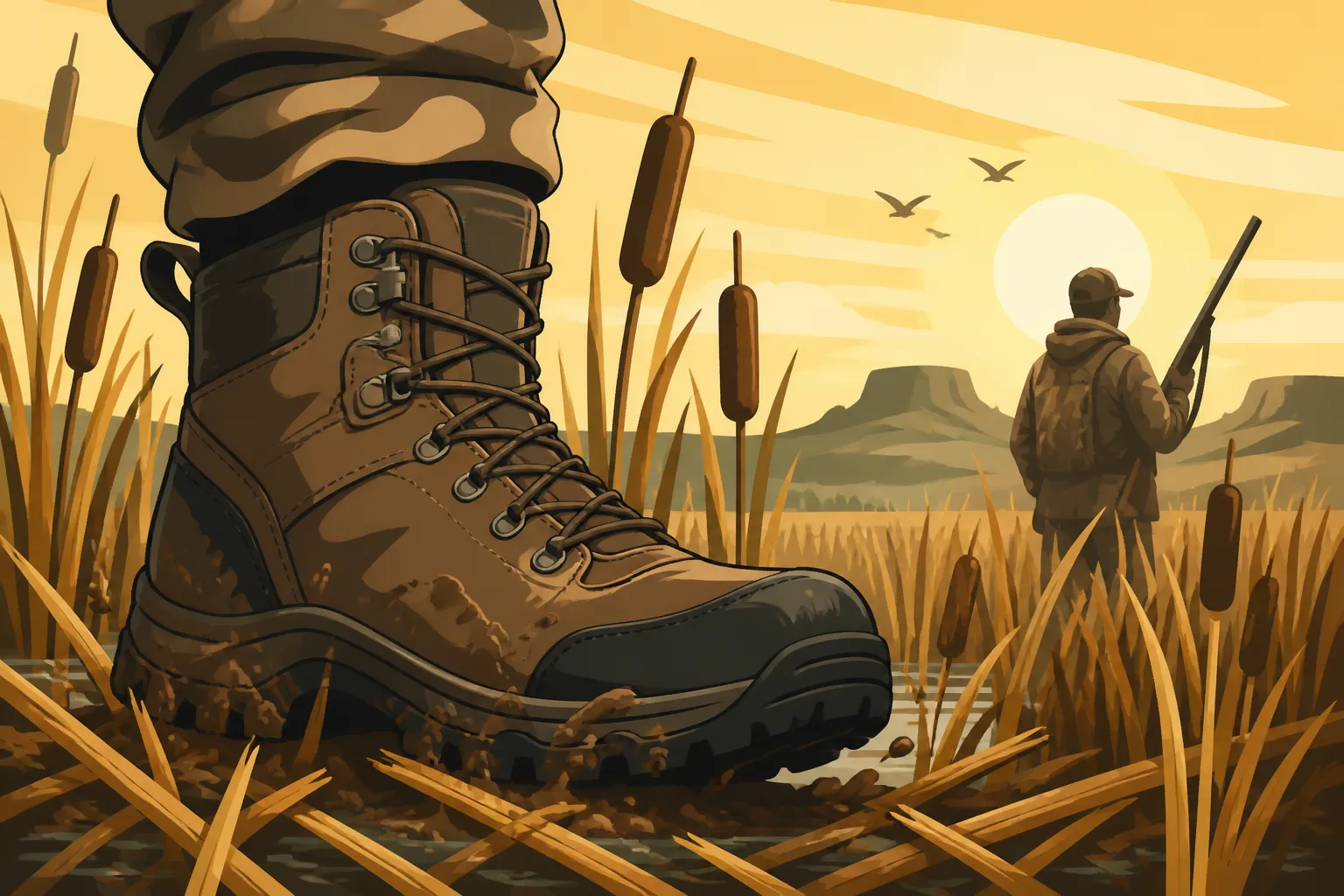
Boots for Walking Cattails All Day
There’s almost nothing that saps the joy out of a South Dakota pheasant hunt faster than cold, wet feet. We've all been there: pushing through a dense cattail slough, feeling that inevitable seep of icy water, and knowing the rest of your day is going to be a miserable slog. Finding the right boots for walking cattails all day isn't just about comfort; it's about endurance, safety, and ultimately, success in the field. This guide is here to walk you through exactly what to look for, so your feet stay warm and dry, no matter how deep the bog gets.
The Unforgiving Challenge of South Dakota Cattail Sloughs
Cattail sloughs are a pheasant hunter’s paradise, holding countless roosters, especially as the season progresses. But they’re also a boot’s worst nightmare. These dense, often watery environments present a unique set of challenges that can quickly turn even decent footwear into a soggy, uncomfortable mess. Understanding these challenges is the first step in selecting the right gear.
The Mud, Water, and Ice Gauntlet
Imagine sinking shin-deep into frozen, sticky mud, the kind that tries to suck your boot right off with every step. That’s the reality of a South Dakota cattail slough. These areas are characterized by standing water, often hidden beneath a thick canopy of dead vegetation. Early in the season, this water might be merely cold, but come late fall or winter, it can be ice-cold, sometimes even partially frozen. The ground underneath is rarely firm, instead being a mix of deep, clinging mud and unpredictable soft spots.
Regular waterproof hiking boots might keep your feet dry in a light rain or shallow puddle, but they often succumb quickly to the sustained submersion and pressure found in a slough. Water finds every weak point, every low spot, and seeps in. Once your socks are wet, the cold quickly sets in, leading to discomfort, loss of sensation, and even potential frostbite in severe conditions, making the thought of finishing the push unbearable.
Dense, Tangled Vegetation and Hidden Obstacles
Beyond the water, cattails themselves pose a significant physical challenge. These plants grow incredibly dense, with thick, tough stalks that can be waist-high or taller. Pushing through this type of cover is exhausting, and it puts immense strain on your boots and ankles. The broken stalks and matted down vegetation create a tangled mess that can trip you up, snag laces, and even slice through less durable materials.
Beneath the surface, the terrain is rarely flat. You might encounter hidden submerged stumps, old fence wire, rocks, or deep ruts carved by wildlife or previous water flow. A boot needs to offer not only waterproofing but also substantial protection from punctures and abrasions. Good ankle support is paramount to prevent twists and sprains when your foot inevitably lands on an uneven surface hidden from view. This kind of demanding landscape is why strategies for Walking and Blocking South Dakota Cattail Sloughs emphasize solid footwear and careful footing.
Essential Features for Cattail-Ready Boots
When you’re gearing up to tackle those formidable cattail sloughs, you can’t just grab any old pair of boots. The specific environment demands specific features. Thinking through these aspects will ensure you invest in a pair that truly performs when it matters most, keeping you focused on the hunt, not your soggy feet.
Absolute Waterproofing That Truly Works
This is non-negotiable. Forget "water-resistant" – you need truly waterproof boots. For cattail sloughs, this usually means a tall rubber boot or a highly specialized waterproof hunting boot with a robust waterproof membrane (like Gore-Tex or similar proprietary technologies). Critically, consider the height of the boot. If the water in a slough consistently comes up to your shins, a standard 8-inch boot isn't going to cut it. Many hunters opt for 15-inch or even taller rubber boots to ensure that even deep plunges don't overtop the boot.
The seal around the foot and ankle needs to be impeccable. Any tiny leak will render the waterproofing useless in standing water. Some advanced synthetic materials offer excellent waterproof barriers, but traditional rubber boots often remain the gold standard for pure, uncompromising water exclusion when dealing with prolonged submersion. When you’re considering which models to look into, resources like GoHunt's gear reviews can often highlight how well different boots perform in real-world, wet conditions, giving you a better idea of their actual waterproof capabilities.
Support, Stability, and Ankle Protection
Walking through deep mud and tangled vegetation for hours is incredibly fatiguing. A good boot needs to provide excellent support, starting with a stiff, rigid sole. This prevents your foot from bending excessively over uneven terrain, reducing foot arch strain and muscle fatigue. Think about the energy you expend just lifting your foot out of the mud; a boot that provides good torsional rigidity helps here.
Ankle support is equally critical. Those hidden stumps and submerged ruts are ankle-twisters waiting to happen. A high-cut boot with a well-designed lacing system or a snug-fitting shaft on a rubber boot provides the stability needed to prevent rolled ankles. This kind of unwavering support is what allows you to maintain a steady Walking Speed That Holds Roosters without fear of injury, keeping you in the hunt longer. Look for boots that feel secure around your ankle without restricting natural movement too much.
Traction for Slippery Surfaces
The bottom of a cattail slough is a treacherous mix of slick mud, wet vegetation, and sometimes icy patches. An aggressive outsole with deep, widely spaced lugs is essential for maintaining traction. These deep treads bite into the soft ground, providing grip, while the wide spacing helps prevent mud and vegetation from caking up and turning the sole into a slick, ineffective slab.
Many quality hunting boots feature self-cleaning lug patterns, which shed mud as you walk, ensuring consistent grip. Brands like Kenetrek and Schnee's are renowned for their aggressive outsoles designed for rugged terrain. For anyone scouting or hunting in varied conditions, including those often slick approaches to prime cover, reliable traction is key. You'll also want to consider this for any approach to Hunting Pressure Patterns on Walk-In Areas, which might involve crossing muddy farm roads or grassy, dew-soaked ditches.
Insulation for Cold Water and Frosty Mornings
South Dakota weather can be brutal, especially later in the season. Even if your feet stay dry, they can still get cold if the water or ground temperature is low. Insulation is vital, particularly for hunts in late fall or for Late-Season South Dakota Pheasants in Heavy Cover. Insulation is typically measured in grams (e.g., 400g, 800g, 1200g Thinsulate). The amount you need depends on the ambient temperature and your activity level.
For active walking, 400-800 grams might be sufficient, as your body will generate heat. However, if you're standing in icy water for prolonged periods, or if the temperatures dip well below freezing, you might need 1000 grams or more. Remember, insulation works by trapping air, so a snug but not overly tight fit is important to allow proper blood circulation and for the insulation to work effectively. Consider how your insulation needs might change depending on if you're out during the Ten a.m. Start Times and Bird Behaviour in colder months versus a warmer early season morning.
Durability to Withstand Abuse
Cattail sloughs are tough on gear. Your boots need to be built to last. Look for robust construction, such as triple-stitched seams on leather or synthetic boots, or thick, vulcanized rubber on rubber boots. Reinforced toe and heel caps are crucial for protecting your feet from impacts and preventing premature wear.
High-quality materials, whether they are full-grain leather, durable synthetics like Cordura, or high-grade rubber, will stand up to the constant abrasion from sharp cattail stalks and general wear and tear. A cheap pair of boots might save you money upfront, but they'll likely fail halfway through the season, leaving you with wet feet and the need to buy another pair. Investing in durable boots is an investment in your comfort and your hunting longevity.
Top Boot Types and Their Pros & Cons for Heavy Cover
Choosing the right type of boot for slough hunting really comes down to balancing waterproof capability, support, and overall comfort. Different designs excel in different areas, and understanding these trade-offs will help you pick the best companion for your feet in the demanding South Dakota terrain.
Pure Rubber Boots
Ah, the classic rubber boot. For sheer, unadulterated waterproofing, it’s tough to beat. Many hunters rely on brands like Muck Boots or LaCrosse for their impenetrable barrier against water.
- Pros:
- Unrivaled Waterproofing: They are, by design, 100% waterproof. You can stand in a foot of water all day, and as long as the water doesn't come over the top, your feet will stay dry.
- Easy to Clean: Mud, muck, and debris hose right off, making cleanup after a messy hunt incredibly simple.
- Often Insulated: Many models come with ample insulation, making them suitable for frigid temperatures and icy water, especially valuable for Late-Season Hunting in South Dakota Snow.
- Durable in Water: The rubber construction holds up well to sustained wetness without breaking down.
- Cons:
- Less Ankle Support: This is their biggest drawback. The flexible rubber shaft, while great for accommodating thick pants, often provides less rigid ankle support compared to a traditional laced boot. This can be a concern on uneven ground.
- Breathability Issues: Rubber doesn't breathe. While modern materials have improved, feet can still get sweaty, which can lead to blisters and cold feet once you stop moving.
- Heavier and Bulkier: They can feel clunky and heavy, making long walks across varied terrain more tiring.
- Fit Can Be Tricky: Getting a perfect fit can be challenging, as there's no lacing system for fine-tuning.
Rubber boots are excellent for dedicated slough hunting or when you know you'll be standing in water for much of the day. They're a favorite for hunters who are Pushing a Cattail Slough With Blockers as they often spend more time stationary or moving slowly in deep water.
Hybrid Rubber-Leather/Synthetic Boots
These boots aim to offer the best of both worlds, combining the waterproof lower of a rubber boot with a more supportive, breathable upper. They’re a fantastic compromise for hunters who traverse various terrains but frequently encounter wet conditions.
- Pros:
- Improved Support: The upper sections, often made of leather or durable synthetics, can incorporate lacing systems that provide much better ankle and foot support than pure rubber boots. This is a huge plus when navigating the uneven, hidden terrain within a slough.
- Enhanced Breathability: While the lower portion is rubber, the upper materials often offer some breathability, reducing sweat buildup compared to all-rubber designs.
- Versatility: They are more comfortable for longer walks to and from the slough, making them a great choice for hunters who might walk significant distances on open prairie before hitting the dense cover.
- Durability: High-quality hybrids are built tough, designed to withstand both wet and abrasive conditions.
- Cons:
- Not 100% Submersible: While the lower part is waterproof, the lacing and upper materials, even if waterproof, might not hold up to sustained, deep submersion like a seamless rubber boot.
- Cleaning Can Be More Involved: The synthetic or leather uppers require more care than just hosing down.
- Can Still Be Heavy: While often lighter than some pure rubber boots, they still carry weight due to their robust construction.
Brands like Danner and Irish Setter offer excellent hybrid options that many South Dakota hunters find ideal for tackling diverse environments, from dry CRP fields to soggy cattails. When evaluating specific models, checking how different manufacturers integrate their waterproof membranes in these hybrid designs can be a great way to use resources like GoHunt to inform your decision.
Traditional Leather/Synthetic Hiking-Style Boots with Extreme Waterproofing
These are your typical high-performance hunting or backpacking boots, but with an emphasis on top-tier waterproofing and rugged construction. They aren’t typically thought of as "slough boots," but for certain situations, they shine.
- Pros:
- Superior Support and Comfort: These boots are designed for long miles and heavy loads, offering the best ankle support, arch support, and overall foot stability. If you're covering vast amounts of ground before even reaching the water, these are comfortable.
- Excellent Breathability: High-quality membranes like Gore-Tex allow vapor to escape, keeping feet drier from sweat, crucial for avoiding Keeping a Dog Cool on an Early Opener conditions where a hunter might also overheat.
- Precision Fit: Lacing systems allow for a highly customizable and secure fit.
- Extreme Durability: Built for rocky, abrasive terrain, they are incredibly tough against snags and punctures.
- Cons:
- Limited Submersion Depth: While waterproof, their design with laces and seams means they generally aren't meant for prolonged, deep submersion. If water goes over the top, they fill up quickly and take forever to dry.
- Cleaning: Mud can get trapped in laces and stitching, making them harder to clean thoroughly.
- Cost: The most advanced, truly waterproof models can be quite expensive.
These boots are best if your primary hunting involves more upland walking, like Working South Dakota Shelterbelts for Roosters, with only occasional, shallow crossings of wet areas. If you know a slough is going to be exceptionally deep, these might be a secondary choice, or you might combine them with waterproof gaiters for added protection. Again, for a detailed breakdown of how different boot materials and waterproof membranes hold up, GoHunt offers comprehensive gear tests that can help you discern the truly reliable options.
Here's a quick comparison of these boot types:
| Feature | Pure Rubber Boots | Hybrid Rubber/Synthetic Boots | Traditional Hiking/Hunting Boots (Waterproof) |
|---|---|---|---|
| Waterproofing | Excellent (100% submersible to boot top) | Very Good (lower is submersible, upper is resistant) | Good (resistant, but prone to leakage in deep submersion) |
| Ankle Support | Fair (flexible shaft) | Good (laced upper offers more stability) | Excellent (rigid construction, precise lacing) |
| Traction | Good (often deep lugs) | Very Good (aggressive outsoles) | Excellent (technical outsoles for varied terrain) |
| Insulation Options | Excellent (many models highly insulated) | Good (various insulation levels available) | Good (insulation options available, often lighter) |
| Breathability | Poor (can cause sweat buildup) | Fair to Good (upper offers some airflow) | Very Good (breathable membranes) |
| Durability | Excellent (thick rubber, resistant to abrasions) | Very Good (robust materials, reinforced sections) | Excellent (built for rugged, long-term use) |
| Comfort for Long Walks | Fair (can be heavy, less flexible) | Good (better flexibility and support) | Excellent (designed for extended wear) |
| Ease of Cleaning | Excellent (hoses off easily) | Good (rubber lower is easy, upper needs more care) | Fair (laces and seams can trap mud) |
Boot Care and Maintenance for South Dakota Conditions
You've invested in a great pair of boots designed for those challenging South Dakota cattail sloughs. Now, to make sure they last and perform year after year, proper care and maintenance are absolutely crucial. Neglecting your boots, especially after they've been put through the wringer in wet, muddy conditions, is the quickest way to shorten their lifespan and compromise their performance.
Cleaning and Drying After Each Hunt
This is perhaps the most important step. As soon as you get home from a hunt, especially after tackling a slough, clean your boots. Don't let mud, grime, and plant matter sit and dry on them. For rubber boots, a simple hose-down is usually sufficient. For leather or synthetic boots, use a stiff brush and water to remove all visible dirt. Pay special attention to the seams and around the sole, where mud loves to cling.
Once clean, the most critical step is proper drying. Never, ever dry your boots by a direct heat source like a campfire or a radiator. This can severely damage materials, especially leather and waterproof membranes, causing them to crack, stiffen, and lose their integrity. Instead, use a dedicated boot dryer with gentle, circulating air. If you don't have one, stuff them loosely with newspaper to absorb moisture, changing it periodically. Allow them to air dry completely in a well-ventilated area, preferably for 24-48 hours. This prevents mold, mildew, and foul odors, and helps maintain the boot’s structure.
Conditioning and Waterproofing Treatments
For leather boots, conditioning is key to keeping the leather supple and preventing cracking. After cleaning and drying, apply a high-quality leather conditioner. This not only nourishes the leather but also helps maintain its water repellency. Even boots with waterproof membranes benefit from an external water-repellent treatment (DWR – Durable Water Repellent) on the fabric or leather surfaces. This prevents the outer material from saturating with water, which can make the boot feel heavier and colder, even if the membrane is still keeping your foot dry.
Rubber boots don't typically require conditioning, but some hunters apply rubber protectants to prevent cracking over time. Regularly inspect all types of boots for any signs of wear, such as loose stitching, small tears, or delamination of the sole. Addressing these minor issues promptly can prevent them from becoming major problems that compromise your boot's waterproof integrity. Taking care of your boots extends their life, ensuring they're ready for the next adventure, whether it's South Dakota Pheasant Hunting Tactics for the Opener or a late-season grind.
Sock Selection and Layering
While not strictly boot care, the socks you wear are an integral part of your foot system and directly impact how well your boots perform. Cotton is an absolute no-go; it absorbs moisture and loses all insulating properties when wet, leading to cold, miserable feet. Instead, opt for wool or synthetic blends. Merino wool socks are fantastic because they wick moisture, insulate even when damp, and are naturally odor-resistant. Synthetic socks also excel at moisture wicking.
Consider layering your socks. A thin liner sock made of synthetic material can wick moisture away from your skin, while a thicker wool sock over it provides cushioning and insulation. The key is to ensure your boots still fit comfortably with your chosen sock combination – too tight, and you restrict circulation, leading to cold feet. Proper sock choice, along with smart layering for your entire body, such as understanding Layering for South Dakota Wind, contributes significantly to your overall comfort and ability to stay in the field. This attention to detail, from your feet up, is what separates a comfortable hunter from one constantly battling the elements.
Disclaimer
The information provided in this guide is for general informational purposes only and does not constitute professional advice. Hunting conditions can be dangerous, and individual results may vary. Always prioritize safety, adhere to all local hunting regulations, and consult with experienced professionals for specific gear recommendations or safety concerns.