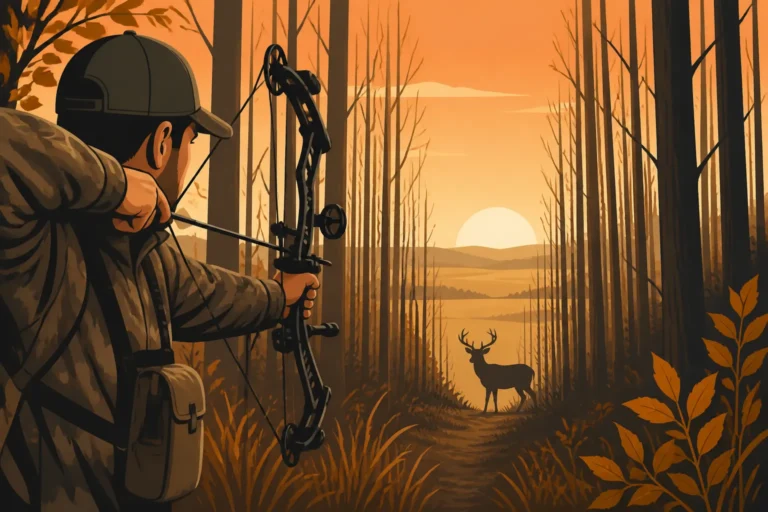
Whitetails in Missouri River Timber
Hunting whitetails in the dense, often unpredictable river bottom timber along South Dakota's Missouri River can be incredibly challenging, but it also offers some of the most rewarding deer hunting experiences in the state. Many hunters feel overwhelmed by the sheer scale and complexity of this habitat, struggling to locate deer in the thick cover or figure out their erratic movements in such a dynamic environment. This comprehensive guide will equip you with the knowledge and strategies you need to effectively pursue whitetails in the unique Missouri River timber, transforming your frustrations into successful hunts.
Understanding the Missouri River Timber Ecosystem
The Missouri River in South Dakota isn't just a waterway; it's a vibrant, ever-changing ecosystem that creates a prime habitat for whitetail deer. The timbered river bottoms are a world unto themselves, vastly different from the open prairie or even the scattered shelterbelts found elsewhere in the state. To consistently find success here, you first need to understand the nuances of this specific environment.
Habitat Characteristics Along the Missouri
The timber along the Missouri River is typically a mix of mature cottonwood, elm, green ash, and various willow species, often intertwined with dense underbrush like buckbrush, wild rose, and dogwood. This creates an incredibly thick canopy and nearly impenetrable ground cover, offering whitetails exceptional security and thermal protection year-round. Unlike agricultural fields or open grasslands, deer here don't necessarily need to travel far for food or cover; it's often all in one place.
The sheer density of the vegetation means visibility is almost always limited, often to just a few dozen yards. This is a stark contrast to the vast, open country many associate with South Dakota hunting. Navigating this terrain can be physically demanding, with tangled vines, downed timber, and often soft, muddy ground, especially near the river's edge or in low-lying areas that collect water. These characteristics dictate how deer move and how hunters must adapt their strategies. The timber provides a haven, a place where deer can vanish almost instantly, making them ghosts in their own domain.
Impact of Water Levels and River Dynamics
The Missouri River is a managed waterway, with water levels fluctuating due to dam releases and seasonal precipitation. These fluctuations directly impact the whitetail habitat. High water events can flood low-lying timber, pushing deer to higher ground and concentrating them in smaller, drier pockets of cover. Conversely, low water exposes new sandbars and gravel beds, which can become travel corridors or even temporary food sources if they support early successional vegetation.
Understanding the river's historical and current water levels is crucial. Areas that were dry and huntable last year might be submerged this year, and vice-versa. The river also constantly reshapes its banks, eroding some areas and depositing silt in others, which changes cover and food availability over time. This dynamic nature means that scouting isn't a one-and-done affair; you need to stay informed about current conditions. For instance, knowing when water is being released from upstream dams like Fort Randall Dam or Oahe Dam can help predict where deer will be pushed or pulled, creating new hunting opportunities or rendering old spots inaccessible. Checking the U.S. Army Corps of Engineers websites for real-time river data can be a game-changer.
Identifying Key Cover and Travel Corridors
Within this vast timber, not all areas are created equal. Whitetails utilize specific types of cover for bedding, feeding, and travel. Bedding areas are typically the thickest, most impenetrable pockets of cover, often on slight rises that offer a vantage point or within dense thickets that provide complete concealment. These can be old oxbows, clumps of fallen timber, or areas dominated by aggressive thorny plants.
Travel corridors are often less obvious in the timber than in open country. Instead of fence lines or field edges, deer rely on subtle terrain features like old game trails, dry creek beds, slight ridges, or even trails created by other large animals. Look for pinch points where dense cover funnels down to a narrower strip, or natural bottlenecks created by the river's bends or higher ground. These are prime locations for ambush. Additionally, deer will often utilize the interface between different habitat types—the edge of a slough, the transition from young saplings to mature timber, or where the timber meets an agricultural field or an open prairie bluff. These transition zones are often high-traffic areas. When you're trying to figure out where whitetails in Missouri River timber might be moving, remember that they prioritize security above almost all else.
Key Whitetail Behaviors in River Bottoms
Whitetails are creatures of habit, but their habits are deeply influenced by their environment. The Missouri River timber imposes certain behavioral patterns that are unique to this landscape. Understanding these can help you predict their movements and intercept them.
Bedding Areas and Security Cover
Deer in river timber seek out security cover that is both dense and offers a degree of advantage. Often, their primary bedding areas will be found in the absolute nastiest, most overgrown parts of the timber – think areas choked with multiflora rose, dense buckbrush, or regenerating clear-cuts from old logging or storm damage. These spots are typically inaccessible or undesirable for humans, which is exactly why deer love them.
They also prefer slight elevations, even just a few feet, within these low-lying areas. A small knoll or a bench along an old riverbank allows them to bed with the wind at their back, surveying the downwind approach. In colder weather, south-facing slopes or thick evergreens (if present) can offer critical thermal cover. After a heavy rain, deer will often move to the driest available ground, which might be a higher bench or the base of a bluff overlooking the river. Identifying these core bedding areas is paramount, but remember that the goal is to hunt near them, not in them, to avoid blowing deer out of their sanctuary. You’ll want to approach these areas cautiously, understanding that the deer are hyper-alert in their resting places.
Feeding Patterns and Food Sources
Unlike parts of the state where deer are almost entirely reliant on agricultural fields, whitetails in the Missouri River timber have a diverse diet throughout the year. While they will certainly hit corn and bean fields adjacent to the timber, they also feast on a variety of natural browse and mast crops. Early season might see them browsing on succulent forbs, young leaves, and woody browse. As fall progresses, acorns from oak trees (where present), wild plums, chokecherries, and various other berries become critical food sources.
Late season, when the natural browse has diminished, waste grain in nearby agricultural fields becomes a primary draw. However, even then, they will continue to browse on woody stems like dogwood and sumac within the timber. Their feeding patterns will often be dictated by the distance to security cover. They might venture into open fields at night, but during daylight hours, they’ll often be found browsing more cautiously along the timber edges, in secluded food plots, or within the deeper woods where natural forage is abundant. Knowing these seasonal food preferences and scouting for fresh sign like rubs, droppings, and browsed vegetation will reveal their current feeding hot spots. You can learn more about how deer adapt to available food by reading our guide on Hunting Food Plots and Corn Edges.
Movement Routes and Rut Activity
Deer movement in river timber is heavily influenced by the thick cover. Instead of wide-open strides, they often utilize a network of smaller, often indistinct trails that wind through the brush. These trails connect bedding areas to feeding zones, water sources, and other pockets of cover. Look for trails that show consistent use, indicated by fresh tracks, overturned leaves, and rubs or scrapes along the edges. Funnels are key here – any natural or man-made feature that constricts deer movement, like a narrow strip of timber between two open fields, a ditch, or a change in elevation, can create a high-traffic zone.
During the rut, these movement patterns intensify and become more unpredictable as bucks actively seek does. Bucks will cruise known doe bedding areas, follow scent trails, and challenge other bucks. This is when the timber really shines for hunters, as the dense cover provides ample opportunity for bucks to travel unseen during daylight hours. Key movement corridors during the rut might be different from non-rut movement. Bucks will often travel primary trails that run parallel to the river, checking for estrous does in the surrounding thickets. Understanding How Buck Movement Changes Through the Rut is crucial for timing your hunts.
Effective Hunting Strategies for River Timber
Hunting the Missouri River timber demands specific tactics that capitalize on the deer's behavior and the unique landscape. Forget long-range glassing; this is close-quarters combat where patience and precise execution are rewarded.
Stand Placement and Scouting Tactics
Effective stand placement in the timber is all about understanding the subtle flow of deer movement. Since visibility is limited, you need to be precise. Focus on pinch points, funnel areas, or trail intersections that show consistent sign. Often, a subtle bend in a creek bed, a narrow strip of mature timber between two thickets, or a slight rise where multiple trails converge can be deadly. Look for fresh rubs and scrapes, but don't just hunt the scrape; hunt the trail leading to or from it.
When scouting, don't be afraid to get into the nastiest stuff, but do so strategically, ideally during the off-season or after a rain when your scent disturbance is minimized. Utilize tools like GoHunt's mapping software or other reliable apps (like onX Hunt) to overlay aerial imagery with topo maps. These can help identify subtle elevation changes, oxbows, and variations in cover density that might not be obvious from the ground. Identifying bedding areas is crucial for planning your approach and exit routes to avoid spooking deer. For a deeper dive into optimal setups, check out our guide on Treestand Setups on Narrow River Timber. Remember to always consider wind direction for every stand location, as swirling winds in river bottoms are a common challenge.
Still-Hunting and Drives in Dense Cover
Still-hunting is perhaps one of the most underutilized yet effective strategies in river timber. It involves moving slowly, deliberately, and quietly through the woods, pausing frequently (often for 5-10 minutes at a time) to scan for deer. This isn't about covering ground; it's about seeing the deer before they see you. Use the wind to your advantage, moving into it or across it, and utilize every bit of cover to break up your silhouette. The key is to blend in, move like a shadow, and be ready to shoot quickly. Look for subtle movements, a flick of an ear, the horizontal line of a deer's back, or a patch of contrasting color. This method is incredibly effective for getting into otherwise unreachable pockets of thick cover where big bucks like to hide.
For those hunting with a group, organized drives can be highly successful, especially in the larger blocks of timber. This involves a group of "drivers" slowly pushing through a section of cover, moving deer towards "blockers" strategically positioned along anticipated escape routes or pinch points. Communication is paramount, and safety must be the top priority. Drivers should move at a slow, consistent pace, pausing and looking for deer holding tight. Blockers need to be absolutely still, concealed, and ready for fast-paced action. Careful planning of escape routes based on terrain and known deer behavior will increase success rates. This can be especially productive when working Hunting Narrow Timber Strips.
Calling and Decoying Strategies
Calling can be highly effective in the timber, especially during the pre-rut and rut phases. The dense cover often muffles sound, making deer more responsive to calls that indicate another deer is close by. Grunt calls can pique a buck's curiosity, especially if he's cruising for does. Rattling antlers can be deadly, simulating a fight and drawing in bucks eager to assert dominance or check out the action. Because of limited visibility, a buck might come in closer than he would in open country before he can pinpoint the source of the sound, giving you a better shot opportunity. Our article on Rattling and Grunting During the South Dakota Rut provides more detailed techniques.
Decoys, while challenging to deploy in thick cover, can also work. A single doe decoy, positioned to be seen from a primary travel route, can stop a cruising buck or draw him into bow range. During the rut, a small buck decoy might also draw in an aggressive rival. The key with decoys in timber is placement – they need to be visible enough to be seen but not so exposed that they look unnatural. Use existing cover to create a natural scene. Remember, any decoy setup needs to be combined with careful scent control and strategic positioning relative to the wind.
Gear and Preparation for Timber Hunts
Hunting river timber requires specific gear and meticulous preparation to ensure safety, comfort, and success in what can be a physically demanding environment.
Weapon and Ammunition Choices
Given the dense nature of the timber and the often-close-range encounters, weapon choice is critical. For rifle hunters, calibers that deliver significant energy at shorter distances are often preferred. Common choices include .30-30, .45-70, .308, or even 12-gauge slug guns. The key is to use bullets that perform well through light brush (though you should always aim for clear shots) and transfer energy quickly to drop a deer efficiently, reducing tracking distances in thick cover. Heavy-for-caliber, bonded, or monolithic bullets are often recommended for their penetration and ability to retain mass.
Archers often thrive in the timber environment, where shots are typically 20-40 yards. Bow setup should prioritize quietness and maneuverability in tight spaces. Fixed-blade broadheads or well-tuned mechanical broadheads that deliver deep penetration are essential for ensuring quick, humane kills. Shotguns with slugs are also highly effective, particularly in areas with specific regulations or where maximum stopping power at short range is desired. Muzzleloaders are a strong choice for similar reasons, offering power and often excellent accuracy at timber ranges.
Clothing and Scent Control
Clothing for river timber hunts needs to be durable, quiet, and capable of handling varying weather conditions. Layers are essential, as you'll often be working hard, generating heat, but then sitting still in a stand where temperatures can drop quickly. Look for briar-resistant pants and jackets to protect against thorns and sharp branches. Waterproof boots with good ankle support are a must, given the potential for mud, wet leaves, and crossing small creeks. Blaze orange requirements apply during certain seasons in South Dakota, so ensure you have the appropriate amount visible, especially during firearm seasons or if participating in a drive.
Scent control is absolutely critical in dense timber, as deer are often encountered at much closer ranges. This means showering with scent-eliminating soaps, washing hunting clothes in scent-free detergent, and storing them in airtight bags. Using scent-eliminating sprays on your clothes and gear before heading into the woods is a good practice. Moreover, playing the wind is your ultimate scent control strategy. No amount of spray can overcome a direct crosswind carrying your scent into a deer's nose. Always approach your stand or still-hunt with the wind in your favor, anticipating potential swirls in the river bottom.
| Strategy Component | Open Prairie Hunting | Missouri River Timber Hunting |
|---|---|---|
| Visibility | High (hundreds of yards) | Low (tens of yards) |
| Primary Method | Spot & Stalk, Stand Hunting | Stand Hunting, Still-Hunting, Drives |
| Key Challenge | Long-range shooting, open exposure | Dense cover, swirling winds, close encounters |
| Weapon Focus | Accurate, flat-shooting rifles | Hard-hitting, maneuverable weapons (bows, shotguns, medium rifles) |
| Scent Control | Important, but wind often consistent | Absolutely critical, unpredictable thermals & swirls |
| Navigation | Landmark-based, easy to orient | GPS, detailed maps essential |
| Physical Demands | Walking long distances | Pushing through thick brush, climbing over obstacles |
E-Scouting and Navigation Tools
In the labyrinthine environment of the Missouri River timber, electronic scouting (e-scouting) and reliable navigation tools are not just helpful; they're essential. Before you even step foot in the woods, use platforms like GoHunt's mapping services, or similar robust apps like onX Hunt, to analyze aerial imagery. Look for subtle changes in vegetation density, old oxbows, dry creek beds, elevation changes, and the boundaries between timber and agricultural fields. These details are often invisible from the ground but can reveal prime travel corridors and bedding areas.
Once in the field, a GPS unit or a smartphone with a downloaded hunting app and offline maps is invaluable. It allows you to mark potential stand sites, track your movements, and navigate safely out of the dense woods, especially at dusk or in unfamiliar territory. With GoHunt, you can utilize public and private land layers to ensure you're always on legal hunting ground, especially crucial along the Missouri River Hunting Access in South Dakota where land ownership can be complex and fragmented. Mark your vehicle, your stand locations, and any significant sign you find, like fresh rubs or heavy trails. Always carry a portable power bank for your phone, as cold weather and constant GPS use can quickly drain batteries. Being able to access onX Layers for South Dakota Land Status on your phone is a huge advantage for knowing exactly where you are and what land you’re on.
Finally, while having the right tools is important, don't forget the basics of physical scouting. There's no substitute for boots on the ground, especially after a fresh snow or heavy rain, to truly understand deer movements. Combine your e-scouting insights with real-world observations to build a comprehensive picture of the whitetails' world in the Missouri River timber. And, of course, once you've successfully harvested your deer, remember the specific challenges of Field Dressing in Warm October Weather or how to manage Getting a Deer Out of a South Dakota Coulee if you're in particularly rugged terrain.
Disclaimer
Hunting is an inherently dangerous activity. This article provides general information and recommendations; however, conditions can vary greatly, and individual discretion, adherence to all local and state regulations, and proper safety practices are paramount. Always prioritize safety, respect wildlife and property, and ensure you have the necessary skills and equipment for your hunt.