Predator Hunting Across South Dakota
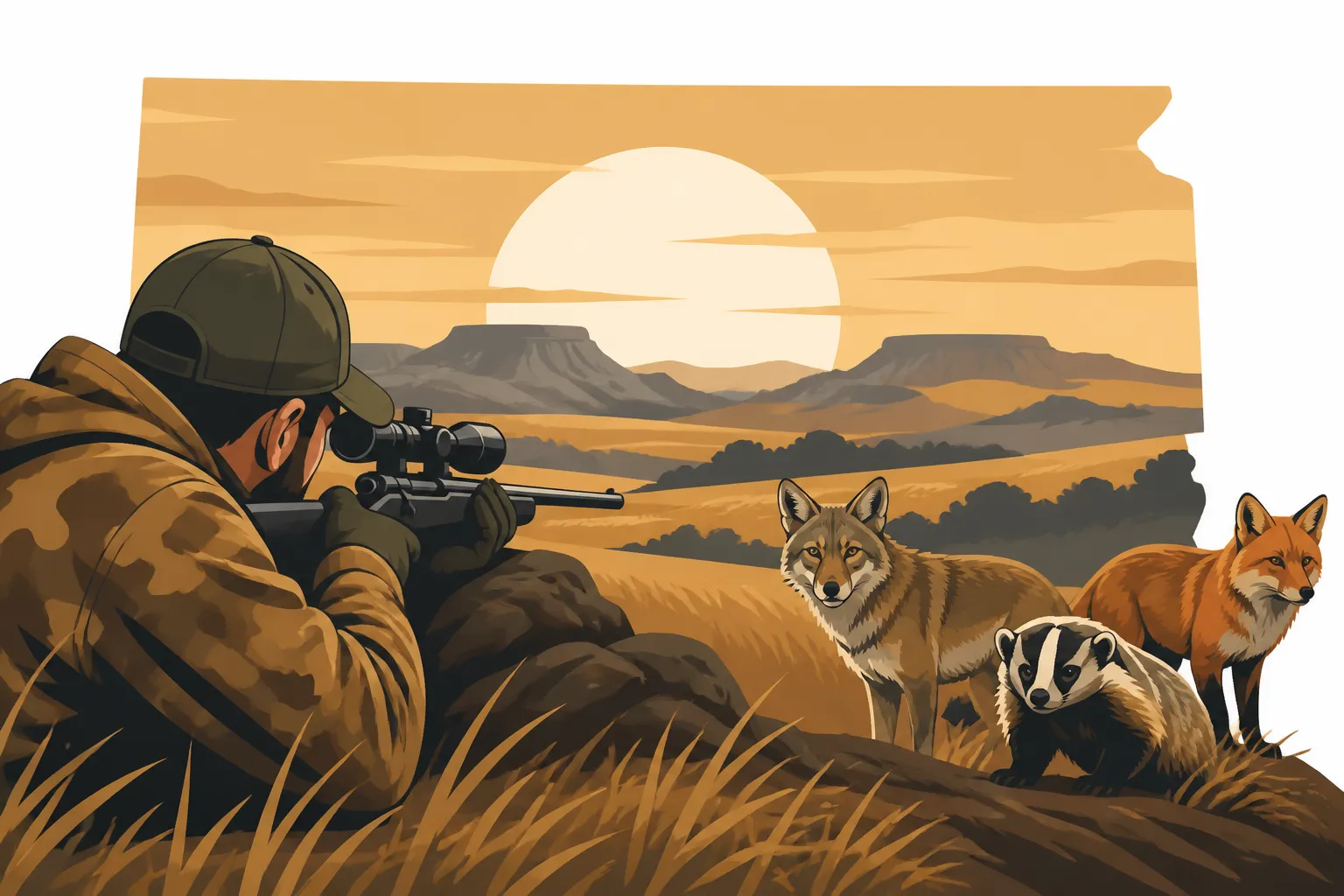
Predator hunting in South Dakota offers some of the most exhilarating and challenging experiences you can find, but it's not without its frustrations. Many hunters, drawn by the thrill of calling in a wily coyote or spotting an elusive bobcat, often hit a wall trying to understand the nuances of this pursuit across our state's incredibly diverse terrain. From the vast, open plains of West River to the dense shelterbelts and river bottoms of the East, different predators demand different strategies. This comprehensive guide is designed to cut through the confusion, offering you proven tactics, essential gear advice, and critical insights to help you consistently connect with South Dakota's cunning predators, no matter where you choose to hunt.
Understanding South Dakota's Primary Predators
Before you even think about hitting the field, understanding the behavior, habits, and preferred habitats of South Dakota's main predator species is paramount. It’s not just about pointing a rifle; it’s about outsmarting an animal that has evolved to survive by being incredibly cautious and intelligent. Each species presents its own unique set of challenges and rewards, and recognizing these differences is the first step towards consistent success.
Coyotes: The Prairie's Opportunistic Hunter
Coyotes are, without a doubt, the most common and widely distributed predator across South Dakota. These adaptable canines thrive in almost every habitat, from the wide-open grasslands of the West to the farm country and sloughs of the East. Their diet is incredibly varied, ranging from small rodents and rabbits to deer fawns and even carrion, making them truly opportunistic. This adaptability is precisely what makes them so challenging to hunt, as they learn quickly and can become incredibly call-shy in areas with high hunting pressure.
When you're chasing coyotes, remember they are highly social animals, often operating in family groups or pairs, though solitary individuals are also common, especially during dispersal phases. They communicate extensively through howls, barks, and yips, which can be used to your advantage with locator calls. A common frustration is when a coyote hangs up just out of range, often indicating it has either seen something unnatural or caught a whiff of human scent. This behavior highlights the critical need for meticulous camouflage, scent control, and an intimate understanding of wind direction, which can make or break a setup. Knowing how they react to different call types at various times of the year is also crucial; a distress call might work wonders on a hungry coyote in winter, but a more subtle social call might be better for an educated animal.
Foxes: Crafty and Elusive
South Dakota is home to both red and swift foxes, each with its own preferred habitat and hunting style. Red foxes are more common across the state, particularly in agricultural areas, broken cover, and the fringes of timber. They are smaller than coyotes but possess an incredible cunning, making them exceptionally difficult to lure into close range. Their keen eyesight, hearing, and incredible sense of smell mean you need to be even more meticulous with your setup than with coyotes. Often, red foxes will approach downwind, circling to get a scent, so planning for this approach is key.
Swift foxes, on the other hand, are a species of concern and are found primarily in the shortgrass prairie ecosystems of western South Dakota. These smaller, more delicate foxes are much rarer, and while they can be called, hunters often target coyotes and encounter swift foxes incidentally. For both species, their smaller size means they often appear less committed to a call than a coyote, making their approach more subtle and harder to detect until they are quite close. Understanding their preferred food sources, mainly small rodents and insects, will help you select the most effective distress calls, such as rodent squeaks or bird cries, which often prove irresistible to a hungry fox. Patience is a virtue when fox hunting, as they can take their time to commit, often peaking over a ridge or pausing behind cover before making a final move.
Bobcats: Elusive Forest and River Bottom Dwellers
Bobcats are the true ghosts of South Dakota's predator hunting scene. While present across the state, their populations are concentrated in areas with suitable habitat, primarily dense river bottoms, timbered draws, and the rugged terrain of the Black Hills. Unlike coyotes and foxes, bobcats are solitary and incredibly secretive, relying on stealth and ambush rather than open pursuit. This makes them exceptionally difficult to call in, and many predator hunters consider a bobcat harvest the ultimate trophy.
Bobcats primarily hunt small game like rabbits, hares, and ground-dwelling birds, and their approach to a call is usually cautious and methodical. They will often use every scrap of available cover to stalk in, moving slowly and deliberately. When calling for bobcats, longer sets are often required, as they may take 20-30 minutes or even longer to commit. You'll need to remain perfectly still, hidden, and vigilant, constantly scanning your shooting lanes for that tell-tale twitch of an ear or flicker of a tail. Their incredible camouflage makes them blend seamlessly into their surroundings, so identifying them can be a challenge even at close range. Understanding their preferred travel corridors, such as game trails along riverbanks or through dense cedar thickets, is vital for setting up in a location where a bobcat is likely to pass or hunt.
Essential Gear for South Dakota Predator Hunters
Success in predator hunting is a combination of skill, knowledge, and having the right tools for the job. South Dakota's varied terrain and unpredictable weather conditions demand gear that is both versatile and reliable. Investing in quality equipment isn't just about comfort; it directly impacts your effectiveness and safety in the field. From your rifle to your optics and calling devices, each piece plays a crucial role in outsmarting these cunning animals.
Rifle Selection and Ballistics for Open Country
When it comes to rifle choice for predator hunting across South Dakota, versatility is key. While many calibers will dispatch a coyote, the vast, open landscapes, especially in West River country, often necessitate shots at extended ranges. This means you need a rifle that is accurate, delivers sufficient energy, and bucks the wind effectively. Calibers like the .223 Remington, .22-250 Remington, .204 Ruger, and .243 Winchester are immensely popular for a reason. They offer flat trajectories, modest recoil, and readily available ammunition that is effective on coyotes and foxes without being overly destructive to pelts, which is a consideration for some hunters.
The .223 Remington is arguably the most common, largely due to its affordability and wide array of factory loads. For hunters seeking a bit more reach and knockdown power for those longer cross-canyon shots, the .22-250 Remington and .243 Winchester truly shine, especially when the prairie wind decides to show up. It's not uncommon to be faced with shots in excess of 300 yards when hunting South Dakota's open country, making precise bullet drop compensation and windage adjustments absolutely critical. Remember, a quick, ethical kill is paramount, so practice shooting from various field positions, especially prone, to ensure you're confident when a coyote hangs up at 400 yards. When considering your Rifle Choice for West River Mule Deer, many of those calibers would also be suitable for larger predators like coyotes, offering a dual-purpose option for hunters.
Electronic Callers and Decoys
Modern electronic callers have revolutionized predator hunting. Gone are the days of solely relying on mouth calls, though they still have their place. Today's e-callers offer a vast library of realistic sounds, from various distress cries (rabbit, bird, rodent) to coyote howls, barks, and even pup distress. Brands like Foxpro, Primos, and Lucky Duck offer robust, remote-controlled units that allow you to place the sound source away from your position, drawing the predator's attention away from you. This separation is vital, as predators often key in on the sound source, and if that's also where you're hiding, your chances dwindle significantly.
Pairing your e-caller with a motion decoy, such as a spinning-wing bird or a fuzzy critter, can be incredibly effective. The visual stimulation of a decoy often seals the deal, drawing in a curious predator that might otherwise hang up. The movement provides a target for the predator's eyes, further distracting them from your position and allowing you to fine-tune your shot. Placing your decoy slightly downwind of your caller can often capitalize on a predator's tendency to circle downwind to scent-check the source of the commotion. Remember to place your caller and decoy in a location that offers clear shooting lanes, ideally 50-75 yards from your position, allowing predators to fully commit before they are in your immediate vicinity.
Optics and Thermal Imaging
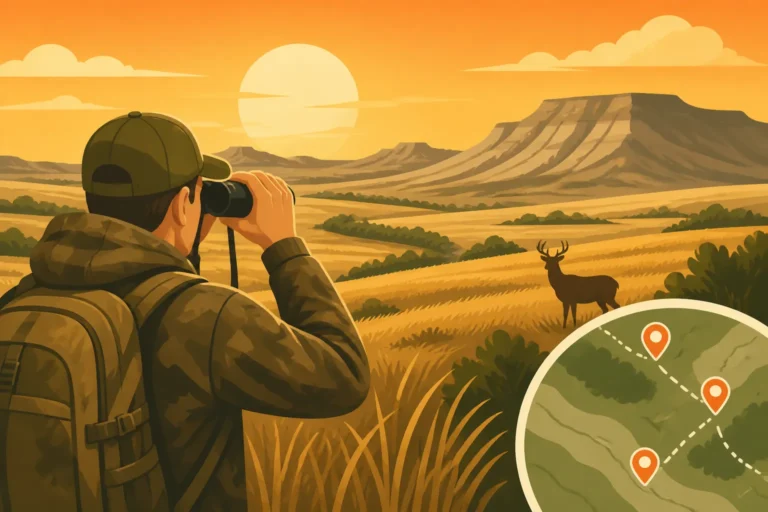
Quality optics are non-negotiable for predator hunting. A good pair of binoculars (10×42 or 12×50) will help you scan the vast landscapes, spot incoming predators, and identify potential setup locations long before you arrive. Spotting scopes can be valuable for confirming distant animals or for pre-scouting an area, allowing you to Glassing South Dakota Breaks at First Light and pick out movement at impressive ranges. For your rifle, a variable power scope (e.g., 3-9×40, 4-16×50, or even 5-25×50) with clear glass and a reticle designed for holdovers or dialing is essential, especially for those longer shots.
For those venturing into night hunting, the world of thermal and night vision optics opens up entirely new possibilities. While a significant investment, thermal imaging scopes and handheld monoculars are game-changers for detecting body heat in complete darkness, making it possible to locate coyotes and other nocturnal predators that would be invisible to the naked eye. Night vision, on the other hand, amplifies ambient light, offering a more traditional "green" image. Each has its pros and cons, with thermal excelling at detection and night vision often providing better target identification at closer ranges. Be sure to understand the specific Night Hunting Rules for Coyotes in South Dakota before investing in and utilizing these advanced tools, as regulations vary and are subject to change.
Calling Strategies That Get Results
Calling predators isn't just about pushing a button or blowing on a reed; it's an art form that blends sound selection, timing, and an innate understanding of animal behavior. Many hunters get frustrated because they simply play a distress sound and expect a predator to magically appear. The reality is far more nuanced, requiring a strategic approach to every setup.
Locating Predators with Howls and Locator Calls
Before you can call a predator in, you need to know where they are, or at least where they might be. This is where locator calls come into play. Coyote howls, especially a challenge howl or group yip, can be incredibly effective at eliciting a response from territorial coyotes, especially during the early morning or late evening hours. You're not necessarily trying to call them to you with these sounds, but rather getting them to reveal their presence. A series of two or three howls, then listening intently for a response, is a classic tactic. Often, distant coyotes will "answer" your call, giving you a general direction to set up.
Beyond coyote howls, other effective locator calls include the owl hoot (particularly for western coyotes) and even domestic animal sounds like a barking dog. These sounds can trigger a curiosity or territorial response without making the coyotes feel directly threatened. The goal is to get an audible confirmation of their presence without giving away your exact location or intentions. Once you have a fix on a general area, you can then plan your approach, considering wind direction and available cover to position yourself for the actual calling sequence. Remember, patience is key here; sometimes it takes a few minutes for a coyote to decide to answer, so wait and listen carefully.
Distress Calls for Coyotes and Foxes
Once you've identified a promising area or located a predator, it's time to switch to distress calls. These are designed to mimic an injured or panicked animal, tapping into a predator's natural hunting instinct. Rabbit distress calls are perhaps the most universally effective for both coyotes and foxes, but don't overlook bird distress, rodent squeaks, or fawn distress, especially in areas with deer. Varying your calls and not over-using one particular sound can prevent predators from becoming conditioned to it.
A common sequence starts with a fairly loud, urgent distress call for 30-60 seconds, then tapers off into quieter whimpers or squeaks, interspersed with periods of silence. The silent periods are crucial; this is when the predator is often approaching, listening intently, trying to pinpoint the source. Continuously blasting a call can be unnatural and alert the predator to your presence. Tailor your calling intensity to the conditions – louder in windy conditions or thick cover, softer and more subtle on calm days or in open areas. Keep your electronic caller at a distance (50-75 yards is ideal), ensuring the predator focuses on the decoy and sound source, not your hidden position. Many hunters find great success with Coyote Calling on Open Grassland by starting with a loud, attention-grabbing sound and then easing off as the animal commits.
Stealthy Setups and Wind Awareness
No matter how good your calls are, a sloppy setup will ruin your hunt. Stealth is paramount. Always approach your chosen setup location into the wind or crosswind, ensuring your scent is carried away from where you expect the predators to approach. South Dakota's winds can be fickle, so checking wind direction with a wind checker frequently is crucial. A predator will almost always try to get downwind to scent-check the source of a call, so anticipate this by positioning yourself to intercept them before they get there. Use topographical features like creek beds, draws, and hills to conceal your approach and provide a backdrop that breaks up your silhouette.
Once in position, remain absolutely still and quiet. Wear camouflage that blends with the current season's foliage or terrain. Break up your outline against a dark background or tuck into a natural depression. Avoid sudden movements, and always keep your rifle ready. Scan continuously, not just directly ahead, but to your flanks and rear, as a wily predator might circle widely. A 30-minute calling sequence is a good baseline, but don't be afraid to sit longer, especially for bobcats or in areas with less pressure. The patience you exhibit in your setup will often be directly proportional to your success.
Adapting Tactics to South Dakota's Diverse Landscapes
South Dakota isn't one uniform hunting ground; it's a tapestry of varied landscapes, each demanding a slightly different approach to predator hunting. What works wonders in the wide-open spaces of the West River breaks might be completely ineffective in the dense cattail sloughs of the Glacial Lakes region. Understanding these geographical nuances and tailoring your tactics accordingly is a mark of a truly seasoned predator hunter.
Hunting the Wide-Open West River Grasslands
The West River country, stretching from the Missouri River west to the Black Hills, is characterized by its vast, rolling grasslands, expansive sage flats, and deep, rugged coulees. Here, visibility can stretch for miles, offering both challenges and opportunities. Coyotes often dominate this landscape, though swift foxes and bobcats can be found in more secluded, broken areas. The primary challenge here is concealment and range estimation. You can see for miles, but so can the predators.
When hunting West River, long-range optics are indispensable. You'll spend a lot of time glassing from elevated positions, trying to locate coyotes before they locate you. Spot-and-stalk tactics, using the terrain to your advantage, can be highly effective, especially for closing the distance on a buck or a coyote once spotted. When setting up to call, identify draws, ridges, and low spots that predators might use for travel or cover. Position your caller on an elevated spot where its sound can carry, but always ensure your position is concealed and provides a clear shooting lane for those 300+ yard shots. The wind is a constant factor here, and learning to Read Wind at Four Hundred Yards or more is a skill you'll develop quickly. Remember, coyotes in this country are often more wary due to lower cover and frequent exposure to human activity, so quick, confident setups are essential. Many hunters find invaluable scouting information using tools like GoHunt's mapping services to identify prime habitat and access points in these expansive areas.
Navigating East River Potholes and Shelterbelts
East River South Dakota presents a completely different challenge. This region is a mosaic of agricultural fields, numerous prairie potholes, scattered woodlots, and ubiquitous shelterbelts. While visibility is generally more limited, cover for both predators and hunters is more abundant. Coyotes, red foxes, and occasionally bobcats can be found here. The density of cover means you often won't see predators until they are much closer, which can lead to exhilarating, close-range encounters.
When hunting the East River, focus on setting up near pinch points, travel corridors, and transition areas between different types of cover. Shelterbelts, in particular, are magnets for predators, offering excellent denning sites, thermal cover, and hunting grounds for rabbits and rodents. Consider setting up on the downwind side of a shelterbelt, allowing the call to pull coyotes or foxes out into a more open field where you can get a shot. Cattail sloughs and wetland edges are also prime areas, especially in winter. Instead of sweeping large areas, concentrate on smaller, more precise setups that target specific cover features. Because shots are often shorter here, a quick-handling rifle with a lower magnification scope might be more appropriate. Hunters often find great success pushing these cover types, similar to Working South Dakota Shelterbelts for Roosters, adapting the approach for predators.
Timber and River Bottom Challenges
The dense timbered draws, sprawling river bottoms along the Missouri River, and the rugged Black Hills present perhaps the most challenging terrain for predator hunters. Here, visibility is often extremely limited, and calling becomes a more intimate, close-quarters affair. Bobcats are more prevalent in these habitats, alongside coyotes and red foxes. The dense cover dictates a different approach: stealth, patience, and meticulous attention to detail.
When hunting timber or river bottoms, focus on finding natural openings, logging roads, or game trails that offer narrow shooting lanes. Your setups will likely be closer to the call, often within 50-100 yards, to maximize the chances of a shot before the animal disappears back into the thick stuff. Hand calls can be particularly effective here, allowing for subtle sounds and quick adjustments in volume. Howls can be used to locate coyotes, but distress calls mimicking small prey that would naturally live in dense cover, such as rabbit or bird distress, are often best. You'll need to be incredibly still and patient, as animals might approach silently through the brush. Using a decoy with motion can be especially useful to draw a predator's attention to an open lane. For those hunting the Black Hills, understanding the terrain is key, much like Hunting Elk on Steep Black Hills Ridges, as steep inclines and thick Ponderosa pine can make any movement challenging.
Advanced Techniques and Seasonal Considerations
Mastering predator hunting involves more than just basic calling; it's about understanding seasonal patterns, environmental factors, and employing advanced techniques to outwit truly educated animals. South Dakota's seasons dramatically influence predator behavior and hunter strategy, making adaptability a critical asset.
Winter Predator Hunting on Snow
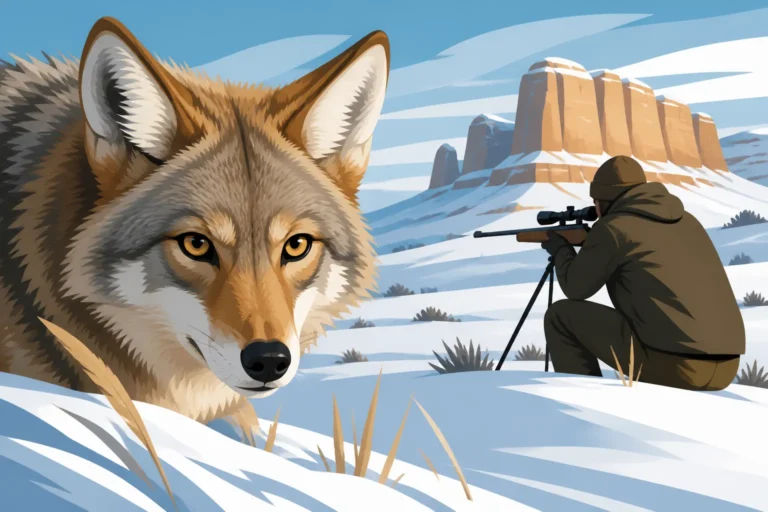
Winter is arguably the best time to hunt predators in South Dakota, especially coyotes. The snow cover not only makes predators more visible against the white landscape but also provides invaluable intel through tracks. When the ground is blanketed in fresh snow, you can easily read patterns of movement, identify fresh sign, and pinpoint travel corridors. This is a crucial element of Reading Snow for Deer and Predator Sign, and it applies just as much, if not more, to predators. Coyotes and foxes are also under increased pressure to find food during winter, making them more responsive to distress calls.
When hunting in winter, thermal regulation becomes critical for both you and your equipment. Layering is key to staying warm during long, still setups in sub-zero temperatures. Consider using hand and foot warmers, and ensure your electronic caller's batteries are protected from the cold to maintain performance. Look for areas where wind has blown snow off ridges, exposing bare ground where rodents might forage, or along south-facing slopes that offer warmer bedding spots. Setting up on the sunny side of a hill can make a huge difference in comfort. Also, remember that frozen ground means less noise from your footsteps, aiding stealth, but also means sound travels further, so be mindful of your calling volume. Many dedicated hunters swear by Winter Predator Hunting on Snow as it often yields the biggest, most beautiful pelts.
Night Hunting Rules and Equipment
Night hunting for predators is a specialized pursuit that requires specific equipment and a thorough understanding of South Dakota's regulations. While generally legal for coyotes, foxes, and other unprotected predators, specific rules regarding weapon types, artificial light, and thermal/night vision devices can vary and are subject to local ordinances. Always check the current South Dakota Game, Fish and Parks regulations handbook before embarking on a night hunt. Ignoring these rules can lead to serious legal consequences.
For night hunting, your equipment needs shift dramatically. A good headlamp or handheld spotlight with red or green filters is essential for navigating to and from your setup, and for scanning during a break in calling. However, for actual target acquisition, dedicated night vision or thermal optics are superior. Thermal excels at detecting the heat signature of an animal, making it easy to spot a coyote across a dark field. Night vision, on the other hand, provides a more detailed image, better for identification once an animal is detected. Many hunters use a combination: thermal for scanning and detection, and night vision (or a weapon-mounted thermal scope) for the shot. Remember to practice extensively with your night equipment in low-light conditions to become proficient before a real hunt. The learning curve can be steep, but the rewards of outwitting a nocturnal predator under the stars are immense. For specific guidelines, refer to the Night Hunting Rules for Coyotes in South Dakota section in the official regulations.
Reading Sign and Tracking
Just like any other hunting pursuit, reading sign is an invaluable skill for predator hunters. Tracks, scat, and disturbed vegetation can tell you a story about what predators are in the area, what they're eating, and where they're traveling. Fresh tracks in snow or soft dirt are obvious indicators of recent activity. Look for characteristic coyote tracks – generally oval-shaped with four distinct toe pads and claw marks, usually in a relatively straight line. Fox tracks are often smaller and more delicate, while bobcat tracks are typically rounder and lack visible claw marks (unless in very soft ground).
Beyond tracks, look for scat, which can reveal diet and recent presence. Predator scat often contains hair, bone fragments, or berries, depending on the season and prey availability. Scratches on trees, especially for bobcats, can indicate territorial marking. Pay attention to how predators use the landscape: look for trails leading into or out of dense cover, along fence lines, or through draws. Identifying pinch points where predators are funneled, or preferred travel corridors, can help you select ideal calling locations. This kind of detailed scouting, often aided by advanced mapping tools like those offered by GoHunt, gives you a significant edge over simply guessing where to set up.
Legalities, Ethics, and Land Access
Hunting predators in South Dakota, like any other hunting activity, comes with a specific set of rules, ethical responsibilities, and access considerations. Ignoring these can not only land you in trouble but also give all hunters a bad name. Being a responsible and knowledgeable hunter is just as important as being an effective one.
South Dakota Predator Hunting Regulations
It is your responsibility to know and follow all current South Dakota Game, Fish and Parks (GFP) regulations. While coyotes and other unprotected predators generally have open seasons and no bag limits, rules can change. Regulations may cover:
- Licensing: While a general hunting license may cover coyotes, specific predator licenses or small game licenses might be required for foxes, bobcats, or other furbearers, especially if you intend to harvest and sell pelts. Always check the latest requirements, which can be found in the South Dakota Predator Hunting Licence Rules section of the GFP handbook.
- Weapon Restrictions: Be aware of any restrictions on weapon types (e.g., centerfire rifles, shotguns, archery equipment), magazine capacity, or ammunition types.
- Hunting Hours: While night hunting is permissible for some species, there might be specific regulations regarding the use of artificial lights or thermal/night vision devices, as discussed earlier.
- Harvest Reporting: While not always required for coyotes, some furbearers like bobcats may require tagging or reporting to GFP.
- Closed Areas: Be aware of any wildlife refuges, state parks (like Custer State Park), or other areas where hunting is prohibited or highly restricted.
Always carry a copy of the current regulations, whether a physical booklet or the digital version on your phone, and double-check anything you are unsure about. When in doubt, contact a GFP conservation officer for clarification.
Respecting Landowners and Public Access
A significant portion of South Dakota's landscape is privately owned, particularly in the prime predator hunting areas of the East River. Gaining access to private land requires respect, courtesy, and often, prior permission. Always ask for permission before entering private land, even if you are just scouting or tracking an injured animal. Offering to share some of your harvest, offering to help with chores, or simply leaving the property better than you found it can go a long, long way in building rapport with landowners. For detailed advice, check out Finding Private Land Access in South Dakota.
South Dakota also offers extensive public hunting opportunities through Game Production Areas (GPAs), National Grasslands, and the highly successful Walk-In Area (WIA) program. These areas are designated for public hunting and can offer fantastic predator hunting. Familiarize yourself with the South Dakota Walk-In Areas Explained and rules specific to these lands, such as "foot traffic only" restrictions. Utilizing the South Dakota Public Hunting Atlas, available online and often through apps like GoHunt, is invaluable for identifying and navigating these public parcels. Always park legally, avoid blocking gates, and leave no trace of your presence. Sharing public land respectfully with other hunters, birdwatchers, and outdoor enthusiasts ensures continued access for everyone.
Ethical Considerations and Shot Placement
Ethical hunting dictates that we strive for quick, humane kills and minimize suffering. For predator hunting, this means practicing your shooting skills regularly to ensure you can make accurate shots at varying distances and angles. Understand the anatomy of a coyote, fox, or bobcat to know the most effective kill zones (typically the vital organs in the chest cavity). Avoid low-percentage shots that could wound an animal, leading to a prolonged search or an unrecovered animal.
If you wound a predator, make every reasonable effort to track and recover it. This might mean following a blood trail, even if it leads onto adjacent property (with permission, of course). Consider the impact of your hunting on local populations, especially for less common species like bobcats or swift foxes. While coyotes are often managed with liberal harvest, being mindful of your impact is part of being a responsible hunter. Also, consider the use of your harvest. If you're not planning to keep the pelt, consider if the hunt is still justified to you personally. Ethical behavior extends to how you represent hunting to others; always be a good ambassador for our sport.
Post-Harvest: Care, Processing, and Fur Value
For many predator hunters, the harvest isn't just about the shot; it's about the beautiful fur and the challenge of preparing it. Whether you plan to sell pelts, keep them as trophies, or simply respect the animal by utilizing as much as possible, proper post-harvest care is crucial.
Field Care for Pelts
Immediately after a successful harvest, especially if the weather is warm, proper field care for the pelt is essential to preserve its quality. Dragging an animal extensively can damage fur, so consider carrying it out if possible. The first step is to cool the animal down as quickly as possible. If the weather is warm, gutting the animal can help prevent "hair slip" – where hair starts to fall out due to bacterial growth.
Once back at your vehicle or camp, the ideal next step is skinning. The quicker you can get the hide off the animal, the better its condition will be. For most predators, a "cased skin" method is used, where the hide is pulled off like a sock, leaving a tube of fur. This method minimizes cutting and is preferred by fur buyers. Avoid cutting into the armpits or belly, as these areas often have thin fur. Once skinned, immediately begin to flesh the hide, removing all fat and muscle tissue. This prevents spoilage and allows the hide to dry properly. A fleshing beam and fleshing knife are invaluable tools for this process. If you don't plan to skin immediately, keep the carcass cool, ideally on ice or in a freezer, until you can get to it.
Market for Furs
The fur market is cyclical and driven by global demand, fashion trends, and supply. Prices for coyote, fox, and bobcat pelts can fluctuate significantly from year to year. While a prime, well-prepared western South Dakota coyote might fetch a good price in some years, in others, it might be minimal. Red fox and bobcat pelts, especially prime, large specimens, often command higher prices due to their perceived rarity and aesthetic appeal.
If you intend to sell your pelts, research local fur buyers or attend fur auctions. They will have specific requirements for how pelts should be skinned, fleshed, stretched, and dried. Incorrect preparation can drastically reduce the value of a pelt. Typically, pelts are stretched and air-dried on specific-sized stretching boards or wire frames, ensuring even drying and preventing spoilage. While the market might not always cover your hunting expenses, the satisfaction of preparing a beautiful fur and knowing it's valued is a reward in itself. Even if not for sale, a properly prepared pelt makes an excellent personal trophy or wall hanger, a lasting reminder of a successful day Predator Hunting Across South Dakota.
| Predator Type | Preferred Habitat | Primary Diet | Best Calling Sounds | Key Hunting Strategy |
|---|---|---|---|---|
| Coyote | Open plains, grasslands, broken farm country, river bottoms, timbered draws | Rabbits, rodents, deer fawns, carrion, birds, insects | Rabbit distress, bird distress, fawn distress, group yips, challenge howls | Stealthy setups, wind awareness, varying call sequences, long-range shooting |
| Red Fox | Agricultural fringes, broken cover, woodlots, shelterbelts | Rodents, rabbits, birds, insects | Mouse squeaks, bird distress, high-pitched rabbit distress | Extreme stealth, anticipate downwind approach, patience, use subtle calls |
| Swift Fox | Shortgrass prairie, sparsely vegetated areas | Rodents, insects, birds | Mouse squeaks, bird distress, subtle rabbit distress | Rare; often incidental while calling for coyotes, focus on extreme caution |
| Bobcat | Dense river bottoms, cedar thickets, rugged canyons, Black Hills timber | Rabbits, hares, rodents, ground birds | Cottontail distress, woodpecker distress, mouse squeaks | Long, patient sets (20-30+ min), extreme concealment, anticipate slow approach, use heavy cover |
Disclaimer
The information provided in this guide is for informational purposes only and is not a substitute for official regulations. Hunting laws, seasons, and licensing requirements in South Dakota are subject to change. Always consult the latest South Dakota Game, Fish and Parks regulations and local ordinances before engaging in any hunting activity. The author and publisher are not responsible for any violations or incidents that may arise from the use of this information. Hunters are responsible for their own safety and for adhering to all applicable laws.