Reading Snow for Deer and Predator Sign
The stark beauty of a South Dakota winter often brings with it a unique set of challenges for hunters. The landscape transforms into a canvas of white, making once-obvious cover disappear, and animals seem to vanish into thin air. But this very blanket of snow can also be your most invaluable scouting tool, offering a pristine record of wildlife activity that reveals secrets invisible in other seasons. This guide will walk you through the art of interpreting these frozen clues, helping you understand deer and predator movements to increase your hunting success.
Why Snow is Your Winter Scouting Report
When the prairie and timber are blanketed in fresh snow, it's like Mother Nature hit a giant reset button, wiping the slate clean and then recording every step, every pause, every interaction that happens afterward. Unlike dry ground where old sign can blend with new, snow gives you a clear timestamp. You can see not just that an animal passed, but when it passed, where it was going, and often, what it was doing. This fresh data is crucial for understanding current animal behavior, especially when late-season hunting in South Dakota snow.
The Immediate Advantage of Fresh Snow
Imagine walking into a field or timber block after a fresh snowfall. Everything is quiet, untouched. Then, you spot a line of tracks. Instantly, you know that whatever made those tracks has been there since the snow fell, giving you a very recent snapshot of activity. This immediacy is something you rarely get in the non-winter months. It means you're working with current intelligence, not trying to piece together weeks-old clues. The tracks tell a story of recent foraging, bedding, or traveling, which can guide your next hunting decision.
Understanding Animal Movement Patterns
Snow doesn't just show you individual tracks; it reveals patterns. Are deer consistently traveling a specific creek bottom? Are coyotes regularly patrolling a certain ridge line looking for prey? These patterns become much more apparent on a snowy landscape. You can identify primary travel corridors, preferred bedding areas, and concentrated feeding zones. For instance, if you're trying to figure out where the whitetails are in a Missouri River timber block, a light dusting of snow will quickly highlight their main trails from bedding cover to their feeding areas, perhaps even showing where bucks are scraping trees under the snow. Observing these patterns helps you predict future movements, placing you in a better position for an encounter.
Decoding Deer Tracks in the Snow
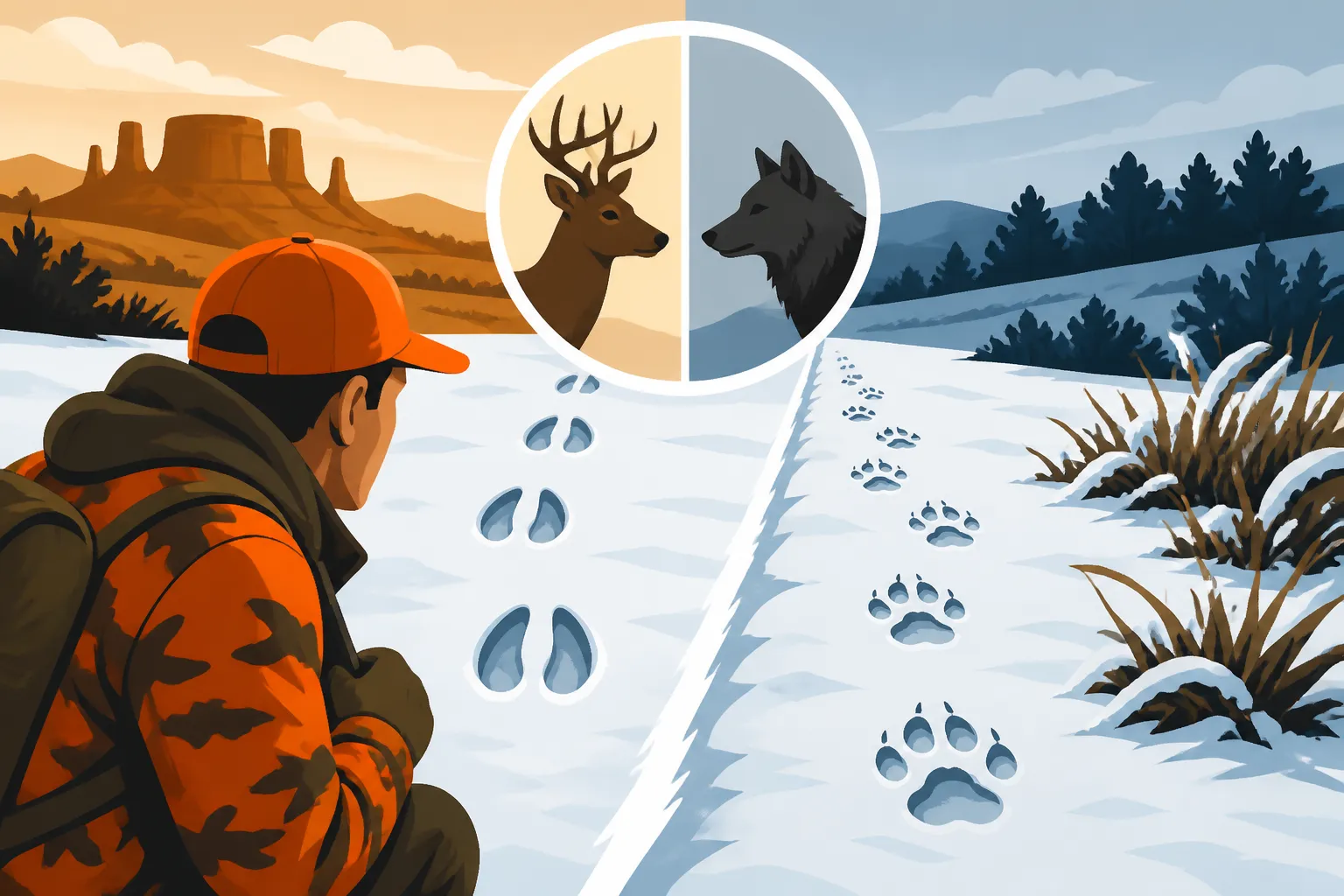
Deer tracks are perhaps the most common and sought-after sign in the winter woods. Learning to differentiate between species, age, and even the intent behind a track can be a game-changer. South Dakota hosts both whitetail and mule deer, and their tracks, while similar, have distinct characteristics that can tell you which species is present.
Differentiating Whitetail and Mule Deer Sign
While both whitetail and mule deer tracks are cloven, meaning they have two distinct halves, there are subtle differences that become more pronounced in snow.
- Whitetail Tracks: Generally appear more pointed or heart-shaped, especially in deep snow. They often show a slight "toe-in" appearance, where the front of the hoof points inward. When a whitetail bounds or runs, the hind feet often land in front of or directly on the front foot tracks, giving a more streamlined, overlapping pattern. You'll often see these in more wooded or brushy areas, like the river bottoms.
- Mule Deer Tracks: Tend to be rounder and broader than a whitetail's. They typically walk with a wider stance, and when they trot or bound, their front and hind tracks often don't overlap as much, sometimes even showing all four prints in a group or spread-out pattern. Their characteristic "bounding" gait, where all four feet push off and land together, leaves a very distinct cluster of four prints in soft snow, often accompanied by a drag mark from their hooves or even their body, especially in deep powder. This is something you'll more likely see out on the west river breaks where they often cover open ground.
| Feature | Whitetail Deer | Mule Deer |
|---|---|---|
| Shape | More pointed, heart-shaped, slight toe-in | Rounder, broader |
| Stride | Often places hind feet in or ahead of front tracks | Wider stance, less overlap, bounding gait creates distinct 4-print clusters |
| Habitat | More common in dense cover, river bottoms, timber | More common in open sagebrush, breaks, coulees |
| Dragging | Less frequent hoof dragging unless very deep snow | More prone to hoof dragging in deep snow, sometimes body drag in bounds |
Interpreting Stride, Depth, and Gait
Beyond just identifying the species, the quality of the tracks themselves offers a wealth of information.
- Stride Length: A long, consistent stride often indicates an animal that is moving purposefully, perhaps heading to or from a feeding area or bedding down. A shorter, more erratic stride could suggest browsing, nervousness, or an animal navigating challenging terrain. Very long, widely spaced strides mean the animal was running, and if you see that in an area, you might have just missed it, or it was spooked.
- Track Depth: The depth of a track is a great indicator of the animal's weight, but also the snow conditions. A deep track in soft snow could mean a large, heavy animal. But if you see a shallow track in soft snow, it might be a smaller deer or even a young one. More importantly, deeper tracks from an otherwise normal-sized deer in consistent snow can indicate an animal that is moving slowly and deliberately, perhaps feeding, as opposed to a shallower track from an animal lifting its feet quickly while moving fast.
- Gait: The pattern of tracks – whether walking, trotting, bounding, or running – tells you a lot about the deer's activity. A walking deer has a distinct alternating pattern. A trotting deer's tracks are typically in pairs or staggered. The mule deer's unique four-hoof bound is unmistakable. Reading these gaits helps you understand if the deer was feeding leisurely, on alert, or spooked. If you consistently find slow-moving, browsing tracks around a specific food source, that's a prime spot to focus your attention.
It's not just about deer either; understanding other animals present can also influence your deer hunt, especially when considering Mule Deer Versus Whitetail in the Same Draw. Knowing where these animals bed and feed is critical.
Finding Bedding and Feeding Sign
Deer don't just walk across the snow; they leave other crucial signs.
- Beds: In soft snow, a deer's bed is often a cleared, oval-shaped depression where the animal lay down. Fresh beds will still show the impression clearly, and you might even find melted spots or hair in the snow. Look for these in sheltered areas, often on south-facing slopes that get more sun, or within dense thermal cover like thick cattails or cedars. Finding a fresh bed nearby suggests the deer isn't far.
- Browse Sign: Deer will push snow aside with their noses to reach tender vegetation. You'll see disturbed snow around shrubs, forbs, and even corn stubble, often with nipped twigs or leaves showing. This indicates a feeding area. Pay attention to what they are browsing; it can tell you about their preferred winter diet.
- Rub and Scrape Lines (Under Snow): While rubs and scrapes are more visible earlier in the season, in areas with lighter snow cover, you might still find bucks clearing snow to refresh a scrape, or even pawing at covered rubs. While less common, fresh pawing at the base of a tree in snowy conditions can indicate a buck is still in the area.
Using modern mapping tools like GoHunt can greatly assist in this. You can mark observed tracks, beds, and browse sign directly on your map, allowing you to build a comprehensive picture of deer movement over time. Overlaying this with satellite imagery from GoHunt can help you pinpoint transition areas, potential bedding cover, and feeding locations, giving you a serious advantage when E-Scouting Walk-In Areas Before the Season.
Unraveling Predator Sign
Deer aren't the only animals leaving telltale signs in the snow. Predators like coyotes and foxes are incredibly active in winter, and their tracks can reveal not only their presence but also their hunting strategies and impact on deer populations. Winter Predator Hunting on Snow is a popular pursuit, and understanding their sign is the first step.
Identifying Coyote and Fox Tracks
Coyotes and foxes are widespread across South Dakota, and their tracks are a constant presence in the winter landscape.
- Coyote Tracks: Generally oval-shaped, longer than they are wide, and typically show four toe pads and a triangular heel pad. The toenails usually leave impressions. One key characteristic of a coyote track is how neat and straight their travel often is; they "direct register," meaning their hind foot lands almost directly into the print of their front foot, creating a single-file line of tracks. This straight line is a strong indicator of a canine, and coyotes are usually larger than foxes. Look for these often along ridge lines, across open prairie, or even through creek bottoms.
- Fox Tracks: Smaller and daintier than coyote tracks, often appearing more circular. The toe pads are usually more spread out, and while they also direct register, their stride is shorter. Red foxes are common, and their tracks are unmistakable once you learn them. Swift foxes, though smaller and more elusive, also leave a distinct, compact track in their range. You might find fox tracks skirting the edges of fields or in brushier areas, as they are often mousing or hunting small game.
Interpreting Predator Hunting Patterns
Predator tracks in the snow can tell you a compelling story about their hunts.
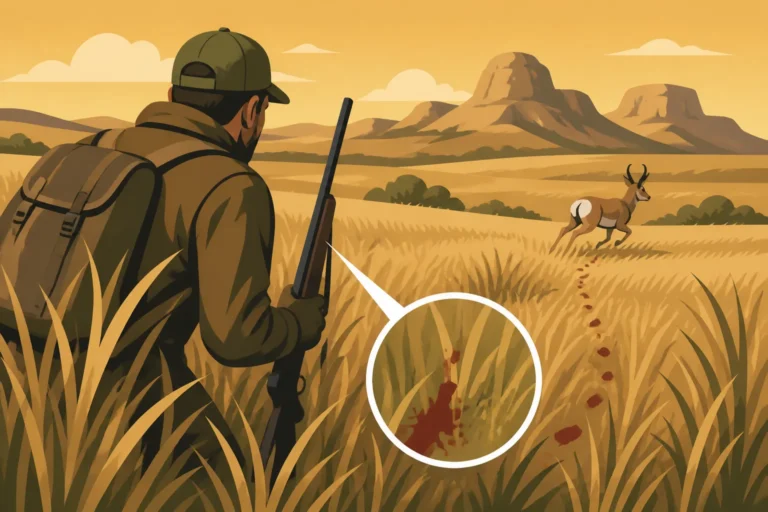
- Track Convergence: If you see multiple coyote tracks converging on a specific area, or signs of frantic activity with disturbed snow and perhaps even blood, it could indicate a recent kill. This is important intel, as it shows where predators are actively finding prey, and sometimes, where deer are being pushed.
- Scat: Predator scat in the snow is highly informative. Coyote scat is typically rope-like and often contains hair, bone fragments, or berries, reflecting their varied diet. Fox scat will be smaller and more tapered. The freshness of the scat, indicated by its pliability and warmth (if very recent), can tell you how long ago the animal passed through.
- Patrol Routes: Like deer, predators establish routes. Coyotes, for example, will often patrol the same draws and coulees, especially if they are consistently finding small game or deer in distress. Observing these consistent routes can help you set up for Calling Coyotes on South Dakota Grassland or understand where deer might be more wary. If you find a set of coyote tracks following a deer trail, it's a clear indication of predation or at least harassment, which might mean deer are moving more often or bedding in thicker cover.
Advanced Tips for Tracking in South Dakota Winter
Beyond the basics, there are several advanced strategies and environmental factors that can significantly enhance your snow-tracking abilities in South Dakota. The prairie landscape presents unique challenges, and understanding them is key.
Reading Snow Conditions for Accuracy
Not all snow is created equal, and understanding its properties can help you gauge the freshness and detail of tracks.
- Powder Snow: Fresh, light powder often holds the best, most detailed tracks. You can see individual toe pads, claw marks, and even subtle nuances of an animal's gait. However, powder can also fill in quickly with wind or subsequent light snow, making older tracks harder to discern.
- Crusty Snow: A hard crust that forms after a thaw and refreeze can be both a blessing and a curse. Tracks will be well-defined but might not show as much detail as powder. The key benefit is that a crust often preserves tracks for longer, and animals, especially deer, will often avoid areas with a noisy, breaking crust, opting for deeper, softer snow or cleared areas.
- Melting Snow: As snow melts, tracks can become distorted and "bleed," making them appear larger and less defined. This makes aging tracks much more difficult. If the sun has been out, assume tracks in direct sunlight are older or at least less reliable for accurate sizing.
Always consider the wind, temperature, and sun exposure when assessing tracks. A strong prairie wind can fill in or obscure tracks quickly, while direct sun can melt and distort them.
Aging Tracks and Predicting Movement
Determining how old a track is crucial. A track laid down an hour ago is far more valuable than one from yesterday.
- Sharpness of Edges: Fresh tracks will have crisp, sharp edges. As time passes, especially with temperature fluctuations or wind, the edges will begin to soften, round, or erode.
- Refrozen Edges: If snow thaws during the day and refreezes at night, you might see a thin layer of ice or a hardened crust along the edges of a track. This tells you the track was made before the thaw/freeze cycle, making it at least a day old.
- Overlapping Weather Events: The most reliable way to age tracks is to know when the last snow, melt, or hard freeze occurred. If you know it snowed last night and you find tracks this morning, they are fresh. If you find tracks under a light dusting of new snow, they are older.
By accurately aging tracks, you can determine if the animal is currently in the area or if you're chasing old sign. This also helps predict when and where you might intercept game, focusing your efforts on areas with very recent activity. Perhaps you've been working a food plot and corn edges and seeing old tracks, but after a fresh snow, new tracks appear in a different area, prompting you to change your strategy.
Using Terrain and Features to Your Advantage
The topography of South Dakota plays a huge role in how animals move and where they leave sign.
- Coulees and Draws: These natural depressions offer shelter from the wind and often hold more snow, making tracks more visible. Deer and predators alike will use coulees as travel corridors, especially Reading Prairie Coulees for Mule Deer.
- Shelterbelts and Tree Lines: These provide vital thermal cover and food, often concentrating deer. Tracks entering and exiting shelterbelts are excellent indicators of activity. Remember, South Dakota Whitetail Hunting in River Bottoms often involves tracking in these types of protected areas.
- Water Sources: Even in winter, open water sources can draw animals. Look for tracks leading to and from springs, unfrozen creeks, or even stock tanks.
Combining your snow-tracking observations with digital mapping tools, like the public and private land layers available on GoHunt, is incredibly powerful. You can pinpoint exactly where tracks are found, identify patterns across property lines, and use topographic maps to anticipate where animals will seek shelter or food. This blend of boots-on-the-ground tracking and modern technology allows for a much more informed and efficient hunt, whether you're scouting from home or out in the field. After all the hard work of tracking, hopefully, you’ll be faced with the challenge of Getting a Deer Out of a South Dakota Coulee!
Disclaimer
This guide is for informational purposes only and does not supersede official South Dakota Game, Fish and Parks regulations. Always consult the current hunting handbook and local laws before engaging in any hunting activities. Stay safe and hunt ethically.