Second Choices in a South Dakota Draw
Applying for hunting licenses in South Dakota can feel like navigating a maze, especially when you’re trying to secure a coveted big game tag. It’s easy to get overwhelmed by the preference point system, unit choices, and the various application periods. This guide is here to break down one crucial, often misunderstood, aspect of the South Dakota draw: your second choices, and how strategically using them can significantly improve your chances of heading afield.
Understanding the South Dakota Draw System Basics
Before we dive into the nuances of second choices, it’s essential to grasp the fundamental mechanics of South Dakota’s big game draws. Unlike some states with pure lottery or pure point systems, South Dakota employs a hybrid approach that can sometimes feel like a moving target. This unique system is designed to provide some advantage to those who apply consistently while still offering a chance for everyone.
The Hybrid Point System Explained
South Dakota uses a system that combines both preference and bonus points for many of its most sought-after big game species like deer, antelope, and elk. For non-residents particularly, understanding this blend is critical. When you apply for certain licenses and are unsuccessful, you often earn a preference point (or a bonus point, depending on the specific draw). These points accumulate, and the more you have, the better your odds become in subsequent draws, but it's not a guarantee.
The preference point system means that applicants with more points are considered before those with fewer points. Think of it like a priority queue. However, it's not a strict "highest points get first dibs" in all cases. Some draws might cube your bonus points, meaning each point you have gives you an exponentially greater number of entries into the lottery, effectively increasing your chances. This means that even if you don't have a huge bank of points, you're not completely out of the running, but consistent application certainly pays off. For a deeper dive into how this all works, check out our guide on South Dakota Preference Points Explained.
Application Periods and Deadlines
The South Dakota Game, Fish and Parks (GFP) sets specific application periods and deadlines for each species, and these are absolutely non-negotiable. Missing a deadline by even a day means you're out of luck for that season, and all your careful planning goes right out the window. Big game applications typically open in late spring or early summer, with deadlines usually falling in late July or early August for deer and antelope. Elk applications often have an earlier deadline.
It's vital to stay on top of these dates, as they dictate when you can submit your first and second choices. The GFP website is always the most up-to-date source, but many hunters also rely on tools from providers like GoHunt to keep track of these critical windows. Knowing when to apply is just as important as knowing what to apply for, because a late application makes all other strategic thinking irrelevant. Keeping a calendar marked with these important dates, even a year or two out, can prevent heart-wrenching misses. You can find comprehensive information about these critical dates in our article on South Dakota Draw Application Deadlines.
The Role of Second Choices in Your Application Strategy
So, you've put in for your dream unit as your first choice, perhaps a coveted West River deer tag or a challenging Black Hills elk unit. But what happens if you don't draw? That's where your second choice comes into play, and it’s far more than just a consolation prize; it’s a critical component of a well-rounded application strategy.
What is a Second Choice and Why Does it Matter?
A second choice on a South Dakota big game application is essentially your backup plan. If your first choice isn't successful, the system then considers your application for your designated second choice unit or license type. It's an opportunity to still secure a tag, even if it's not for your top-tier preference. For many hunters, especially non-residents dealing with limited tags and higher competition, a well-thought-out second choice is the difference between hunting and staying home.
The beauty of the second choice is that it gives you a shot at a different type of hunt, potentially in a less competitive unit or for a different species. For instance, if you apply for an antlered deer tag in a prime unit as your first choice, you might select an antlerless tag in a high-success unit as your second. This significantly increases your odds of drawing something, even if it means adjusting your hunting expectations slightly. It’s all about playing the percentages and maximizing your time in the field.
When Second Choices Come into Play
Your second choice only becomes active if your first choice application is unsuccessful. The draw system processes all first choices first, allocates those tags, and then goes back through the remaining applications to consider second choices. This is a crucial distinction: your second choice isn't competing directly with first choices. It's competing against other second choices, and against any remaining tags that weren't filled by first choices.
This sequential processing means that second choices often have different draw odds than first choices for the same unit. A unit that might be tough to draw as a first choice might actually have decent success rates as a second choice, particularly if it's an antlerless tag or in a less desirable, but still productive, area. This opens up strategic possibilities for hunters willing to do a bit of research and adjust their expectations. It’s a smart way to ensure you don’t walk away from the draw empty-handed.
The Draw Order for Second Choices
Understanding the draw order for second choices is key to making an informed decision. After all first choice applications are processed, the remaining quota for each unit is then available for second choices. When evaluating second choices, the GFP system typically re-ranks applicants based on their accumulated points, even for these secondary selections. This means your hard-earned points still carry weight, making consistent application a valuable strategy over the long term.
For example, if you have accumulated several preference points for West River deer, and your first choice for a specific buck tag unit isn't successful, your application is then entered into the second choice pool for your selected alternative. In this second round, your higher point total will still give you an advantage over other applicants who chose the same second choice but have fewer points. This ensures that the time and effort you've put into building points isn't wasted, even if your primary goal wasn't met. It’s a safety net with a built-in advantage for dedicated hunters.
Navigating Specific Big Game Second Choice Options
South Dakota offers a diverse range of big game hunting opportunities, and with that comes an equally diverse set of draw units and license types. When it comes to second choices, tailoring your selection to the specific species and region you’re targeting is paramount.
Deer Hunting Second Choices: East vs. West River
Deer hunting in South Dakota is broadly divided into two distinct regions: East River and West River. These areas offer vastly different hunting experiences and, consequently, different draw odds and strategies for second choices.
-
West River Deer: This is primarily mule deer country, characterized by vast grasslands, breaks, and coulees. Tags here are highly sought after, especially for buck licenses, and often require multiple preference points to draw as a first choice. For a second choice, many West River hunters consider antlerless tags in units known for higher deer populations or slightly less pressure. This might include units with significant public land access like those found in the Buffalo Gap National Grassland, where an antlerless tag can offer a rewarding hunt. Choosing an antlerless tag as a second option is a pragmatic move to ensure you get to experience the beauty of the West River region, even if you’re not chasing a trophy buck this particular season. Our guide on West River Mule Deer Hunting in South Dakota provides more context on these units.
-
East River Deer: The East River region is dominated by whitetails, with hunting often focused around river bottoms, shelterbelts, and agricultural fields. While some East River buck tags can be tough, especially for non-residents, there are generally more opportunities for antlerless tags and even some combination licenses that are easier to draw as a second choice. Units with a good mix of private and public land, or those adjacent to larger river systems like the James River or Missouri River, can be excellent second choice options. An East River antlerless tag can be a fantastic opportunity to fill the freezer and enjoy a different style of whitetail hunting. You can learn more about these areas in our article about South Dakota Whitetail Hunting in River Bottoms.
Antelope Hunting Second Choices
Pronghorn antelope hunting on the South Dakota prairie is a thrilling experience, and while specific buck tags can be difficult for non-residents to draw, second choices offer a solid path to getting a tag.
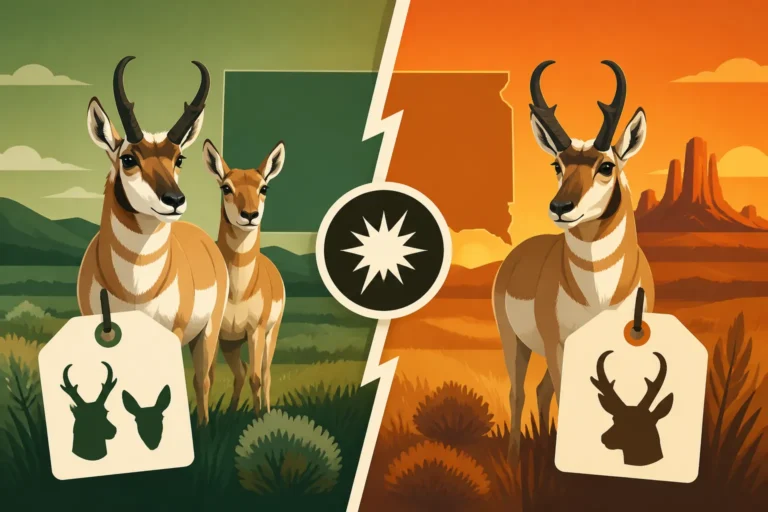
Most antelope applications allow for an "any legal antelope" or "antlerless antelope" as a second choice. If your first choice is for a buck tag in a prime unit like those found near Faith or Belle Fourche, a smart second choice would be an antlerless tag in a unit with higher success rates and less competition. These units might not be known for record book bucks, but they offer fantastic opportunities to hunt one of North America’s fastest land animals and secure some delicious meat. Focusing on a second choice for an antlerless tag significantly boosts your chances, and you'll still get to experience the unique challenge of Spot-and-Stalk Antelope Hunting in South Dakota.
Elk and Other Once-in-a-Lifetime Tags
Elk tags in South Dakota, particularly for the Black Hills herds, are incredibly difficult to draw and are often considered "once-in-a-lifetime" opportunities due to the low odds. While you can technically put a second choice for elk, it’s rarely a practical strategy for non-residents hoping to secure a tag. The quotas are so low and demand is so high that drawing any elk tag as a second choice is exceptionally rare.
For these premium species, the best use of your second choice is often for a completely different animal, like a deer or antelope tag, if the application allows it. This ensures that if your long-shot elk dream doesn't pan out, you still have a viable plan for another hunt. It’s all about managing expectations and utilizing the system to guarantee a hunt, even if it’s not the one you originally fantasized about. More details on the challenging draw for these species can be found in our comprehensive guide on South Dakota Elk Draw and Units.
Maximizing Your Odds with Smart Second Choices
The real art of the South Dakota draw lies in making intelligent decisions not just for your first choice, but especially for your second. It’s about leveraging data, understanding unit dynamics, and being realistic about your goals.
Researching Draw Odds and Success Rates
This is arguably the most crucial step. You need to know the historical draw odds for both first and second choices in the units you're considering. The South Dakota GFP provides past draw results, which are an invaluable resource. They typically show how many applicants applied for a given unit/license type, how many tags were issued, and the point ranges of successful applicants.
Don’t just look at first choice odds; actively seek out information on second choice success rates. Sometimes, a unit with very high demand as a first choice will have a surprisingly good second choice success rate if the right type of tag (e.g., antlerless) is offered. Tools and services like GoHunt's Insider can aggregate this data, making it easier to analyze trends and identify units where your second choice might have a genuine shot. Understanding these numbers will guide you away from applying for another long-shot unit as your second choice, which is a common mistake.
Targeting Less Popular Units or Tag Types
A common mistake is using your second choice on another highly sought-after unit or a premium tag type that also has dismal draw odds. Instead, think about "opportunity units" or "opportunity tags." These are typically units with slightly less desirable habitat, more private land challenges, or a higher proportion of antlerless tags.
For example, if your first choice is a trophy buck unit in the Badlands, your second choice might be an antlerless deer tag in a unit closer to the agricultural heartland, or even a different type of hunt like a South Dakota Pheasant Hunting Tactics for the Opener if you can secure that through another license purchase. The goal is to identify tags that historically have a higher chance of being drawn with fewer points, or even tags that sometimes go to leftover sales. These units might require a different hunting approach or offer a different type of experience, but they still get you into the field.
Balancing Desirability and Probability
This is the strategic sweet spot. Your first choice can be your "dream tag"—the unit you've always wanted to hunt, even if the odds are low. Your second choice, however, should lean heavily towards probability. It should be a unit or tag type that you'd still be genuinely excited to hunt, but one that has a significantly higher chance of being drawn.
Consider a scenario where you're a nonresident applying for West River mule deer. Your first choice is a limited-quota buck tag in a specific unit known for mature bucks. For your second choice, instead of another limited-entry buck tag in a similar unit, you might opt for an antlerless deer tag in a broader geographic area, or even a unit that allows for "any deer" but has historically lower hunter pressure. This balance ensures you take a shot at your ideal hunt while having a strong fallback plan to ensure you're not left without a tag. This strategic thinking allows you to confidently apply, knowing you've stacked the odds in your favor as much as possible.
Common Pitfalls and How to Avoid Them
Even with the best intentions, it's easy to make mistakes when navigating the complexities of the South Dakota draw system. Being aware of these common pitfalls can help you avoid disappointment and increase your chances of success.
Wasting Your Second Choice on Another Long Shot
One of the most frequent errors hunters make is treating their second choice as just another swing at a trophy unit. If your first choice is for a highly competitive buck tag with 5% draw odds, selecting another highly competitive buck tag with similar low odds as your second choice is often a recipe for disappointment. Remember, the system processes first choices first. By the time it gets to second choices, the remaining premium tags are often gone.
Instead of duplicating your low-probability bet, use your second choice to secure a more obtainable tag. This might mean an antlerless deer tag, a unit with higher public land access but perhaps lower trophy potential, or a tag type that historically sees less competition. The goal of a second choice is to get you hunting, not to take another long-shot gamble that leaves you empty-handed.
Not Considering Leftover Tags
Sometimes, even after first and second choices are processed, some tags remain unsold. These are often referred to as "leftover tags" and can be a fantastic opportunity, especially for flexible hunters. South Dakota does hold sales for leftover tags, usually on a first-come, first-served basis.
While your second choice is part of the initial draw, researching which units historically have leftover tags can inform your strategy. If a particular unit consistently has antlerless tags available as leftovers, you might decide to use your second choice for something slightly different, knowing you could still pick up that leftover tag later. However, don't rely solely on leftovers; they're not guaranteed. Use them as an additional layer to your planning. Our article on South Dakota Leftover Licence Sales provides valuable insights into this process.
Overlooking Regulations for Specific Units
South Dakota’s hunting regulations can vary significantly from one unit to another, and it’s critical not to overlook these details, especially when making your second choice. Some units might have specific weapon restrictions, different season dates, or particular land access rules. For instance, a unit might be entirely private, requiring landowner permission, which could make a drawn tag difficult to use if you don't have access secured.
Always double-check the current year's hunting handbook for the specific regulations pertaining to any unit you list as a second choice. The last thing you want is to draw a tag for a unit only to realize it's archery-only when you primarily hunt with a rifle, or that it's entirely private and you have no connections. A little bit of homework here can save a lot of frustration down the road.
Leveraging Tools and Resources for Better Decisions
Making informed decisions about your South Dakota draw choices doesn't have to be a guessing game. There are numerous resources available that can help you understand the odds, scout potential units, and refine your application strategy.
Utilizing the South Dakota GFP Website and Maps
The official South Dakota Game, Fish and Parks (GFP) website is your primary source of truth. Here you'll find:
- Annual Hunting Handbooks: These documents are indispensable, containing all current regulations, season dates, unit boundaries, and draw procedures. Make sure you're always consulting the current year's handbook.
- Draw Result Reports: The GFP publishes historical draw success rates, often broken down by unit, license type, and point levels. This data is the bedrock of any smart draw strategy.
- Public Hunting Atlas: This interactive map tool shows public hunting lands, including Game Production Areas (GPAs) and Walk-In Areas (WIAs). Knowing where public access exists is crucial, especially for second choice units where you might not have prior connections. When scouting specific areas, understanding Hunting Pressure Patterns on Walk-In Areas can give you a significant edge.
Navigating these resources thoroughly can provide a robust foundation for your draw strategy.
Third-Party Data and Mapping Tools
Beyond the official GFP resources, several third-party platforms offer enhanced tools and data analysis that can streamline your research.
- GoHunt: Services like GoHunt's Insider platform are invaluable for hunters applying in multiple states, including South Dakota. They consolidate draw odds data, provide unit-by-unit breakdowns, and often include features like "draw odds calculators" and "unit filters" that can help you pinpoint promising second choice options. GoHunt also offers detailed articles and analysis, helping you understand complex state draw systems more easily.
- OnX Hunt and BaseMap: These mapping applications are essential for e-scouting, allowing you to visualize unit boundaries, public and private land ownership, and terrain features from the comfort of your home. You can identify potential access points, pinpoint cover, and even estimate walking distances. This kind of e-scouting is particularly useful for second choice units that you might not be as familiar with. Learning to E-Scouting Walk-In Areas Before the Season can greatly improve your success.
Engaging with Online Hunting Communities
Don't underestimate the power of collective wisdom. Online hunting forums and social media groups dedicated to South Dakota hunting can be excellent places to gather anecdotal information and ask specific questions. While you should always verify information with official sources, these communities can offer insights into unit dynamics, local conditions, and what strategies have worked for others. You might hear about an overlooked unit that performs well for second choices or get tips on specific public access points. Just remember that every hunter's experience is unique, so use these insights as guidance, not gospel.
Table: Second Choice Strategy Comparison
To help illustrate the differences in strategy, here's a quick comparison of how you might approach first and second choices for common South Dakota big game species.
| Species | First Choice Strategy (Dream Hunt) | Second Choice Strategy (High Probability Hunt) | Key Consideration |
|---|---|---|---|
| West River Deer | Limited-quota buck tag in a renowned unit (e.g., Custer County for mule deer). Requires high points. | Antlerless deer tag in a broader West River unit with good public access. Focus on freezer filler. | Prioritize guaranteed tag for experience; antlerless often easier to draw. |
| East River Deer | Any-deer tag in a prime whitetail river bottom unit (e.g., Missouri River timber). | Antlerless deer tag in a diverse habitat unit with ag fields or shelterbelts. | Whitetail tags can be more abundant; antlerless provides high success. |
| Pronghorn Antelope | Buck-only tag in a unit known for large horns (e.g., Harding or Perkins County). Requires high points. | Any-antelope or Antlerless tag in a higher population unit. | Antlerless antelope tags are significantly easier to draw and still offer a fantastic hunt. |
| Black Hills Elk | Any-elk tag in a specific Black Hills unit for a bull. Extremely low odds, "once-in-a-lifetime." | No practical elk second choice; use for deer or antelope if application allows, or skip if only elk. | Elk odds are so low, a second choice for elk is almost always a wasted slot. |
This table highlights the importance of using your second choice as a practical fallback, ensuring that even if your ambitious first choice doesn't pan out, you still have a viable and exciting hunting opportunity awaiting you in South Dakota. Remember, the goal is to get out there and hunt, and smart second choices are a huge part of making that a reality. For more general licensing details, consult our article on South Dakota Nonresident Licence Costs.
Disclaimer
Please remember that hunting regulations, draw odds, and license availability can change annually. Always consult the official South Dakota Game, Fish and Parks (GFP) website and the current year's hunting handbook for the most accurate and up-to-date information before applying for any licenses or planning your hunt. This guide is for informational purposes only and does not constitute legal advice or guarantee draw success.