Questions to Ask a South Dakota Outfitter
Booking a guided hunt in South Dakota can be an incredible experience, offering memories that last a lifetime, but it can also be a significant investment of your time and hard-earned money. The frustrating reality is that not all outfitters are created equal, and discerning the truly reputable operations from those that might leave you disappointed requires a good deal of due diligence. This comprehensive guide is designed to equip you with the essential questions you need to ask a South Dakota outfitter before you ever put down a deposit, ensuring you have a clear understanding of what to expect and helping you choose the right partner for your next adventure.
Understanding the Hunt Details
Before diving into the nitty-gritty of dates and dollars, you need to understand the core of the hunting experience being offered. This isn't just about what you're hunting, but how, where, and under what conditions. Getting these details ironed out early can prevent major misunderstandings down the road.
What's Included and What's Not?
One of the biggest sources of friction between hunters and outfitters often comes down to unclear expectations about what the package price actually covers. Don't assume anything. What seems obvious to you might be an add-on or not provided at all by the outfitter.
Ask for a detailed list of everything that's included in the advertised price. Does it cover just the hunting days, or does it include arrival and departure days at the lodge? Are all meals provided, and if so, how many per day and what style (lodge dining, packed lunches, restaurant meals)? What about transportation once you arrive at the closest airport? Is it round-trip, or do you need to arrange your own shuttle? Clarify if the cost of your South Dakota hunting license and any necessary stamps (like the Habitat Stamp or Federal Duck Stamp for waterfowl) are part of the package or if you're responsible for purchasing them separately. Often, these are on you, and it's good to know the total financial picture upfront.
Beyond the basics, inquire about specifics like bird cleaning and packaging for pheasants, or initial field dressing and caping for big game. Will the outfitter provide coolers or freezer space for your game? What about ammunition or loaner firearms? While most hunters bring their own gear, unexpected costs for incidentals can add up quickly if you're not prepared. For instance, some lodges might provide shotgun shells, while others expect you to bring your own or purchase them onsite. Knowing these details helps you budget accurately and arrive fully prepared for your hunt.
Game Management and Hunting Pressure
Understanding how an outfitter manages their hunting ground and what kind of hunting pressure their animals experience is crucial, especially if you're looking for a specific quality of hunt. South Dakota is renowned for its game, but not all ground is created equal.
Inquire about the acreage the outfitter controls and whether it's owned, leased, or a combination. What kind of habitat does this land primarily offer? Is it primarily cattail sloughs, shelterbelts, crop fields, or native prairie? The diversity of habitat can significantly impact the quality and style of your hunt. For pheasant hunters, you might ask about their rotation strategy for fields and if they rest certain areas. For big game, understand how they manage herd numbers and buck-to-doe ratios, and if they implement any antler restrictions. You can often glean insights into their practices by asking about their approach to managing land for wildlife beyond just the hunting season.
It's also essential to ask about the typical hunting pressure the animals on their ground experience, both from their own clients and from neighboring properties. For example, if you're Hunting Pressure Patterns on Walk-In Areas, you know that public ground can see heavy traffic. Is the outfitter's private ground surrounded by other high-pressure hunting operations, or do they have large, undisturbed tracts? How many hunter groups do they typically run simultaneously, and how do they manage their groups to avoid crowding or over-pressuring specific areas? Understanding these factors will give you a realistic expectation of the quality of the hunting experience and the likelihood of encountering game.
Physical Demands and Expectations
Hunting in South Dakota, whether it's chasing pheasants through heavy cover or stalking mule deer across expansive breaks, can be physically demanding. Misjudging the exertion required can quickly turn an exciting trip into an exhausting ordeal.
Be honest with yourself and with the outfitter about your physical capabilities. Ask what the typical day of hunting entails. For pheasant hunts, how many miles do hunters typically walk in a day, and through what kind of terrain (dense cattails, rolling grass, corn stubble)? Will there be opportunities to ride in vehicles between drives, or is it continuous walking? Some outfitters tailor hunts to different fitness levels, while others run a more uniform program. Understanding the physical demands helps you prepare adequately and ensures you're not signing up for something beyond your comfort or capability. South Dakota Pheasant Hunting Tactics for the Opener often involves considerable walking.
For big game hunts, what are the typical stalking distances and elevation changes? Are you expected to hike steep ridges in the Black Hills, or will it be mostly glassing and spot-and-stalk on the more forgiving prairie? What kind of weather conditions should you be prepared for, and how might that affect the physical demands? A late-season pheasant hunt in heavy snow, for instance, is a vastly different physical challenge than an early October hunt. Knowing these details allows you to pack appropriately and get yourself in the right shape, ensuring you can fully enjoy the experience rather than struggling through it.
Licensing, Legalities, and Logistics
The administrative side of booking a hunt can be daunting, especially for out-of-state hunters navigating South Dakota's unique licensing and draw systems. It's vital to have a clear picture of what's required and how the outfitter assists with these processes.
Navigating the South Dakota Draw and Licenses
South Dakota has specific rules for both resident and nonresident licenses, especially for big game. Many big game tags are allocated via a lottery draw, and understanding this process is critical.
Begin by asking the outfitter which specific licenses and stamps you will need for your desired hunt. For big game, inquire about the draw process: does the outfitter assist clients with their applications, or are you entirely on your own? What are the typical draw odds for the unit and species they hunt, and how many preference points (if applicable) do their clients generally need to draw a tag? This is where resources like GoHunt can be invaluable for researching draw odds and points needed for specific units, giving you a better understanding of your chances. Asking South Dakota Big Game Draws and How to Apply and How the South Dakota Draw System Works will give you a solid foundation.
If you don't draw a tag, what is the outfitter's policy regarding your deposit or booking? Can it be rolled over to the next year, or is it non-refundable? For small game, especially pheasants, the licensing is generally more straightforward, often involving a nonresident small game license and a habitat stamp. Confirm if these can be purchased over-the-counter or online, and if there are any specific dates by which they must be acquired. Having all this information helps you plan your application strategy and manage expectations around tag acquisition.
Deposits, Cancellations, and Financial Considerations
Understanding the financial terms of your booking, including deposits, payment schedules, and cancellation policies, is paramount. This protects both you and the outfitter should unforeseen circumstances arise.
Ask for a clear, written contract or agreement detailing all financial obligations. What percentage deposit is required to secure your booking, and what is the payment schedule for the remaining balance? Are there any hidden fees or surcharges that might not be immediately obvious? It's wise to clarify these to avoid surprises. Inquire about their cancellation policy. What happens if you need to cancel due to an emergency, illness, or if you fail to draw a necessary tag? Some outfitters offer a full refund if a tag isn't drawn, while others might retain a portion or offer a credit for a future hunt. This is a critical discussion point, and knowing the terms upfront allows you to consider purchasing hunt insurance if the cancellation policy is strict. Outfitter Contracts and Deposits in South Dakota will explain this in more detail.
Also, discuss tipping. While not strictly a financial obligation in the contractual sense, tipping your guides and lodge staff is customary in the outfitting industry. Ask what the typical tipping range is and to whom tips are usually given (head guide, bird boys, cooks, housekeepers). Understanding these expectations allows you to budget for the full cost of the trip, beyond just the advertised price. Tipping Guides and Dog Handlers in South Dakota can provide further insight.
Accommodation, Meals, and Travel
The logistics of getting to and from the hunt, as well as your comfort during the stay, are crucial elements of the overall experience. Don't overlook these practical details.
Inquire about the accommodation provided. Is it a dedicated hunting lodge, a motel, or something else? Are rooms private, or will you be sharing with other hunters? What amenities are available (private bathrooms, Wi-Fi, laundry facilities)? Ask about the meal service: what kind of food can you expect, and can they accommodate dietary restrictions or preferences? Some lodges pride themselves on gourmet meals, while others offer more rustic, home-style cooking. Knowing this helps you manage your expectations for comfort and cuisine.
Clarify the travel arrangements. If you're flying in, which airport should you aim for, and is airport pickup and drop-off included? If you're driving, will the lodge provide detailed directions, and is there ample, secure parking for your vehicle? You should also ask about cell service and internet connectivity at the lodge and in the hunting areas. While some hunters seek to disconnect, others need reliable communication for work or family. Knowing what to expect regarding connectivity is important for planning.
The Guides, Dogs, and Hunting Experience
The quality of your guides and their dogs (for bird hunts) can make or break your hunting experience. These are the people who will be with you in the field, and their expertise, personality, and professionalism are paramount.
Guide-to-Hunter Ratios and Team Dynamics
The ratio of guides to hunters, and the overall team dynamic, can significantly impact the safety, efficiency, and enjoyment of your hunt.
Ask about the typical guide-to-hunter ratio. For pheasant hunting, will there be one guide per small group, or a larger team handling a bigger drive? How many dogs will be working with your group? A good ratio ensures personalized attention, effective bird flushing or deer spotting, and a safer hunting environment. Inquire about the experience level of the guides. Are they seasoned professionals with years of experience on this specific ground, or newer guides? What is their communication style like? Do they provide clear instructions and work well as a team? You want guides who are not only knowledgeable about the game and the land but also enjoyable to spend time with in the field.
Also, ask about the typical size of hunting groups. Will you be hunting exclusively with your private party, or will you be combined with other clients? Some hunters prefer the camaraderie of a larger group, while others seek a more intimate experience. Understanding these dynamics helps ensure the group size and composition align with your preferences.
Bringing Your Own Dog: Policies and Provisions
For many upland bird hunters, their canine companion is an integral part of the experience. If you plan to bring your own dog, you need to understand the outfitter's policies and facilities.
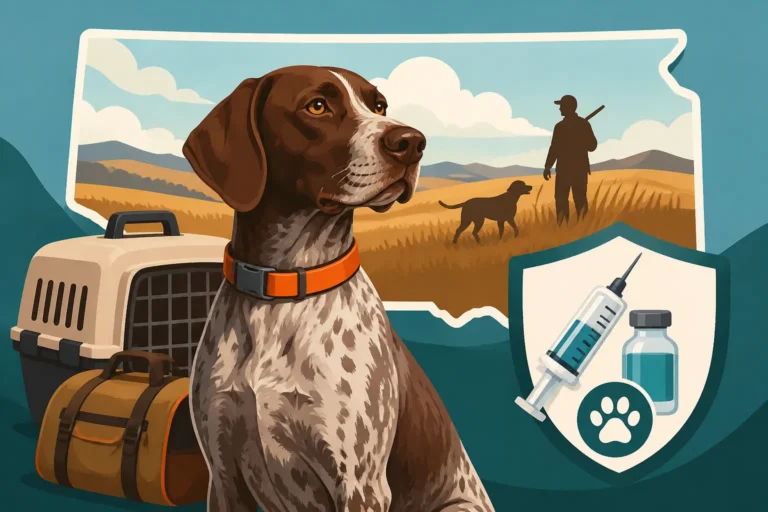
First, ask if the outfitter allows hunters to bring their own dogs. If so, are there any breed or temperament restrictions? What are the requirements for vaccinations and health certificates? Most reputable outfitters will have strict health protocols to protect their own kennel dogs and other clients' animals. Inquire about their kennel facilities. Is there a safe, clean, and secure place for your dog to stay? Is water readily available, and can you access your dog during non-hunting hours? Bringing Your Own Dog on a Guided Hunt delves deeper into this topic.
Crucially, ask how your dog will be integrated into the hunt. Will your dog hunt alongside the outfitter's dogs, or will it be in a separate field? If hunting together, how do they manage multiple dogs to ensure safety and effective hunting? Some outfitters prefer to run their own experienced dogs, while others welcome client dogs and will adjust their strategy accordingly. Being clear on these points ensures a smooth experience for both you and your four-legged hunting partner.
Field Strategies and Shot Opportunity
Every outfitter has a unique approach to hunting, and understanding their field strategies will give you a realistic idea of the type of hunt you'll be participating in and your potential for success.
For pheasant hunting, ask about their typical driving techniques. Do they primarily push cattail sloughs, work shelterbelts, or hunt cornfields? How do they position hunters (walkers versus blockers) to maximize shot opportunities while maintaining safety? South Dakota Pheasant Hunting Tactics for the Opener will give you a good overview. What kind of shots can you expect – close-flushing birds or longer-range opportunities? Understanding this helps you practice accordingly and choose the right shotgun choke and ammunition.
For big game, inquire about their primary hunting methods. Is it spot-and-stalk, still-hunting, glassing from vantage points, or stand hunting near food sources or water? How much time is typically spent glassing versus actively moving? What is their policy on shot distance – do they encourage hunters to take ethical shots at longer ranges, or do they prioritize closer, higher-percentage shots? A good outfitter will always prioritize ethical hunting and shot placement. You might also ask about their success rates over the past few seasons. While no reputable outfitter can "guarantee" a kill, their historical success can indicate the quality of their operation and the abundance of game on their land. Remember, Reading Outfitter Success Claims with a critical eye is always important.
Post-Hunt Logistics and Follow-Up
The hunt doesn't end when the shot is fired. How the outfitter handles game processing, trophy care, and other post-hunt services can be just as important as the hunt itself.
Game Care, Processing, and Transport
Proper game care after the harvest is essential for ensuring the quality of your meat. This is particularly important in South Dakota, where early season temperatures can still be warm.
Ask about the outfitter's procedures for immediate game care in the field. How quickly do they field dress big game, and what methods do they use to cool the meat, especially during warmer weather? For pheasants, how are the birds kept cool throughout the day? Many lodges have dedicated bird cleaning facilities. Inquire if bird cleaning and packaging (e.g., vacuum sealing) are included in the price, or if there's an additional fee. This can be a huge convenience, especially for nonresident hunters.
For big game, ask about processing options. Do they have a preferred local processor, and what are the typical costs? Can the outfitter assist with getting your meat to the processor? Also, discuss transportation of your game back home. Will they help arrange shipping for frozen meat, or do you need to make those arrangements yourself? Knowing about Getting Meat Cooled in Warm Weather and other game care details ensures your harvest is handled properly from field to freezer.
Trophy Handling and Taxidermy Services
If you're hunting for a trophy, you'll want to ensure it's handled correctly from the moment it's harvested.
For big game, ask about the outfitter's caping procedures for a shoulder mount. Do their guides have experience caping, and is this service included? What about skull cleaning or European mounts? They should be able to properly prepare your trophy for a taxidermist. Inquire if they work with local taxidermists and if they can recommend one or assist with transporting your trophy to a taxidermy shop.
For bird hunters, you might want to mount a magnificent rooster pheasant. Ask about their procedures for handling birds intended for taxidermy – how they are stored and frozen to prevent feather damage. If you're interested in taxidermy, discuss whether they can connect you with a local taxidermist or if you should make arrangements to transport the bird yourself. Understanding these details will ensure your trophy is preserved to your specifications.
References and Outfitter Reputation Checks
A reputable outfitter will be transparent and proud of their past clients' experiences. Never skip the step of checking references.
Ask the outfitter for a list of recent references – ideally, clients who have hunted with them in the past 12-24 months and pursued the same species you are interested in. A good outfitter will provide these without hesitation. Don't just get names; ask for contact information (phone and/or email) and be prepared to actually reach out to these individuals. Ask them about their overall experience, the accuracy of the outfitter's descriptions, the quality of the guides, the food and lodging, and if they would book with the outfitter again. This is a crucial step in Checking a South Dakota Outfitter's Reputation.
Beyond direct references, consider using online resources like BookYourHunt to read reviews and testimonials from other hunters. This can provide a broader perspective on an outfitter's reputation and consistency. Be wary of any outfitter who is reluctant to provide references or whose online reviews seem suspiciously one-sided or lacking in detail.
Red Flags and Trusting Your Gut
While asking questions is key, it's equally important to recognize potential red flags and listen to your intuition throughout the booking process.
Unrealistic Promises and "Guaranteed" Success
One of the biggest warning signs in the outfitting world is an outfitter who promises too much. Hunting involves wild animals, unpredictable weather, and countless variables.
Be extremely skeptical of any outfitter who offers a "guaranteed" kill or promises an "easy" hunt, especially for wild animals. Reputable outfitters will speak in terms of opportunity, effort, and experience, not certainties. If an outfitter claims 100% success rates year after year, it should raise a red flag. While some high-fence operations or private shooting preserves might offer very high success rates for pen-raised birds, for wild South Dakota pheasants or big game, true guarantees are rare and often indicate something is amiss.
Similarly, be wary of dramatically lower prices compared to competitors for a seemingly identical package. While deals exist, unusually low prices might indicate shortcuts in quality, lack of proper licensing, or other issues. Remember, a high-quality, ethical hunting experience comes with a certain cost.
Vague Contracts and Lack of Transparency
A lack of clear, written communication, especially regarding financial terms and what the hunt includes, is a major red flag.
If an outfitter is unwilling to provide a detailed written contract outlining all terms and conditions, deposits, cancellation policies, and what is included, walk away. Verbal agreements, no matter how friendly, are insufficient for a significant investment like a guided hunt. The contract should clearly specify hunt dates, species, numbers of hunters, and the total cost. Red Flags When Booking in South Dakota always includes a vague contract.
Also, be cautious if the outfitter seems evasive or changes their story when you ask follow-up questions. Transparency is a hallmark of a professional operation. If you find yourself consistently needing to press for details or feel like you're not getting straight answers, it's a sign that they might not be upfront about other aspects of their business.
Asking for and Checking References
As mentioned earlier, references are critical. An outfitter who makes excuses for not providing them, or only offers a select few that seem too good to be true, is a significant concern.
If an outfitter tells you they don't have client references, or only offers a single, glowing testimonial from a distant cousin, consider that a giant red flag. A legitimate operation will have a roster of satisfied clients willing to share their experiences. Once you receive references, actually call them. Don't just collect the names. Ask specific questions about their hunt and compare their answers to what the outfitter told you. Look for consistency in the message.
The due diligence you put in before booking can save you from a disappointing experience and ensure your South Dakota hunting adventure lives up to its promise. Take your time, ask the hard questions, and trust your instincts.
Disclaimer
This article is for general informational purposes only and does not constitute professional advice. Laws, prices and regulations vary by location and change over time. Consult a qualified professional for guidance on your specific situation.