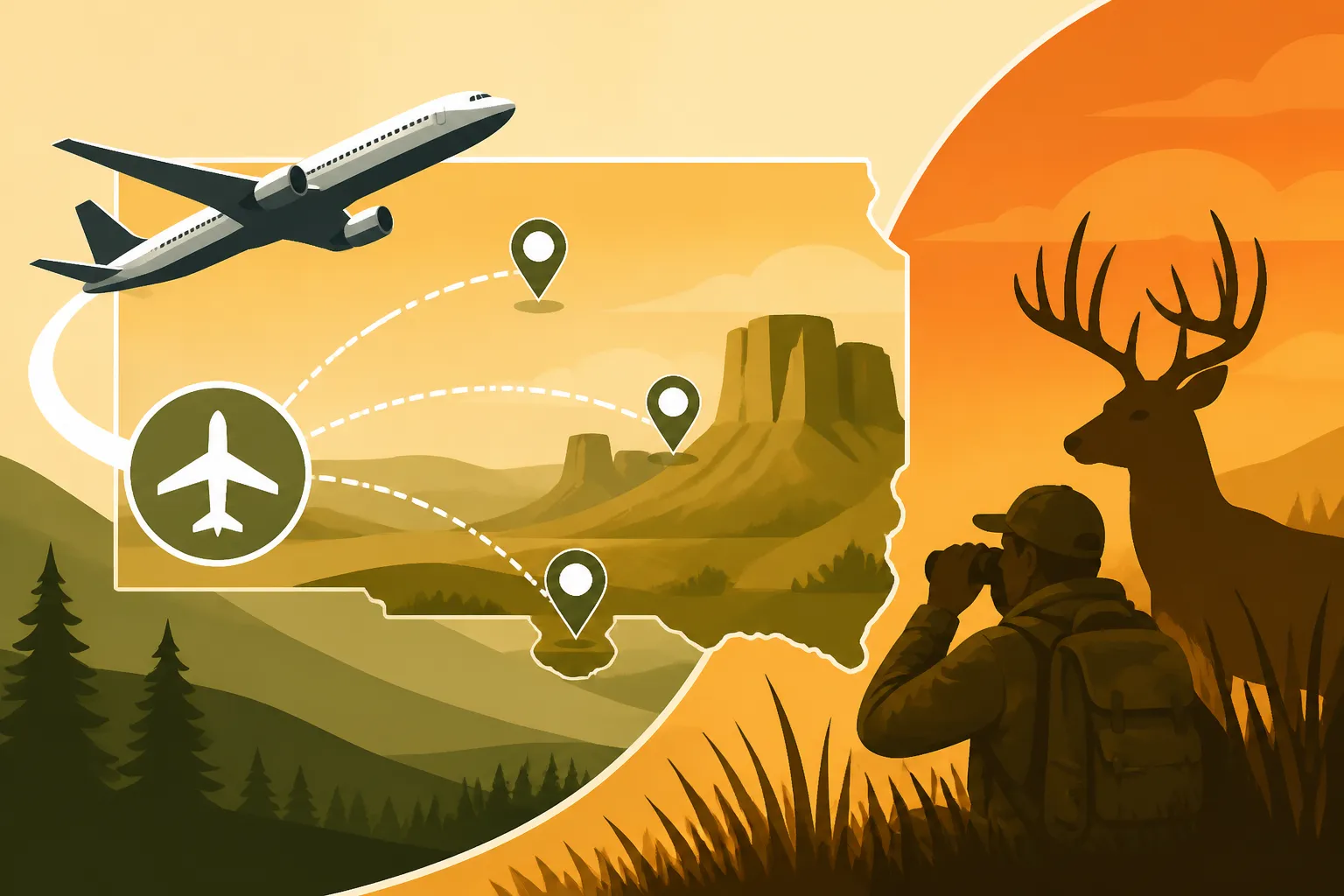
Nearest Airports for a South Dakota Hunt
Embarking on a South Dakota hunting adventure, especially if you're coming from out of state, often means grappling with the logistics of getting yourself and your gear to the vast prairie or rugged Black Hills. One of the biggest questions I hear from folks is about the most convenient airports to fly into, and believe me, figuring out the best landing strip for your particular hunt can feel like trying to hit a rooster at 70 yards with a slingshot if you don't know the lay of the land. This guide will walk you through the primary air hubs and offer practical advice to make your journey smoother, ensuring you spend less time traveling and more time chasing game.
Why Air Travel for Your South Dakota Hunt Makes Sense (And Its Challenges)
For many hunters, especially those coming from afar, flying into South Dakota isn't just a convenience; it's a necessity. The state is geographically large, and driving from distant states can eat up precious vacation days that are better spent in the field. However, flying with hunting gear, particularly firearms, introduces its own set of considerations that need careful planning.
The Vastness of the Prairie and Time Savings
South Dakota's hunting opportunities are spread across a massive landscape, from the rolling farmlands and glacial lakes of the East River region, prime for pheasants and whitetails, to the rugged breaks and vast national grasslands of West River, home to mule deer, antelope, and prairie elk. Driving across the state can take several hours, and if you're coming from states like California, Florida, or even the East Coast, you're looking at days of driving just to get there. Air travel drastically cuts down on this transit time. Imagine spending two days driving one way versus a few hours in the air, allowing you to maximize your time actually hunting. This is especially true for those with limited vacation time, where every hour in the field counts towards making the most of your South Dakota Pheasant Season and Licences or drawing a coveted South Dakota Elk Draw and Units tag.
The time saved isn't just about the drive itself, but also about avoiding fatigue. Arriving refreshed means you're more alert, safer, and ready to hit the ground running, whether you're pushing a cattail slough or glassing a distant ridge for a buck.
Navigating Gear and Logistics with Flights
While air travel is efficient, it does introduce specific logistical hurdles, primarily centered around your hunting gear. Shotguns and rifles cannot be carried on and must be declared, unloaded, and transported in a locked, hard-sided case as checked baggage. Ammunition also has strict rules regarding quantity and how it's packed. This means you need to be prepared, understanding the airline's specific policies, which can vary slightly, and having the right cases.
Beyond firearms, you'll need space for hunting clothes, boots suitable for Boots for Walking Cattails All Day, and potentially other equipment like optics or calls. This often means checking multiple bags, which adds to the overall cost of your trip. Don't forget, too, that once you land, you'll need a rental vehicle large enough to accommodate all your gear, your hunting party, and any game you might harvest. These challenges are manageable with foresight and preparation, but they are certainly different from simply tossing everything in the back of your truck for a road trip.
Major Airports Serving South Dakota's Hunting Regions
South Dakota has two main commercial airports, with a few other regional options and neighboring state airports that can also serve as convenient entry points depending on your final hunting destination. Understanding where each airport is located relative to different hunting opportunities is key to making the best choice.
Sioux Falls (FSD) for Eastern South Dakota Pheasants and Deer
Sioux Falls Regional Airport (FSD), also known as Joe Foss Field, is the largest airport in South Dakota. It's strategically located in the southeastern part of the state, making it the gateway for most hunters targeting the prolific pheasant and whitetail deer populations of East River South Dakota. If your plans involve chasing roosters in counties like Beadle, Kingsbury, or Sanborn, or Hunting Whitetails in South Dakota's Missouri River Timber, FSD is very likely your best bet.
From Sioux Falls, you can easily access countless pheasant hunting hotspots, including many South Dakota Walk-In Areas Explained and Game Production Areas that dot the landscape. Rental car options are plentiful at FSD, and the drive to many prime hunting grounds is often just an hour or two on well-maintained state highways. The city of Sioux Falls itself offers all the amenities you might need before or after your hunt, from hotels and restaurants to sporting goods stores for any last-minute essentials. Many pheasant outfitters and lodges in the eastern part of the state also operate shuttles or are within easy driving distance of FSD.
Rapid City (RAP) for West River Big Game and Black Hills Hunting
On the western side of the state, Rapid City Regional Airport (RAP) serves as the primary hub for hunters looking to explore West River South Dakota and the Black Hills. This is your go-to airport if your sights are set on West River Mule Deer Hunting in South Dakota, Spot-and-Stalk Antelope Hunting in South Dakota, or the unique challenge of Black Hills Elk Hunting Tactics. RAP provides convenient access to the vast Buffalo Gap and Fort Pierre National Grasslands, as well as the diverse landscapes of the Black Hills National Forest.
While smaller than FSD, RAP offers excellent connectivity, often with direct flights to major airline hubs. The proximity to the Black Hills means you can be in the rugged terrain chasing elk or whitetails shortly after landing. For those hunting antelope on the open prairie, a drive of an hour or two will put you deep into classic pronghorn country. Like FSD, Rapid City offers a good selection of rental cars and all necessary services for hunters. If you're utilizing services like BookYourHunt to find guided trips in the western regions, chances are RAP will be the recommended airport for your outfitter.
Bismarck (BIS) and Other Bordering State Options for Niche Areas
Sometimes, the "nearest" airport isn't actually in South Dakota. Depending on your very specific hunting destination, especially if it's near the state borders, it can be more efficient to fly into a neighboring state's regional airport.
- Bismarck, North Dakota (BIS): For hunters targeting the extreme northern reaches of South Dakota, particularly for waterfowl or pheasants in counties like McPherson or Campbell, flying into Bismarck can sometimes save significant drive time compared to FSD or even RAP. It's a solid option to consider when you're looking at Waterfowl Hunting the South Dakota Prairie in that northern corridor.
- Fargo, North Dakota (FAR): Less common for South Dakota hunts, but for the far northeastern corner, it could be an alternative, though FSD is usually still more convenient.
- Omaha, Nebraska (OMA): For hunters heading to the extreme southeastern corner of South Dakota, especially along the Missouri River, Omaha's Eppley Airfield can sometimes offer better flight deals or more direct routes, though you'll have a longer drive into South Dakota proper than if you landed at FSD.
- Denver, Colorado (DEN): While a much larger hub, DEN serves as a major connection point for flights into RAP. Sometimes, direct flights to Denver followed by a connecting regional flight to Rapid City can be more cost-effective or offer more flexibility than trying to find a direct flight straight into South Dakota.
When planning, don't be afraid to look at these cross-border possibilities, especially if you're using a tool like GoHunt to scout areas and coordinate with guides. A little extra planning on the airport choice can shave hours off your drive and make for a much more pleasant start to your trip.
Connecting Flights and Rental Cars: Your Ground Game After Landing
Once you've decided on your primary airport, the next critical steps involve your connections and ground transportation. These aspects are just as crucial as your flight choice for a successful and stress-free hunting trip.
The Importance of a Reliable Rental Vehicle
I cannot stress this enough: securing the right rental vehicle is paramount for a South Dakota hunting trip. Many hunting areas, especially the vast public lands and Walk-In Areas, are accessed via gravel roads, two-track trails, or simply unmarked paths. A standard sedan is often insufficient and can easily get stuck or damaged, ruining your hunt before it even begins.
When booking your rental, prioritize:
- Four-wheel drive (4WD) or All-wheel drive (AWD): This is essential, especially if you're hunting during pheasant season (late October into November) when rain can turn gravel roads into muddy quagmires, or if you plan on Late-Season Hunting in South Dakota Snow. West River hunting for deer or antelope also often involves navigating challenging terrain where 4WD is a lifesaver.
- Ground Clearance: Look for an SUV or pickup truck with decent clearance to handle ruts and uneven surfaces.
- Space: Consider how much gear you have, how many people are in your party, and the possibility of hauling harvested game. A full-size SUV or a pickup truck with a cap will provide ample room for everything, including coolers for transporting meat.
- Tire Type: All-season tires are usually fine, but if you anticipate heavy snow or truly muddy conditions, consider if the rental company offers vehicles with more aggressive tread.
Always book your rental car well in advance, especially during peak hunting seasons like the pheasant opener. Demand for suitable vehicles can be high, and you don't want to be stuck with a compact car when you need a robust truck. Check the rental company's policies on driving on unpaved roads and their specific insurance options.
Planning for Shotgun Transport and Ammunition
Transporting firearms and ammunition on commercial flights requires strict adherence to airline and TSA regulations. Don't leave this to chance or try to skirt the rules; doing so can result in serious penalties and ruin your trip.
Here's a quick rundown of essential tips, but always double-check with your specific airline and the TSA website before you fly:
- Hard-Sided, Lockable Case: Your firearm must be in a hard-sided case, and it must be locked. Only you should have the key or combination. Pelican cases or similar sturdy, purpose-built gun cases are ideal.
- Unloaded and Declared: The firearm must be unloaded, and you must declare it at the airline check-in counter. They will provide a declaration tag to place inside the case.
- Ammunition: Ammunition must be stored securely in a separate container (it doesn't have to be locked, but it must be sturdy, like its original packaging or a plastic ammo box) and usually within your checked luggage. There are weight limits (typically 11 lbs gross weight per passenger, but again, check with the airline). It cannot be loose.
- Magazines: Unloaded magazines can be stored with the firearm or separately.
- Pistols/Handguns: Follow the same rules as rifles and shotguns.
- "Cool Down" Period: Some airlines require a "cool down" period after a gun has been fired, though this is less common for hunting trips where you're not typically flying immediately after shooting.
A quick comparison of gear transport considerations:
| Feature | Road Trip | Air Travel |
|---|---|---|
| Firearms | Easily accessible, no special cases required if unloaded. | Hard-sided, locked case; declared at check-in. |
| Ammunition | Can be in original boxes, easily stored. | Separate container, weight limits, within checked bags. |
| Coolers | Can bring large coolers for game. | Requires purchase/rental upon arrival, or shipping. |
| Clothing | Pack freely, more flexibility. | Subject to baggage weight/size limits. |
| Vehicle | Use your own, familiar rig. | Must rent suitable vehicle, book in advance. |
| Total Travel Time | Longer, potentially days. | Shorter, hours to half a day. |
Remember to allow extra time at the airport for the firearm declaration process. It's usually quick, but unexpected delays can happen. Also, consider the cost of checking multiple bags and firearm fees when budgeting for your trip.
Tips for a Smoother Hunting Trip Journey
Beyond the core logistics, there are several practical tips that can greatly enhance your travel experience and ensure you arrive ready for your South Dakota hunt.
Timing Your Flights with Hunt Dates and Weather
When planning your flights, especially if you're coming for a specific season opener like the South Dakota Pheasant Opener Date, be strategic. Arriving a day or two early can be a huge advantage. It gives you time to:
- Settle in: Get your rental car, check into your lodging, and buy any last-minute groceries or supplies without feeling rushed.
- Scout: Even if you're hunting with an outfitter, an extra day allows you to drive around and get a feel for the landscape. If you're doing a DIY hunt on Hunting South Dakota Walk-In Areas, this time is invaluable for understanding the terrain and E-Scouting Walk-In Areas Before the Season.
- Acclimatize: Especially if you're coming from a very different climate or elevation, an extra day can help you adjust.
- Weather Buffer: South Dakota weather can be notoriously unpredictable. A late fall storm or an early winter blizzard can delay flights. Arriving a day early provides a buffer against unexpected travel disruptions, ensuring you don't miss any precious hunting time. Imagine flying in on the very day of the opener only for your flight to be delayed by freezing rain – that's a tough pill to swallow.
Similarly, consider flying out a day after your hunt concludes. This gives you time to properly process and package any game meat, clean your firearms, and relax before the journey home. Getting Meat Cooled in Warm Weather or Field Dressing an Antelope Fast will be easier without a tight flight schedule looming.
Utilizing Booking Platforms for Best Deals
When it comes to booking your flights, using reputable online travel agencies or direct airline websites is always a good practice. Here are a few platforms and strategies that many hunters find useful:
- Aggregator Sites: Sites like Google Flights, Kayak, or Skyscanner allow you to compare prices across multiple airlines and find the most cost-effective routes into FSD, RAP, BIS, or other regional airports. They often have flexible date searches that can show you cheaper days to fly.
- Direct Airline Bookings: Once you've found a good flight, sometimes booking directly with the airline can offer more flexibility for changes or cancellations, and it streamlines communication regarding firearm transport policies.
- Hunt Booking Platforms: If you're using an outfitter, especially one found through services like BookYourHunt or GoHunt, they often have preferred travel agents or can provide recommendations for the best airports and even suggest specific rental car companies that cater to hunters. Don't hesitate to ask your outfitter for their travel advice; they deal with this every season!
- Credit Card Rewards: If you have travel rewards credit cards, look into using points or miles to offset the cost of your flights, which can be significant, especially with extra baggage fees for firearms.
Remember to consider the total cost, including baggage fees for your firearms and checked bags, when comparing flight options. A cheaper ticket might end up being more expensive if it has high hidden fees. Planning your air travel thoughtfully is just as important as choosing the right gear or scouting your hunting spot. It sets the stage for a memorable South Dakota hunting adventure.
Disclaimer
This article is for general informational purposes only and does not constitute professional advice. Laws, prices and regulations vary by location and change over time. Consult a qualified professional for guidance on your specific situation.