Getting to South Dakota Hunting Country
Planning a South Dakota hunting adventure is exciting, but let's be real: figuring out the logistics of actually getting to our vast hunting grounds can be a source of real stress. It's not like you just show up at a city center; you're often heading deep into prairie, timber, or breaks where roads can be challenging and services sparse. This guide is here to ease that burden, offering practical advice on how to navigate your journey to and through South Dakota's diverse hunting country, ensuring you arrive ready to hunt, not worn out by travel woes.
Flying into South Dakota: Your Gateway to the Prairie
For many hunters, especially those coming from farther afield, flying is the most practical way to reach South Dakota. However, it's crucial to understand that our airports aren't always sprawling international hubs, and travel logistics often extend well beyond your landing time.
Major Airports and Their Locations
When you're looking at flight options, your choice of airport will largely dictate your initial entry point into the state and your proximity to different hunting opportunities.
- Sioux Falls (FSD) – Joe Foss Field: Located in the eastern part of the state, Sioux Falls is our largest airport. It generally offers the most frequent flights and connections, often making it the most economical option. If you're primarily targeting our legendary East River pheasants, waterfowl in the glacial lakes region, or whitetails along the eastern river systems, FSD is usually your best bet. You'll find a good selection of rental car agencies here, but be warned, during peak pheasant season, prices can surge and vehicle availability can become tight if you don't book well in advance.
- Rapid City (RAP) – Rapid City Regional Airport: Situated in western South Dakota, RAP is your gateway to the iconic Black Hills and the vast West River country. This is the ideal airport if your sights are set on Black Hills elk, West River Mule Deer Hunting in South Dakota, or Spot-and-Stalk Antelope Hunting in South Dakota. While RAP has good connections, flight options might be fewer and potentially more expensive than FSD, often involving connecting flights through Denver or Minneapolis. Given the rugged terrain out west, a suitable rental vehicle from here is almost a necessity.
- Smaller Regional Airports: Don't overlook our smaller regional airports in cities like Aberdeen, Pierre, and Watertown. These can sometimes offer closer access to very specific hunting zones, cutting down on drive time once you land. For example, if you're hunting pheasants directly north of Pierre, flying into Pierre might save you hours of driving from Sioux Falls. However, flights into these smaller hubs are typically less frequent, often more expensive, and might only have connections through larger regional airports. Rental car selections can also be quite limited, making pre-booking absolutely essential. The trade-off is often between the convenience of landing closer to your destination and the higher cost or less flexible flight schedules.
Flying with Firearms and Ammunition
This is one of the biggest anxieties for hunters flying, and for good reason: the rules are strict, and consistency can sometimes feel elusive depending on who you talk to. It's vital to follow regulations to the letter.
First and foremost, TSA regulations require firearms to be declared to the airline at check-in, unloaded, and transported in a locked, hard-sided container. This container must completely secure the firearm, preventing access to the firearm when the container is locked. Ammunition must be in its original manufacturer's packaging or a similar securely boxed container designed for ammunition, and typically carried in a separate case or within the same hard-sided, locked container as the firearm. There are usually weight limits for ammunition, so check before you pack a whole case.
Beyond TSA, each individual airline will have its own specific policies, which can often be more restrictive than TSA guidelines. You absolutely must check your specific airline's website or call them directly well in advance of your flight. Some airlines have limits on the number of firearms, the type of hard case, or even whether ammunition can be in the same case. Imagine showing up at the counter with everything perfectly squared away for TSA, only to be told your airline has a different policy – that's a frustration you want to avoid! Ensure your gun cases are robust and use non-TSA approved locks for maximum security. Reviewing resources like Flying With a Shotgun to South Dakota can provide even more detailed guidance.
Rental Cars and Transportation from the Airport
Let's be clear: unless you're joining an all-inclusive guided hunt where transportation is provided from the airport, a rental car is not optional; it's essential for hunting in South Dakota. Our public transportation infrastructure simply doesn't exist in the areas you'll want to hunt.
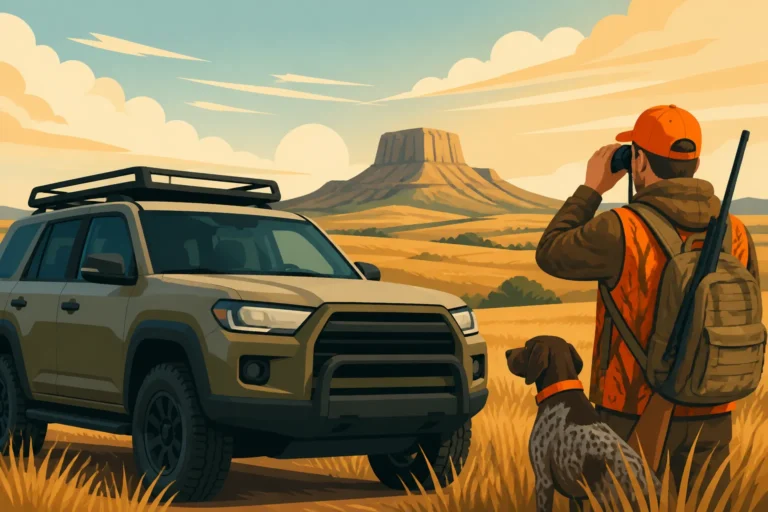
The type of vehicle you choose is critical. While a sedan might get you to your motel in town, it's going to be a real liability once you hit the gravel, dirt, or mud roads that lead to most prime hunting spots. For West River hunting, especially when chasing mule deer or antelope in rugged terrain, a 4×4 or AWD vehicle with good ground clearance is highly recommended. Even in East River pheasant country, a rainy day can turn a seemingly innocent two-track into a muddy quagmire. Don't risk getting stuck miles from anywhere because you skimped on your rental choice.
Booking your rental car far in advance, especially if your hunt coincides with the popular pheasant opener or other major seasons, is non-negotiable. Rental fleets can be stretched thin, and waiting until the last minute will likely leave you with few options and sky-high prices. Look for rental companies at both FSD and RAP; a quick search on a platform like BookYourHunt, if you're exploring outfitters, often gives you an idea of what local infrastructure exists around popular hunting areas, which might hint at rental car agencies nearby. For more on this, check out Renting a Vehicle for a Prairie Hunt.
The Great American Road Trip: Driving to South Dakota
For many hunters, especially those in neighboring states, driving to South Dakota is the preferred method. It offers flexibility, the ability to haul more gear, and often a more economical approach. But a long drive to South Dakota isn't just a casual cruise; it's a journey across vast distances that requires preparation.
Planning Your Route and Drive Time
South Dakota might feel "close" on a map, but the sheer size of the Great Plains means drive times can be substantial. For hunters coming from the Midwest, I-29 (north-south) and I-90 (east-west) are your main arteries. If you're coming from the Mountain West, I-90 will be your primary route.
A trip from Chicago, for instance, is a solid 10-12 hour drive to the eastern border, and significantly more to reach West River hunting grounds. Don't try to push it all in one go; consider breaking up longer drives to avoid fatigue. Use mapping applications to estimate travel times accurately, factoring in potential fuel stops and comfort breaks. Many hunters find resources like GoHunt, typically used for detailed mapping and scouting, can also be invaluable for pre-planning these long drives, especially when trying to understand the terrain you'll be covering just before reaching your destination. Knowing the general layout can help you anticipate potential road challenges.
Once you leave the interstates, you'll encounter a vast network of state highways and, more commonly, county and township gravel roads. These can significantly slow your progress, especially if weather conditions are poor. Always build in extra time for the "last leg" of your journey from a paved highway to your actual hunting camp or area.
Vehicle Preparation for Prairie Conditions
Your personal vehicle needs to be in tip-top shape for a South Dakota hunting trip. Breakdowns in remote areas are not just inconvenient; they can be genuinely dangerous.
- Tires are paramount: Ensure you have good quality, all-terrain tires with plenty of tread. The gravel roads of South Dakota are notorious for causing flats. A full-sized, properly inflated spare tire is absolutely non-negotiable, along with the tools to change it. Consider patching kits or a portable air compressor for minor punctures.
- Fuel Strategy: Distances between towns and gas stations can be considerable, particularly in West River country. Don't let your tank get below half-full if you're heading into remote areas. It’s always better to top off when you have the chance.
- Emergency Kit: This isn't just Boy Scout advice; it's prairie survival. Pack jumper cables, a tow strap, basic tools, a flashlight, extra water, non-perishable food, blankets, and extra layers of clothing, even if the forecast looks mild. Cell Coverage in West River Country can be spotty to non-existent, so don't count on your phone for immediate help. A First Aid Kit for a Prairie Hunt is also a must-have.
- Road Conditions: Be prepared for anything. Dry gravel roads can be dusty and bumpy. A sudden rainstorm can turn them into slick, impassable mud. Late-season hunts mean the possibility of snow and ice, which transforms even main roads into tricky propositions. Always check local weather and road conditions before heading out for the day.
Transporting Your Gear Safely
One of the big advantages of driving is the ability to pack more gear. However, even with a vehicle, safety and organization are key.
- Firearms: Just like flying, firearms should be unloaded and stored securely. Many hunters use locked cases, even in their vehicle, to prevent theft and ensure safe transport. Ammunition should be stored in a manner that prevents rattling or accidental discharge, often in separate containers or organized within a durable case.
- Coolers and Game Meat: If you're successful (and we hope you are!), you'll need a plan for your harvest. Large, high-quality coolers are essential for keeping meat cool, especially during early season hunts when temperatures can still be warm. Think about how many animals you might take and plan your cooler space accordingly for the drive home. Read up on Getting Meat Cooled in Warm Weather to ensure your hard-earned game doesn't spoil.
- Hunting Dogs: If you're bringing your canine companion, ensure they have a comfortable, secure crate for travel. Plan for regular stops for water and exercise. Even the toughest hunting dog needs breaks on a long drive.
Navigating South Dakota's Diverse Hunting Landscapes
South Dakota isn't a monolithic landscape; it's a tapestry of distinct regions, each with its own characteristics and travel challenges. Understanding these differences will help you prepare for what lies ahead.
West River Country: Mule Deer and Antelope Territory
West River, the vast expanse west of the Missouri River, is truly big country. It's characterized by rolling prairie, badlands, breaks, and coulees. This is prime habitat for mule deer, antelope, and prairie elk.
The roads here, even county-maintained ones, are often gravel or dirt, and they can be incredibly challenging. After a rain, two-tracks can become deeply rutted, slick mud traps. Washouts are common in draws. A 4×4 or AWD vehicle with good ground clearance isn't just a suggestion; it’s a strong recommendation for safe and effective travel in these areas. You’ll be covering significant distances between glassing points, and often the best way to approach a stalk is by vehicle, using terrain to conceal your movements. When planning routes, remember that what looks like a short cut on a map might be an impassable track in reality. You might spend hours slowly navigating these roads.
East River Pheasant and Waterfowl Hotbeds
East River South Dakota is the heart of our pheasant country, a patchwork of agricultural fields, shelterbelts, grasslands, and countless prairie potholes. While generally flatter and more populated than West River, don't underestimate its unique travel challenges.
Here, you'll primarily be driving on paved state highways and an extensive grid of gravel county roads. These gravel roads are generally well-maintained but can still become slick with mud after heavy rain or develop bone-rattling washboards. Access to hunting areas, particularly public lands like Hunting South Dakota Walk-In Areas or private land you have permission for, often involves driving down two-track field approaches or parking on shoulder areas. When hunting pheasants, especially if you're Walking and Blocking South Dakota Cattail Sloughs, expect muddy edges and potentially soft ground that can challenge a two-wheel-drive vehicle. Be mindful of property boundaries and posted signs; respectful access is key.
Black Hills Hunting: Mountains and Timber
The Black Hills offer a completely different hunting experience, both in terms of game and terrain. This is where you'll find our primary elk herds, whitetails, and even some mountain goats.
Travel in the Black Hills involves winding paved roads, steep grades, and an intricate network of forest service roads – many of which are dirt or gravel and can be narrow and rocky. In the late season, snow and ice can make many of these roads impassable or extremely hazardous. Always check with the Forest Service or state resources for road closures before venturing deep into the timber. A reliable vehicle with good tires and four-wheel drive is a wise choice here, too, especially if you plan on accessing more remote areas for Black Hills Elk Hunting Tactics or deer. Don't forget that wildlife often crosses these roads, particularly at dawn and dusk, so drive defensively.
Essential Travel Logistics and Preparation
Beyond getting from point A to point B, there are several other critical logistical pieces that hunters often overlook, only to find themselves scrambling at the last minute.
Accommodation and Booking in Peak Season
Whether you're roughing it in a tent or enjoying the comforts of a lodge, having your accommodation squared away is crucial. South Dakota is a popular hunting destination, and lodging, especially in smaller towns, can fill up incredibly fast during peak seasons like the pheasant opener.
- Hotels and Motels: In larger towns, you'll find standard chain hotels. In smaller, more rural communities, motels are often locally owned. These often provide practical amenities for hunters but book up quickly. Secure your rooms months in advance.
- Hunting Lodges: If you're going with a guided hunt, your lodge will likely handle all accommodation. Platforms like BookYourHunt are excellent for finding reputable outfitters, and their packages typically include lodging, which simplifies this aspect immensely. Remember to clarify what's included in your package when you are Booking a South Dakota Pheasant Hunt.
- Camping: Camping on South Dakota Public Land is an option on many Game Production Areas and National Grasslands. However, facilities are usually primitive or non-existent, and you'll need to be entirely self-sufficient. Check specific regulations for the area you plan to hunt regarding camping permits or restrictions.
Connectivity and Emergency Planning
The romance of getting "off the grid" for a hunt can quickly turn into a nightmare if you're unprepared for a true emergency.
- Cell Service: It's a fact of life in much of South Dakota's hunting country: cell service can be spotty to non-existent. Cell Coverage in West River Country is particularly unreliable. Don't rely on your phone for navigation or communication in remote areas. Download offline maps to your smartphone or carry a dedicated GPS unit.
- Satellite Messengers: For peace of mind and true emergency communication in areas without cell service, consider investing in a satellite messenger or personal locator beacon (PLB). Devices like Garmin InReach or Spot can send pre-programmed messages or SOS signals, even from the most remote locations.
- Sharing Your Plan: Always, always, always let someone back home know your itinerary. Share where you're going, when you expect to return, and who you're with. This simple step, often referred to as Leaving a Trip Plan Before a Hunt, can be a lifesaver if something goes wrong.
- First Aid: Beyond the emergency kit in your vehicle, carry a compact, well-stocked first aid kit with you whenever you leave camp or your vehicle. Minor cuts, scrapes, and blisters are common, but more serious injuries require immediate attention.
Preparing Game Meat for the Journey Home
Successful hunters face another logistical challenge: getting your hard-earned game meat home in good condition.
- Cooling is Key: South Dakota's early seasons, particularly for antelope and early pheasants, can have warm daytime temperatures. Proper field dressing and rapid cooling of game meat are critical to prevent spoilage. Have a plan for ice and coolers. Many local towns have ice suppliers, but they can sell out fast during hunting season. Consider bringing block ice or freezing water bottles. You can find more tips on Getting Meat Cooled in Warm Weather.
- Butchers/Processors: Many hunting communities have local meat processors who cater to hunters. Research these services in advance and understand their operating hours and pricing. They can often skin, butcher, and package your game for travel. Some can even freeze it solid for long drives or prepare it for shipping.
- Transporting Meat: If you're driving, plan to have enough cooler space and ice to keep the meat chilled for the entire journey. For flying, check your airline's policies on transporting frozen meat. It often needs to be solidly frozen and packed in a leak-proof cooler or insulated container that meets airline size and weight restrictions. Always remember to comply with all tagging and transport regulations for harvested game.
| Airport | Primary Hunting Region Served | Typical Flight Options | Rental Car Considerations |
|---|---|---|---|
| Sioux Falls (FSD) | East River (Pheasants, Waterfowl, Whitetails) | More frequent connections, diverse airlines | Good availability, strong competition during peak season, book early for best rates. |
| Rapid City (RAP) | West River (Mule Deer, Antelope, Elk), Black Hills | Fewer direct routes, often smaller planes, common connections through Denver | Essential for access, 4WD/AWD often recommended for rugged terrain, book far in advance. |
| Pierre (PRC) | Central (Whitetails, Pheasants, Missouri River) | Limited regional connections, higher cost | Limited selection, often local agencies; critical to book well ahead, might require pre-arrangement. |
| Aberdeen (ABR) | Northeast (Pheasants, Waterfowl) | Regional connections only, usually through MSP | Very limited options, absolutely vital to book months in advance, often small cars or trucks only. |
| Watertown (ATY) | Northeast (Pheasants, Waterfowl, Glacial Lakes) | Regional connections only | Extremely limited, often requires coordination directly with local agencies or third-party booking. |
Disclaimer
This article is for general informational purposes only and does not constitute professional advice. Laws, prices and regulations vary by location and change over time. Consult a qualified professional for guidance on your specific situation.