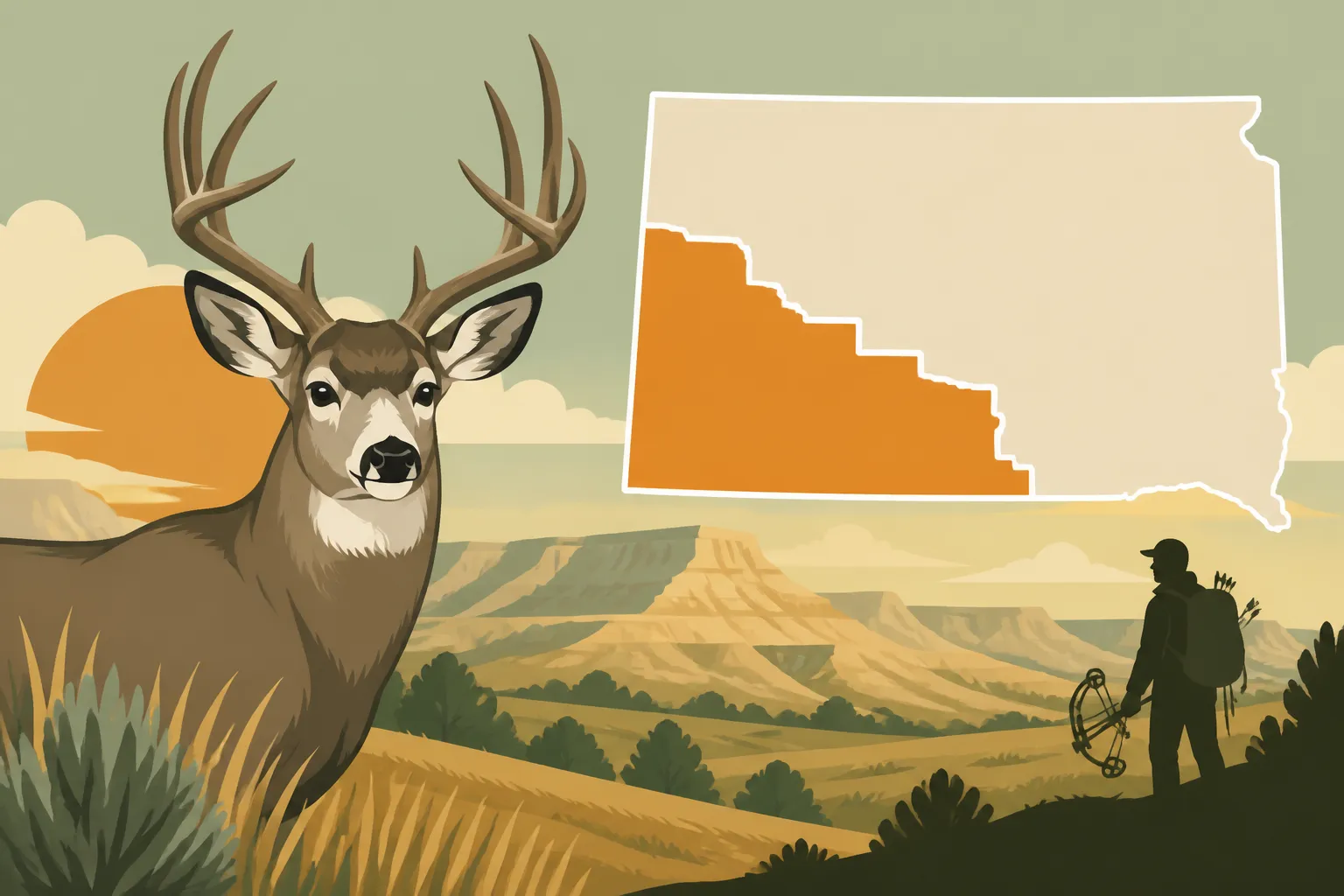
Mule Deer Range in West River South Dakota
Hunting mule deer in the vast, open expanses of West River South Dakota can feel like searching for a needle in a haystack if you don't understand their preferred haunts. These elusive bucks aren't like their whitetail cousins; they have distinct preferences for terrain and cover. This guide is going to peel back the layers of this unique landscape, helping you pinpoint where these incredible animals live, move, and thrive across South Dakota's western half.
Understanding West River's Unique Landscape
If you've spent any time on the eastern side of South Dakota, you know it's a land of rolling prairies, rich farmland, and endless pheasant cover. But once you cross the Missouri River, everything changes. The West River country is a different beast entirely, a wilder, more rugged place that truly shapes the mule deer that call it home. It's an environment that demands a different kind of hunting strategy, one that understands the subtle cues of the landscape.
The Geography of West River Country
Imagine vast, undulating grasslands that stretch to the horizon, broken up by dramatic buttes, deep canyons, and intricate draws carved by eons of wind and water. This is the heart of West River. You'll find yourself navigating steep, eroding hillsides, expansive sagebrush flats, and the occasional rocky outcrop that seems to erupt from the prairie floor. Unlike the more gentle slopes of the East, West River's topography is often sharp and unforgiving, characterized by sudden elevation changes and hidden pockets of cover. It's this very ruggedness that provides mule deer with the security they need to evade predators, including us hunters. Knowing these geographical nuances is step one in understanding your quarry.
Vegetation Types and Their Importance
The plant life in West River might look sparse to the untrained eye, but every shrub, grass, and tree plays a crucial role in supporting mule deer. You'll see dominant native grasses like big bluestem and switchgrass, providing forage. But it's the more resilient, drought-tolerant plants that truly stand out as mule deer magnets. Think dense patches of sagebrush, which offer not only food but also critical bedding cover. Look for the sharp, spiky yucca plants, often indicators of arid, undisturbed areas where deer might feel secure. And while widespread timber is rare, pockets of Ponderosa pine, scattered cedars, and cottonwood stands along drainages offer vital thermal protection and visual breaks, especially when the prairie winds howl or the sun beats down relentlessly. These aren't just pretty plants; they're the grocery store and bedroom for West River mule deer.
Water Sources and Topography
In an often arid landscape, water is life, and this is especially true for mule deer. Natural springs, ephemeral creeks, and even small prairie potholes become critical hubs of activity. However, perhaps the most common and vital water sources you'll encounter are man-made stock dams. These small impoundments, built for cattle, also serve as essential watering holes for all wildlife, including the deer you're pursuing. Learning to read the topography around these water sources is key. Deer will often bed on north-facing slopes nearby to catch the cool breeze, or tuck into deep, brushy coulees that lead directly to water, making for subtle travel corridors. Remember, water dictates movement, and understanding where and when deer access it is a huge part of the puzzle in these dry expanses.
Core Mule Deer Habitat Zones
Mule deer aren't just wandering aimlessly across the prairie; they have specific zip codes they prefer, areas that offer the perfect blend of cover, food, and security. Pinpointing these core habitat zones is paramount to a successful hunt in West River South Dakota. It's about recognizing the landscape's features that scream "mule deer paradise."
The Badlands and Breaks
Without a doubt, some of the most iconic and productive mule deer habitat in West River lies within the Badlands and the countless river breaks. These areas are characterized by intensely eroded landscapes, featuring intricate networks of steep draws, deep canyons, and exposed sedimentary layers. It's a geological maze, and it's precisely this complexity that mule deer adore. They use the broken terrain for ultimate escape cover, disappearing into the labyrinthine folds of the earth at the first sign of danger.
You'll often find mule deer bedding high on ridges within these breaks, using their keen eyesight to survey the landscape below. When disturbed, they'll navigate the steep, rocky slopes with remarkable agility, quickly putting distance and terrain between themselves and a threat. For hunters, these areas demand physical fitness and a strategic approach, often requiring long glassing sessions from prominent vantage points to locate deer before planning a stalk. The areas along the Cheyenne River breaks are particularly renowned for this type of habitat, offering prime opportunities for those willing to put in the legwork. If you're looking to challenge yourself, diving into Hunting South Dakota Walk-In Areas in these rugged zones can be incredibly rewarding, but it demands serious preparation.
National Grasslands and Large Ranches
Beyond the immediate breaks, vast tracts of National Grasslands and expansive private ranches form another significant component of West River mule deer range. Areas like the Buffalo Gap National Grassland, stretching across several counties, offer millions of acres of public access. These landscapes might appear wide open, but they are far from barren. They feature rolling native prairie, interspersed with sagebrush flats, deeper coulees, and the occasional Ponderosa pine stand in the more rugged sections.
Mule deer in these extensive grassland environments learn to use every ripple in the terrain, every patch of taller grass, and every brushy draw for cover. They are often less concentrated than in the breaks, requiring hunters to cover significant ground, often utilizing a vehicle-based glassing approach before setting out on foot. These areas are truly the domain of the spot-and-stalk hunter. Understanding the specific regulations and access points for Buffalo Gap National Grassland Hunting is crucial here, as is respecting the often-intermingled private land boundaries. Tools like GoHunt can be invaluable in overlaying land ownership maps, ensuring you're always on legal ground and maximizing your scouting efficiency in these immense landscapes.
River Bottoms and Creek Drainages
While the Badlands and grasslands offer vast, open habitat, don't overlook the critical role played by river bottoms and smaller creek drainages. Major waterways like the Cheyenne River, the White River, and even seasonal creeks create ribbons of more lush, diverse vegetation in an otherwise arid environment. These riparian corridors provide essential water, denser cover from cottonwood trees and willows, and a wider variety of forage.
Mule deer, especially during dry spells, will gravitate towards these green arteries. The deeper the drainage and the thicker the cover, the more likely you are to find deer bedding down or traveling through. The Cheyenne River Breaks Access, for instance, isn't just about the eroding hillsides; it's about the life-giving river itself. Hunters often find surprising numbers of deer tucked away in these linear habitats. They offer excellent opportunities for methodical still-hunting or short drives if you have a group. These areas can also be crucial winter range, offering protection from harsh winds and deeper snow.
Seasonal Movement Patterns and Influences
Mule deer are creatures of habit, but their habits shift dramatically with the seasons. Understanding these annual cycles and the factors that influence them is key to predicting where bucks might be during your hunt. The West River landscape, with its extreme weather fluctuations, plays a massive role in dictating these movements.
Spring and Summer Dispersal
As the snow melts and the prairie greens up in spring, mule deer begin to disperse from their tighter winter ranges. Does are looking for secluded areas to fawn, often seeking out small, isolated pockets of dense cover in the expansive grasslands or deep within the breaks. Bucks, meanwhile, will begin to grow their new antlers and will often spread out to capitalize on the fresh, nutritious forage available across the landscape.
During summer, they're generally less concentrated than at other times of the year. Bucks will often form small bachelor groups, spending their days in hidden draws or cool, shady pockets, conserving energy. Their movements during these months are primarily driven by food and security. While scouting during this time, you might find them in unexpected, more open areas if the feed is good and pressure is low, but they will still prioritize thick cover for bedding during the heat of the day. Using powerful optics to glass distant slopes during the early morning and late evening can reveal these bachelor groups before they melt into cover.
Fall Concentration and Rut
As autumn arrives and the first cool fronts sweep across the prairie, a shift occurs. Mule deer begin to move more, preparing for winter and, crucially, for the rut. Bucks, having shed their velvet, become increasingly active, scent-checking scrapes and rubs, and subtly beginning to test each other. This is when their movements become more predictable, yet also more erratic.
During the archery and early firearm seasons, bucks are often found in transition areas between bedding cover and food sources. As the rut intensifies, typically in November, their focus shifts almost entirely to finding receptive does. This is when you'll see bucks covering significant ground, often venturing into areas they might normally avoid in pursuit of a doe. Understanding How Buck Movement Changes Through the Rut is absolutely vital for hunting success during this period. They will be less cautious, more visible, and often susceptible to calling or decoying. Keep an eye on does; bucks will usually be nearby, often just out of sight.
Winter Range and Survival
West River winters can be brutal, characterized by deep snows, extreme cold, and relentless winds. Survival becomes the primary driver for mule deer during these months. They will seek out areas that offer the best combination of thermal cover and accessible forage. This often means concentrating in the deepest, brushiest coulees, the densest cedar thickets, or the most sheltered pockets within the Badlands or river breaks.
Food becomes scarcer, and deer will often browse on woody vegetation and whatever dormant forage they can find. Their movements are minimized to conserve energy. Scouting these traditional wintering areas can be insightful, even if you're not hunting in the dead of winter, as it reveals critical habitat that deer rely on year-round. While snow can make hunting difficult, it also offers invaluable information. Learning to decipher Reading Snow for Deer and Predator Sign can tell you exactly where deer are concentrating and their primary travel routes, even if you're just looking at old sign.
Scouting and Locating Mule Deer in West River
Finding a mature mule deer buck in the vast West River landscape can feel like a daunting task. It's not about blind luck; it's about systematic scouting, both from your home and in the field. Leveraging modern tools and time-tested techniques will significantly increase your odds of success.
E-Scouting and Map Analysis
Before you even set foot on the prairie, your hunt should begin from your computer or tablet. E-scouting is a game-changer for West River mule deer. Start by utilizing online mapping platforms like GoHunt or the official South Dakota Game, Fish and Parks Public Hunting Atlas. These tools allow you to analyze topography, identify potential bedding areas, locate water sources, and pinpoint access points from the comfort of your home. Look for deep, intricate draws, especially those with northern exposures for bedding relief during warmer periods, or dense pockets of sagebrush and cedar. Pay close attention to subtle changes in elevation that might offer a deer a vantage point, or isolated patches of cover that could hold a hidden buck.
You can virtually trace travel corridors connecting food sources to bedding areas, mark potential ambush points, and identify terrain features that might funnel deer. This pre-season work is invaluable, saving you countless hours of unproductive walking. It's especially useful for public lands, where understanding boundaries is paramount. For example, when planning a hunt on a Walk-In Area (WIA), e-scouting can help you identify its boundaries and plan your approach, much like you would for E-Scouting Walk-In Areas Before the Season. Remember to save your findings and load them onto a GPS device or smartphone app for in-field navigation.
Glassing Techniques for Open Country
Once you're in the field, your optics are your best friend. Mule deer hunting in West River is, first and foremost, a glassing game. You won't be still-hunting thick timber; you'll be sitting on a high point, systematically dissecting distant landscapes. A good pair of binoculars (10x or 12x) and a high-quality spotting scope (20-60x or higher) are essential. Find a prominent hill or ridge that offers a panoramic view of potential deer country.
Set up comfortably, ideally with a tripod for your binoculars, to minimize fatigue and maximize stability. Divide the landscape into a grid and methodically scan each section, moving slowly and deliberately. Don't just look for an entire deer; look for parts of a deer—an ear, an antler tip, a horizontal line in a vertical world, a patch of hide that looks "off." Spend more time than you think is necessary, especially in areas with good cover. Deer blend in incredibly well. Patience is crucial. Often, it's the 100th scan of the same hillside that reveals a bedded buck you swore wasn't there. Master the art of Glassing South Dakota Breaks at First Light, and you'll put yourself in position for more stalks than you ever thought possible.
Reading Sign and Tracking
While glassing dominates West River mule deer hunting, understanding how to read deer sign is still incredibly important, especially once you've located a general area of activity. Look for fresh tracks in dusty trails, along creek bottoms, or near water sources. Pay attention to their size and shape; larger, rounded tracks often indicate a mature buck. Scrapes and rubs, particularly during the pre-rut and rut, are clear indicators that bucks are in the area and actively marking their territory.
Perhaps the most valuable sign is finding fresh beds. Mule deer often bed in open, sunny areas during cool weather, or in shady, secluded spots on windy or hot days. Look for depressions in the grass or dirt, often with fresh droppings nearby. These tell you not only that deer are present but also their preferred bedding locations relative to the wind and sun. Piecing together these clues—tracks leading to a rub, which leads to a fresh bed—allows you to build a picture of deer movement patterns within a smaller, more manageable area. This detailed work can sometimes be the final puzzle piece when you're Stalking a Bedded Mule Deer Buck.
Conservation and Management of West River Mule Deer
The majestic mule deer of West River South Dakota are a cherished resource, offering incredible hunting opportunities and a vital part of the region's ecosystem. But they don't just thrive on their own; their populations are carefully managed, and their future depends on thoughtful conservation efforts and responsible hunter involvement.
Population Trends and Challenges
Like any wild game species, mule deer populations in West River experience fluctuations, influenced by a variety of factors. Habitat quality and quantity are paramount. While vast, the prairie ecosystem is fragile, susceptible to changes in land use, prolonged droughts, and even severe weather events. For instance, a series of harsh winters with deep, crusted snow can lead to significant winterkill, particularly among fawns and older animals. Conversely, years with abundant moisture and lush forage can boost fawn survival and overall herd health.
Disease can also be a challenge. While Chronic Wasting Disease (CWD) is present in South Dakota, its impact on mule deer populations is continually monitored. Other factors like EHD (Epizootic Hemorrhagic Disease) can also cause localized die-offs, especially in hot, dry years when deer congregate near limited water sources. It's a constant balancing act for the wildlife managers to navigate these challenges. Understanding Mule Deer Population in South Dakota requires looking at these multiple environmental variables that impact their survival and reproduction each year.
Management Strategies and Hunter Involvement
The South Dakota Game, Fish and Parks (GFP) plays a critical role in managing West River mule deer populations. Their strategies are built on scientific data gathered through aerial surveys, harvest reports, and biological sampling. They set hunting season lengths, bag limits, and allocate tags (often through a lottery system for non-residents and residents alike) to ensure sustainable harvest and healthy herd numbers. The goal is to maintain a population that is in balance with its habitat and provides quality hunting experiences.
Hunters are an essential part of this conservation equation. By purchasing licenses and tags, hunters directly fund wildlife management efforts. Moreover, responsible harvest ensures that populations don't outgrow their food supply, which can lead to habitat degradation and increased disease susceptibility. When you submit your harvest report, that data contributes directly to GFP's understanding of herd health and population trends. Participating in public meetings or providing feedback on season proposals also gives hunters a voice in the future of mule deer management.
Ethical Hunting Practices and Respect for Land
Beyond regulations and population data, the long-term health of West River mule deer hunting relies heavily on ethical conduct and respect for the land and its owners. This means adhering strictly to all hunting laws, including those regarding fair chase, shooting hours, and tag requirements. It means making clean, ethical shots and diligently tracking any wounded animal to ensure a swift recovery.
Perhaps most importantly in West River, where private land dominates much of the landscape, is respecting property rights. Always obtain explicit permission before entering private land, even if you suspect a wounded animal has crossed a boundary. The vastness of South Dakota's private ranches means hunters often navigate a patchwork of public and private ground. Tools like GoHunt or the Public Hunting Atlas are crucial for identifying land ownership boundaries, but nothing replaces a polite request to a landowner. Building positive relationships with landowners through courteous communication and responsible behavior is vital to preserving hunting access for future generations. Remember, a good reputation as a hunter opens more doors than any fancy gear ever will.
| Season | Key Habitat Features | Movement Tendencies | Primary Influences |
|---|---|---|---|
| Spring | Green-up areas, secluded fawning cover | Dispersal, does seek fawning grounds | New forage growth, fawning |
| Summer | Cooler, shady draws, dense cover, water sources | Spread out, bachelor groups, minimal movement mid-day | Heat, forage availability, antler growth |
| Fall (Early) | Transition zones, food sources, consistent water | Increased activity, pre-rut rubs/scrapes, stable patterns | Cooling temperatures, approaching rut |
| Fall (Rut) | Areas with high doe concentrations, travel corridors | Erratic, bucks actively seeking does, less cautious | Hormonal drive, breeding behavior |
| Winter | Deep coulees, cedar thickets, thermal cover | Concentrated in sheltered areas, minimal movement | Harsh weather, deep snow, forage scarcity |
Disclaimer
Please remember that hunting regulations, seasons, and public land access policies can change. Always consult the most current South Dakota Game, Fish and Parks (GFP) regulations and maps before planning your hunt. This guide is for informational purposes only and does not supersede official state regulations.