South Dakota Mule Deer Population
If you've ever spent time glassing the rolling hills and sagebrush flats west of the Missouri River, you know the South Dakota mule deer holds a special place in the hearts of hunters. But trying to understand exactly how the mule deer population is doing, and what influences those numbers, can feel like trying to track a ghost in a blizzard. One year, they seem to be everywhere, and the next, they're as elusive as a unicorn. This guide aims to pull back the curtain on the factors shaping South Dakota's mule deer population, offering insights into where they live, what affects their numbers, and how you can approach hunting them with a better understanding.
The Unique World of South Dakota Mule Deer
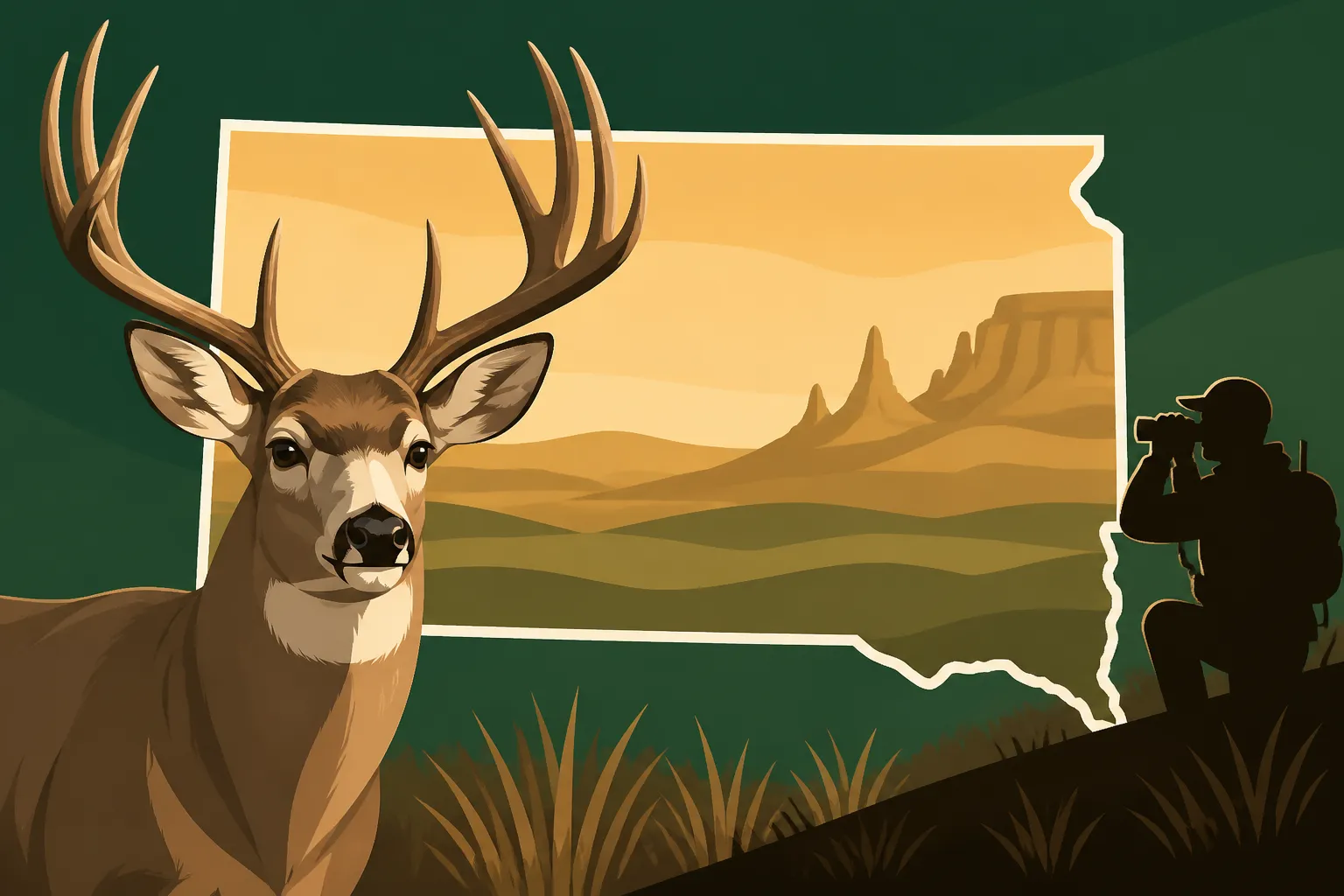
The mule deer, with its majestic antlers and signature bounding gait, is an iconic symbol of the American West. In South Dakota, these magnificent creatures are primarily residents of the rugged West River country, a landscape vastly different from the fertile farmlands to the east. Understanding their preferred terrain and how their numbers have changed over time is crucial for anyone hoping to connect with one.
Where the West River Giants Roam
When we talk about mule deer in South Dakota, we're almost exclusively talking about the western half of the state, specifically the region west of the Missouri River. This is true mule deer country, characterized by expansive grasslands, rolling hills, cedar breaks, and sparse, arid conditions. Unlike their whitetail cousins who thrive in denser timber and agricultural fringes, mule deer prefer open, broken terrain where their keen eyesight and ability to traverse steep, rocky draws give them an advantage.
You'll find them scattered across units like those within the Buffalo Gap National Grassland, the Fort Pierre National Grassland, and the more remote reaches of Harding, Perkins, and Butte counties. These areas provide the diverse forage of prairie grasses, forbs, and browse from shrubs like sagebrush and serviceberry that mule deer depend on. The draws and coulees, often lined with small pockets of cover like cedars or scattered hardwoods, offer crucial bedding areas, especially during harsh weather or when they need to escape the midday sun. Knowing the characteristics of these areas can greatly aid your scouting efforts for Mule Deer Range in West River South Dakota. The vastness of this landscape also means hunters need to be prepared for covering significant ground, whether on foot or with optics.
A Look Back: Historical Peaks and Valleys
The story of South Dakota's mule deer population is one of natural cycles and environmental shifts, marked by periods of abundance and times of struggle. Historically, mule deer thrived across the western portion of the state, with strong populations supporting robust hunting opportunities. Their numbers, like many wildlife species, are intimately tied to habitat conditions and climatic events.
During periods of mild winters and favorable moisture, mule deer populations tend to flourish. Better moisture leads to more forage, which translates to healthier does and higher fawn survival rates. However, South Dakota's weather is notoriously unpredictable. Severe winters, especially those with deep, crusted snow and prolonged cold, can take a heavy toll, particularly on fawns and older animals. Drought conditions, while not as immediately devastating as a brutal winter, can also depress numbers over time by reducing the quality and quantity of available forage, impacting the overall health and reproductive success of the herd. Understanding these historical fluctuations helps put current population figures into perspective and prepares hunters for what they might expect in the field.
What Shapes the Herd: Key Population Influencers
The health and size of the South Dakota mule deer population aren't static; they're the result of a complex interplay of natural and human-influenced factors. From the bite of winter to the changes in the landscape, several critical elements continually shape the herd's dynamics.
The Winter's Cruel Hand: Survival and Recruitment
No single factor impacts South Dakota's mule deer population more dramatically than the severity of winter. A mild winter means more fawns make it through their first few months, and adult deer enter spring in better condition, ready to reproduce. This leads to higher fawn recruitment – the number of fawns that survive to become part of the breeding population.
Conversely, a harsh winter can be devastating. Deep snow makes foraging difficult, forcing deer to expend more energy to find food while simultaneously facing limited nutritional resources. Prolonged periods of sub-zero temperatures further stress animals. Fawns, with their smaller body size and less fat reserves, are often the first to succumb. This can lead to a significant dip in the population, and it can take several years of favorable conditions for the herd to rebound. For example, a particularly tough winter might see fawn survival drop considerably, directly affecting the number of yearlings available for hunters in subsequent seasons and influencing Mule Deer Fawn Recruitment in Dry Years. Hunters often observe these impacts firsthand, with fewer young bucks and smaller overall herds in areas hit hardest by winter.
Habitat Shifts and Human Footprints
While South Dakota's West River country remains largely wild, habitat is always in flux, influencing where and how mule deer thrive. Changes in land use, agricultural practices, and even energy development can alter the landscape, sometimes for better, sometimes for worse, from a mule deer's perspective. The conversion of native prairie to cropland, while less prevalent in the core mule deer range than in East River, can reduce crucial forage and cover. Similarly, the fragmentation of large, contiguous blocks of habitat by fences, roads, or new structures can disrupt migration patterns and increase stress on localized herds.
On the other hand, conservation programs and responsible land management can provide significant benefits. Practices that encourage diverse native vegetation, improve water sources, and manage grazing can enhance the carrying capacity of the land for mule deer. These efforts create healthier ecosystems that support not just deer, but a whole host of prairie wildlife. Access to private lands where these practices are implemented often offers prime hunting opportunities, but public land hunters must adapt to less managed environments.
The Silent Threats: Disease and Competition
Beyond weather and habitat, mule deer face threats from disease and competition with other species. Chronic Wasting Disease (CWD) is a persistent concern, slowly spreading across North America and present in certain areas of South Dakota. CWD is a fatal neurological disease that impacts deer, elk, and moose. While the overall impact on the statewide mule deer population is still being studied, localized outbreaks can be serious. South Dakota Game, Fish and Parks (GFP) conducts monitoring and offers South Dakota CWD Testing for Hunters to help track its prevalence.
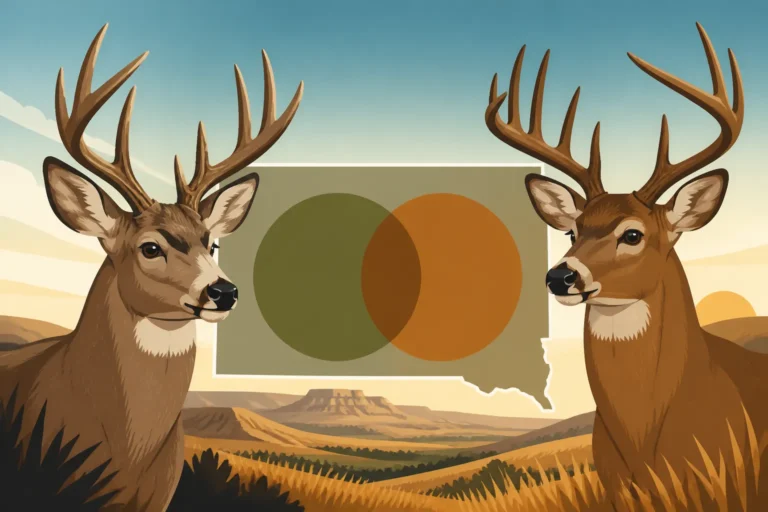
Another challenge comes from the expanding population of white-tailed deer. Whitetails are often more adaptable to a wider range of habitats, including those that are marginally suitable for mule deer. This can lead to competition for resources, especially in transition zones where both species coexist. While mule deer and whitetails typically prefer slightly different habitats, their ranges do overlap, and increased whitetail numbers can put additional pressure on available forage. Predation by coyotes and mountain lions, particularly on fawns, also plays a role, though typically a less significant one than winter weather or habitat loss in healthy, balanced ecosystems.
Understanding Today's Mule Deer Picture
For hunters, knowing the current state of the mule deer population isn't just about curiosity; it's about planning successful hunts and understanding draw odds. The South Dakota Game, Fish and Parks (GFP) works hard to monitor these populations, providing the data that informs hunting seasons and management strategies.
Current Estimates: What the Numbers Tell Us
Unlike pheasants, for which specific brood counts used to provide yearly population indices (though this has changed, as detailed in Why South Dakota Stopped Its Brood Survey), estimating big game populations like mule deer is a complex undertaking. South Dakota GFP utilizes a combination of aerial surveys, ground observations, and harvest data to gauge herd health and population trends. While exact, real-time numbers are difficult to pinpoint, these methods provide crucial indices that indicate whether the population is stable, increasing, or decreasing in various management units.
These assessments often focus on fawn-to-doe ratios and buck-to-doe ratios, which are key indicators of reproductive success and herd structure. A healthy fawn-to-doe ratio suggests good recruitment, while a balanced buck-to-doe ratio indicates a stable population with mature animals. Hunters can use this information, often available through GFP's annual reports or specific unit data, to better understand potential success rates and where to focus their efforts. Tools like GoHunt can also aggregate this publicly available data, helping hunters quickly visualize trends and historical performance for specific units.
Navigating the Draws: Population's Impact on Hunters
The health of the mule deer population directly translates into hunting opportunities and draw odds for hunters, especially non-residents. South Dakota manages its big game hunting through a lottery system, and the number of available tags in each unit is a direct reflection of the population's status and management goals. When populations are robust and healthy, more tags are typically issued, leading to better draw odds. Conversely, after tough winters or periods of decline, tag numbers may be reduced to allow the herd to recover, making drawing a tag more challenging.
Many hunters use platforms like GoHunt to research draw odds and historical success rates, which are heavily influenced by population health. This insight is critical when applying for limited South Dakota Deer Licence Types by Region or trying to secure a coveted West River mule deer tag. Non-residents, in particular, face steeper odds due to quotas, making it even more important to understand which units offer the best chances based on current population trends and tag allocations. Planning several years ahead, and accumulating preference points if available, is often a necessary strategy for those dreaming of a trophy South Dakota mule deer.
Here's a quick comparison of key differences between mule deer and whitetail deer that hunters commonly encounter in South Dakota:
| Feature | Mule Deer | White-tailed Deer |
|---|---|---|
| Ears | Large, mule-like | Smaller, more proportional |
| Antlers | Bifurcated (forks, then forks again) | Tines branch from a single main beam |
| Tail | Rope-like, white with black tip | Broader, white underneath ("flag") |
| Rump Patch | Large, white | Smaller, often concealed by tail |
| Movement | "Pronking" or stotting (all four legs push off ground) | Bounding or running, often "flags" its tail |
| Preferred Habitat | Open, broken country, sagebrush flats, cedar breaks, coulees | River bottoms, dense timber, agricultural edges, brushy areas |
| Typical Range in SD | West River | Statewide, especially East River and river corridors |
Becoming a More Informed Mule Deer Hunter
Understanding the mule deer population isn't just academic; it's a practical advantage for any hunter. By integrating population knowledge with smart field strategies and a commitment to conservation, you can enhance your hunting experience and contribute to the future of these magnificent animals.
Smart Scouting for Success on the Prairie
Knowing where to find mule deer is half the battle, and it directly ties into population health and habitat preferences. Given that South Dakota Mule Deer Population numbers can fluctuate, good scouting becomes paramount. Begin your scouting by focusing on the classic mule deer habitat: the broken country of the West River. Look for areas with a mosaic of sagebrush, native grasses, and the ever-important draws or coulees that offer both feed and cover. Using topographic maps and aerial imagery, perhaps with a tool like GoHunt's mapping features, can help you identify these key areas before you even set foot on the ground. This "e-scouting" is invaluable for covering vast areas efficiently.
Once in the field, learn to read the terrain. Mule deer are masters of using topography to their advantage, often bedding on shaded slopes during the day or using ridges to travel undetected. Focus your efforts during the golden hours of dawn and dusk when deer are most active. This is when you'll have the best chance of spotting them moving between bedding and feeding areas. When glassing, pay close attention to any movement, especially in the shadows of Reading Prairie Coulees for Mule Deer or the broken edges of prairie breaks. Remember that mule deer will use different parts of their habitat depending on the time of day, weather, and hunting pressure.
Investing in Tomorrow: Conservation Efforts
As hunters, we have a vital role to play in the conservation of South Dakota's mule deer. Our license fees and excise taxes on hunting equipment directly fund wildlife management and habitat restoration efforts by agencies like South Dakota GFP. But our involvement goes beyond financial contributions. Being a responsible hunter means understanding and respecting the regulations, which are designed to maintain healthy populations.
Consider going a step further by supporting organizations dedicated to mule deer conservation, such as the Mule Deer Foundation, which works to ensure the future of mule deer and their habitat. Participating in habitat improvement projects, advocating for sound wildlife management policies, and simply being an ethical hunter who respects the land and its wildlife are all ways to give back. By doing so, we help ensure that future generations can also experience the thrill of hunting West River Mule Deer Hunting in South Dakota and seeing these magnificent animals thrive on the prairie. Every effort, big or small, contributes to the longevity and health of South Dakota's mule deer population.
Disclaimer
This article is for general informational purposes only and does not constitute professional advice. Laws, prices and regulations vary by location and change over time. Consult a qualified professional for guidance on your specific situation.