How GFP Counts Big Game
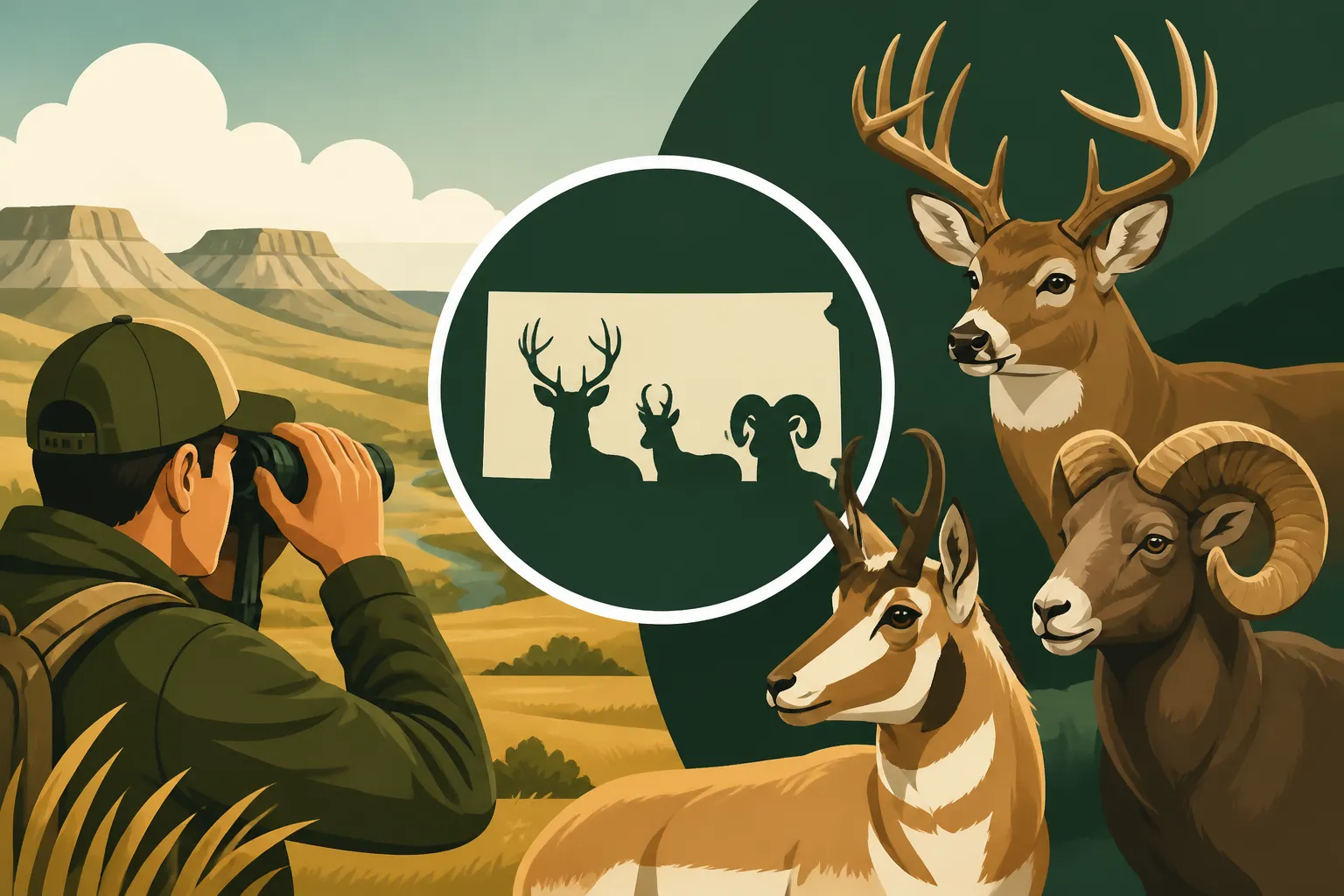
It's a question every hunter has pondered, especially after a tough season or when eyeing those coveted draw tags: "How exactly do they know how many deer, antelope, or elk are out there?" The South Dakota Game, Fish and Parks (GFP) isn't just pulling numbers out of a hat; they rely on a sophisticated blend of field work, advanced technology, and data analysis to estimate big game populations. This guide will pull back the curtain on those methods, helping you understand the science behind your hunting opportunities.
The Challenge of Counting Wild Animals
Trying to get an accurate count of every single deer, antelope, or elk roaming the vast landscapes of South Dakota is, quite frankly, an impossible task. Unlike livestock in a pasture, wild animals don't stand still for a headcount. They're elusive, constantly moving, and spread across millions of acres, from the dense timber of the Black Hills to the wide-open prairie. It’s no wonder hunters often feel a disconnect between what they see in the field and the population numbers reported.
Why Counting is So Difficult
Think about trying to count mule deer in the rugged, broken country of the West River breaks, where canyons and draws provide endless cover. Or imagine pinpointing every whitetail buck lurking in the thick Missouri River bottom timber. These animals are masters of concealment. Their populations are dynamic, changing with births, deaths, and migration patterns throughout the year. The sheer scale of the land, combined with the animals' natural instincts and camouflage, makes a precise census unfeasible. Even with modern technology, GFP's goal isn't to count every individual animal, but rather to generate reliable estimates of population trends, densities, and overall health. These estimates are crucial, but they are always subject to a degree of variability, a reality that can sometimes be frustrating for hunters seeking definitive answers.
The Importance of Reliable Data
Despite the inherent difficulties, having reliable population data is absolutely critical for responsible wildlife management. Without these estimates, the GFP would be flying blind when setting season dates, determining tag allocations, and developing habitat improvement projects. Imagine a scenario where tags are issued without understanding the population's capacity to sustain harvest – that could lead to overhunting and long-term declines, which no hunter wants. Conversely, too few tags could mean missed opportunities for hunters and underutilized resources. The data collected also helps identify potential issues like disease outbreaks, habitat degradation, or shifts in migration patterns. For example, if fawn recruitment numbers are consistently low in a particular unit, it flags a potential problem that managers need to investigate, whether it's related to predation, drought, or habitat quality. This science-driven approach is what ensures sustainable hunting for generations to come.
Primary Methods for Estimating Big Game Populations
South Dakota GFP employs a variety of methods, often combining several approaches to get the most comprehensive picture possible of big game populations. Each method has its strengths and weaknesses, but together they form a powerful toolkit for wildlife managers.
Aerial Surveys: Eyes in the Sky
When you see a small plane or helicopter flying low over the prairie in late fall or winter, there's a good chance it's a GFP crew conducting an aerial survey. These surveys are a cornerstone of big game estimation for species like deer, antelope, and elk. The timing is crucial: post-leaf drop in the fall for deer, or after a good snow cover has settled in winter. The snow provides a stark white backdrop, making it much easier to spot animals, especially the darker-colored deer and elk, against the landscape.
Pilots fly pre-determined transect lines or focus on specific units, covering vast areas systematically. Observers on board meticulously count animals, classify them by sex and age (if possible), and record their locations using GPS. This data then gets extrapolated to estimate the total population within the surveyed area. For example, South Dakota Pronghorn Population Estimate relies heavily on these systematic aerial counts across the open prairie where they are highly visible. While incredibly effective for covering large areas, aerial surveys are weather-dependent – blizzards or clear, warm winters without snow can severely limit their utility. They are also resource-intensive, requiring specialized aircraft and skilled personnel, which adds to the operational costs.
Ground Surveys and Field Observations
While aerial surveys provide a bird's-eye view, ground surveys offer a boots-on-the-ground perspective that complements the airborne data. GFP biologists and conservation officers regularly conduct roadside surveys, especially for deer, often at dawn and dusk when deer are most active. These involve driving pre-determined routes and counting animals observed.
Spotlight surveys are another ground-based technique, typically conducted at night. Crews drive through specific areas, using powerful spotlights to locate and count deer. This method can be particularly effective in areas with dense cover where aerial visibility is limited. Furthermore, GFP staff spend countless hours in the field throughout the year, making direct observations, noting signs of game, and tracking population trends. This constant presence provides invaluable anecdotal and localized data that might not be captured by broader surveys. Combining these observations with more formal counts helps to fine-tune population estimates and identify specific areas of concern or abundance, crucial for understanding the health of populations like the South Dakota Mule Deer Population or the South Dakota Whitetail Population.
Harvest Data and Hunter Reporting
One of the most valuable sources of ongoing big game population data comes directly from hunters themselves: mandatory harvest reporting. In South Dakota, when you successfully harvest a deer, antelope, or elk, you are required to report it to the GFP. This isn't just a formality; it's a vital part of wildlife management.
The information collected typically includes the unit where the animal was harvested, the date, and the sex of the animal. For deer, specific antler point counts are often requested, allowing managers to track age structures of the buck population. Over time, this cumulative data provides a rich dataset that helps GFP estimate annual harvest rates, hunter success rates, and can even indicate population trends when combined with other survey methods. For example, a consistent increase in doe harvest might suggest a healthy and growing herd, while a decline in buck age structure might signal high hunting pressure or other issues. You can often find summaries of this data in reports like a Reading a South Dakota Harvest Report, which provides a snapshot of the previous season's outcomes. This harvest data is crucial for validating population models and making adjustments to future season frameworks and tag numbers.
Advanced Techniques and Data Analysis
Counting animals is just one piece of the puzzle. The real magic happens when all that raw data is brought together and analyzed using sophisticated statistical methods and population modeling.
Population Modeling and Statistical Projections
Once all the aerial, ground, and harvest data are collected, they aren't just tallied up and presented as a final number. Instead, wildlife biologists feed this information into complex computer models. These models are designed to simulate population dynamics, taking into account factors like estimated birth rates (fawn recruitment), overwinter survival rates, and sex ratios (e.g., how many does per buck).
By running different scenarios, these models can project future population numbers, helping GFP predict how many animals might be available for harvest in the coming seasons. If a unit shows strong fawn recruitment and good overwinter survival for the South Dakota Elk Population Numbers, the model might suggest increasing tag numbers. Conversely, a severe winter could lead to a projection of lower survival, prompting a reduction in tags. This isn't a perfect crystal ball, but it's the best tool available to make informed, data-driven decisions about the future of big game hunting. It's a key process that hunters interested in specific tag draws, perhaps for a trophy South Dakota Big Game Draws and How to Apply, should understand, as it directly influences their chances.
Incorporating Environmental Factors
Wildlife populations don't exist in a vacuum; they are constantly influenced by their environment. GFP's population models are increasingly sophisticated at incorporating these external factors. For instance, a mild winter means better overwinter survival for deer and antelope, while a harsh one, like the scenario described in Winter Severity and South Dakota Pheasant Survival (though for pheasants, the principle applies), can decimate herds. Drought conditions can impact fawn survival by reducing forage quality and water sources, particularly in the drier West River country.
Disease outbreaks, such as EHD and South Dakota Deer Die-Offs (Epizootic Hemorrhagic Disease), can have a swift and devastating impact on deer numbers, requiring immediate adjustments to management strategies. Habitat changes, whether it's the conversion of native prairie to agriculture, the enrollment or expiration of CRP (Conservation Reserve Program) acres, or even the impacts of wildfire, all play a significant role. Biologists constantly monitor these environmental variables and integrate them into their models to provide a more realistic and adaptive picture of population health and trends. Without considering these elements, population estimates would be woefully incomplete.
Transparency and Hunter Involvement
Understanding how GFP collects and uses this data is valuable for every hunter. The agency works to make this information accessible, and savvy hunters can use it to improve their success and contribute to conservation. Services like GoHunt, for example, often compile and present this kind of publicly available data in an easily digestible format, allowing hunters to research specific units and historical draw odds more effectively.
Accessing GFP Data and Reports
You don't need a biology degree to understand the general health of big game populations in South Dakota. The GFP website is a treasure trove of information, publishing annual hunting handbooks, season proposals, and often detailed big game reports. These reports often include harvest statistics, population estimates for specific units, and outlooks for the upcoming season. For instance, if you're trying to decide which South Dakota Deer Licence Types by Region to apply for, looking at past success rates and population trends in those regions can be incredibly helpful.
Take the time to explore these resources. They can inform your hunting strategy, help you pick areas with better prospects, and even give you a deeper appreciation for the complex work of wildlife management. Tools like GoHunt can be particularly useful for those who want to quickly compare data across different units or visualize long-term trends before putting in for a draw, helping you make informed decisions about where to focus your efforts.
| Survey Method | Species Primacy | Timing | Key Advantages | Key Limitations |
|---|---|---|---|---|
| Aerial | Deer, Antelope, Elk | Late Fall/Winter (post-leaf/snow) | Covers vast areas quickly; good for open country. | Weather dependent; expensive; visibility issues in dense cover. |
| Ground | Deer, Elk, Predators | Year-round (specific times for surveys) | Effective in dense cover; direct observation; complements aerial. | Labor-intensive; limited coverage compared to aerial; can be habitat-biased. |
| Harvest Data | All Big Game | Post-harvest (mandatory reporting) | Provides direct measure of hunter success; tracks trends; cost-effective. | Relies on hunter compliance; post-event data; doesn't directly count animals. |
| Modeling | All Big Game | Ongoing (uses all data) | Predicts future trends; integrates multiple data sources; identifies ecological relationships. | Only as good as the input data; assumptions can introduce bias; complex. |
The Role of Hunter Feedback
While GFP relies on scientific methods, your eyes and ears in the field are also incredibly valuable. Hunters spend countless hours observing wildlife, and your anecdotal observations can sometimes confirm or challenge official data. For example, if you consistently see a lack of young bucks in an area where GFP reports a healthy population, that information, when reported, can spark further investigation.
GFP often provides avenues for hunter feedback, whether through online surveys, public meetings regarding season proposals, or direct communication with local conservation officers. Engaging in these processes allows you to contribute directly to wildlife management. Understanding the processes behind South Dakota Antelope Season and Draw helps you tailor your feedback if you believe local conditions aren't adequately reflected in the proposed season. This partnership between hunters and managers is essential for the long-term health of South Dakota's big game populations, ensuring that future generations will also have the opportunity to pursue these incredible animals. Hunters using platforms like GoHunt often find communities where they can discuss these trends, further enriching the collective understanding of game populations and helping to shape responsible management decisions.
Disclaimer
This article is for general informational purposes only and does not constitute professional advice. Laws, prices and regulations vary by location and change over time. Consult a qualified professional for guidance on your specific situation.