South Dakota Whitetail Population
It can feel a bit like trying to solve a prairie puzzle when you're trying to wrap your head around whitetail deer numbers in South Dakota. You hear different stories from one season to the next, one county to the next, and it leaves you wondering if you're chasing ghosts or actual deer. This guide is here to untangle the complexities of the South Dakota whitetail population, giving you a clearer picture of where these adaptable animals thrive, what challenges they face, and what it all means for hunters hoping to tag a South Dakota whitetail.
Understanding South Dakota's Whitetail Population Dynamics
South Dakota is known for its incredible hunting opportunities, and whitetail deer play a massive role in that reputation. Unlike their mule deer cousins who prefer the wide-open spaces of the West River breaks, whitetails are truly versatile, making their home in everything from river bottoms to shelterbelts, and even thriving right up against agricultural fields. Their population dynamics are a fascinating blend of resilience and vulnerability, constantly shifting with environmental changes and human activity.
The General Health and Trend of Whitetail Numbers
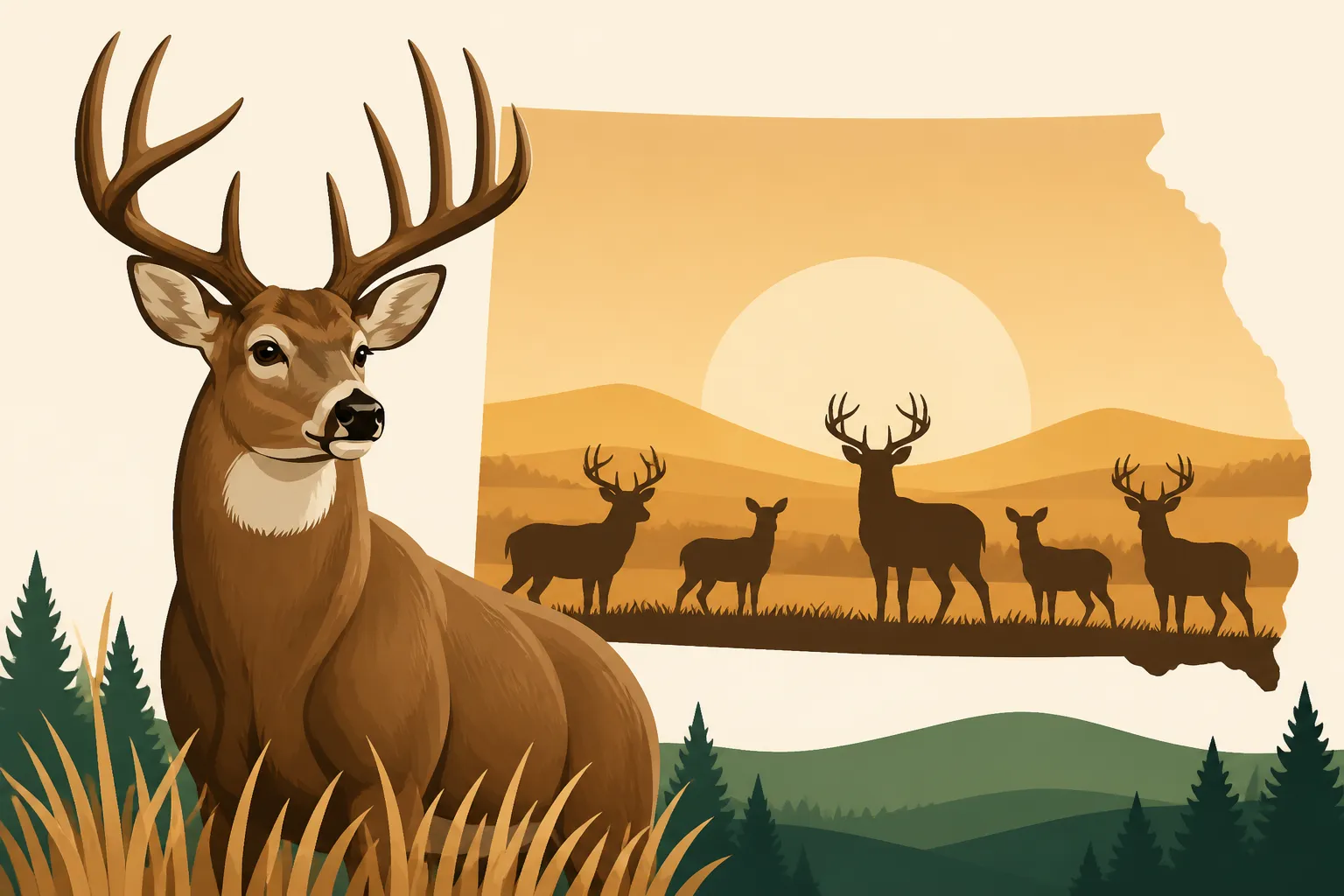
Overall, South Dakota's whitetail population tends to be robust, especially in the eastern part of the state. These deer are highly reproductive, capable of bouncing back from tough winters or disease outbreaks relatively quickly under good conditions. You often find higher densities in areas with a mix of cover and food, which pretty much describes a good chunk of East River South Dakota. However, that doesn't mean their numbers are static or always high everywhere. Localized fluctuations are common, driven by factors like habitat availability, winter severity, and even the type of agricultural practices in a given area. When you're looking at a map or checking out scouting tools, it's not just about the state-level estimate; it's about drilling down to what's happening in specific units or even individual sections of land.
East River Versus West River Whitetail Densities
There's a pretty stark difference in whitetail distribution when you compare East River and West River South Dakota. East of the Missouri River, you'll find whitetails are the dominant deer species. The landscape here is characterized by more abundant water, dense river timber, shelterbelts, and a heavy agricultural presence with corn and soybean fields. This environment provides ideal food and cover, allowing whitetail populations to flourish. Hunters often experience higher success rates and encounter more deer in these areas.
West of the Missouri River, the landscape opens up dramatically into vast grasslands and breaks. Here, mule deer typically hold the numerical advantage. While whitetails are certainly present, especially along riparian corridors like the Cheyenne River or Grand River, their overall density is much lower. They stick close to the limited timber and brushy draws, often sharing habitat with mule deer. Hunters targeting whitetails in West River often focus heavily on these specific river drainages and sheltered pockets. Understanding these regional differences is crucial when you're planning your hunt, whether you're looking at Hunting Whitetails in South Dakota's Missouri River Timber or considering a more open-country approach.
Key Regions and Habitat for Whitetails in South Dakota
South Dakota's diverse landscape offers various prime habitats for whitetail deer, each with its own characteristics that influence deer density and behavior. Knowing where these deer prefer to live can greatly inform your scouting and hunting strategies. It's not just about finding "deer country" but understanding why that particular piece of ground is attractive to whitetails.
River and Creek Bottoms: Whitetail Strongholds
If there's one habitat type synonymous with South Dakota whitetails, it's the rich, brushy river and creek bottoms. From the mighty Missouri River to the countless smaller tributaries crisscrossing the eastern prairie, these corridors offer everything a whitetail needs: dense cover for bedding, reliable water sources, and an abundance of browse and agricultural forage. The timber along these waterways, often a mix of cottonwood, ash, and cedar, provides thermal cover in winter and shade in summer.
Deer will use these bottoms as travel routes, bedding areas, and feeding grounds. During the rut, these areas become hotbeds of activity as bucks cruise for does. Hunters who learn to read these river systems, understand how deer navigate the timber, and pinpoint key funnels or pinch points can be incredibly successful. This is especially true when considering tactics like Treestand Setups on Narrow River Timber, where strategic placement can make all the difference.
Shelterbelts and Farmstead Cover
Beyond the major waterways, shelterbelts and established farmstead tree rows are incredibly important whitetail habitat, particularly in the more agricultural East River regions. These man-made strips of trees and shrubs might seem small, but they provide critical thermal cover from blizzards, escape cover from predators and hunters, and often a direct link to vast food sources like corn and soybean fields. A mature shelterbelt with a good understory can hold a surprising number of deer, especially in the late season when crops are down.
Deer will often bed deep within these strips during the day, emerging at dusk to feed in adjacent fields. Sometimes, a deer will stick to a single long shelterbelt for weeks, moving only within its confines. It’s not uncommon to jump a mature buck out of a seemingly small patch of trees, leading to those heart-pounding close encounters. If you're looking for Shelterbelt Ends That Hold Late Birds, remember that deer love them too, often using the very same cover pheasants do.
Agricultural Lands and Edge Habitat
South Dakota's agricultural landscape, particularly in the eastern half, is a massive draw for whitetail deer. Corn, soybeans, alfalfa, and winter wheat fields provide an almost endless buffet of high-energy food. Whitetails are experts at utilizing the edges where these fields meet cover – whether it's a creek bottom, a shelterbelt, or even a grassy ditch. These "edge habitats" are where deer often spend their mornings and evenings, moving between bedding areas and feeding grounds.
The sheer abundance of food allows deer to grow large and healthy, which is a major factor in the antler quality many South Dakota hunters dream of. However, hunting these areas effectively requires understanding deer movement patterns, which can change drastically depending on crop rotation, harvest schedules, and hunting pressure. Scouting tools like GoHunt can be invaluable here, helping you pinpoint potential feeding and bedding areas from aerial imagery before you even step foot in the field. This understanding helps in strategies like Working Food Plots at Midday, even when they're not dedicated food plots but just part of a farmer's crop.
Factors Influencing Whitetail Health and Numbers
South Dakota's whitetail population is a dynamic entity, constantly influenced by a variety of environmental pressures, diseases, and management strategies. These factors can lead to significant shifts in deer numbers and overall health, impacting hunter success and the ecosystem alike.
Winter Severity and Its Impact on Survival
The harsh South Dakota winters can be a significant bottleneck for whitetail populations. Severe cold, deep snow, and prolonged periods of freezing temperatures can take a heavy toll, especially on fawns and older or weaker deer. Deep snow limits access to food, forces deer to expend more energy to move, and can lead to malnutrition and increased vulnerability to predators. A particularly brutal winter can reduce fawn recruitment for the following year, leading to a noticeable dip in the population.
Conversely, mild winters allow more deer to survive, leading to higher fawn crops and potentially an increase in overall numbers. This natural ebb and flow is a critical component of whitetail ecology. While deer are remarkably resilient, consecutive severe winters can set populations back for several years. Hunters often feel this directly, seeing fewer deer or deer in poorer condition after a tough winter.
Disease Outbreaks: EHD and CWD Concerns
Disease is an ever-present concern for whitetail deer managers and hunters alike. Epizootic Hemorrhagic Disease (EHD) is a particularly common viral disease in South Dakota, transmitted by biting midges. EHD outbreaks typically occur in late summer and early fall, especially during dry years when deer congregate around limited water sources, increasing transmission rates. EHD can cause rapid, widespread deer mortality, often leading to noticeable population drops in localized areas. The impact can be devastating to a local herd, and understanding EHD and South Dakota Deer Die-Offs is vital for hunters.
Chronic Wasting Disease (CWD) is another serious threat. While not as acutely deadly as EHD, CWD is a progressive, fatal neurological disease that slowly erodes a deer's health. It poses a long-term threat to deer populations and can be transmitted through direct contact or indirectly via contaminated environments. South Dakota Game, Fish and Parks (GFP) actively monitors for CWD, and hunters are often asked to participate in surveillance efforts, particularly in regions where the disease has been detected. Knowing Carcass Transport Rules for CWD is crucial to prevent its spread.
Habitat Loss and Fragmentation
While South Dakota still boasts significant tracts of prime whitetail habitat, ongoing changes in land use can lead to habitat loss and fragmentation. Urban development, conversion of native grasslands or marginal agricultural land to intensive row crops, and the removal of shelterbelts can reduce the amount of quality cover and food available to deer. When habitats become fragmented, deer populations can become isolated, limiting genetic diversity and increasing vulnerability to disease or localized overhunting.
Conservation efforts, such as the creation of Walk-In Areas and Game Production Areas, help to mitigate some of these impacts by preserving and enhancing critical habitat. Programs that incentivize landowners to maintain or establish wildlife-friendly cover are also vital. When you're using scouting tools from GoHunt, pay attention not just to existing cover, but also how it connects (or doesn't) to larger tracts of habitat.
Monitoring and Management of South Dakota Whitetails
The South Dakota Game, Fish and Parks (GFP) agency plays a crucial role in monitoring the health and population levels of whitetail deer across the state. Their efforts inform season structures, license allocations, and conservation strategies, all aimed at ensuring sustainable deer populations for future generations of hunters.
How GFP Monitors Deer Populations
GFP employs a variety of methods to monitor whitetail populations. These include aerial surveys in certain regions, often conducted in winter when snow cover makes deer more visible. Harvest data, collected through mandatory harvest reports from hunters, provides valuable insights into population trends, buck-to-doe ratios, and fawn recruitment. Hunter observations and biological samples (such as lymph nodes for CWD testing) also contribute to the overall picture.
These data points help GFP biologists estimate population sizes, assess herd health, and identify areas where populations might be increasing, decreasing, or holding steady. This scientific approach is critical for making informed management decisions and ensuring that hunting opportunities are balanced with conservation needs. You can often find summaries of these findings in the annual South Dakota Hunting Handbook, which provides a wealth of information including expected deer numbers in various units. Knowing How GFP Counts Big Game is fascinating and helps understand why tags might be more or less available.
Licence Allocation and Season Structure
One of the most direct ways GFP manages whitetail populations is through licence allocation and season structure. By adjusting the number of available tags (especially antlerless tags), the timing and duration of seasons, and the types of weapons allowed, GFP can influence harvest levels and steer populations toward management goals. For instance, increasing antlerless tags in an area with high deer density can help reduce herd size and alleviate agricultural depredation, while limiting tags in areas recovering from disease or a tough winter can allow populations to rebound.
South Dakota offers a variety of deer licence types, including those specific to South Dakota East River Deer Licences and South Dakota West River Deer Licences, archery, firearms, and muzzleloader seasons, each with different quotas and deadlines. Understanding these nuances and planning your application strategy well in advance is essential for securing a tag, especially for popular units or nonresident hunters. The goal is to provide ample hunting opportunities while maintaining healthy, sustainable deer numbers across the state.
Challenges in Managing a Widespread Species
Managing a species as widespread and adaptable as the whitetail deer presents unique challenges. Their ability to thrive in diverse habitats, often in close proximity to human development and agriculture, means that management decisions must consider a broad range of factors. Balancing hunter demand with landowner concerns about crop damage, urban deer issues, and disease management requires constant vigilance and adaptation.
For example, high whitetail populations, while often popular with hunters, can lead to increased vehicle collisions and damage to agricultural crops. Conversely, overly aggressive harvest strategies or successive harsh winters could depress populations below desired levels. GFP's job is to navigate these competing interests, using the best available science and public input to make decisions that benefit both the deer and the people of South Dakota. As a hunter, staying informed and participating in public comment periods (when available) helps ensure your voice is heard in these important discussions.
| Region | Primary Habitat | Typical Whitetail Density | Factors Influencing Density | Hunting Considerations |
|---|---|---|---|---|
| East River | River Bottoms, Shelterbelts, Cropland Edges | High | Abundant food (corn, soybeans), good cover, consistent water. | Focus on river corridors, tree lines, and crop field edges. Higher hunter numbers often, but more deer. |
| West River | Limited River Bottoms, Brushy Draws, Breaks | Moderate to Low | Fewer large timber blocks, less agriculture, more competition with mule deer. | Concentrate on major drainages (Cheyenne, Moreau, Grand Rivers). Patience and extensive glassing are key. |
| Black Hills | Pine Forests, Aspen Groves, Canyon Bottoms | Moderate (localized) | Timbered areas, some agricultural pockets, severe winters can be tough. | Whitetails more common in lower elevations and creek bottoms. Often overlooked in favor of mule deer or elk. |
Disclaimer
This article is for general informational purposes only and does not constitute professional advice. Laws, prices and regulations vary by location and change over time. Consult a qualified professional for guidance on your specific situation.