Renting a Vehicle for a Prairie Hunt
Okay, let's talk about something that can make or break your South Dakota hunting trip before you even step foot in the field: your rental vehicle. Too many hunters make the mistake of assuming any old rental car will do, only to find themselves stuck in a muddy two-track, bottomed out on a grassy field edge, or just plain miserable bouncing down miles of washboard gravel. This guide is all about helping you pick the right set of wheels to navigate the diverse and often challenging terrain of the South Dakota prairie, ensuring your vehicle is an asset, not an obstacle, to your hunting adventure.
Why Your Standard Rental Just Won't Cut It on the Prairie
Imagine flying into Sioux Falls or Rapid City, picking up what looks like a perfectly fine sedan, and then heading out to chase pheasants in a remote Walk-In Area or glass for mule deer in the wide-open West River country. What seems perfectly adequate in the city quickly becomes a huge liability once you leave the pavement. The South Dakota prairie is beautiful, but it's also wild and unforgiving on vehicles not built for it.
Understanding South Dakota's Unique Terrain
South Dakota's hunting lands are incredibly diverse, from the rolling grasslands and vast agricultural fields of the East River region to the rugged breaks and coulees of the West River country. Even in the relatively flat pheasant country, you're constantly on gravel roads, dirt tracks, and sometimes even driving across harvested fields with uneven terrain. These aren't pristine, well-maintained surfaces. They can be deeply rutted from previous rains, covered in loose gravel that hides rocks, or become slick, greasy mud after even a light shower.
Then you have the Black Hills, with their steeper, winding forest service roads, or the expansive National Grasslands which are crisscrossed by faint two-tracks that might look like roads on a map but are barely more than trails. Your standard sedan, designed for smooth pavement, simply doesn't have the clearance, traction, or suspension to handle these conditions without serious risk of damage or getting hopelessly stuck. It’s a completely different world out here compared to urban driving, and your vehicle needs to be equipped for it. Many hunters, even those who plan their hunts using resources like BookYourHunt or GoHunt, sometimes overlook this critical piece of logistical planning, assuming all roads lead to the hunting grounds with ease.
The Risks of Undersized or Underpowered Vehicles
The consequences of showing up with the wrong vehicle can range from annoying delays to a complete disaster for your hunt. The most common scenario is getting stuck. After a rain, those beautiful dirt roads turn into slick gumbo, and without four-wheel drive and decent tires, you'll find yourself spinning helplessly, burning precious hunting time trying to dig yourself out. Or, worse, needing to call for a tow in an area where cell service might be spotty at best. We've all heard stories, or experienced it ourselves, of trying to get to that prime spot only to encounter a section of road that a low-slung sedan simply can't clear. That pothole or rock that looked small from a distance suddenly rips off an oil pan or damages a suspension component.
Beyond getting stuck or damaged, an undersized vehicle impacts your overall hunting experience. It restricts where you can go, forcing you to park further away and walk longer distances, which can be exhausting, especially when you're trying to cover ground or get to a specific point like you would when Reading Aerial Imagery for Cattail Cover. It adds stress to every drive, worrying about every bump and puddle. And let's not forget the potential financial hit: rental companies can charge hefty fees for damage incurred off-pavement, not to mention the cost of a tow from a remote location. This isn't just about convenience; it's about safety, efficiency, and protecting your investment in the hunt.
Essential Features for a South Dakota Hunting Rig
When you’re planning your South Dakota hunting trip, thinking about what kind of vehicle you’ll be driving is just as important as deciding what gear to pack or what units to scout. You need a vehicle that’s ready for anything the prairie throws at it, from soggy fields to unexpected snowdrifts. It’s not about luxury; it’s about capability and peace of mind.
The Importance of Four-Wheel Drive (4WD) or All-Wheel Drive (AWD)
This is arguably the most critical feature for a hunting vehicle in South Dakota. While some might argue they've "gotten by" without it, those are often tales of luck rather than good planning. A light rain can transform a packed dirt road into a slick, impassable mess. Early season hunts can still bring muddy conditions, and late-season hunts almost guarantee encounters with snow and ice. Getting Stuck on a Prairie Two-Track is a rite of passage for some, but it's best to avoid it altogether.
Four-wheel drive (4WD) systems typically offer more robust traction control, often with a low-range gearing option that is invaluable for climbing steep, slippery hills or pulling through deep mud. All-wheel drive (AWD) is also a significant upgrade over two-wheel drive, continuously distributing power to all four wheels as needed. While AWD might not have the same brute force as a true 4WD system with low range, it's generally more than sufficient for most gravel and light mud conditions you'll encounter. Whichever you choose, having power going to all four wheels greatly increases your ability to navigate uncertain terrain, climb out of slick spots, and maintain control on loose gravel roads, particularly those that might be soft from heavy rains or thawing snow.
Ground Clearance: More Than Just a Number
Beyond traction, ground clearance is paramount. You might not be rock crawling, but South Dakota’s prairie roads and access trails are rarely smooth. You'll encounter ruts, washouts, elevated grassy sections between wheel tracks, and unexpected rocks. Even a seemingly flat field edge can have subtle undulations that will scrape the undercarriage of a low-riding vehicle.
When you're trying to get to a remote corner of a Walk-In Area or simply navigate a field approach, that extra few inches of clearance makes all the difference. It prevents you from bottoming out, scraping vital components like the oil pan or exhaust system, and getting hung up on high points. Picture driving through a tall-grass field; if your vehicle is too low, that grass will constantly be scraping and grabbing, potentially even masking hidden obstacles. This isn't just about comfort; it's about avoiding costly damage and ensuring you can actually reach the hunting spots you've identified through careful E-Scouting Walk-In Areas Before the Season. Look for SUVs or trucks with a visibly higher stance, not just "SUV-like" body styling on a car chassis.
Tires and Suspension for Rough Roads
Many rental vehicles, even SUVs, come equipped with standard street-oriented tires. While these are great for fuel efficiency and quiet highway driving, they offer minimal grip on mud, snow, or loose gravel. They also tend to be less durable and more prone to punctures from sharp rocks you might encounter. Ideally, you want all-terrain (A/T) tires, which have a more aggressive tread pattern designed for better traction off-pavement and more robust sidewalls to resist damage. While you likely won't get to choose your specific tire type on a rental, asking for a truck or SUV and checking the tires on pickup can sometimes reveal better options.
Likewise, the suspension system is key for comfort and control. Driving for hours on washboard gravel roads can be incredibly jarring in a vehicle with a soft or worn suspension. A robust suspension, typically found in trucks and larger SUVs, absorbs bumps and shocks more effectively, making the ride more comfortable and reducing fatigue. It also maintains better contact with the ground, improving handling and safety on uneven surfaces. This is especially true when hauling gear, game, or multiple hunters. A vehicle with good suspension helps keep you fresh for the hunt, rather than feeling like you've already wrestled a bear before you even step out of the truck.
Vehicle Types Best Suited for a Prairie Hunt
Alright, so we've talked about why certain features are crucial. Now let's get down to the brass tacks of what types of vehicles will actually serve you best on a South Dakota hunting trip. You're looking for a workhorse, not a show pony, and the rental market offers options across a spectrum of capability.
Full-Size SUVs and Pickup Trucks
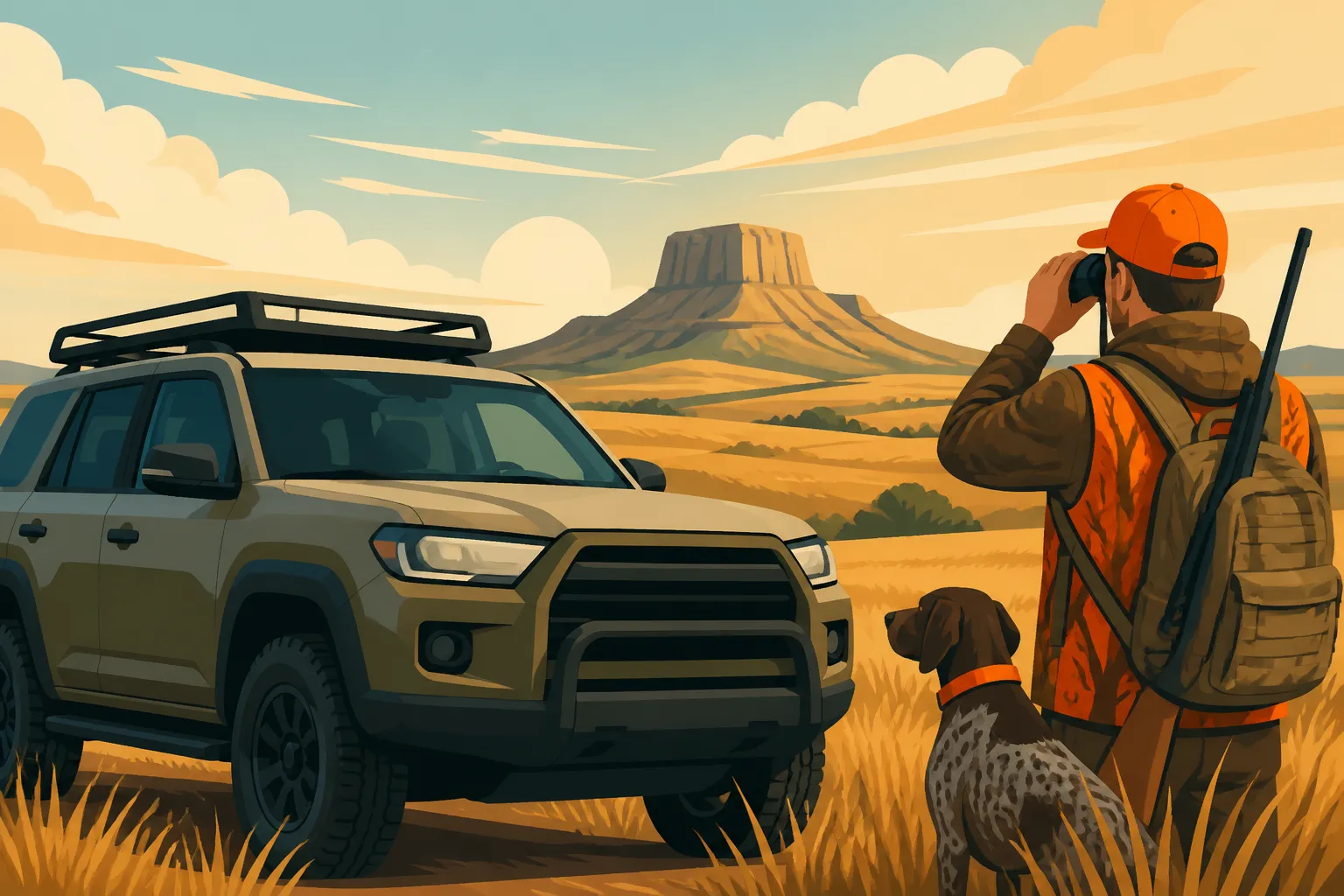
When it comes to tackling the South Dakota hunting landscape, full-size SUVs and pickup trucks are generally your best bet. Think about vehicles like a Chevrolet Tahoe or Suburban, a Ford F-150 or Expedition, or a Ram 1500. These vehicles offer a winning combination of features:
- Robust 4WD Systems: Most full-size trucks and SUVs offer capable 4WD systems, often with selectable modes for different terrains like mud or snow.
- Superior Ground Clearance: They sit higher off the ground, significantly reducing the risk of bottoming out on ruts, rocks, or snowdrifts.
- Durable Suspension: Built to handle heavier loads and rougher roads, their suspensions are typically more robust, leading to a more comfortable ride even on neglected gravel.
- Ample Cargo Space: Whether it's the bed of a pickup for muddy boots, dog kennels, and harvested game, or the cavernous interior of a full-size SUV for gear and passengers, these vehicles have the room you need. This space is essential when you consider Packing Meat Up a Steep Draw and needing a clean, cool place to transport it.
- Towing Capacity: While not always necessary for hunting, the underlying strength translates to overall durability.
The downsides? They're often more expensive to rent and definitely thirstier at the pump. However, the peace of mind and access they provide often outweigh the additional cost. When you're driving hours to reach remote public lands or Hunting South Dakota Walk-In Areas, you want a vehicle that inspires confidence, not anxiety.
Crossovers and Mid-Size SUVs: A Compromise?
If a full-size truck or SUV seems like overkill or is outside your budget, a mid-size SUV or crossover might be an acceptable compromise, if you're realistic about your hunting plans and the conditions. Vehicles like a Toyota RAV4 AWD, Subaru Outback, or a mid-size SUV like a Ford Explorer or Jeep Grand Cherokee (with 4WD/AWD) can work for certain situations.
Here's where they fit in:
- Paved Roads to Well-Maintained Gravel: If your hunting largely involves driving on paved roads and then turning onto decent gravel that is mostly flat and dry, a capable AWD crossover can handle it.
- Lighter Loads: If you're a solo hunter or a pair with minimal gear and no dog kennels, the reduced cargo space might not be an issue.
- Known Conditions: If you've been to the area before and know the roads are generally good, or if you're hunting during a reliably dry period, these can perform adequately.
However, they come with caveats. Their ground clearance, while better than a sedan, is still often less than a full-size option. Their AWD systems, while capable, might not have the grunt of a low-range 4WD when faced with truly deep mud or steep, slippery inclines. Their street-biased tires are still a weakness. If you anticipate any serious off-pavement driving, significant mud, or heavy snow, you'll quickly find their limits. It's a delicate balance, and if you're unsure, always lean towards more capability. Some hunters might use mapping tools from GoHunt to scout potential access roads, and if those maps show faint tracks or unimproved surfaces, a crossover might not be enough.
What to Avoid at All Costs
This might seem obvious, but it bears repeating: do not rent a standard sedan, compact car, or anything with limited ground clearance and two-wheel drive for a South Dakota hunting trip. This includes many popular rental models that are great for city driving but disastrous for the prairie.
Here’s why these vehicles are a non-starter:
- Zero Ground Clearance: You will bottom out. Repeatedly. On even minor ruts or gravel berms.
- Street Tires: These tires have no traction in mud, minimal grip on loose gravel, and are easily punctured by rocks or sharp stubble in fields.
- Lack of Durability: These vehicles are not built to withstand the constant jarring and impact of unpaved roads. You risk significant mechanical damage.
- Getting Stuck is Inevitable: Even dry dirt roads can become impassable after a sprinkle of rain. Add some snow, and you're not going anywhere. This can lead to missed hunts, expensive tow bills, and stranded hunters in areas with poor Cell Coverage in West River Country.
You might save a few dollars on the daily rental rate, but you'll pay for it in stress, potential damage, and a severely hampered hunting experience. It's a false economy. When planning your trip, consider that your vehicle is a critical piece of hunting equipment, just like your firearm or your boots. Don't skimp on it.
| Vehicle Type | Pros | Cons | Ideal Use Case |
|---|---|---|---|
| Full-Size SUV/Truck | Excellent 4WD, high ground clearance, durable, ample cargo | Higher rental cost, lower fuel economy | Any prairie hunt, especially rough terrain, bad weather, large groups, hauling game |
| Mid-Size SUV/Crossover | Better fuel economy than full-size, some AWD capability, moderate clearance | Limited 4WD, less ground clearance, less cargo | Mostly paved/well-maintained gravel, light mud/snow, smaller groups, known dry conditions |
| Sedan/Compact Car | Lowest rental cost, best fuel economy on pavement | No 4WD, very low ground clearance, fragile, minimal cargo | Avoid for hunting trips in South Dakota |
Navigating the Rental Process for a Hunting Vehicle
So you know what you need. Now, how do you actually get it? Renting a specific type of vehicle, especially one with certain capabilities, isn't always as straightforward as clicking a button online. A little insider knowledge and proactive planning can make all the difference.
Booking Strategies: Specific Models vs. Categories
Here’s a frustrating reality of rental car companies: you often book a category of vehicle (e.g., "Full-Size SUV" or "Standard Pickup Truck"), not a specific make or model. This means you might reserve a Ford F-150 and end up with a Chevy Silverado, or even worse, a model in the same "class" that has less capability than you'd hoped for.
To increase your chances of getting what you need:
- Book Early: Especially if you're traveling during peak hunting seasons like the pheasant opener, vehicles with 4WD/AWD and higher clearance are in high demand. Booking well in advance gives you more options.
- Call the Local Branch: After making your online reservation for a "Full-Size SUV" or "Standard Pickup," call the specific rental branch where you'll be picking up the vehicle. Explain you're coming for a hunting trip and absolutely need a vehicle with 4WD/AWD and good ground clearance. Ask if they can make a note on your reservation or confirm what specific models they typically have in that category. Sometimes, a friendly chat can help.
- Be Flexible with Pickup: If your flight lands early, try to get to the rental counter before the main rush. Sometimes, you have more choice if you're among the first to pick up.
- Confirm at Pickup: When you arrive, verify the vehicle's features before driving off. If it doesn't meet your needs, politely explain the situation and ask if they have anything else available. Sometimes, they can upgrade you or find a suitable alternative, especially if you've called ahead. Remember, reputable hunting planning services, whether you're using BookYourHunt for a guided trip or planning DIY with GoHunt, will always emphasize proper gear and logistics, and your vehicle is a huge part of that.
Insurance and Damage Waivers for Off-Pavement Use
This is where the fine print really matters. Most standard rental agreements and personal auto insurance policies have clauses that limit or even void coverage if the vehicle is driven off-road or on unpaved surfaces where damage occurs. South Dakota has vast amounts of gravel and dirt roads, and while they are "roads," some rental companies might consider driving on a heavily rutted two-track to be "off-road."
Before you drive off the lot:
- Review Your Personal Auto Policy: Call your insurance provider and ask specifically about coverage for rental vehicles, especially when driving on unpaved public roads or private land access roads.
- Consider Rental Company Waivers: While often expensive, the collision damage waiver (CDW) or loss damage waiver (LDW) offered by the rental company might be your safest bet. Read the terms carefully to understand what situations they cover and if there are any exclusions for unpaved roads.
- Credit Card Benefits: Some credit cards offer rental car insurance as a benefit. Again, call your card provider and understand the specifics, including any limitations related to vehicle type or driving conditions.
- Document Existing Damage: Thoroughly inspect the vehicle with a rental agent before accepting it. Take photos or videos of any existing dents, scratches, or interior damage. This protects you from being charged for pre-existing issues.
Getting stuck or damaging the vehicle isn't just an inconvenience; it can be a major financial hit if you're not properly insured. Don't let a moment of excitement about the hunt overshadow this critical step.
Pre-Trip Inspection and Preparation
Once you have your rental, don't just throw your bags in and go. A quick pre-trip inspection and some thoughtful preparation can save you a ton of grief.
- Tire Check: Look at the tires. Are they in good condition? Do they have decent tread? What about the spare tire? Is it present and properly inflated? Many people forget to check the spare, which is exactly when you'll need it most in a remote location.
- Fluid Levels: While you're not expected to be a mechanic, a quick glance at visible fluid reservoirs (like washer fluid) can prevent small annoyances.
- Basic Tools: Pack a small shovel, a recovery strap, and a jump starter if you have one. These are invaluable if you get stuck or have a dead battery in the middle of nowhere. A good flashlight is also a must, especially if you're out late or need to deal with a flat tire in the dark.
- Navigation and Communication: Download offline maps of your hunting areas onto your phone or a dedicated GPS device, as Cell Coverage in West River Country can be notoriously unreliable. Consider a satellite messenger or a two-way radio if you're venturing into truly remote areas with no cell signal.
- Emergency Kit: A basic emergency kit including first aid supplies, extra water, non-perishable food, and a blanket is crucial. This ties into the general advice of always having a First Aid Kit for a Prairie Hunt and being prepared for unexpected delays.
Even with the right vehicle, preparation is key to a safe and successful hunting trip.
Budgeting for Your Rental: Beyond the Daily Rate
The sticker price for a daily rental can be deceiving. When budgeting for your South Dakota hunting vehicle, you need to consider more than just the base rate.
- Fuel Costs: Larger, more capable vehicles like full-size SUVs and pickup trucks are going to consume more fuel, especially when driving long distances on gravel roads or in 4WD. Fuel prices can vary, so factor in a generous budget for gas. You'll be covering a lot of ground, often in sparsely populated areas where gas stations are few and far between.
- Additional Fees: Look out for extra mileage fees if you anticipate covering vast distances. Some rental companies have limits, and going over can add up quickly. Also, factor in the cost of any insurance waivers you decide to purchase.
- Airport Surcharges: Renting from an airport location often incurs additional taxes and fees compared to an off-airport branch.
- Buffer Time: Don't schedule your pickup or drop-off too tightly. Give yourself ample time to inspect the vehicle, get familiar with it, and return it. Rushing can lead to oversights or late fees.
- Cleaning: If you plan on hauling muddy gear, dogs, or game, be prepared to give the interior a good cleaning before returning it, or you might face a cleaning fee. It's often cheaper to do it yourself with a portable vacuum and some wipes than to let the rental company do it.
By considering these additional costs upfront, you can avoid unpleasant surprises and ensure your hunting budget accurately reflects the full expense of your reliable prairie transport. After all, the cost of a rental vehicle is a small fraction of the total investment you make in a South Dakota hunt, especially when you factor in your time, travel, and licenses like South Dakota Nonresident Licence Costs. Make sure that investment is protected by having the right ride.
Disclaimer
This article is for general informational purposes only and does not constitute professional advice. Laws, prices and regulations vary by location and change over time. Consult a qualified professional for guidance on your specific situation.