Antler Growth and Prairie Nutrition
Many hunters dream of seeing those massive racks on the wall, the kind that tell stories of a buck that thrived. But the truth is, not every buck grows a giant rack, and it's easy to get frustrated wondering why. It's often because we don't fully understand the intricate relationship between a deer's diet and its antler development, especially in a dynamic place like the South Dakota prairie. This guide will pull back the curtain on how prairie nutrition shapes those impressive headgear, giving you a clearer picture of what truly drives antler growth in the deer you pursue.
Understanding the Foundation: Antler Growth and a Buck's Basic Needs
Antlers are truly fascinating, growing incredibly fast and then shedding, only to restart the cycle anew each year. But this annual marvel isn't magic; it's a testament to a buck's physiological capacity, driven almost entirely by the fuel it gets from its environment. Without adequate nutrition, that potential is severely limited, no matter how good a buck's genes might be.
The Annual Cycle of Antler Growth and Hardening
Every year, after the previous season's antlers are shed, a buck enters a phase of rapid regeneration. This isn't just bone growing; it's a complex process of vascularization, mineralization, and cell division, all wrapped up in a fuzzy skin known as velvet. This stage, typically from spring through late summer, is when a buck demands an immense amount of energy and specific nutrients to construct a new rack. If the feed isn't there, or is of poor quality, the rack suffers.
As summer progresses into fall, the velvet is shed, and the antlers harden, becoming the formidable weapons and display items we recognize. This hardening process requires a massive influx of minerals, especially calcium and phosphorus, to make the bone dense and strong. The buck has to draw these minerals from its diet or, if dietary sources are insufficient, from its own skeletal reserves, which can be taxing on its overall health. A buck that is constantly drawing from its own body to build a rack will generally not express its full antler potential or maintain optimal body condition.
Essential Nutrients for Rack Development
Think of a buck's body as a complex factory, and antlers are one of its most demanding products. To produce high-quality antlers, that factory needs specific raw materials in abundance. It's not just about eating something; it's about eating the right things.
Protein is paramount. It’s the building block for all body tissues, including the protein matrix that forms the initial structure of the antler. During the rapid growth phase, a buck needs a diet rich in protein to maximize antler mass and tine length. Forbs and legumes found on the prairie are often excellent sources of digestible protein, but their availability can fluctuate wildly with Spring Rain and Pheasant Nesting Success and other weather patterns.
Beyond protein, a slew of minerals are critical. Calcium and phosphorus are the primary components of bone, and they're needed in specific ratios for proper antler mineralization. If either is deficient, or the ratio is off, antler quality can suffer. Trace minerals like zinc, copper, and selenium, while needed in smaller amounts, play vital roles in enzyme function and overall metabolic health, which indirectly but significantly impacts antler development. A deficiency in even one of these can create a bottleneck, limiting a buck's ability to express its full genetic potential.
The South Dakota Prairie Diet: Forage Quality and Availability
Hunting deer in South Dakota means understanding the unique challenges and opportunities the prairie environment presents. Unlike dense timber or agricultural heartlands, the prairie's bounty can be incredibly boom-or-bust, directly influencing the nutritional landscape for deer.
The Feast and Famine of Prairie Forage
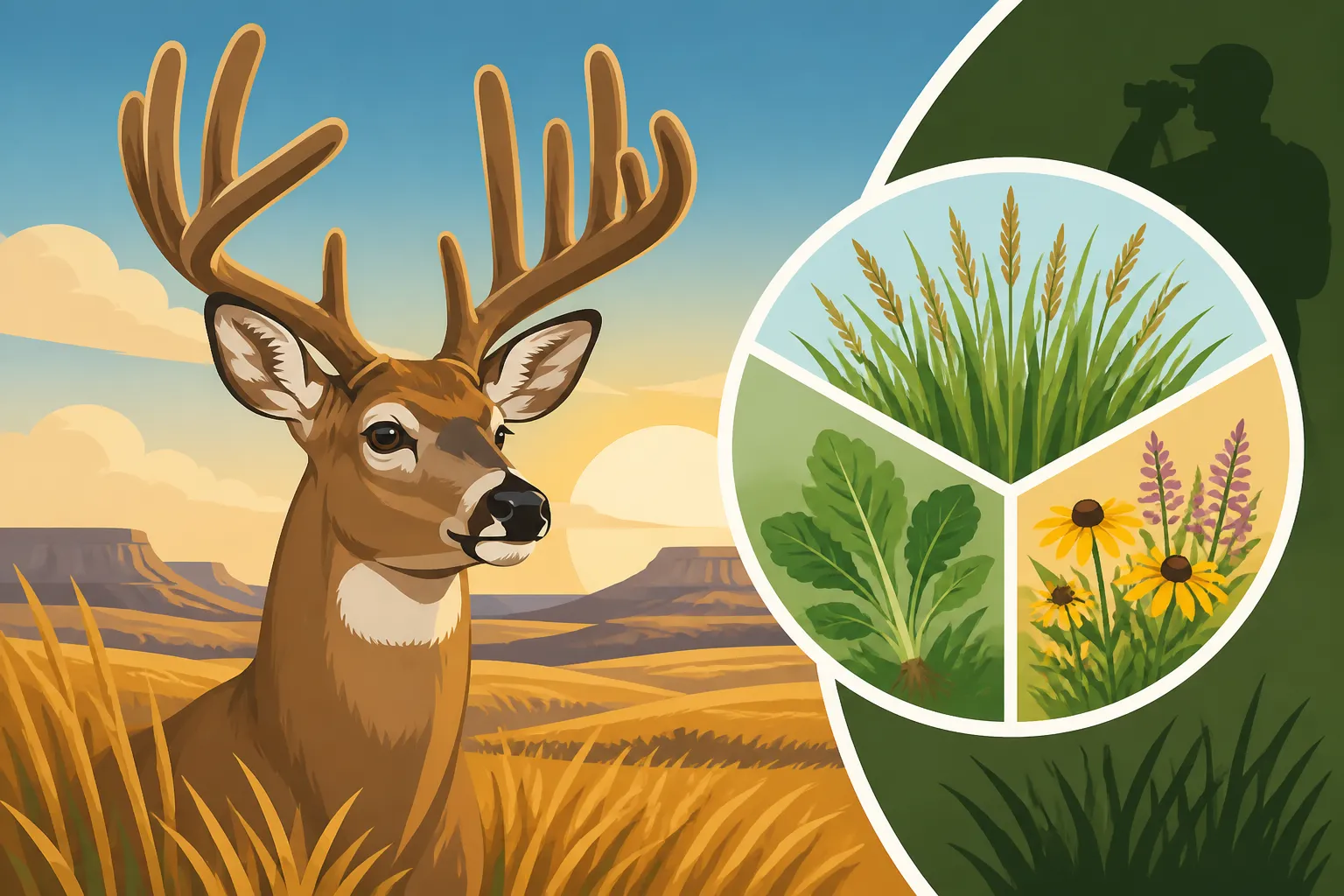
Spring and early summer on the South Dakota prairie can be a nutritional paradise for deer. Lush new growth of native grasses, forbs, and woody browse explodes with high protein and moisture content. Bucks capitalize on this flush, packing on weight and fueling rapid antler growth. This is the period when the foundation of a good rack is laid.
However, as the prairie summer heats up and dries out, often becoming quite arid, the quality of forage can plummet. Many plants become lignified, meaning they develop more fiber and less digestible protein and nutrients. This can create a significant nutritional stress period. Bucks might still find food, but it might not be the quality food needed to sustain optimal antler growth. Add in the pressure of drought conditions, and the challenge for a buck to find sufficient high-quality forage only intensifies. Even when the rut approaches and bucks start to focus on breeding, their body condition and antler quality are a direct reflection of how well they ate through the preceding spring and summer.
Water's Critical Role in Nutrient Uptake
It's easy to focus solely on food, but water is an equally critical, and often overlooked, component of a deer's nutritional health and, by extension, antler growth. Think of it this way: even if a buck is consuming plenty of high-quality forage, without sufficient water, its body simply cannot process and absorb those nutrients effectively. Water is the medium for all metabolic processes.
On the West River breaks, for example, natural water sources can be sparse, especially during dry years. Deer often rely on stock dams, dugouts, and intermittent springs. If these sources become scarce, deer must travel further for water, expending valuable energy and increasing their exposure to predators. This stress, combined with reduced nutrient absorption, can directly translate to smaller, weaker antlers. You can often see the impact of water stress not just in antler size but in the overall health and body condition of the Mule Deer on the West River Breaks. Hunters often use resources like GoHunt to e-scout potential feeding areas or areas with dense cover, giving them an advantage in understanding where deer might find the best nutrition and, critically, consistent water sources.
Key Nutritional Factors for Optimal Antler Growth (and What Hunters Can Observe)
As hunters, we can't control what every deer eats, but we can learn to read the landscape and the deer themselves for clues about nutrition. Understanding these signs helps us appreciate the health of the herd and make informed decisions about where and when to hunt.
Identifying High-Quality Forage and Browse
Knowing what deer are actually eating, and what's good for them, is a huge step. Deer are browsers, meaning they prefer to eat leaves, shoots, and woody stems, as well as forbs (broad-leafed plants) and certain agricultural crops. On the prairie, this means looking for areas rich in legumes like alfalfa or clover, young woody browse (such as plum thickets or chokecherry), and a variety of native forbs that often grow alongside grasses. These plants are typically higher in protein and digestibility than mature grasses.
For example, when scouting, pay attention to browse lines on woody vegetation or heavy use on particular forbs. Fresh agricultural fields, especially those with corn or soybean residue, offer a concentrated, though seasonal, source of energy and protein. Working Food Plots at Midday can be effective because deer are often focused on these high-energy food sources during those times. Observing what’s growing and what’s being eaten can tell you a lot about the nutritional profile of a specific area. Tools like GoHunt can help you research specific unit data, including historical draw odds and harvest reports, which often indirectly reflect herd health and habitat quality, and thus the availability of quality forage.
Observing Deer Health as a Proxy for Nutrition
You don't need a lab test to gauge a deer's nutritional status; often, a quick visual assessment can tell you volumes. Bucks that are well-fed and healthy typically have sleek, shiny coats, particularly noticeable as they transition from their summer to winter coats. Their body condition will be good, showing a rounded rump and a deep chest, without prominent ribs or hip bones.
A buck struggling with poor nutrition might appear thin, with a dull coat, and perhaps be less alert or energetic. Fawn recruitment is another excellent indicator of overall herd health, which is directly tied to doe nutrition. Areas consistently producing healthy, vigorous fawns usually indicate a robust nutritional base for the entire herd. For instance, in an exceptionally dry year, you might observe that the South Dakota Whitetail Population along river corridors, where food and water are more consistent, might show better body condition and antler growth compared to deer in drier upland areas.
| Nutrient Type | Primary Role in Antler Growth | Common South Dakota Prairie Sources (Examples) | Signs of Deficiency in Deer |
|---|---|---|---|
| Protein | Tissue growth, antler matrix | Alfalfa, clover, young woody browse, soybeans | Reduced antler mass, shorter tines, poor body condition |
| Calcium | Bone mineralization, density | Legumes, certain forbs, mineral licks | Weak, porous antlers, delayed hardening, skeletal issues |
| Phosphorus | Bone strength, energy metabolism | Grasses (early growth), cereal grains, forbs | Similar to calcium, poor energy, brittle bones |
| Zinc | Hormone production, immune function | Forbs, browse, some cereal grains | Impaired antler growth, deformed antlers, poor immune response |
| Copper | Bone formation, connective tissue | Grasses, forbs | Weak bones, poor coat quality, neurological issues |
| Selenium | Antioxidant, muscle function | Varies widely by soil type | Muscle weakness, reproductive issues, poor health |
Beyond the Dinner Plate: Water, Health, and Other Influences
While nutrition is absolutely foundational to antler growth, it's never the sole factor. A buck's potential is a complex interplay of several forces, each influencing how effectively those nutrients can be utilized.
The Unseen Hands of Genetics and Age
Imagine two bucks, both eating the exact same diet from the same rich habitat. One consistently grows a Boone and Crockett rack, while the other never breaks a 130-inch mark. The difference? Genetics. Just like humans, deer inherit traits, and antler growth potential is one of them. Some bucks are simply predisposed to grow larger, more impressive racks due to their genetic lineage. Good nutrition allows a buck to express its genetic potential; poor nutrition limits it.
Age is another non-negotiable factor. A young buck, say 1.5 or 2.5 years old, is still dedicating significant resources to growing its body. While it might show good antler development for its age if nutrition is excellent, it hasn't reached its peak. Most bucks don't achieve their largest racks until they are 4.5, 5.5, or even 6.5 years old, depending on the species and herd dynamics. At these ages, their skeletal growth is largely complete, and more energy and nutrients can be channeled directly into antler production. This is why understanding Mule Deer Buck Age Structure in a unit is so important; older bucks generally mean bigger antlers, assuming they've had good feed throughout their lives.
Disease and Environmental Stressors
Even with prime genetics, plenty of age, and a robust diet, external stressors can derail a buck's antler growth. Diseases like EHD and South Dakota Deer Die-Offs can decimate deer populations and severely impact the health of survivors, often leading to stunted antler growth for years afterward as their bodies recover. Chronic Wasting Disease in South Dakota also takes a toll, slowly weakening deer and impairing their ability to utilize nutrients effectively, ultimately resulting in smaller, atypical antlers.
Beyond disease, harsh environmental conditions are constant threats. Severe winters, particularly those with deep, persistent snow like what we sometimes see in a Late-Season Hunting in South Dakota Snow scenario, force deer to expend immense energy just to survive. They burn through fat reserves, and their bodies prioritize survival over antler development. Similarly, prolonged droughts lead to reduced forage quality and quantity, putting immense stress on the deer, diminishing their body condition, and ultimately impacting the size and quality of their racks. Every bit of stress means fewer resources are available for that impressive headgear.
Putting It Together: How Hunters Can Understand and Support Antler Potential
Understanding the connection between prairie nutrition and antler growth isn't just academic; it empowers hunters to make better decisions and appreciate the complex ecology of South Dakota's deer. It’s about recognizing that a healthy deer herd, one that consistently produces quality animals, is a product of healthy habitat.
Reading the Habitat for Antler Potential
When you're out scouting, or even simply driving through hunting country, start looking at the landscape with a new perspective. Are there diverse forage types available? Do you see a good mix of grasses, forbs, and woody browse? Are water sources abundant and easily accessible, especially in critical summer months? The answers to these questions are direct indicators of the nutritional support available to the deer in that area.
Areas with a mosaic of habitat types – a mix of native grasslands, cultivated fields, and riparian zones along creeks or rivers – often provide the most consistent and highest quality nutrition. These diverse areas ensure that even if one food source falters due to weather or seasonal changes, others are available. When you're using your mapping apps, consider how different habitat features might contribute to a buck's year-round diet. While no platform can tell you exactly what a buck ate, using GoHunt's mapping features can certainly help identify areas with prime forage and water sources before you ever set foot in the field, guiding you to potential hotspots.
The Hunter's Role in Herd Health
As hunters, we contribute to herd health through our harvest strategies. By carefully managing the harvest, particularly of younger bucks, we can allow more deer to reach older age classes where they have the potential to grow larger racks. This isn't just about "trophy management" in a narrow sense; it's about fostering a balanced age structure that, when combined with good nutrition, allows the herd to thrive.
Furthermore, being aware of local conditions – a particularly wet spring, a harsh winter, or signs of disease – helps us understand why antler growth might fluctuate from year to year. A year of smaller racks doesn't necessarily mean a "bad" deer herd; it might simply reflect a tough environmental year where survival took precedence over growing bone. By applying for South Dakota Deer Licence Types by Region that align with your understanding of regional herd health and habitat, you can make more informed choices, whether you're after a specific type of experience or trying to contribute to the health of the deer population.
Ultimately, the quest for impressive antlers on the South Dakota prairie isn't just about big genetics, but about providing the right fuel. Understanding this intricate relationship makes us better observers, more informed hunters, and more connected to the incredible wildlife around us.
Disclaimer
This article is for general informational purposes only and does not constitute professional advice. Laws, prices and regulations vary by location and change over time. Consult a qualified professional for guidance on your specific situation.