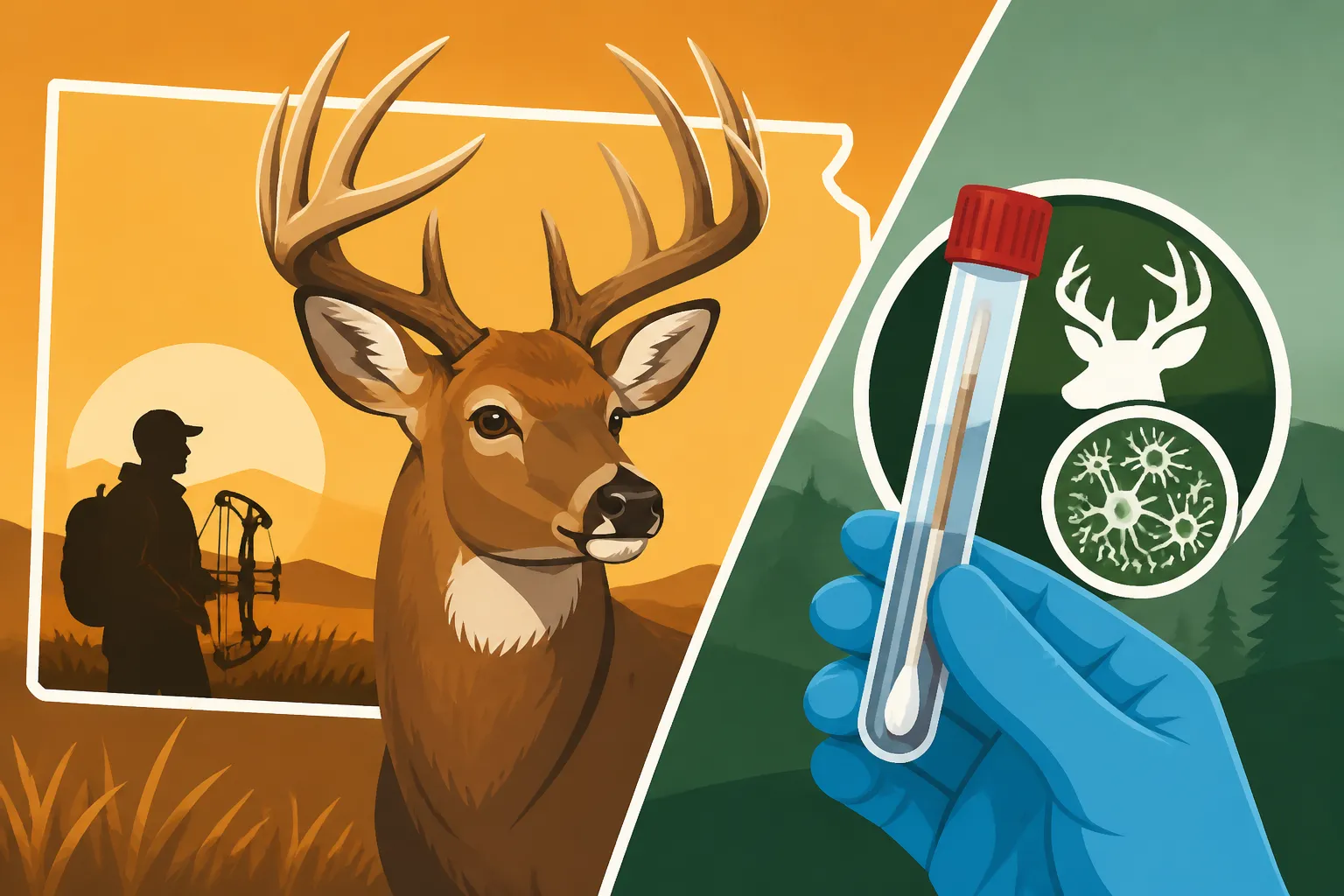
South Dakota CWD Testing for Hunters
You've just tagged that magnificent West River mule deer buck, or perhaps a beautiful East River whitetail, and the adrenaline is still coursing. You're thinking about the venison, the stories you'll tell, and maybe even that mount. But then a serious thought might creep in: Chronic Wasting Disease. CWD is a real and growing concern for all deer hunters in South Dakota, and navigating the testing process can feel like another hurdle after a successful hunt. This guide aims to pull back the curtain on South Dakota's CWD testing requirements, providing clear, actionable information to help you understand your role in protecting our cherished wildlife resources.
Understanding Chronic Wasting Disease CWD in South Dakota
CWD is one of those topics that can quickly make a hunter feel a knot in their stomach. It’s not just a buzzword; it’s a genuinely serious issue that impacts our deer, elk, and moose populations. As responsible hunters, understanding what CWD is and why it matters is the first step in protecting South Dakota’s incredible hunting heritage.
What Exactly is Chronic Wasting Disease
At its core, CWD is a fatal neurological disease that affects cervids – that’s deer, elk, moose, and caribou. It’s caused by abnormal proteins called prions, which slowly damage the animal's brain and nervous system. Think of it like a slow, debilitating illness. The prions aren't bacteria or viruses, which makes CWD particularly challenging to manage. They're incredibly resilient and can persist in the environment for years, even after an infected animal is gone.
Animals infected with CWD might not show symptoms for a long time, often a year or more. This incubation period is part of what makes it so insidious; an animal can appear perfectly healthy while unknowingly spreading the prions. Once symptoms do emerge, they're usually severe: significant weight loss (hence "wasting"), stumbling, poor coordination, excessive salivation, difficulty swallowing, and a generally listless appearance. Eventually, it leads to death. There is currently no vaccine or cure for CWD. This reality underscores why vigilance and proper testing are so important for hunters. The health of our herds, whether you're focused on South Dakota Whitetail Hunting in River Bottoms or pursuing Mule Deer on the West River Breaks, depends on us.
Why CWD is a Major Concern for South Dakota Hunters
The implications of CWD stretch far beyond just individual animals. For South Dakota hunters, it represents a direct threat to the very fabric of our outdoor traditions and the health of the deer herds we love to pursue. First and foremost, CWD is always fatal. This means that if it becomes widespread, it has the potential to significantly reduce deer populations over time, making hunting opportunities scarcer and impacting herd dynamics in unpredictable ways. Imagine working hard for years, putting in for tags, improving your skills, only to find the deer numbers dwindling in your favorite units due to disease. It's a sobering thought.
Beyond population impacts, there's the economic concern. Hunting generates a substantial amount of revenue for South Dakota, supporting local businesses, conservation efforts, and rural communities. A decline in huntable deer populations or increased public concern about CWD could lead to fewer hunters, which in turn impacts this vital economic engine. We also can't ignore the meat itself. While there's no scientific evidence to date that CWD can be transmitted to humans, health organizations recommend against consuming meat from CWD-positive animals. For many, venison is a primary motivation for hunting, and having that tainted by the possibility of disease is a significant blow. Resources like GoHunt regularly share updates on CWD findings, helping hunters stay informed on the latest developments and management strategies in their areas. Protecting our herds from this disease is a collective effort, and hunters are on the front lines.
South Dakota's CWD Testing and Surveillance Program
South Dakota's Game, Fish and Parks (GFP) takes CWD very seriously, and they have established a robust surveillance and testing program to monitor the disease, understand its spread, and implement management strategies. As hunters, we are critical partners in this effort, and knowing the ins and outs of the testing protocols is essential.
Mandatory Versus Voluntary Testing
The rules around CWD testing in South Dakota aren't always a one-size-fits-all scenario. Depending on where you're hunting and the specific regulations for that season, testing might be either mandatory or strongly encouraged on a voluntary basis. Generally, mandatory testing is implemented in areas where CWD has been detected or where surveillance efforts are being intensified to monitor potential spread. These are often designated as CWD Management Units. When you apply for your deer tag or purchase an over-the-counter license, especially if you're looking at specific South Dakota Deer Licence Types by Region, it’s crucial to pay close attention to the specific unit rules regarding CWD testing. You might find that all harvested deer from a certain unit, or perhaps just specific age classes or sexes, are required to be submitted for testing.
In other areas, testing might be voluntary, but it’s still highly recommended. GFP often sets up voluntary drop-off sites in these zones during peak hunting seasons to make it easy for hunters to contribute samples. Even if not mandatory, taking the initiative to submit a sample provides valuable data to wildlife managers, helping them track the disease and make informed decisions. It’s about being a proactive part of the solution, even when the law doesn’t explicitly demand it. Always consult the current year's hunting handbook or the GFP website for the most up-to-date information on mandatory testing areas and requirements.
How Hunters Submit Samples
When it comes to submitting a sample for CWD testing, the process is designed to be as straightforward as possible for hunters. After you've successfully harvested your animal and completed the initial field dressing, the key is to ensure the head (with at least a few inches of neck attached) is properly handled. The most common samples collected for CWD testing are the retropharyngeal lymph nodes, located in the throat area, and sometimes a portion of the brain stem. These are the tissues where the CWD prions accumulate earliest and in highest concentrations.
GFP typically designates specific drop-off locations throughout the state, especially within or near CWD management zones. These could be refrigerated kiosks accessible 24/7, designated GFP regional offices, or check stations during specific periods of the season. At these sites, you'll usually find instructions, collection bags, and tags to fill out. You'll need to provide your name, contact information, license number, and the location of your harvest. Make sure the head is in a clean bag, clearly tagged with all the required information. Some hunters prefer to remove the lymph nodes themselves and submit them, but often, the entire head is requested so that trained GFP personnel can collect the appropriate samples efficiently and accurately. Always check the specific requirements for your unit and season. For example, some areas might ask for the entire head, while others are fine with just the lymph nodes. Online resources and services like GoHunt can also provide up-to-date maps and locations for these drop-off points, making your post-hunt logistics a little smoother. Remember, your participation in this step is vital for the state's CWD surveillance efforts.
Getting Your Results
Once you've submitted your sample, the waiting game begins. GFP strives to process samples efficiently, but the turnaround time can vary depending on the volume of samples submitted and the time of year. During peak hunting seasons, it's not uncommon for results to take several weeks. Typically, GFP will provide an estimated timeframe when you drop off your sample or on their website.
Most often, you'll be notified of your results via email or a direct mailing to the address you provided. It's crucial to ensure your contact information is accurate when you submit your sample. If your animal tests negative for CWD, you'll usually receive a notification stating just that, giving you peace of mind about consuming your venison. However, if your animal tests positive, GFP will contact you directly to discuss the results and the implications. In the unfortunate event of a positive test, it is strongly advised against consuming the meat, and GFP will provide guidance on proper disposal. While waiting for results, many hunters choose to keep their meat frozen as a precaution. Understanding Carcass Transport Rules for CWD is important during this waiting period, especially if you plan to move the meat across state lines or outside of a CWD zone before getting your results. It’s all part of being a responsible steward of our wildlife.
Navigating CWD Zone Regulations and Carcass Transport
The rules around CWD are not just about testing; they also extend to how you handle and transport your harvested animal, especially when moving it out of specific CWD management zones. These regulations are in place to prevent the inadvertent spread of CWD prions to new areas, protecting uninfected herds.
Understanding South Dakota's CWD Management Zones
South Dakota isn't uniformly affected by CWD, and the GFP manages the disease through various designated CWD Management Zones. These zones are typically areas where CWD has been detected in wild deer populations, or adjacent areas that are at high risk for spread. The exact boundaries of these zones can change from year to year based on surveillance results, so it's always critical to consult the most current South Dakota hunting handbook or the GFP website before you head out. These zones might encompass entire counties, specific hunting units, or even portions of units. Knowing if the area you're hunting in is a designated CWD zone is the absolute first step in understanding your responsibilities for testing and carcass transport.
For example, if you're hunting in a known CWD zone in the Black Hills, the rules will likely be different than if you're chasing pheasants in an East River county not currently designated as high risk for deer. These zones directly influence whether testing is mandatory and how you must process your animal before moving it. This proactive approach helps GFP contain the disease and prevents hunters from unknowingly contributing to its spread. It’s also worth checking resources like Where CWD Has Been Found in South Dakota to get a broader understanding of the historical and current spread.
Here's a simplified overview of how these zones might impact you:
| Zone Type | Purpose | Hunter Impact (General) | Key Carcass Transport Rule |
|---|---|---|---|
| CWD Management Zone | Areas with confirmed CWD, intensive surveillance | Mandatory testing often required for specific species/sex. | Whole carcasses cannot leave the zone (only boned meat, skull caps, hides, etc.). |
| CWD Surveillance Zone | Areas adjacent to CWD zones, increased monitoring | Voluntary testing highly encouraged, sometimes mandatory for specific hunts. | Limited carcass parts restriction, check current regs for specifics. |
| Non-CWD Zone | Areas where CWD has not been detected | Voluntary testing for awareness, usually no mandatory requirements. | Whole carcass can generally be transported freely within the state. |
Always verify the specific, current regulations and zone maps directly with South Dakota Game, Fish and Parks.
Rules for Moving Carcasses
Once you've harvested an animal, particularly in or near a CWD Management Zone, understanding the rules for carcass transport is paramount. The primary goal of these regulations is to prevent the movement of high-risk tissues – specifically brain and spinal cord material – that could carry CWD prions to new, uninfected areas. This means that, generally, you cannot transport an intact deer or elk carcass out of a CWD Management Zone. This can be a significant logistical challenge, especially if you're an out-of-state hunter or live a long distance from your hunting grounds.
So, what can you transport? Typically, the following parts are allowed to be moved out of a CWD zone:
- Boned-out meat: This is the most common and safest option. All meat must be removed from the bone.
- Quarters: If the backbone and spinal cord have been completely removed.
- Clean skull plate: This means the skull cap with antlers attached, but all brain tissue and any soft tissue must be completely removed and cleaned.
- Hides: They must be free of any meat or tissue.
- Cleaned teeth.
- Finished taxidermy products.
This often means performing extensive field dressing beyond just gutting. You might need to quarter your animal in the field, bone out the meat, and even clean the skull plate meticulously before you leave the CWD zone. Planning ahead for this, including bringing the right tools and knowing how to Field Dressing in Warm October Weather quickly and efficiently, is crucial. If you're staying at a local motel or have access to a processor in the area, that can simplify things. These rules are non-negotiable and are crucial for slowing the spread of CWD.
Out-of-State Transport
For nonresident hunters, the carcass transport rules become even more critical, and often more complex, because you're dealing with not only South Dakota's regulations but also the regulations of your home state and any states you pass through. Before you even pack your bags for your South Dakota hunt, research the specific CWD carcass importation rules for your state of residence. Many states have strict regulations about bringing cervid carcasses or parts from CWD-positive states. They often mirror South Dakota's rules, requiring boned-out meat, clean skull plates, and hides, but it's vital to confirm.
Failure to comply with these rules can result in citations, fines, and potentially the confiscation of your hard-earned game meat. Imagine having a successful hunt, only to have your venison taken at a state border checkpoint because you weren't aware of the specific cleaning requirements. It's a frustrating situation that's easily avoided with a bit of homework. When planning your trip, consider options for processing your animal within South Dakota, especially if you harvest it in a CWD zone. This could involve using a local meat processor or ensuring you have the time, space, and tools to do the extensive field processing yourself. Always have your CWD test results on hand if applicable, as proof of negative status might be helpful, though not always sufficient to bypass all transport restrictions.
The Hunter's Role in CWD Mitigation
As hunters, we are not just consumers of wildlife resources; we are its most dedicated stewards. Our actions on the ground play a pivotal role in the ongoing fight against CWD. By understanding best practices, staying informed, and actively participating in monitoring efforts, we can make a real difference in the health and future of South Dakota's deer, elk, and moose populations.
Best Practices for Hunters in CWD Areas
Hunting in a CWD-affected area comes with increased responsibility. Beyond simply complying with testing and transport regulations, there are several best practices you can adopt to minimize any potential spread of CWD prions and contribute to herd health. First, be strategic with your field dressing. While you need to gut the animal, try to do so at the place of kill whenever possible. This concentrates potentially infectious materials, such as lymph nodes, spleen, and digestive tract, at the harvest site. If you must transport the gut pile, ensure it's done legally and responsibly, often by burying it deeply or disposing of it in an approved landfill, especially if mandated by local regulations.
Second, avoid spreading high-risk parts. When quartering or boning out your animal, be mindful of where you place discarded bones, spinal columns, or heads. Do not leave them in areas where other cervids might come into contact with them, such as common feeding grounds or water sources. Third, clean your equipment thoroughly. CWD prions are notoriously resilient. After processing an animal, especially one from a CWD zone, meticulously clean all knives, saws, gloves, and even vehicle surfaces that came into contact with the carcass. A diluted bleach solution can be effective for disinfecting surfaces. Finally, consider testing all harvested animals in CWD zones, even if it's voluntary. This data is invaluable to GFP for understanding the disease's prevalence and trends. Your commitment to these practices is a direct contribution to preserving the long-term health of our wildlife.
Staying Informed and Reporting Suspect Animals
One of the most powerful tools in CWD mitigation is an informed and vigilant hunter base. Staying up-to-date with the latest CWD information from South Dakota GFP is not just a recommendation; it’s a responsibility. The GFP website is your primary resource for current CWD management zones, testing requirements, and news updates. They typically publish an annual hunting handbook which details all the season-specific regulations, and it’s wise to download or pick up a copy well before the season. Websites like GoHunt also provide aggregated information and news, making it easier for hunters to track significant developments.
Beyond reading up, actively observing the deer, elk, and moose in the field is vital. You are often the first line of defense in spotting potential issues. If you observe an animal that appears sick, lethargic, extremely emaciated, has difficulty walking, or exhibits neurological signs, do NOT harvest it. Instead, document the location, time, and a description of the animal, and immediately report it to South Dakota GFP. This early detection can be critical in preventing further spread. Knowing how to differentiate between a healthy animal and one displaying symptoms is key, and GFP welcomes these reports. Remember, Reporting a Sick Animal in South Dakota is a direct way you contribute to wildlife disease surveillance and management.
Supporting Research and Management
Hunters are often unaware of how much their participation and financial contributions already support wildlife research and management, including CWD efforts. Every time you purchase a hunting license, tag, or pay a habitat stamp fee, a portion of that revenue goes directly to wildlife agencies like South Dakota GFP. These funds are crucial for everything from on-the-ground surveillance and sample collection to laboratory analysis and public education campaigns. Your license dollars literally pay for the science and staff dedicated to understanding and combating CWD.
Beyond financial contributions, your adherence to regulations and active participation in testing programs are invaluable. Each submitted sample provides a data point that helps GFP map the disease's presence and intensity. This data then informs management decisions, such as adjusting hunting seasons, establishing feeding bans, or implementing selective culling strategies in specific areas. Many conservation organizations also actively support CWD research and management. By joining or donating to these groups, you further amplify the collective effort. The future of hunting in South Dakota, and indeed across the continent, relies on our collective commitment to responsible stewardship. By being informed, compliant, and proactive, we ensure that our children and grandchildren can continue to experience the thrill of the hunt and the bounty of healthy wildlife.
Disclaimer
This article is for general informational purposes only and does not constitute professional advice. Laws, prices and regulations vary by location and change over time. Consult a qualified professional for guidance on your specific situation.