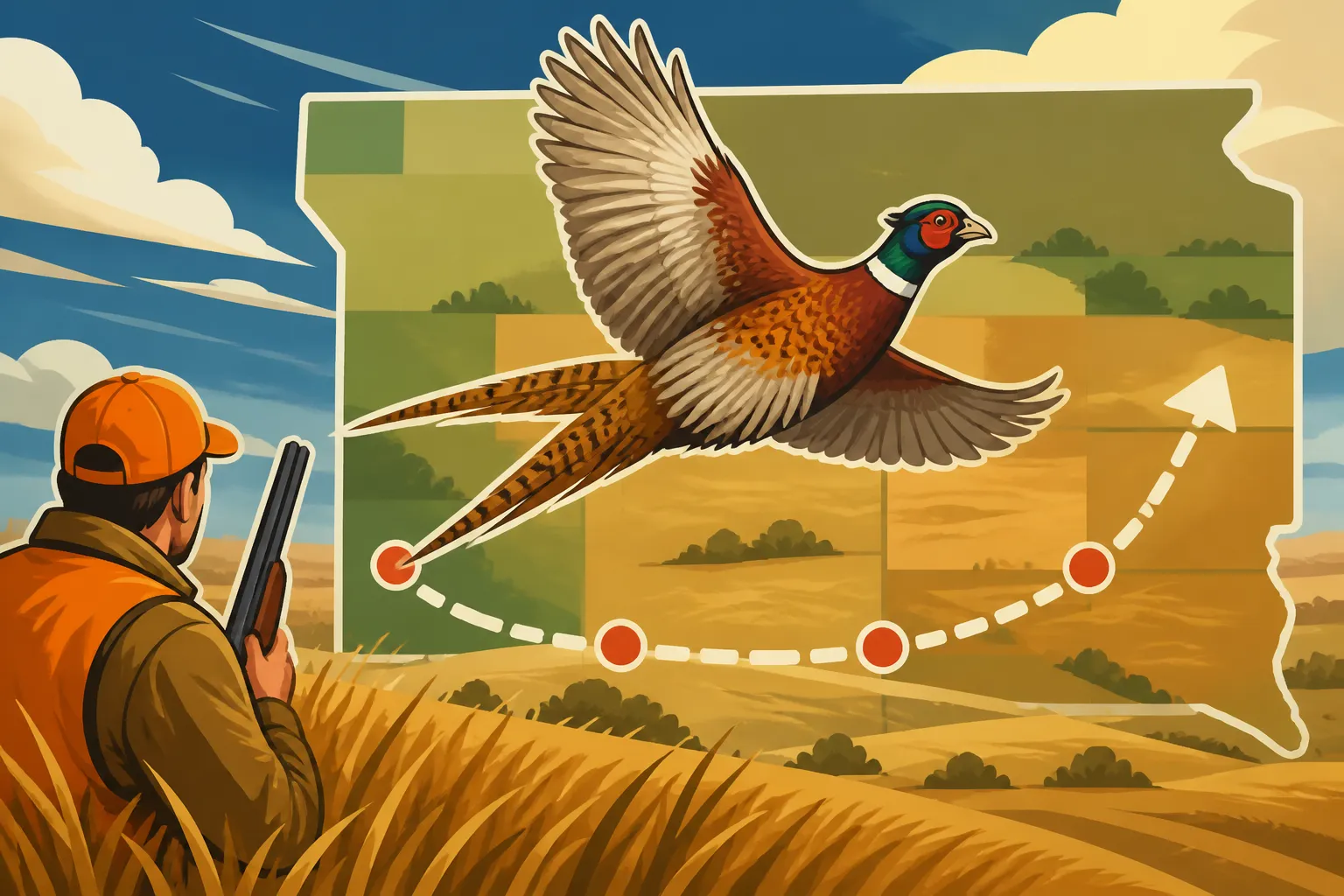
How Far Pheasants Move in a Day
It's incredibly frustrating when you're out pheasant hunting, you've scouted a prime piece of cover, and the birds just aren't where you expect them to be. Or, conversely, you walk through what looks like empty grass, and a rooster explodes from under your feet. Understanding how far pheasants move in a day is key to unlocking their patterns and vastly improving your chances of success in the field.
Understanding Daily Pheasant Rhythms and Roosting Habits
Pheasants aren't just randomly wandering the landscape; they operate on a fairly predictable daily rhythm dictated by their most basic needs: safety, food, and cover. Once you start to grasp these patterns, those seemingly unpredictable flushes begin to make a lot more sense, and you can tailor your hunt to intercept them where and when they're most vulnerable. It’s all about getting into their heads, so to speak, and moving with them throughout the day.
Morning Movement: From Roost to Feed
As the first hint of dawn paints the South Dakota sky, pheasants begin to stir. Their primary directive after a long night of roosting is to find food. They'll typically spend the night in dense, secure cover – think thick cattail sloughs, heavy shelterbelts, or even dense stands of switchgrass or tall weeds that offer protection from predators and the elements.
From these overnight sanctuaries, often located along drainages or in expansive field edges, the birds will begin their walk-out towards feeding areas. This morning commute can range from a few dozen yards to several hundred yards, depending on the proximity of suitable food sources. If a cornfield or a patch of milo is just adjacent to their roost, they might not move far at all. However, if they need to cross open ground or navigate a section line to reach a preferred breakfast spot, they could easily travel a quarter-mile or more. This is the prime time for hunters to target those transition areas.
When the weather turns particularly cold, or if there's a fresh blanket of snow, this morning movement becomes even more critical for the birds. They need to fuel up to maintain body heat, making food sources irresistible. Hunters who can intercept birds shortly after they leave their roosts, but before they get too far into the feeding fields, often find the most success. This often means being set up on those transition routes, watching for movement, and planning your approach accordingly.
Midday Lulls and Cover Seeking
After their morning feeding frenzy, usually between 9 and 10 AM, pheasants enter what many hunters refer to as the "ten o'clock lull." This isn't a hard and fast rule, but it's a very real phenomenon. With their crops full and the sun climbing higher, birds will seek out dense, protective cover to digest, rest, and escape the attention of predators. This is why you'll often hear veteran hunters recommend hitting the field a little later in the morning; the birds are moving from the edges of feed to deep cover.
During this midday period, pheasants tend to hunker down. Their movement becomes much more localized and stealthy. Instead of walking long distances across open fields, they'll burrow deep into the heaviest available cover. This could be the impenetrable heart of a cattail slough, a dense stand of CRP (Conservation Reserve Program) grass that's chest-high, or the thickest section of a mature shelterbelt. They’re looking for security and warmth, or perhaps shade on a hot day. The distance they move within this cover is typically minimal – often just enough to find the perfect hiding spot.
For hunters, this means shifting tactics from morning field edge hunts to pushing thick cover. Knowing their preference for heavy cover is crucial, especially when you're hunting Late-Season South Dakota Pheasants in Heavy Cover. You might not see birds fly until you're right on top of them, as they'll often try to run and sneak through the dense vegetation rather than flush prematurely. This makes for exciting, close-quarters encounters and demands a slow, methodical approach to effectively work these holding areas.
Factors Influencing Pheasant Travel Distances
Pheasant movement isn't static; it's a dynamic response to their environment. Several key factors can dramatically influence how far a pheasant travels in a day, and understanding these can give you a significant advantage in the field. Ignoring these variables can lead to endless walking in empty cover.
Habitat Quality and Food Availability
The quality and distribution of habitat are perhaps the most significant drivers of pheasant movement. In areas where excellent food sources are interspersed with prime cover, pheasants simply don't need to travel as far to meet their daily needs. Think of a perfect South Dakota landscape: a cornfield buttressing a dense shelterbelt, which then transitions into a thick CRP field, with a cattail slough nearby. In such a scenario, a pheasant can access everything it needs within a few hundred yards.
Conversely, in areas with more fragmented or poorer quality habitat, birds are forced to range further. If a pheasant roosts in a thin strip of grass but has to fly or walk a half-mile to reach the nearest reliable food source, that's exactly what it will do. This forces them into longer, more exposed movements, which can be both a challenge and an opportunity for hunters. Identifying these critical connections between isolated patches of habitat is where detailed scouting, often aided by tools like GoHunt, truly pays off. You can use aerial imagery to identify these "connective tissue" areas.
Specific food sources also play a huge role. Corn, milo, sunflowers, and various weed seeds are high-energy staples. If these are readily available near secure cover, birds become "lazy" in their movements. However, if those fields are heavily grazed, harvested early, or don't offer enough waste grain, pheasants will expend more energy seeking out alternative food, increasing their daily travel. This is why understanding Working Food Plots at Midday or understanding the availability of waste grain after harvest can be so impactful on your hunting plans.
Weather Conditions: Wind, Snow, and Cold
Weather acts as a powerful orchestrator of pheasant movement. A calm, sunny autumn day will see different patterns than a blustery, snowy one. Pheasants are built to withstand harsh South Dakota winters, but they aren't going to spend more energy than necessary.
Extreme cold and significant snow cover force pheasants to prioritize thermal cover and easily accessible food. In blizzard conditions, birds might move surprisingly long distances to reach the absolute densest cover they can find – often deep into cattail sloughs or massive shelterbelts that offer protection from the biting wind and drifting snow. Once there, they might stay hunkered down for days, only making short forays out to find food. This is when places like Shelterbelt Ends That Hold Late Birds really become vital sanctuaries.
Wind, even without cold or snow, heavily influences pheasant behavior and travel routes. Birds will almost always move and hold on the lee side of cover, escaping the direct force of the wind. They'll also use terrain to their advantage, slipping through draws and low spots to avoid being buffeted by strong gusts. A hunter who walks directly into a strong wind will often find birds flushing further out, having heard or sensed the approach sooner. Conversely, approaching from downwind or crosswind, if possible, can allow for closer flushes, as the wind carries your scent and sound away. Using a tool like GoHunt to check real-time wind conditions and overlaying that on a map of the cover can help you plan the most strategic approach.
Hunting Pressure and Escape Behavior
Perhaps no single factor causes pheasants to alter their daily movements more dramatically than hunting pressure. Wild pheasants quickly learn to associate human presence with danger, and they adapt their behavior accordingly. Early in the season, on opening weekend, birds might hold tight, relying on their camouflage. But after a few days, or even a few hours, of intense pressure, they become incredibly wary.
When exposed to significant hunting pressure, pheasants learn escape routes and become masters of evasion. Instead of flushing readily, they will often run long distances, utilizing any available ditch, fence line, or patch of sparse cover to put distance between themselves and the hunters. This phenomenon is often observed when birds seemingly vanish from a field you thought was full. They haven't vanished; they've simply run ahead, sometimes for hundreds of yards, before deciding to flush or find new cover. This is a critical insight into Why Birds Run Instead of Flush.
The intensity and consistency of pressure also influence how far birds will move to find sanctuary. On heavily hunted public land, or popular Walk-In Areas, pheasants might abandon their usual midday cover if it's repeatedly disturbed. They'll then seek out less accessible, often thicker, or more remote cover, which might require them to travel further. This makes understanding Hunting Pressure Patterns on Walk-In Areas essential for success. They might even leave an entire section of ground if the pressure is constant, only returning when things quiet down. Knowing this helps you predict where birds might have moved to after being pushed out of their initial spots.
Applying Movement Knowledge to Your Hunting Strategy
Understanding pheasant movement isn't just academic; it's a practical tool that can transform your hunting success. By aligning your strategies with the birds' natural tendencies, you can hunt smarter, not harder. This means being in the right place at the right time and approaching cover in a way that maximizes your chances of a flush.
Timing Your Hunts for Optimal Success
Knowing the daily rhythm of pheasants allows you to time your hunts strategically. For many, the early morning is prime time, but for different reasons than some might assume. As pheasants leave their secure roosts to feed, they are often in transition zones – the edges of dense cover bordering feeding fields. This is an excellent opportunity to catch them as they are moving. Rather than walking vast cornfields that they might have already picked over, focus on the first 50-100 yards of cover adjacent to those fields.
After the initial morning feeding, as the "ten o'clock lull" sets in, your strategy should shift. This is the perfect time to concentrate on the densest cover available: heavy cattail sloughs, massive cedar belts, or the deepest parts of CRP fields. Pheasants will be bedded down, digesting, and relying on their hiding skills. This is why South Dakota's official Ten a.m. Start Times and Bird Behaviour is actually a benefit for hunters, as it aligns perfectly with when birds are moving into heavy cover. You're not interrupting their feeding, but rather catching them when they are most likely to hold tight.
Later in the afternoon, as the sun begins to drop, birds will start to make their way back towards their evening roosts, often repeating a similar pattern to their morning movements, albeit in reverse. Catching them again in these transition zones, or even within the roosting cover itself just before sunset, can be very productive. This requires knowing not just where they move, but when they are likely to be there.
Reading the Landscape for Pheasant Holds
Effective pheasant hunting is often about reading the landscape and understanding how birds utilize different cover types. Pheasants are creatures of edge habitat, but also of security. They thrive where food, water, and dense cover are all within close proximity. Using tools like GoHunt or other detailed topographic maps can help you identify these crucial areas before you even step out of the truck. Look for fingers of cover extending into fields, narrow draws that offer concealed travel corridors, and the interfaces between different habitat types.
For example, a long, narrow strip of CRP grass running alongside a harvested cornfield is an obvious travel lane and holding spot. A deep cattail slough with a slight rise in the middle that provides dry bedding is a classic pheasant hideout, especially in colder weather. Pay attention to how the land lays and how birds might use it for concealment and movement. Identifying a series of small, connected cover patches can often be more productive than walking one huge, unbroken expanse, as birds will use these connections to move between safer spots. For instance, understanding Reading Aerial Imagery for Cattail Cover can show you the depth and density of sloughs, helping you pick out the most promising sections.
Even subtle changes in elevation, a slight ditch, or a solitary clump of trees can concentrate birds. Learning to see the landscape through a pheasant's eyes — looking for protection from wind, predators, and hunters — will help you narrow down vast amounts of ground to the most productive areas.
Strategies for Pushing and Blocking
Once you understand how far pheasants move and why they move, you can develop more effective strategies for pushing and blocking. Pheasants, especially pressured birds, often prefer to run rather than fly. They will use the thickness of cover to their advantage, trying to outflank or outrun hunters. Knowing this dictates your walking speed and the placement of blockers.
When walking a field, a slow, methodical pace is crucial, especially in heavy cover. A fast walk often pushes birds ahead of you, causing them to flush out of range or run into adjacent cover where you don't have permission. A consistent, moderate Walking Speed That Holds Roosters allows dogs to work thoroughly and gives birds less incentive to run far. If you're pushing a long, narrow cover strip, understanding the potential distance birds will run can help you position blockers further down the line, anticipating their escape. Remember, while a rooster might fly a few hundred yards when flushed, it can run significantly further.
For larger fields or extensive cover, a well-placed line of blockers is indispensable. Based on how far pheasants are likely to run before deciding to flush, you can strategically position your blockers at logical escape points: the end of a field, a narrow neck of cover, or where a slough tightens up. Knowing How Far Roosters Fly When Pushed can help you determine if your blockers are positioned to catch those birds that do decide to take flight. Using the detailed mapping features from providers like GoHunt to visualize these fields and plan your blocking strategy can be a game-changer, ensuring that you cover all the primary escape routes and potential holding areas.
Typical Pheasant Movement Scenarios
To help solidify these concepts, let's look at some common scenarios and how a pheasant's daily movement might play out. Remember, these are generalizations, and specific circumstances (weather, pressure, habitat) will always influence individual birds.
| Time of Day | Primary Activity | Typical Movement Distance | Key Factors Influencing Movement | Hunter Strategy |
|---|---|---|---|---|
| Pre-Dawn | Roosting | 0 yards (bedded) | Security, Thermal Cover | Prepare for morning push |
| Dawn-9 AM | Leave Roost, Seek Food | 100-500 yards | Food proximity, Cold/Snow | Hunt field edges, transition zones |
| 9 AM-3 PM | Midday Rest/Digestion | 0-100 yards (within cover) | Security, Warmth/Shade, Pressure | Push thick cover, sloughs, shelterbelts |
| 3 PM-Dusk | Secondary Feed, Return to Roost | 100-500 yards | Food proximity, Predator avoidance | Hunt transition zones, evening roosts |
| Night | Roosting | 0 yards (bedded) | Security, Thermal Cover | Rest, scout for next day |
This table provides a snapshot, but always remember that pheasants are wild animals and can surprise you. The more you observe and adapt, the better you'll become at predicting their next move.
Disclaimer
This article is for general informational purposes only and does not constitute professional advice. Laws, prices and regulations vary by location and change over time. Consult a qualified professional for guidance on your specific situation.