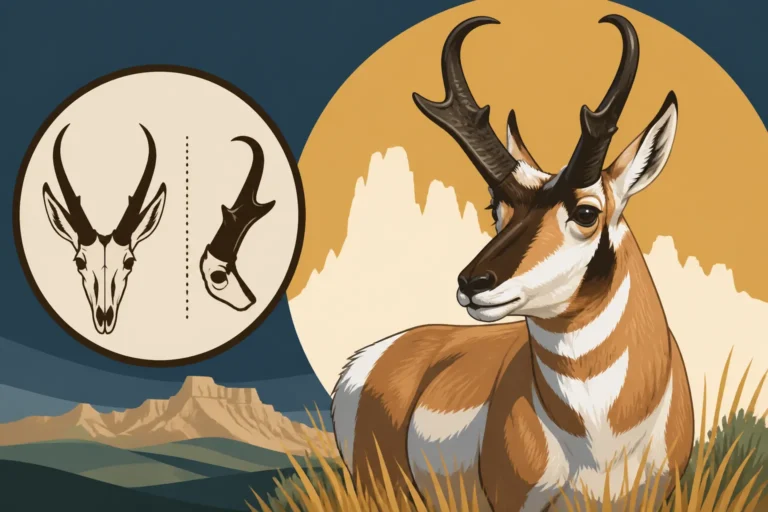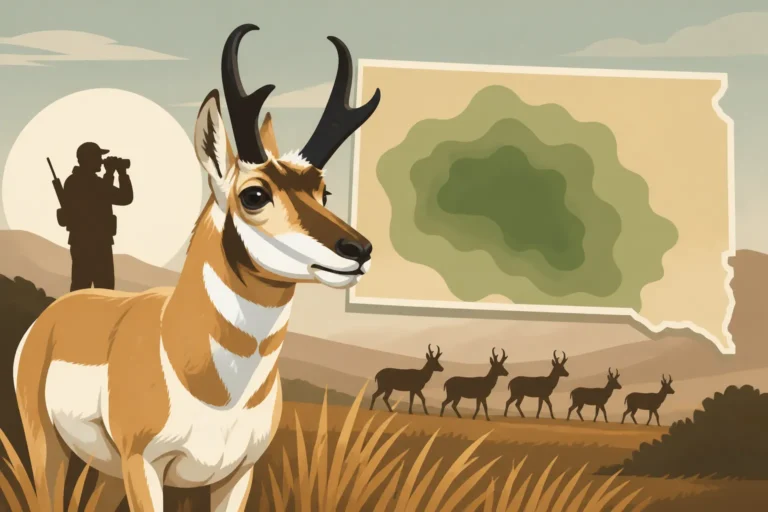
Pronghorn Antelope on the South Dakota Prairie
For many hunters, the image of a pronghorn antelope ghosting across the vast South Dakota prairie represents one of the most iconic challenges in North American big game hunting. Their incredible speed, sharp eyesight, and ability to seemingly vanish into thin air can be incredibly frustrating for those unprepared. This guide will walk you through everything you need to know about these magnificent animals, from their unique biology to effective hunting strategies, helping you finally connect with a true prairie speedster.
Understanding the Pronghorn's Unique Place on the Prairie
The pronghorn is a creature perfectly designed for the wide-open spaces it calls home, and South Dakota's western prairies offer some of the best habitat in the country. Often mistakenly called an "antelope," it's actually the last surviving member of an ancient family, Antilocapridae, making it a true American original.
A True North American Original
Unlike true antelopes found in Africa and Asia, the pronghorn isn't just a distant cousin; it's in a league of its own. Imagine an animal that has evolved over millions of years right here on this continent, honing every single trait to thrive in an environment defined by vastness and ever-present danger. Its closest living relatives are actually giraffes and okapi, which might surprise you given their vastly different appearances. But it speaks to a shared evolutionary branch that split off long, long ago. What makes them truly unique among horned animals is that they shed their horn sheaths annually, much like deer shed antlers, yet they retain a permanent bony core. This combination of attributes is found in no other animal on Earth, making every encounter with a pronghorn a brush with living history.
Their adaptability is truly remarkable. From the scorching summer sun where they might stand over a prairie waterhole, waiting for an opportunity to drink, to the biting winds and deep snows of winter, pronghorn endure it all. They've witnessed the comings and goings of mammoths and saber-toothed cats, adapting to every change the prairie threw at them. This deep historical connection to the land is palpable when you watch a herd flow across the landscape, a timeless dance that has played out for millennia.
Why the Prairie is Home
The open prairie isn't just a place pronghorn live; it's an extension of their very being. Every aspect of their physiology and behavior is intimately tied to the wide-open grasslands and sagebrush flats. Their legendary speed, which can reach up to 60 miles per hour, is less about chasing prey and more about escaping it in an environment devoid of dense cover. Imagine trying to hide from a predator like a coyote or even an eagle when the tallest thing around is a patch of sagebrush—you better be fast, and you better be able to sustain that speed for a long time.
Their keen eyesight is equally impressive, often compared to an 8x binocular, allowing them to detect threats miles away. This incredible vision, combined with a vast panoramic field of view, means they are almost impossible to surprise in open country. This is why tactics for Spot-and-Stalk Antelope Hunting in South Dakota require such patience and skill. The rolling hills, coulees, and draws of western South Dakota provide just enough undulation and cover for a hunter to attempt a stalk, but the pronghorn's constant vigilance makes it a high-stakes game. They thrive on the diverse forage the prairie provides, from grasses to forbs and sagebrush, their diet shifting with the seasons to maximize nutrition in a sometimes harsh landscape. It's a testament to nature's intricate design that such an animal could not only survive but truly flourish in such a demanding environment.
South Dakota's Pronghorn Population and Distribution
South Dakota is a fantastic state for pronghorn, offering extensive habitat that supports a healthy population. While their numbers can fluctuate with harsh winters, the commitment of the South Dakota Game, Fish and Parks (GFP) to sound management helps ensure a future for these incredible animals.
Where the Antelope Roam
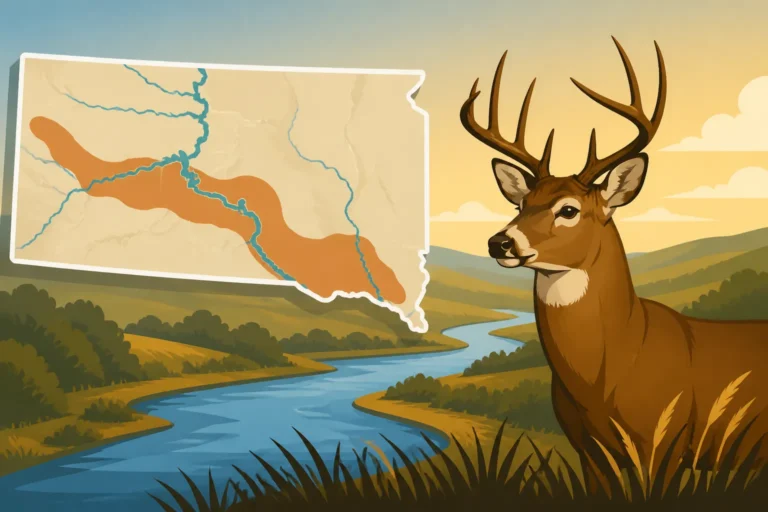
In South Dakota, pronghorn are predominantly found west of the Missouri River. This vast region, often referred to as "West River," consists of rolling grasslands, sagebrush flats, and the occasional badlands breaks, all of which are ideal pronghorn habitat. Counties like Harding, Perkins, Meade, and Fall River often boast the highest densities, but you'll find them scattered throughout the western half of the state. These areas offer the expansive visibility pronghorn prefer, allowing them to spot predators from great distances.
When looking at a map, you'll notice units specifically designated for antelope hunting, reflecting these concentrations. Many hunters rely on resources like the South Dakota Public Hunting Atlas or mapping tools from companies like GoHunt, which can highlight these prime areas and help differentiate between public and private land. While some of the best hunting is found on private ranch land, there are also significant opportunities on public access lands such as National Grasslands like the Buffalo Gap and Fort Pierre, as well as School and Public Trust Lands. Understanding these areas is key to successful Spot-and-Stalk Antelope Hunting in South Dakota. Knowing the typical terrain – whether it's vast, flat prairie or slightly more broken country with shallow coulees – will greatly influence your hunting strategy and how you approach a stalk.
Population Trends and Winter Challenges
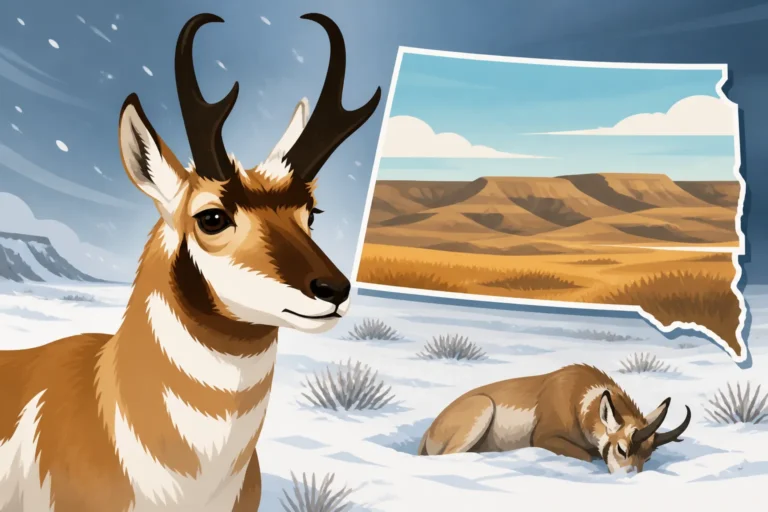
South Dakota's pronghorn population, like most wildlife, isn't static. It experiences natural fluctuations, primarily influenced by winter severity. While the state generally enjoys a healthy population, a particularly harsh winter with deep snow and prolonged cold can lead to significant winter kill events. Pronghorn are not adept at navigating deep snow, and their diet can become limited when forage is buried. For instance, in 2022-2023, many Western states, including parts of South Dakota, experienced brutal winter conditions that impacted deer, elk, and pronghorn herds.
The South Dakota Game, Fish and Parks (GFP) constantly monitors these trends through aerial surveys and population modeling. For example, recent estimates from GFP indicated the state's pronghorn population to be in a healthy range prior to severe winters, allowing for robust tag allocations. However, following a tough winter, adjustments are often made to tag numbers to allow herds to recover. This is why checking the annual South Dakota Pronghorn Population Estimate is crucial, as it directly impacts the number of tags available for hunters. While the animals are resilient, it can take several mild winters and good fawning seasons for populations to rebound fully. Hunters play a vital role in supporting these management efforts through ethical hunting practices and by reporting harvest data accurately, ensuring the long-term health of the herds.
Pronghorn Behavior and Adaptations
To successfully hunt pronghorn, you need to think like one. Understanding their incredible adaptations and typical behaviors will be your greatest asset on the prairie.
The Need for Speed
The pronghorn is truly the fastest land animal in North America, a title it earned through millions of years of evolutionary arms race with long-extinct predators like the American cheetah. Their ability to reach speeds of up to 60 miles per hour and sustain high speeds for miles is nothing short of astounding. They possess oversized lungs and a large heart to pump oxygenated blood efficiently, lightweight, hollow hair that acts as excellent insulation, and uniquely structured hooves that absorb impact and provide traction on firm ground.
When startled, a pronghorn doesn't just bolt; it often displays a unique "flagging" behavior, raising the white hairs on its rump. This flash of white serves as a warning signal to other pronghorn in the herd, allowing them to quickly assess danger and flee in unison. This rapid, coordinated escape can be incredibly frustrating for a hunter trying to get within range. You might see a small herd suddenly flag, and within seconds, they've covered hundreds of yards and are little more than specks on the horizon. This speed means that closing the distance requires not just stealth, but also a deep understanding of terrain and wind direction. A straight-on approach in open country is almost always doomed to fail against such an incredibly fast and alert animal.
Senses That Keep Them Alive
Beyond their speed, pronghorn are equipped with an array of senses finely tuned for survival on the open prairie. Their eyes are arguably their most impressive feature. Proportionally very large for their heads, they are set on the sides of their skulls, granting them an almost 360-degree field of vision. This means they can see danger approaching from nearly any direction without turning their head. As mentioned earlier, their visual acuity is exceptional, often likened to looking through 8x binoculars naturally. They can spot a hunter, a vehicle, or a predator at distances that would surprise most other big game animals.
Their hearing is also acute, allowing them to pick up subtle sounds across the quiet prairie. While less critical than their sight in the vastness, it still plays a role in detecting close-range threats. And then there's their sense of smell. While not as dominant as in deer or elk, pronghorn do use their nose to detect danger, especially when downwind. A slight shift in wind can carry your scent directly to a bedded buck, ruining a perfectly executed stalk. This combination of hyper-alert senses means that any approach must meticulously account for not only visual detection but also sound and scent. You need to use every wrinkle in the terrain, every patch of tall grass, and every gust of wind to your advantage, making a successful stalk a true chess match.
Social Structures and Herd Dynamics
Pronghorn are social animals, and their herd dynamics are fascinating to observe. During most of the year, bucks will often form small bachelor groups or wander solo, while does and fawns gather in larger nursery herds. These nursery herds can sometimes number in the dozens, providing safety in numbers with many eyes and ears to detect predators. This collective vigilance makes them even harder to approach undetected.
Come late summer and early fall, leading into the breeding season (the rut), things change dramatically. Dominant bucks will establish territories and attempt to gather harems of does, aggressively defending them from rival bucks. This is a time of increased activity, with bucks chasing does, sparring with competitors, and generally being more preoccupied, which can sometimes present unique hunting opportunities. Understanding How Buck Movement Changes Through the Rut can be a game-changer for a pronghorn hunter. You might observe a herd buck continually moving to keep his does together, or a satellite buck constantly trying to cut off a stray doe, which can momentarily lower their guard. However, even during the rut, pronghorn remain incredibly wary. Their social structure means that even if one animal is distracted, there are likely many others alert to their surroundings, reinforcing the challenge of hunting these sharp-eyed prairie dwellers.
Hunting Pronghorn in South Dakota: A Unique Challenge
Hunting pronghorn in South Dakota is a truly exhilarating experience, offering a blend of intense glassing, strategic stalking, and often, long-range shooting. It's a hunt that demands patience, precision, and an appreciation for the vastness of the prairie.
The Draw System and Tag Availability
South Dakota utilizes a lottery draw system for its highly sought-after pronghorn antelope tags, especially for non-residents. Unlike some states with complex preference point systems, South Dakota uses a bonus point system that cubes your chances with each point you accumulate. This means the more years you apply without drawing, the better your odds become, but it doesn't guarantee a tag. Resident hunters generally have better odds and access to more units. For non-residents, drawing a rifle tag can take several years of applying, making strategic unit selection crucial.
The application deadlines typically fall in late summer, so it's vital to mark your calendar and get your application in on time. Researching South Dakota Antelope Draw Odds for specific units in previous years can help you make an informed decision, though past performance is never a guarantee of future success. Websites like GoHunt provide valuable insights and tools for researching draw odds, unit statistics, and application strategies, which can significantly enhance your chances. It's also worth noting that archery antelope tags are often over-the-counter or much easier to draw for non-residents, providing a more accessible option for those willing to get up close and personal with a bow. Whether you're applying for a rifle or archery tag, understanding the draw system is the first, and perhaps most critical, step to an antelope hunt in the Mount Rushmore State.
| License Type | Residency | Application Period (Approx.) | Odds (General) | Cost (Approx. 2024) | Notes |
|---|---|---|---|---|---|
| Any Antelope (Firearms) | Resident | July | Good to Excellent | $50 | Draw required. Units vary in difficulty. |
| Any Antelope (Firearms) | Non-Resident | July | Low to Moderate | $285 (+ $100 pref.) | Bonus Point system. Can take several years to draw. |
| Archery Antelope | Resident | Over-the-counter | Very Good | $50 | Generally available statewide, within open seasons. |
| Archery Antelope | Non-Resident | Over-the-counter | Very Good | $285 | Great option for those unable to draw a rifle tag. |
| One-Tag Antelope (Archery) | Non-Resident | Over-the-counter | Very Good | $285 | Available only to hunters who do not draw a firearms tag. |
Note: All costs are approximate and subject to change by SD GFP. A Habitat Stamp is also required.
Spotting and Stalking Tactics
Once you've secured your tag and arrive on the prairie, the real game begins. The vastness of South Dakota's antelope country means that effective glassing is paramount. You'll spend far more time looking through binoculars or a spotting scope than actually walking. Start by finding a good vantage point, ideally one that allows you to survey several square miles of terrain. Early mornings and late evenings are typically the best times to find pronghorn as they move to feed or water. A good pair of 10x binoculars and a high-quality spotting scope are indispensable. As outlined in Glassing South Dakota Breaks at First Light, patience is key.
Once a buck is spotted, the stalking phase is a true test of skill and often where most hunts are won or lost. Pronghorns have exceptional eyesight, so any movement in the open will likely be detected. You'll need to use every piece of terrain to your advantage: dry creek beds, folds in the prairie, patches of taller sagebrush, or even distant hay bales can offer concealment. Wind direction is critical; always try to keep the wind in your face or quartering to you to avoid having your scent carried to the animals. A typical stalk might involve a long, low crawl through sparse cover, moving only when the pronghorn's head is down feeding or if it's looking in another direction. Remember, pronghorns are known for their ability to disappear, so having a solid plan before you leave your glassing position is crucial. Sometimes, the best stalk is the one you don't even attempt if the odds are stacked too heavily against you.
Decoying and Waterhole Strategies
While spot-and-stalk is the quintessential pronghorn hunt, alternative methods like decoying and hunting waterholes can be incredibly effective, especially in specific conditions or if a stalk proves too difficult. Decoying pronghorn can be an exciting, heart-pounding experience. A life-sized pronghorn decoy, particularly a buck decoy, can often pique the curiosity of a territorial buck during the rut. As described in Decoying Antelope Over Water, the tactic usually involves one hunter carrying or holding the decoy, slowly moving to simulate a rival buck, while the shooter remains hidden behind. Bucks, especially those with does, will often challenge what they perceive as an intruder, sometimes running hundreds of yards straight into range. The trick is to judge their reaction and know when to drop the decoy and shoot.
Waterhole hunting, on the other hand, relies on the pronghorn's need to drink, particularly in arid West River country during hot, dry early season hunts. Setting up a ground blind near an active waterhole—a stock tank, a small pond, or a natural seep—can be a highly successful ambush strategy. This typically involves identifying heavily used water sources through scouting or local knowledge. Hunters need to be in place well before daylight and remain concealed, often for hours, waiting for the pronghorn to come to them. While less active than a decoy hunt, waterhole hunting requires immense patience and impeccable concealment. Both methods offer unique challenges and rewards, providing valuable alternatives for hunters pursuing South Dakota pronghorn.
Essential Gear and Preparation for a Pronghorn Hunt
A successful pronghorn hunt in South Dakota isn't just about drawing a tag; it's also about having the right gear and being prepared for the unique conditions of the prairie.
Optics for the Open Country
Given the pronghorn's incredible eyesight and the vastness of their habitat, high-quality optics are not just recommended, they are absolutely essential. This isn't a hunt where you can skimp on your glass. You'll spend the vast majority of your time behind them, so investing in the best you can afford will pay dividends.
First and foremost, a good pair of 10x binoculars is your constant companion. Look for models with excellent light transmission, crisp edge-to-edge clarity, and a comfortable ergonomic design for extended viewing sessions. Brands like Vortex, Leupold, and Maven offer excellent options across various price points. These will be used for initial scanning of the landscape, identifying potential animals, and judging their size and sex. Secondly, a high-power spotting scope (typically 15-45x or 20-60x magnification) is crucial for evaluating bucks at extreme distances without disturbing them. You’ll use this to discern horn length, mass, and the tell-tale "cutters" that distinguish a mature buck, crucial for Judging a Pronghorn Buck in the Field. Pairing it with a sturdy, lightweight tripod is non-negotiable for stable viewing. Without quality optics, a pronghorn hunt quickly becomes a frustrating exercise in futility, as you simply won't be able to find and assess animals before they spot you.
Rifles, Calibers, and Ballistics
Pronghorn hunting often involves shots at extended ranges, given the open nature of the prairie. Therefore, choosing the right rifle and cartridge combination, and being proficient with it, is critical. While there's no single "best" caliber, ideal choices for South Dakota pronghorn typically balance flat trajectory, manageable recoil, and sufficient energy for a clean kill at distance. Popular choices include cartridges like the .243 Winchester, 6.5 Creedmoor, .25-06 Remington, .270 Winchester, and 7mm-08 Remington. These offer excellent ballistic coefficients and velocities without being overly powerful or causing excessive meat damage. The Rifle Calibers for South Dakota Antelope article further explores these options.
Regardless of your chosen caliber, practice is paramount. You absolutely must be confident in your ability to make an ethical shot out to 300, 400, or even 500 yards. This means spending significant time at the range, not just shooting from a bench, but practicing from prone positions with shooting sticks or a bipod, simulating real-world hunting scenarios. Understanding your rifle's ballistics, including bullet drop and wind drift, is vital. A good rangefinder is also non-negotiable for accurately gauging distances. When considering Shot Placement on a Pronghorn, remember their vital zone is smaller than a deer's, making precise shot execution even more important. A well-placed shot with a moderate caliber will anchor a pronghorn quickly, whereas a poorly placed shot with a magnum can lead to a long, difficult tracking job on the prairie.
Clothing and Footwear for Prairie Conditions
The South Dakota prairie can be a land of extremes, often experiencing wide temperature swings within a single day. Layering your clothing is the smartest approach to stay comfortable and adaptable. Start with a moisture-wicking base layer, add insulating mid-layers like fleece or down, and top it off with a windproof and water-resistant outer shell. Even in early fall, sudden thunderstorms or strong winds can sweep across the plains. Camouflage patterns are effective, but earthy tones that blend with the dry prairie grasses and sagebrush work just as well.
Footwear is another critical consideration. You'll be doing a lot of walking, often across uneven terrain, through prickly pear cactus, and over long distances during stalks. Comfortable, broken-in hunting boots with good ankle support and sturdy soles are a must. They should be waterproof, yet breathable. For many hunts, a lighter, more athletic style of hiking boot works well, prioritizing comfort and flexibility over heavy-duty insulation unless hunting late season. Don't forget durable gaiters to protect your pants and boots from burrs and cactus spines. Finally, a wide-brimmed hat or a baseball cap and sunglasses are essential for eye protection from the sun's glare, which can be intense on the open prairie and make glassing incredibly difficult without them. Being prepared for the elements ensures your focus remains on the hunt, not on discomfort.
Field Care and Meat Quality of South Dakota Pronghorn
Pronghorn often get an unfair reputation for their meat quality, but this is usually a result of improper field care. With proper handling, pronghorn venison can be incredibly delicious and a true culinary treat.
The Importance of Rapid Cooling
The most critical factor in ensuring excellent pronghorn meat quality is rapid cooling. Pronghorn are small animals, but they live in environments that can be surprisingly warm, even in early fall. Their lean muscle mass can retain heat, and if left to sit in warm temperatures, the meat can quickly spoil or develop a strong, undesirable flavor. This is a common culprit behind the misconception of "gamey" antelope meat.
As soon as your pronghorn is down, the clock starts ticking. The first step, as detailed in Field Dressing an Antelope Fast, is to field dress the animal immediately and thoroughly. Remove all internal organs, taking care to avoid puncturing the stomach or intestines. If possible, rinse the cavity with clean water (though often water is scarce on the prairie, so a dry wipe is best if no water is available), and then prop the cavity open with a stick or two to allow for maximum airflow. This is especially important if you're alone and can't quarter the animal immediately. If temperatures are warm, even a few hours can make a difference. Get the animal, or its quarters, into a cooler with ice as soon as humanly possible. Some hunters even carry large game bags and ice chests specifically for this purpose, immediately quartering the animal and getting it on ice to draw out that crucial body heat. This proactive approach will make all the difference in the flavor of your harvest.
Debunking the "Gamey" Myth
Let's tackle the "gamey" myth head-on. While some people truly dislike the robust flavor of wild game, often, the "gamey" taste attributed to pronghorn (and deer) is a direct result of stress during the kill or, more commonly, improper cooling and handling. A clean kill minimizes adrenaline and lactic acid buildup in the muscles. But it's really the rapid cooling that makes the biggest difference.
When pronghorn meat is allowed to stay warm, or if it's not kept clean, bacteria can proliferate, leading to off-flavors. Moreover, if the animal has been gut shot, digestive enzymes can contaminate the meat, resulting in an unpleasant taste. However, if you execute a clean kill, field dress quickly and hygienically, and get the meat cooled down promptly, you'll be rewarded with some of the finest wild game meat available. Pronghorn meat is lean, tender, and has a distinct, mild flavor that is often compared to a cross between venison and beef, but with its own unique character. It's excellent in steaks, roasts, ground meat, and stir-fries. As the article Why Antelope Meat Gets a Bad Name explains, diligent field care from the moment of the shot to the freezer is truly the secret to delicious pronghorn on your dinner table, turning potential detractors into enthusiastic fans.
Conservation and Future of South Dakota's Pronghorn
The majestic pronghorn we pursue on the South Dakota prairie are a testament to successful conservation efforts. Hunters, alongside wildlife managers, play a crucial role in ensuring these unique animals continue to thrive for generations to come.
Management Efforts and Challenges
South Dakota Game, Fish and Parks (GFP) implements science-based management strategies to maintain healthy and sustainable pronghorn populations. This involves a multi-pronged approach, including aerial surveys to estimate populations and assess herd health, habitat improvement projects on public lands, and careful regulation of hunting seasons and tag allocations. The goal is to balance hunter opportunity with the long-term biological needs of the herd. When populations are robust, more tags are issued; when they face setbacks, such as severe winter mortality, tag numbers are reduced to allow for recovery. This adaptive management ensures that hunting remains a sustainable activity and doesn't negatively impact the overall population.
However, challenges persist. Habitat fragmentation due to agricultural expansion or energy development can disrupt migration corridors and reduce available foraging areas. Severe weather events, as previously discussed, can cause significant population declines. Furthermore, diseases, though less common than in some other big game species, can occasionally pose a threat. GFP works to mitigate these challenges through land acquisition for public access and habitat protection, collaboration with private landowners, and ongoing research into pronghorn health and ecology. These continuous efforts highlight the dynamic nature of wildlife management and the constant need for vigilance and adaptation to ensure the pronghorn's future.
Hunter's Role in Pronghorn Stewardship
Hunters are, and always have been, crucial partners in wildlife conservation, and this holds true for South Dakota's pronghorn. The revenue generated from hunting licenses and tags, including the South Dakota Habitat Stamp Price, directly funds GFP's conservation programs. This financial contribution is the backbone of wildlife management in the state. Beyond dollars, hunters are also vital on-the-ground conservationists. Ethical hunting practices ensure fair chase and minimize stress on the animals. Reporting accurate harvest data helps GFP gather critical information for population modeling and season setting.
Hunters also act as informal stewards, often being the first to notice changes in wildlife behavior, habitat health, or signs of disease, which they can then report to wildlife officials. Participating in public meetings or providing feedback on season proposals also gives hunters a voice in the management process. By adhering to regulations, respecting private property, and practicing responsible outdoor ethics, hunters demonstrate their commitment to the species and help foster a positive public perception of hunting. Every hunter who successfully navigates the draw for a South Dakota Antelope Season and Draw and then ethically pursues and harvests a pronghorn is contributing directly to the ongoing conservation success story of these magnificent prairie speedsters.
Disclaimer
Please be aware that hunting regulations, season dates, and license requirements for South Dakota can change annually. It is your responsibility to consult the current South Dakota Game, Fish and Parks (GFP) hunting handbooks and official regulations prior to any hunting activity. This guide provides general information and should not be considered a substitute for official sources.