White-Tailed Deer Across South Dakota
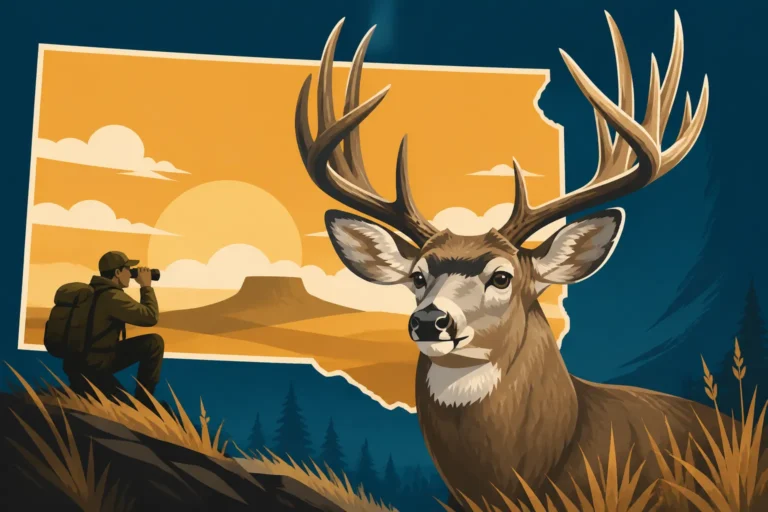
For many hunters, the thought of pursuing white-tailed deer conjures images of dense timber stands, quiet creek bottoms, or the rustle of cornfields. While these classic scenarios certainly hold true, hunting whitetails across South Dakota presents a unique set of challenges and opportunities that can leave even seasoned hunters scratching their heads. This guide aims to pull back the curtain on South Dakota's ubiquitous whitetail population, delving into their behavior, habitat, and the nitty-gritty of how to successfully hunt them in a state often renowned more for its pheasants.
Understanding South Dakota's Whitetail Dominance and History
It’s easy to get caught up in the allure of West River mule deer or the thunder of pheasant flushes, but the humble white-tailed deer remains the most widespread and frequently harvested big game animal in South Dakota. They're practically everywhere, from the deep draws of the western breaks to the heavily timbered river bottoms of the east, and out into the vast agricultural expanses. Understanding their historical journey and how they've carved out such a successful niche is key to appreciating their resilience and adapting your hunting strategies.
Historical Expansion and Adaptation
Before European settlement, whitetails were present in what is now South Dakota, but their populations were largely confined to riparian corridors – the river and creek bottoms that offered protection and consistent food sources. The expansive prairies, while home to other deer species like mule deer, were less suitable for whitetails who prefer more cover. However, as pioneers moved in and began breaking sod for agriculture, planting shelterbelts, and suppressing prairie fires, the landscape started to change dramatically. These changes inadvertently created a mosaic of habitat perfectly suited for whitetails. The introduction of corn and alfalfa provided abundant, high-energy food sources. Tree claims and shelterbelts offered vital cover from severe winter weather and predators.
This shift allowed whitetails to expand their range dramatically, colonizing areas where they were once sparse or non-existent. They are incredibly adaptable animals, thriving in diverse environments from dense forests to open prairies interspersed with agriculture. This historical expansion is why today you'll find healthy whitetail populations in almost every corner of the state, from the eastern plains to the fringes of the Black Hills, showcasing their incredible ability to exploit new resources and habitat modifications.
Population Dynamics and Management
South Dakota's whitetail population is a testament to effective wildlife management and the deer's inherent resilience. The Game, Fish and Parks (GFP) department meticulously monitors herd health, buck-to-doe ratios, and fawn recruitment rates to set appropriate hunting quotas. This is a complex dance, balancing hunter demand with biological sustainability. Factors like winter severity can have a significant impact, especially in areas with less thermal cover. A harsh South Dakota winter with deep snow and prolonged cold can lead to increased winter kill, particularly among fawns and older deer. Conversely, mild winters often result in high fawn survival and robust herd growth.
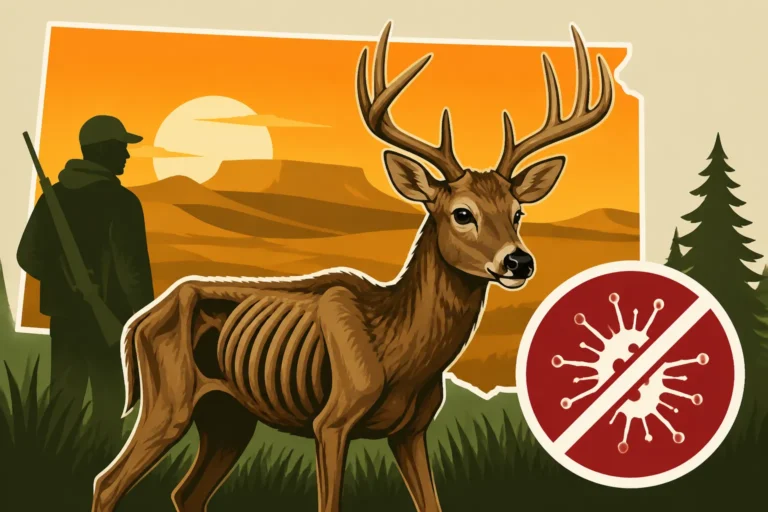
Another critical component of population dynamics is disease. South Dakota has unfortunately experienced outbreaks of Epizootic Hemorrhagic Disease (EHD), which can decimate local whitetail populations in certain years, especially during hot, dry summers when deer congregate around limited water sources. Learning about EHD Outbreaks in South Dakota Deer can help hunters understand regional fluctuations. The GFP also continuously monitors for Chronic Wasting Disease (CWD), a serious neurological disease that can affect deer, elk, and moose. Hunters are encouraged to participate in South Dakota CWD Testing for Hunters to help monitor its spread. Through a combination of habitat work, responsible harvest limits, and disease monitoring, the GFP strives to ensure healthy and sustainable whitetail populations for generations to come.
Where to Find South Dakota's Whitetail Hotspots
While whitetails are truly ubiquitous across South Dakota, not all ground is created equal. Understanding their preferred habitats can significantly narrow down your search, whether you're looking for a quick evening hunt or planning a multi-day expedition. From the sprawling Missouri River to isolated pockets of cover, there are distinct types of terrain that consistently hold good numbers of deer.
River Corridors and Riparian Zones
If you're looking for consistent whitetail action, you absolutely cannot overlook South Dakota's river and creek bottoms. These riparian zones are whitetail magnets, providing everything a deer needs: dense thermal cover, abundant forage, and crucial travel corridors. The Missouri River, in particular, is an absolute highway for whitetails, with its extensive timber, thick underbrush, and proximity to agricultural fields. Areas like the breaks along Lake Oahe or the timbered islands and shorelines of Lake Sharpe and Lake Francis Case are prime examples.
Imagine a ribbon of cottonwoods, willows, and cedars winding through otherwise open prairie or cropland. This natural edge provides security and a consistent water source, drawing deer in from miles around. Bucks will use these areas heavily during the rut, cruising for does. They offer excellent opportunities for treestand hunting, especially on narrow strips of timber where deer movement is concentrated. To delve deeper into these areas, you might want to read about South Dakota Whitetail Hunting in River Bottoms or specifically Hunting Whitetails in South Dakota's Missouri River Timber. These locations can be challenging to hunt due to thick cover and often limited access, but the rewards are frequently worth the effort.
Agricultural Edges and Shelterbelts
East River South Dakota, with its vast fields of corn, soybeans, and alfalfa, might seem like endless open country. However, whitetails thrive here by utilizing the edges where agriculture meets natural cover. These edges, often called "transition zones," are where deer spend a significant amount of their time, feeding in the fields during low-light hours and retreating to thicker cover during the day. Shelterbelts—those long, narrow strips of trees planted by farmers—are incredibly important in these agricultural landscapes. They provide essential bedding cover, especially in the cold, windy winters, and act as travel corridors for deer moving between feeding areas and more extensive cover.
Many deer will bed down right on the edge of a cornfield, especially if it offers even a slight topographical advantage or a brushy ditch. Hunting these agricultural edges requires a keen understanding of wind direction and deer movement patterns, as deer will often scent check fields before entering. Approaching these spots carefully, often from downwind or during midday when deer are typically bedded, can yield fantastic results. Don't underestimate the small, isolated pockets of woods or brushy creek drains that crisscross these farmlands; they often hold mature bucks seeking refuge from human activity.
Black Hills and Western River Breaks
While mule deer are often the stars of West River South Dakota, whitetails are steadily increasing their presence and are a common sight even in the Black Hills. In the Black Hills, whitetails tend to stick to the lower elevations, preferring the denser ponderosa pine stands, creek bottoms, and areas with more deciduous undergrowth. They can be found in the canyons and draws, often where water is present, providing both cover and forage. They are less likely to be found on the high, open ridges where mule deer often dominate.
Out on the western river breaks, like those along the Cheyenne River or the Grand River, whitetails will again favor the thicker timbered draws and the deeper, more rugged canyons that offer significant protection. While you'll encounter plenty of mule deer in these areas, whitetails occupy the more traditional "deer country" within the broken landscape. The key here is to identify those patches of denser cover, often north-facing slopes or creek bottoms, that provide shelter from the sun and wind. These spots can be challenging to access and navigate, but they offer some incredible opportunities for both archery and rifle hunters seeking a western whitetail experience.
Key Whitetail Behavior and Movement Patterns
Understanding how white-tailed deer behave is paramount to successful hunting, especially in a state with such varied terrain and weather as South Dakota. They are creatures of habit, but those habits can shift dramatically based on season, weather, and pressure. Ignoring these nuances can lead to long days in the field with little to show for it.
Daily Routines and Seasonal Shifts
Whitetails are most active during dawn and dusk, a period known as crepuscular activity. During these times, they are typically moving between bedding areas and feeding grounds. In early morning, they'll often be heading from fields or oak stands back to security cover, while in the evening, they reverse course. However, their specific daily routines are heavily influenced by the season. In the early archery season, often during warmer September days, deer might move more at night to avoid heat and insect pressure, making midday bedding areas crucial. As fall progresses and temperatures drop, their daytime movement generally increases.
During the late season, especially with snow on the ground, deer may alter their patterns to conserve energy, often bedding on sunny slopes or in thick thermal cover like cattail sloughs or cedar breaks. They might spend more time feeding during daylight hours to build fat reserves. Identifying these seasonal shifts in behavior is critical. For instance, in October, a deer might be feeding in a cut cornfield, but by December, with deep snow, they might be yarded up in a dense river bottom, rarely venturing out. Observing local conditions and understanding how deer adapt to the changing seasons will make you a much more effective hunter.
The South Dakota Rut: Peak Activity
Ah, the rut! This is often considered the holy grail for deer hunters, and for good reason. The breeding season sees bucks abandon their cautious, nocturnal tendencies and become far more active, often moving during daylight hours in search of receptive does. In South Dakota, the whitetail rut typically peaks in early to mid-November, though pre-rut activity can start in late October and post-rut cruising can extend into late November. This is when you'll see bucks scent-checking scrapes, rubbing trees, and engaging in sparring matches.
Understanding How Buck Movement Changes Through the Rut is vital. During the pre-rut, bucks are getting fired up, laying down sign, and becoming more aggressive. The peak rut is when chasing and breeding occur most frequently, making bucks incredibly vulnerable. They're often so focused on does that they let their guard down. This is the ideal time for calling tactics like rattling and grunting, as a buck might respond aggressively to the sound of rival deer. However, it's not a magic bullet; sometimes, intense pressure or a small buck-to-doe ratio can make the rut feel less productive. Nevertheless, if you're targeting a mature buck, the rut offers the best window of opportunity for a daytime encounter. Consider learning more about Rattling and Grunting During the South Dakota Rut to maximize your chances.
Adapting to Pressure and Weather
Whitetails, particularly mature bucks, are incredibly adept at avoiding human pressure. In areas that receive heavy hunting pressure, deer will quickly become nocturnal or move to the thickest, most inaccessible cover they can find. This is a common frustration for many hunters, especially on public lands or easily accessible private ground. They learn quickly, often retreating to dense cattails, hidden draws, or even small, overlooked pockets of cover that most hunters walk past.
Weather, too, plays a monumental role. Cold fronts, especially those following mild spells, can trigger increased deer movement. A fresh snowfall can be a blessing and a curse; it makes tracking easier and reveals fresh sign, but it can also push deer into the heaviest thermal cover. High winds, common on the South Dakota prairie, can make deer nervous and less likely to move in open areas, often pushing them into protected draws or timber. However, a strong wind can also mask a hunter's approach, allowing for closer stalks. Extremely warm weather, especially during the early season, will often restrict deer movement to the cool hours of darkness, forcing hunters to focus on bedding areas at midday or hunt sparingly at dawn and dusk. Successful hunters are constantly observing these factors and adjusting their tactics accordingly.
Licensing and Drawing for South Dakota Whitetails
Navigating the licensing and draw system for white-tailed deer in South Dakota can feel like cracking a complicated code, especially for non-residents. It's not as simple as walking into a store and buying a tag, and understanding the nuances can make or break your hunting plans.
Resident vs. Non-Resident Opportunities
South Dakota prioritizes its resident hunters, as do most states, ensuring they have ample opportunity to pursue deer. Residents have access to a wider variety of tags, often at lower costs, and significantly better draw odds for coveted units. Non-residents, however, face more limited options and significantly tougher draw odds, particularly for firearms tags in desirable areas. This system is designed to manage harvest pressure and maintain healthy deer populations.
For non-residents, the primary avenues for rifle whitetail hunting are often through the limited number of West River Any Deer or West River Antlerless Only tags, or occasionally through leftover tags if they become available. Archery opportunities are generally more accessible for non-residents, with a higher quota for South Dakota Nonresident Archery Deer Licence Numbers compared to rifle tags. It's crucial for non-residents to understand that drawing a rifle tag is often a multi-year endeavor requiring patience and a good strategy for building preference points.
Understanding East River and West River Draws
South Dakota's deer hunting is broadly divided into "East River" and "West River" units, with very different landscapes and draw dynamics.
East River: This region generally refers to the eastern half of the state, characterized by rich agricultural lands, abundant prairie potholes, and significant river corridors like the James and Big Sioux. Whitetails here thrive on the combination of food and cover. East River units are primarily resident-only for firearms tags, with very few, if any, non-resident firearm tags allocated. When they are, they are often antlerless-only or through specific programs. Non-residents largely pursue pheasants and other small game in East River, but archery deer hunting can be excellent.
West River: This encompasses the more rugged, open country west of the Missouri River, known for its rolling hills, breaks, and mixed-grass prairie. While mule deer are prominent here, whitetails are increasingly common, especially in draws and riparian areas. Non-residents stand their best chance of drawing a firearm deer tag in West River units. These tags are often "Any Deer," meaning you can harvest either a whitetail or a mule deer, though specific units might be buck-only or antlerless-only. The draw for these tags can still be competitive, but it's where non-residents focus their efforts.
Here's a quick comparison of general hunting considerations for each region:
| Feature | East River Whitetail Hunting | West River Whitetail Hunting |
|---|---|---|
| Primary Habitat | Agricultural fields, shelterbelts, river bottoms, wetlands | Breaks, rugged draws, riparian areas, timbered canyons |
| Access | More private land, often requiring landowner permission; good WIA access | Significant public land (National Grasslands, WIAs); private ranches |
| Hunter Density | High on public pheasant ground, can be lower for deer in some areas | Can be high in popular units, but vastness allows for solitude |
| Weapon Focus | Primarily archery for non-residents; rifle for residents | Rifle and archery opportunities for non-residents |
| Terrain | Flatter, rolling hills; dense cover often in narrow strips | Hilly, broken terrain; deep canyons and wide-open spaces |
| Draw Odds | Very challenging/non-existent for non-resident rifle; better for archery | Competitive but possible for non-resident rifle; good for archery |
| Typical Cover | Cornfields, sloughs, tree belts, river timber | Cedar breaks, ponderosa pine, willow thickets, rugged draws |
Navigating Preference Points and Application Deadlines
South Dakota utilizes a preference point system for many of its big game draws, including deer. This system is designed to reward loyalty and persistence. For every year you apply for a license and are unsuccessful, you can purchase a preference point (or automatically receive one if you've selected that option). These points essentially give you a better chance in subsequent years' drawings. The more points you have, the better your odds. However, drawing a tag often depletes your points back to zero, so it's a long-term game.
Understanding how South Dakota Preference Points Explained work is crucial. If you're a non-resident dreaming of a West River rifle deer tag, buying a preference point each year you don't hunt or apply is a smart move. The GFP usually has a specific period for Deadline to Buy a South Dakota Point where you can purchase a point without applying for a tag. You'll also need to know the South Dakota Deer Application Deadline to ensure your application is submitted on time. Websites like GoHunt provide excellent resources and draw odds data, helping hunters strategize their point accumulation and application choices, maximizing their chances year after year. Missing these deadlines means losing a year of potential point accumulation, setting back your plans significantly.
Effective Hunting Strategies for South Dakota Whitetails
Hunting South Dakota whitetails successfully means being adaptable. The tactics that work in a river bottom are very different from those employed on an open prairie fringed with agriculture. Developing a versatile approach, grounded in thorough preparation and an understanding of deer behavior, is key.
Scouting and E-Scouting for Success
In today's hunting world, effective scouting extends far beyond simply walking the woods. E-scouting, using satellite imagery and mapping applications, has become an indispensable tool, especially when planning a trip to unfamiliar South Dakota territory. Before you even set foot in the field, you can identify potential bedding areas, travel corridors, food sources, and access points. Look for thick cover, pinch points, creek drains, and changes in topography. Mapping apps like onX Hunt or GoHunt provide detailed public and private land boundaries, making it easier to plan your approach without trespassing. You can learn more about E-Scouting Walk-In Areas Before the Season to get a head start.
Once you've done your digital homework, in-person scouting seals the deal. This involves walking the ground, ideally outside of hunting season, to verify what you saw on the map. Look for fresh sign: rubs, scrapes, tracks, and droppings. Identify natural funnels, saddlebacks, and dense cover where deer might be bedding. Pay attention to prevailing wind directions and how they might affect your approach to a stand. Early morning or late evening glassing sessions can reveal deer movement patterns before the season even begins. Even if you're hunting an area you know well, a quick pre-season scout can reveal new patterns or areas deer are using, especially if conditions like crops or water levels have changed.
Treestand and Ground Blind Tactics
Treestands and ground blinds are classic whitetail hunting tools, and they are incredibly effective in South Dakota's varied habitats.
Treestands: These are ideal for hunting timbered river bottoms, shelterbelts, or any area with mature trees that provide elevation. The main advantage of a treestand is getting your scent above a deer's nose and offering a better vantage point for spotting deer movement. When setting up a treestand, focus on pinch points, funnels, or areas overlooking primary food sources or bedding areas. Consider the sun's angle to avoid silhouetting yourself and to keep the sun out of your eyes during peak hunting times. For optimal concealment and access, think about Treestand Setups on Narrow River Timber or similar dense areas. Always prioritize safety with a full-body harness and proper setup.
Ground Blinds: These shine in more open country or areas without suitable trees, which describes a lot of East River South Dakota. Ground blinds are excellent for hunting agricultural field edges, the fringes of cattail sloughs, or even within brushy draws. They offer complete concealment and a scent barrier, which can be invaluable when deer are wary. Portability can also be a factor, as many pop-up blinds can be moved relatively easily. When placing a ground blind, ensure it blends naturally with its surroundings and brush it in well. Pay attention to prevailing winds; even with a blind, scent control is paramount. Always clear shooting lanes before the season, or discreetly on the day of the hunt if possible, to avoid alarming deer.
Still-Hunting and Drives in Various Habitats
Sometimes, sitting and waiting isn't the most effective strategy, especially when deer are pressured or the cover is too vast.
Still-Hunting: This involves slowly, methodically moving through the deer's habitat, taking a few steps, pausing, and scanning for deer. It requires immense patience and keen observation skills. Still-hunting is most effective in areas with broken cover, such as the western breaks, or through expansive timber where deer might be bedded during the day. You move at a snail's pace, often taking 15-20 minutes to cover 50 yards, constantly looking for a flicker of an ear, a horizontal line in a vertical world, or a patch of hide. Use the wind to your advantage, moving into it or across it, and utilize terrain features to break up your silhouette. This method often leads to close encounters if done correctly.
Deer Drives: Drives are a traditional and highly effective method for flushing deer out of dense cover, particularly in South Dakota's heavy cattail sloughs, shelterbelts, or extensive river timber. This usually involves a group of hunters: "drivers" who slowly push through the cover, and "blockers" or "standers" who position themselves at strategic exit points. Communication is key, as is safety. Everyone must be aware of each other's positions and established shooting lanes. A well-executed drive can push deer out of seemingly impenetrable cover, offering shooting opportunities for the blockers. Consider researching methods like Pushing a Cattail Slough With Blockers for detailed strategies. Drives are often done with larger groups and require significant coordination, but they can be incredibly productive, especially in late season when deer are locked down in thick cover.
Gear and Preparation for South Dakota Whitetail Hunts
Successful whitetail hunting in South Dakota isn't just about strategy; it's also about having the right tools for the job and being prepared for whatever the prairie or timber throws at you. South Dakota weather is notoriously unpredictable, and being underprepared can quickly turn a hunt miserable or even dangerous.
Rifle and Archery Considerations
Choosing the right weapon for your South Dakota whitetail hunt depends on personal preference, hunting style, and the specific regulations for your tag.
Rifle Hunters: For rifle hunting in South Dakota, versatility is key. While many whitetail shots in timber might be relatively close, West River hunts or those on agricultural edges can involve longer distances. A flat-shooting caliber that can handle both close-range timber shots and potential 200-300 yard prairie shots is ideal. Popular choices include .270 Win, .30-06 Sprg, .308 Win, and 6.5 Creedmoor. Ensure your rifle is sighted in accurately and you've practiced shooting from various field positions, including prone or with shooting sticks, as you never know what kind of shot opportunity will present itself. A good quality scope with clear glass and reliable tracking is a worthwhile investment. Always check the Rifle Calibers for South Dakota Antelope or deer regulations, as well as any specific unit restrictions.
Archery Hunters: Archery hunting for whitetails demands precision and patience. A compound bow, recurve, or longbow capable of delivering a clean, ethical kill is essential. Pay attention to arrow weight, broadhead choice, and shot placement. Practice extensively at varying distances and from different shooting angles, including from an elevated position if you plan to use a treestand. Scent control is even more critical for archery hunting, as you need to get much closer to deer. Blinds and treestands are your best friends. For specific regulations regarding South Dakota Archery Deer Season Dates, consult the GFP hunting handbook.
Essential Clothing and Field Gear
South Dakota weather can swing wildly, from warm, sunny days in early fall to frigid, windy blizzards in late November and December. Layering is not just a suggestion; it's a necessity. Start with a moisture-wicking base layer, add insulating mid-layers, and top it off with a waterproof and windproof outer shell. Blaze orange requirements vary by season and weapon, so always check current regulations.
Beyond clothing, a well-stocked pack is crucial. Here’s a basic checklist:
- Navigation: GPS device or smartphone with mapping app (e.g., onX Hunt) and a portable charger. Cell service can be spotty in remote areas.
- Optics: Binoculars (10×42 or 12×50 are great all-around choices) and a rangefinder. Spotting scopes can be useful for glassing large areas from a distance.
- Knives: A sharp fixed-blade knife and a folding knife for field dressing.
- Lights: Headlamp with extra batteries.
- First-Aid: Compact first-aid kit for minor injuries.
- Water & Snacks: Stay hydrated and fueled throughout the day.
- Game Bags: For quartering and packing out meat, especially in warmer weather.
- Calls: Grunt tubes and rattling antlers/bags if you're hunting during the rut.
Always double-check your gear before heading out, ensuring batteries are charged and everything is in working order.
Post-Harvest Care and Meat Processing
The work doesn't end when you pull the trigger or release the arrow. Proper post-harvest care is vital to ensure high-quality venison. In South Dakota's often-variable temperatures, especially during early season, quick field dressing is paramount to cooling the carcass. Remove the entrails as soon as possible to allow the body heat to escape. If temperatures are warm, consider getting the deer to a processor or skinning and quartering it for cooling in coolers with ice. You can find useful tips on Field Dressing an Antelope Fast (which applies to deer too) and Getting Meat Cooled in Warm Weather.
Once field dressed, tag your deer immediately according to GFP regulations. This usually involves attaching your tag to the carcass. Transport rules are also important, particularly concerning CWD; check the latest Carcass Transport Rules for CWD to ensure you're compliant. For those not comfortable processing their own deer, South Dakota has numerous reputable meat processors, especially in larger towns and hunting hubs. Contact them beforehand to confirm their hours and services, as they can get very busy during peak hunting season. Taking the time to properly care for your harvest ensures that the meat will be delicious and a fitting reward for your efforts.
Challenges and Conservation of South Dakota Whitetails
Hunting whitetails in South Dakota, like any hunting endeavor, comes with its own set of challenges. Beyond the hunt itself, understanding the broader conservation landscape is vital for ensuring these animals thrive for future generations. It’s a delicate balance of managing disease, habitat, and predator impacts.
Disease Management and EHD Concerns
One of the most significant challenges for South Dakota's whitetail population is disease, particularly Epizootic Hemorrhagic Disease (EHD). This viral disease is transmitted by biting midges (no-see-ums) and can cause widespread deer mortality, especially during hot, dry periods in late summer and early fall when water sources shrink, concentrating deer and midges. Symptoms include fever, swelling, and internal hemorrhaging, often leading affected deer to seek water, where they may eventually die.
While EHD outbreaks are sporadic and often localized, they can severely impact regional deer numbers, sometimes causing significant die-offs. The South Dakota GFP monitors EHD reports closely and adjusts tag allocations in affected units to allow herds to recover. Hunters play a crucial role by reporting sick or dead deer to the GFP, which helps track outbreaks and assess impacts. Another critical concern is Chronic Wasting Disease (CWD), a fatal neurological disease. While less impactful on overall population numbers than EHD typically, CWD poses a long-term threat to herd health and requires constant vigilance. The GFP conducts mandatory and voluntary CWD testing and has strict Carcass Transport Rules for CWD to prevent its spread.
Habitat Loss and Preservation Efforts
Despite their adaptability, South Dakota whitetails still rely on quality habitat, and that habitat is constantly facing pressures. Agricultural expansion, urban sprawl, and changes in land use can lead to the fragmentation and loss of crucial cover and food sources. The conversion of grasslands and shelterbelts into cropland, for example, removes vital bedding and wintering areas, making deer more vulnerable to predators and harsh weather.
Conservation efforts are ongoing to counteract these pressures. Programs like the Conservation Reserve Program (CRP) pay landowners to convert marginal cropland into perennial grass and forb cover, providing excellent habitat for deer, pheasants, and other wildlife. The GFP also manages Game Production Areas (GPAs) and works with private landowners through the Walk-In Area (WIA) program, opening up thousands of acres of private land to public hunting. These areas often contain high-quality whitetail habitat, including dense riparian zones, shelterbelts, and undisturbed grasslands. Supporting these initiatives, whether through buying hunting licenses and stamps or advocating for habitat conservation, is essential for maintaining robust whitetail populations in the face of ongoing land-use changes.
Predator Interactions and Their Impact
Predator-prey dynamics are a natural part of any ecosystem, and South Dakota whitetails are no exception. Coyotes are the primary predator of whitetails in the state, particularly preying on fawns. While coyotes generally have a limited impact on healthy, established deer populations, their predation can become more significant during periods of low fawn recruitment or after severe winters that weaken deer. Bobcats, and even occasional mountain lions in the Black Hills and some West River areas, also contribute to predation.
The impact of predators on deer populations is a complex and often debated topic. While some hunters advocate for increased predator control, research often suggests that healthy deer herds can largely withstand typical predation pressure. In fact, predators often play a role in culling sick or weak animals, contributing to overall herd health. However, in specific areas where deer populations are struggling due to other factors (like disease or habitat loss), increased predation pressure can be a concern. The GFP manages predator populations through regulated hunting and trapping seasons, aiming to maintain a natural balance while acknowledging the diverse impacts on various game species.
Comparing Whitetails to Mule Deer in South Dakota
In South Dakota, particularly west of the Missouri River, hunters often have the unique opportunity to pursue both white-tailed deer and mule deer. While both are deer, they are distinct species with different behaviors, habitat preferences, and physical characteristics. Knowing how to tell them apart, and understanding their nuances, is key to identifying your target and adapting your hunt.
Distinguishing Features and Habitat Preferences
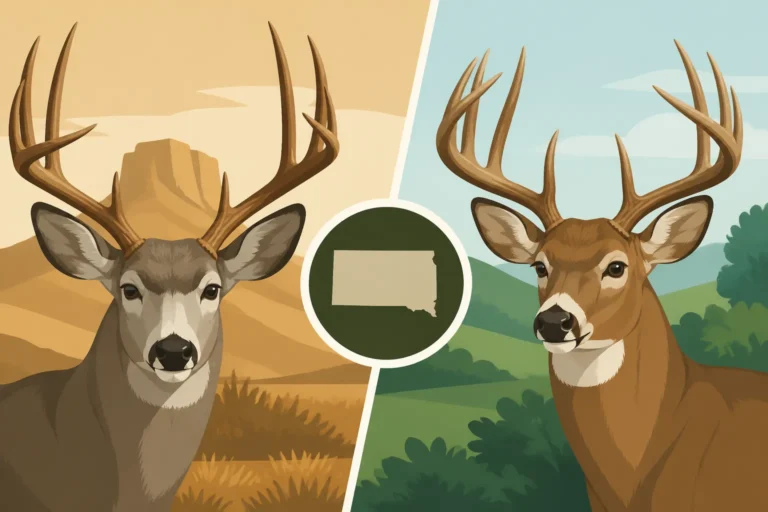
The most obvious way to differentiate a whitetail from a mule deer, especially a buck, is by its antlers. Whitetail antlers typically consist of a main beam with all tines originating off that beam. Mule deer antlers, in contrast, are generally dichotomous, meaning they "fork" as they grow, producing a series of splits. But antlers can be deceiving, especially on younger bucks or during velvet.
More consistent distinguishing features include:
- Ears: Mule deer have significantly larger ears, often described as "mule-like," which is where they get their name. Whitetails have smaller, more proportionate ears.
- Tail: This is often the most reliable field characteristic. A whitetail's tail is broad, typically reddish-brown on top, and pure white underneath. When alarmed, they will raise (flag) their tail, revealing the white underside. Mule deer have a narrow, rope-like tail that is white with a black tip. They rarely "flag" their tail, often holding it down when fleeing.
- Coloration: While both can vary, mule deer generally have a lighter, more uniform gray-brown coat, especially in winter, with a distinctive white rump patch. Whitetails often have a reddish-brown coat, especially in summer, and lack the prominent rump patch.
- Gait: When alarmed, whitetails tend to run with a fluid, bounding gait. Mule deer, famously, "bound" or "stot," a distinctive four-legged leap, covering ground by pushing off with all four feet simultaneously.
In terms of habitat, whitetails prefer denser cover: river bottoms, thick shelterbelts, and brushy draws. Mule deer are more creatures of the open, preferring rugged breaks, sagebrush flats, and high ridges. However, there's significant overlap, especially in transition zones. You might find a whitetail buck bedded in a small patch of timber on a prairie hillside, and a mule deer buck in an open, grassy draw. For a deeper dive, check out Telling a Mule Deer From a Whitetail.
Hunting Tactics for Each Species
Given their differing behaviors and habitat choices, the best hunting tactics often vary between the two species.
Whitetail Tactics:
- Ambush Hunting: Due to their reliance on cover and predictable travel patterns, treestands and ground blinds set up along trails, pinch points, or near food sources are highly effective.
- Drives: In dense cover like cattails or heavy timber, deer drives are a powerful tool to push whitetails out.
- Still-Hunting: Slow, deliberate movement through thick cover, focusing on spotting deer before they spot you.
- Calling: Rattling and grunting are effective during the rut to attract curious or aggressive whitetail bucks.
Mule Deer Tactics:
- Spot-and-Stalk: This is the quintessential mule deer hunting method. Due to their preference for open country, glassing from a distance with high-quality optics to spot deer, then planning a stalk to get within range, is often the most productive. Learning about Glassing South Dakota Breaks at First Light is key here.
- Elevation: Utilizing high points to glass vast areas of terrain.
- Patience: Mule deer often bed in open, exposed areas. A successful stalk often requires waiting them out until they stand, or moving extremely carefully when they are bedded.
- Utilizing Terrain: Using draws, ridges, and terrain features to stay out of sight during a stalk.
While these are general guidelines, remember that a buck is a buck. A mature whitetail buck that lives in open country might behave more like a mule deer, using topography to its advantage and being harder to get close to. Conversely, a mule deer buck that lives in timbered river bottoms might adopt more whitetail-like tendencies. The most successful hunters are those who understand both species and adapt their approach based on the specific animal and its environment.
Disclaimer
Hunting is an inherently risky activity. The information provided in this guide is for informational purposes only and should not be considered a substitute for professional instruction, local laws, or personal safety precautions. Always prioritize safety, understand and follow all South Dakota Game, Fish and Parks regulations, obtain proper landowner permission, and hunt ethically. Wildlife populations and regulations can change, so always consult the latest official South Dakota hunting handbooks and websites before planning your hunt.