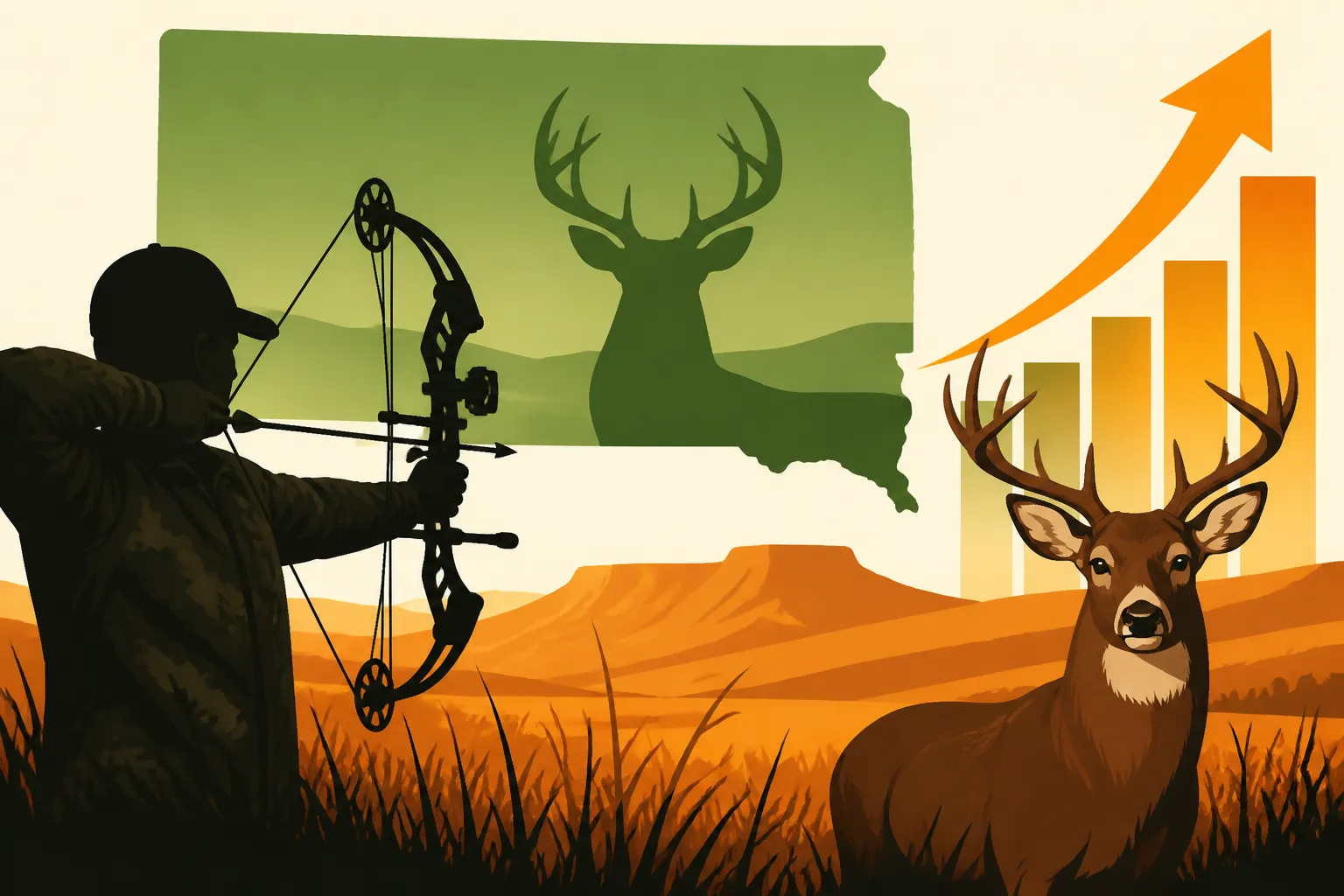
South Dakota Nonresident Archery Deer Licence Numbers
Trying to navigate the complex world of nonresident hunting licenses in South Dakota, especially for a specific pursuit like archery deer, can feel like trying to hit a moving target in the dark. Many hunters get frustrated by the seemingly opaque process and struggle to find clear information on how many opportunities actually exist. This guide aims to shed light on the nonresident archery deer license numbers in South Dakota, explaining how they are set, what factors influence them, and how you can best position yourself for success in the draw.
Understanding the South Dakota Nonresident Archery Deer Lottery
South Dakota is a bucket-list destination for many deer hunters, offering diverse landscapes and robust deer populations. However, for nonresidents, drawing an archery deer tag involves a specific lottery system with a set number of available licenses. It’s not an over-the-counter free-for-all; rather, it’s a controlled draw designed to manage hunter numbers and opportunity.
The state's approach ensures that while nonresidents have a chance to experience the hunting, resident opportunities are prioritized, and deer populations remain healthy. This means that year to year, the exact number of licenses can fluctuate slightly, but the general framework remains consistent. For example, for the 2023 season, the South Dakota Game, Fish and Parks (GFP) allocated a total of 4,200 nonresident archery deer licenses. These licenses generally allow for the harvest of one deer, either an antlered or antlerless whitetail, or an antlered mule deer, statewide, with some specific unit exclusions like Custer State Park or certain refuge areas. This statewide nature of the tag means you have considerable flexibility once you draw, which is a huge bonus compared to highly restrictive unit-specific rifle tags.
Factors Influencing License Availability and Quotas
The number of nonresident archery deer licenses available in South Dakota isn't pulled out of thin air. Several critical factors come into play when the GFP Commission determines annual quotas. Understanding these can help you anticipate future availability and strategize your applications.
Deer Population Trends and Health
The most significant factor is the health and population size of the deer herds. The GFP conducts annual surveys, monitors harvest data, and assesses winter severity to get a clear picture of deer numbers. If the population is robust and healthy, with good fawn recruitment and favorable winter conditions, the commission might maintain or even slightly increase nonresident quotas. Conversely, a severe winter kill, widespread disease outbreaks like EHD (Epizootic Hemorrhagic Disease), or prolonged drought affecting habitat can lead to conservative quotas to help herds recover. It’s a delicate balance, and wildlife managers always err on the side of caution to ensure long-term sustainability. For instance, in areas that experienced significant EHD outbreaks, even if it primarily affects whitetails, the overall pressure on the resource is considered. Hunters often look to resources like GoHunt for current population data and analysis to inform their application choices.
Habitat Conditions and Land Use Changes
Habitat is the backbone of any healthy wildlife population. Changes in land use, such as the conversion of CRP (Conservation Reserve Program) grasslands to cropland or the impact of extensive development, can influence deer numbers. The availability of quality cover, forage, and water directly impacts a deer's ability to survive and reproduce. South Dakota's diverse landscapes, from the Missouri River timber to the West River breaks, offer varied habitats, and changes in these areas are constantly monitored. A decrease in prime habitat might necessitate a reduction in tags to ensure the remaining habitat can support the deer population. On the other hand, robust conservation efforts or new public land access programs can sometimes lead to more opportunities. Understanding the nuances of CRP Acres and South Dakota Bird Numbers can even provide insights into broader habitat health, which indirectly affects deer.
Hunter Pressure and Success Rates
The GFP also considers existing hunter pressure and success rates when setting nonresident quotas. If a specific area sees very high resident pressure, or if success rates for archery hunters begin to dip significantly, the commission might adjust nonresident numbers to balance opportunity and experience. The goal isn't just to issue tags but to ensure a quality hunting experience and a reasonable chance of success. Too many hunters, even if the deer population is stable, can lead to crowded public lands and reduced satisfaction. The statewide nature of the nonresident archery tag helps spread out hunters, but pressure points still exist, especially around popular areas or during peak rut times. Data on South Dakota Harvest Reporting Rules helps GFP track these trends year over year.
Strategies for a Successful Nonresident Archery Deer Draw
Given the limited number of nonresident archery deer licenses, a strategic approach is essential. While there's always an element of luck in any lottery, smart planning can significantly improve your odds.
Understanding the Application Period and Deadlines
The absolute first step is to be aware of the application period and strict deadlines. Missing a deadline means missing out on the draw entirely. The application period for South Dakota nonresident archery deer tags typically opens in late spring or early summer, with a deadline usually in July. For instance, in recent years, the deadline has often fallen around the third Friday of July. You must submit your application well before this date. Many hunters use tools like GoHunt's Insider service to stay on top of these critical dates, ensuring they never miss an opportunity to apply. Remember, this is different from the South Dakota Deer Application Deadline for rifle seasons, which may have different dates.
Optimizing Your Application Choices
Unlike some states with complex preference point systems for archery, South Dakota's nonresident archery draw is often a true lottery, meaning everyone who applies has an equal chance for the initial tags, regardless of whether they've applied before. However, the system does offer bonus points for those who are unsuccessful in the draw, which can slightly improve your odds in subsequent years. It's crucial to understand how these bonus points work: typically, your application is "cubed" (multiplied by itself) based on the number of points you have. So, if you have two points, your application effectively counts as eight entries (2x2x2).
When applying, consider the following:
- Unit Preferences: While the primary nonresident archery tag is statewide, some specific units might have smaller quotas or different regulations. Pay close attention to the details in the GFP application instructions.
- Antlered vs. Antlerless: The standard tag is usually "any deer," but sometimes specific antlerless-only opportunities arise or can be purchased as a second tag if available. Focus on securing the primary "any deer" tag first.
- Second Choices: Always utilize any second-choice options if available, as this can sometimes provide another opportunity if your first choice is unsuccessful, though typically the main nonresident archery draw is a single-choice, statewide tag.
Researching Draw Odds and Past Trends
While the nonresident archery draw might seem straightforward, digging into past draw odds can give you a better sense of demand. The GFP often publishes harvest reports and draw statistics from previous years. These reports will show how many nonresidents applied versus how many tags were issued, providing a rough success rate percentage. While these are historical figures, they offer the best available predictor for the upcoming season. Organizations like GoHunt meticulously track these trends and offer detailed draw odds calculators and analysis, making it much easier for nonresidents to gauge their chances. Looking at the South Dakota Archery Deer Application Deadline and understanding the process flow is key.
Another useful strategy is to examine harvest data by county or region. Even with a statewide tag, understanding which areas have higher deer densities or less hunting pressure can inform your scouting efforts once you draw. This can be particularly insightful for mule deer hunters who might focus on West River regions.
Key Deadlines and Application Process
Navigating the South Dakota GFP website and ensuring you meet all requirements can be daunting. Let's break down the typical application process and highlight some crucial aspects.
Application Submission and Fees
The application for a nonresident archery deer license is typically done online through the South Dakota Game, Fish and Parks website. You'll need to create an account if you don't already have one. The application will ask for your personal details, hunting history, and payment information. Ensure all information is accurate to avoid any issues. There is usually a non-refundable application fee, in addition to the actual license cost if you are successful in the draw. It's important to remember that applying does not guarantee a license, so you are paying for the chance to draw, not the license itself. You'll also need to purchase a South Dakota Nonresident Hunting Licence Cost and a habitat stamp if successful.
Bonus Points and Draw Results
As mentioned, South Dakota offers a bonus point system for unsuccessful applicants in the nonresident archery deer draw. Each year you apply and are unsuccessful, you accrue another bonus point. These points effectively cube your chances in subsequent draws. For example, if you have 3 bonus points, your application is entered into the lottery 3x3x3 = 27 times. This system significantly improves your long-term odds, so it's wise to apply every year, even if you don't plan to hunt, just to build points. You can also purchase a "point-only" option during a specific period if you want to build points without applying for a tag that year. Understanding South Dakota Preference Points Explained in general is beneficial.
Draw results are typically announced a few weeks after the application deadline, often by early August. You'll usually receive an email notification, and results will also be posted on the GFP website. If you are successful, your credit card will be charged for the full license amount. If unsuccessful, you'll receive a bonus point for the next year.
Post-Draw Considerations: Licences, Dates, and Regulations
Once you've successfully drawn a nonresident archery deer license, congratulations! Your planning isn't over, though.
- License in Hand: Ensure you have a physical or digital copy of your license on your person while hunting.
- Season Dates: While the application is generally for the statewide archery season, always double-check the specific South Dakota Archery Deer Season Dates for the current year. The archery season typically runs from early September through the end of the year, offering a long window of opportunity, including the rut.
- Rules and Regulations: Familiarize yourself with all current regulations, including legal shooting hours, blaze orange requirements (if applicable during certain periods, though not typically for archery), and tagging requirements. South Dakota has specific rules about how to tag your deer immediately after harvest.
- E-Scouting and Access: Start your boots-on-the-ground scouting, or use tools like onX Hunt or GoHunt maps to digitally scout potential public access areas. Understanding how to use E-Scouting Walk-In Areas Before the Season is critical for finding good spots. You'll want to analyze the terrain, cover, and water sources. Remember, most of South Dakota is private land, so identifying public access through South Dakota Walk-In Areas Explained or national grasslands is key.
Here’s a summary of key dates and numbers for recent nonresident archery deer seasons:
| Year | Total Nonresident Archery Licenses Offered | Application Deadline (Approx.) | Bonus Point System | Typical Season Length |
|---|---|---|---|---|
| 2023 | 4,200 (Statewide) | Mid-July | Yes (Cubed) | Sept – Dec 31 |
| 2022 | 4,200 (Statewide) | Mid-July | Yes (Cubed) | Sept – Dec 31 |
| 2021 | 4,200 (Statewide) | Mid-July | Yes (Cubed) | Sept – Dec 31 |
| 2020 | 4,200 (Statewide) | Mid-July | Yes (Cubed) | Sept – Dec 31 |
Note: These numbers are general and subject to change by the South Dakota Game, Fish and Parks Commission each year. Always consult the official GFP website for the most current information.
In conclusion, securing a nonresident archery deer license in South Dakota requires diligence and a clear understanding of the application process. While the numbers are limited, the system is designed to give persistent hunters a fair shot. By staying informed, applying on time, and building your bonus points, you can significantly increase your chances of experiencing the fantastic archery deer hunting South Dakota has to offer.
Disclaimer
Please note that hunting regulations and license numbers can change annually. This guide provides general information based on recent seasons and should not be considered legal advice. Always consult the official South Dakota Game, Fish and Parks (GFP) website and current year's hunting handbook for the most accurate and up-to-date regulations before planning your hunt.