South Dakota Road Hunting Laws
Navigating the intricate rules around road hunting in South Dakota can feel like walking a legal tightrope, filled with confusing boundaries and unspoken expectations. It’s easy to inadvertently step over a line when you’re just trying to scout or get to a prime hunting spot, leading to potential fines or even losing your hunting privileges. This guide is here to clear up the confusion, lay out the specific laws you need to know, and help you hunt ethically and legally in the Rushmore State.
The Nuances of South Dakota's Road Hunting Regulations
South Dakota, with its vast stretches of open prairie and diverse wildlife, offers incredible hunting opportunities. However, the seemingly endless landscape can often blur the lines between public access and private property, especially when it comes to roads. Understanding the specific regulations around hunting from or near roads is absolutely critical to staying on the right side of the law and respecting both wildlife and landowners. It’s not just about what’s explicitly forbidden, but also about the spirit of ethical hunting and maintaining access for everyone.
Understanding the "Right-of-Way"
One of the biggest areas of confusion for hunters in South Dakota revolves around the concept of the "right-of-way." Many hunters assume that if they are on a public road, everything within a certain distance of that road is fair game, or at least public. Unfortunately, that's a common misconception that can lead to big trouble. In South Dakota, the right-of-way is generally considered the strip of land on either side of a public road that is legally designated for public use, often for the road itself, utilities, and ditches. This public easement typically extends a certain distance from the center of the road or from the edge of the graded surface, but this width can vary.
What’s crucial to remember is that while you might be legally allowed to travel on the right-of-way, hunting activities within it are heavily restricted. Many assume that if they are standing in the road ditch, they are on public land and can shoot onto adjacent private land if it's not posted. However, South Dakota law explicitly prohibits shooting from or across a public highway, including the right-of-way, at game animals or birds. This means you cannot simply pull over, step out of your vehicle onto the shoulder, and shoot at a rooster pheasant in the adjacent cornfield, even if that field isn't posted. The actual ground underneath the right-of-way usually remains private property, with the public holding an easement for travel. Fences often mark property lines, but the right-of-way can extend beyond a fence or stop short of it depending on the specific survey, adding to the confusion. Always consult tools like the South Dakota Public Hunting Atlas or mapping apps like onX Hunt or GoHunt to clearly define property lines, especially when you think you might be hunting near a road.
Hunting from a Vehicle: What's Strictly Prohibited
When we talk about hunting from a vehicle in South Dakota, the regulations are crystal clear and designed primarily for safety and fair chase principles. It is explicitly and strictly prohibited to shoot at any wild animal or wild bird from within a motor vehicle, including cars, trucks, ATVs, and even snowmobiles. This isn't just about having the engine running; it means you cannot discharge a firearm or bow while you are inside or physically resting against any part of a motor vehicle. This rule is paramount and non-negotiable for all hunters.
Furthermore, using a motor vehicle to pursue or harass game is equally illegal. You can't drive your pickup alongside a running pheasant, trying to get it to flush for a shot. Nor can you chase a coyote across a field with your ATV. The intent here is to prevent unfair advantages over wildlife and ensure that hunting remains a challenge, rather than a mechanized pursuit. Think of it this way: your vehicle is for transportation to your hunting area, not an active part of the hunting process itself. Even having a loaded firearm in a vehicle, under certain conditions, can be illegal. Generally, all firearms must be unloaded and encased (or in a trunk) while being transported in a vehicle on public roads, though specific rules can vary by season and weapon type. This rule applies even if you are just moving from one hunting spot to another on public ground. Always double-check the current hunting handbook for exact definitions and rules regarding loaded firearms in vehicles.
Exceptions and Important Distances
While the rules against road hunting are strict, there are a few very specific exceptions and critical distances every hunter needs to be aware of in South Dakota. These aren't loopholes, but rather carefully considered allowances or safety mandates.
One notable exception to the "no shooting from a vehicle" rule is for hunters with certain disabilities who possess a special permit. South Dakota Game, Fish and Parks (GFP) may issue a permit to hunters who are physically unable to walk, allowing them to shoot from a stationary vehicle on a public road right-of-way or from private land with permission. This permit is highly regulated and requires specific criteria to be met, ensuring it's not misused. This is not a blanket allowance; you must have the specific permit in hand and understand its limitations.
Another crucial aspect of South Dakota's hunting laws involves safety zones around occupied dwellings. It is illegal to hunt, shoot, or discharge a firearm within 660 feet (approximately 220 yards) of any occupied dwelling, church, or school building without the permission of the owner or tenant. This "safety zone" is a non-negotiable rule designed to protect people and property. This distance is much farther than many realize, and it's easy to misjudge on open prairie. Imagine a typical football field: 660 feet is more than two fields laid end-to-end. Before you even think about setting up for a shot, you must identify any buildings nearby and ensure you are well outside this perimeter. If you're on public land, such as a Game Production Area, and an occupied farmhouse is adjacent, that safety zone still applies. Always carry a rangefinder and use it to measure distances to buildings if there's any doubt.
It's also worth noting that specific regulations can apply to certain varmint species, like coyotes. While the general rules about shooting from a vehicle or across a right-of-way still largely apply, specific exemptions or different requirements might exist for certain types of hunting. For instance, the regulations around Coyote Calling on Open Grassland might involve setting up near roads, but always ensure you step off the right-of-way onto legitimate public access (like a Walk-In Area) or private land with explicit permission.
Ethical Considerations and Respect for Landowners
Beyond the letter of the law, there's a vital ethical component to road hunting that impacts everyone who enjoys the outdoors. Hunters have a responsibility to not only abide by regulations but also to uphold a positive image of hunting and foster good relationships with landowners. In a state like South Dakota, where much of the land is privately owned, these relationships are the bedrock of future hunting opportunities.
The Image of Hunters and Public Perception
Let's be honest, nothing makes a hunter look worse than driving slowly down a gravel road, shotgun hanging out the window, ready to blast the first rooster that flushes from a ditch. Even if you argue that technically you weren't "shooting from the vehicle" because you jumped out just before pulling the trigger, the perception to a passing motorist, a landowner, or a non-hunting resident is overwhelmingly negative. This type of behavior, often referred to as "road hunting" in a derogatory sense, paints all hunters with a broad, negative brush.
This negative perception has real consequences. It contributes to anti-hunting sentiment, encourages landowners to post their properties more aggressively, and can even lead to tighter regulations for everyone. When a landowner sees vehicles constantly cruising the edges of their property, it creates feelings of intrusion and disrespect. Many times, the actions of a few careless individuals can spoil access for responsible hunters who put in the effort to gain permission or hunt legitimately. As stewards of the land and wildlife, it's our duty to present hunting in the best light possible, demonstrating respect, safety, and adherence to fair chase principles. This often means going above and beyond the minimum legal requirements, choosing to pursue game on foot in proper hunting areas, rather than relying on roadside opportunities.
Obtaining Permission and Avoiding Trespass
In South Dakota, gaining access to private land is often essential for a successful hunt. The vast majority of prime pheasant habitat, deer wintering areas, and antelope cruising grounds are on private property. While the state offers incredible public access through programs like the Hunting South Dakota Walk-In Areas and Game Production Areas, understanding private land boundaries and the necessity of permission cannot be overstated.
Trespassing, even accidentally, is a serious offense in South Dakota. Landowners are often very protective of their property, and a trespass violation can result in fines, confiscation of equipment, and loss of hunting privileges. This is where tools like the GoHunt app or onX Hunt really shine. These mapping applications allow you to see property ownership boundaries in real-time, helping you identify private versus public land, and even showing you land parcels where you might need to seek permission. Before you even step out of your truck, use these resources to identify exactly where you are and what land surrounds you. You can even E-Scouting Walk-In Areas Before the Season using these tools to plan your approach routes and ensure you stay legal.
When it comes to private land, always seek permission before entering. A simple knock on a farmhouse door or a phone call can go a long way. Many landowners are receptive to respectful hunters who ask politely, especially if you offer to share some of your harvest or help with a chore. Remember, a "No Trespassing" sign means exactly that. Even if land isn't posted, it's still private property, and you need permission. For more detailed advice, check out our guide on Asking a South Dakota Landowner for Permission. Even if you are just Parking Away From the Cover You Hunt on a public access road, be mindful of where the private property begins and ends, and ensure you're not obstructing any gates or access points.
Practical Strategies for Legal and Ethical Road Hunting
While "road hunting" in the negative sense is out, using roads strategically and legally to enhance your hunting experience is absolutely valid. The key is to shift your mindset from hunting from the road to using the road as a means of access and observation.
Scouting Versus Hunting
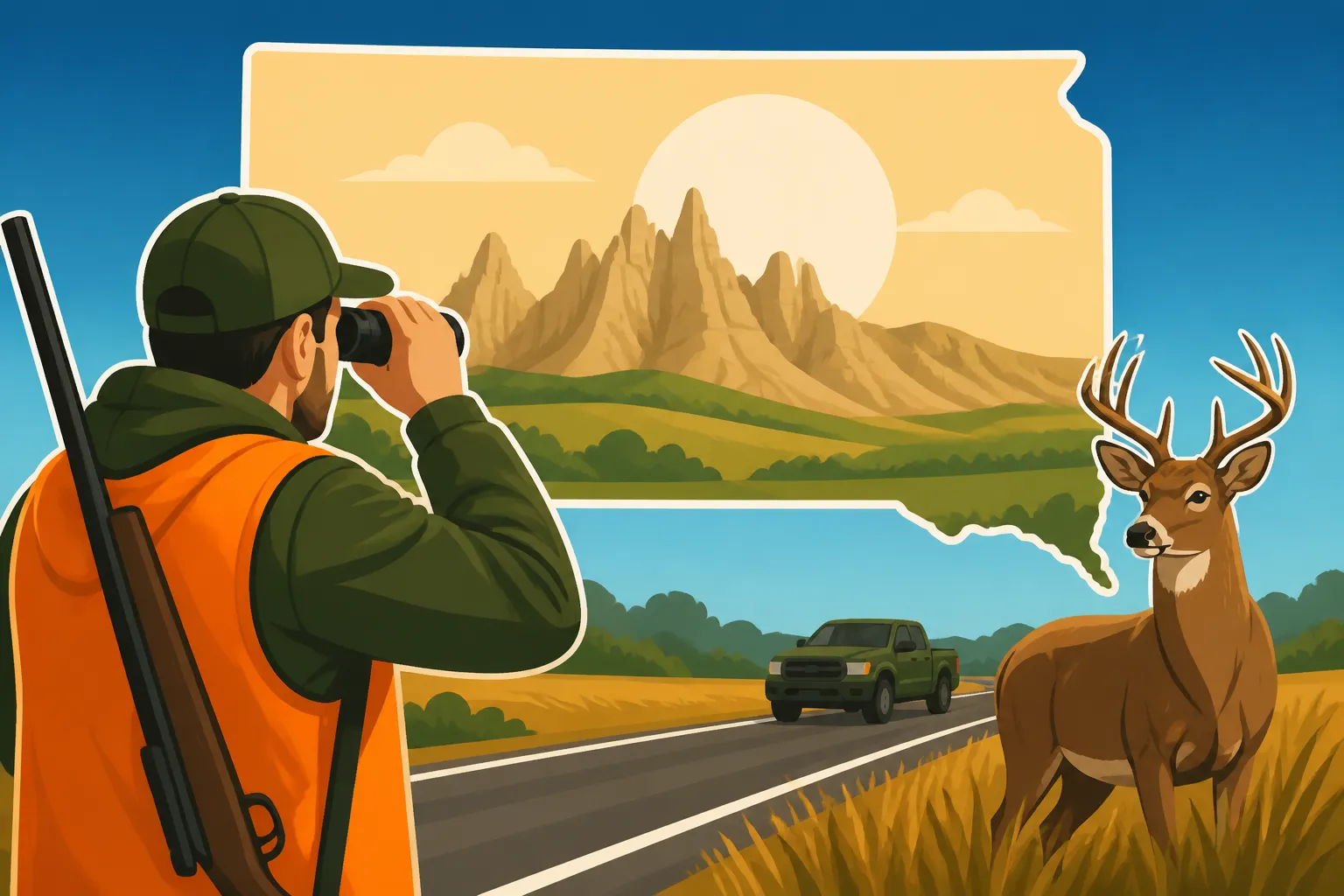
There's a fundamental difference between legal scouting from a vehicle and illegal hunting from one. A vehicle can be an invaluable tool for covering vast amounts of ground in South Dakota's expansive landscape, helping you locate game concentrations or identify promising habitat. You can drive slowly, observing fields, draws, and shelterbelts with binoculars, looking for deer moving at dawn or dusk, or pheasants feeding in corn stubble. This kind of observation is perfectly legal and encouraged as part of your preparation.
The line is crossed when that observation turns into active hunting. If you spot a group of turkeys from the road, it's perfectly fine to mark their location, then park your vehicle, unload your firearm, and legally access public land or gain permission for private land to pursue them on foot. What's not okay is to immediately jump out of the truck, chamber a round, and start stalking down the road ditch hoping to cut them off. The vehicle should serve as a mobile observation platform and a means to transport you to your actual hunting grounds, allowing you to Scouting a South Dakota Unit From Home and then verifying what you've seen in person. Using your vehicle to spot pheasants in heavy cover or Reading Aerial Imagery for Cattail Cover can greatly improve your chances when you actually get out and walk.
Safe Practices and Muzzle Discipline
Safety should always be your top priority, especially when firearms are involved near roads or other people. When you are using a vehicle to scout, ensure all firearms are unloaded and properly cased or stored according to South Dakota law. Never drive with a loaded firearm ready to go. This isn't just a legal requirement; it's a critical safety measure that prevents accidental discharges and ensures responsible handling.
When you do park and get out to hunt, practice impeccable muzzle discipline. Always know where your muzzle is pointing and keep it in a safe direction, particularly when other hunters or members of the public might be present on roads or adjacent properties. If you're walking a road ditch on legitimate public access (like a Walk-In Area, where legal to do so), be intensely aware of passing vehicles, homes, and any other activity. Communication with your hunting partners is also vital, especially when dealing with variables like Rifle Setup for South Dakota Open Country where long-range shots might be tempting but require extreme care. The goal of South Dakota Hunter Safety Requirements is to instill these habits.
Reporting Violations and Understanding Penalties
Unfortunately, despite clear laws and ethical guidelines, road hunting violations still occur. If you witness someone breaking South Dakota's road hunting laws, it's important to know how to report it safely and effectively. The South Dakota Game, Fish and Parks (GFP) has a TIPs (Turn In Poachers) program that allows citizens to report wildlife violations anonymously. You can call their hotline or contact a local conservation officer. When reporting, try to gather as much detail as possible: vehicle description (make, model, color, license plate number), time and location, a description of the alleged violation, and any other pertinent information. Do not confront individuals yourself, as this can be dangerous.
The penalties for road hunting violations in South Dakota can be severe. Depending on the nature and severity of the offense, consequences can include substantial fines, mandatory court appearances, confiscation of hunting equipment (including firearms and vehicles), and the suspension or revocation of hunting privileges. Losing your hunting license for multiple years or even permanently is a very real possibility for serious or repeat offenders. These are not minor infractions; they are taken seriously by law enforcement and the courts. Understanding South Dakota Wildlife Violation Penalties emphasizes the importance of knowing and following the rules, especially given the popularity of hunting seasons like the South Dakota Pheasant Season and Licences when many hunters are in the field.
To make things a bit clearer, here's a quick reference table regarding common actions and their legality near roads in South Dakota:
| Action | Legality in South Dakota (General) | Notes |
|---|---|---|
| Shooting FROM a Motor Vehicle | ILLEGAL | Strictly prohibited. Includes being inside, on, or resting against any part of a motor vehicle (except for permitted disabled hunters). |
| Shooting ACROSS a Public Highway/Right-of-Way at Game | ILLEGAL | You cannot discharge a firearm or bow from or across any public highway or its right-of-way at wild animals or birds. This applies even if the game is on adjacent private land. |
| Using a Motor Vehicle to Pursue/Harass Game | ILLEGAL | Actively driving after game or using the vehicle to flush it is against fair chase and state law. |
| Loaded Firearm in a Vehicle | ILLEGAL | Generally, firearms must be unloaded and encased (or in a trunk/compartment inaccessible from the passenger area) when transported in a motor vehicle on public roads. Check current regulations for exceptions like specific weapon types or during certain seasons. |
| Scouting/Observing from a Vehicle | LEGAL | You can use your vehicle to drive roads and observe game, but without any intent to shoot from the vehicle. Your firearm must remain unloaded and properly stored. |
| Shooting from Public Land Adjacent to a Road | LEGAL (with caveats) | If you are legally on a Walk-In Area or GPA adjacent to a road, you can shoot away from the road and its right-of-way, provided you are not shooting across the road, not shooting from the right-of-way, and are outside the 660-foot safety zone of any occupied building. Always know your precise location and property lines using tools like GoHunt. |
| Retrieving Game from a Road Ditch | LEGAL (with caveats) | If you legally harvested game and it falls into a public road ditch (right-of-way), you can retrieve it. However, you cannot use this as an excuse to hunt within the right-of-way. If the game falls onto private land, you must first secure permission from the landowner to retrieve it, as outlined in South Dakota Trespass Law and Posted Land. |
Ultimately, respecting the law and the land is paramount. By understanding and adhering to South Dakota's road hunting regulations, you not only protect yourself from legal trouble but also contribute to the positive image of hunting for generations to come.
Disclaimer
This article provides general information and guidance regarding South Dakota hunting laws. Regulations can change, and interpretations may vary. It is your responsibility to review the most current South Dakota Game, Fish and Parks (GFP) hunting handbooks and consult with GFP officials or legal counsel for definitive clarification on any specific rules or situations. Failure to do so could result in legal penalties.