South Dakota Mountain Goat Applications
Dreaming of chasing a majestic mountain goat in the rugged Black Hills of South Dakota? You're not alone. Many hunters share this deeply challenging, once-in-a-lifetime aspiration, but the reality of drawing one of these incredibly rare tags can feel like trying to catch smoke. The application process itself often seems shrouded in mystery, leading to frustration and confusion about deadlines, points, and how to even begin. This guide will meticulously break down everything you need to know about South Dakota mountain goat applications, helping you understand the draw, manage your expectations, and navigate the path to potentially pursuing one of the state's most iconic big game animals.
Understanding the Rarity of South Dakota Mountain Goat Tags
Let's be brutally honest right from the start: drawing a South Dakota mountain goat tag is an exceptionally rare feat. It's not like applying for a pheasant license where you're almost guaranteed to get one. This is a bucket-list hunt for a reason, and the limited availability of tags makes it one of the most sought-after opportunities in North American hunting.
The Elusive Black Hills Herd
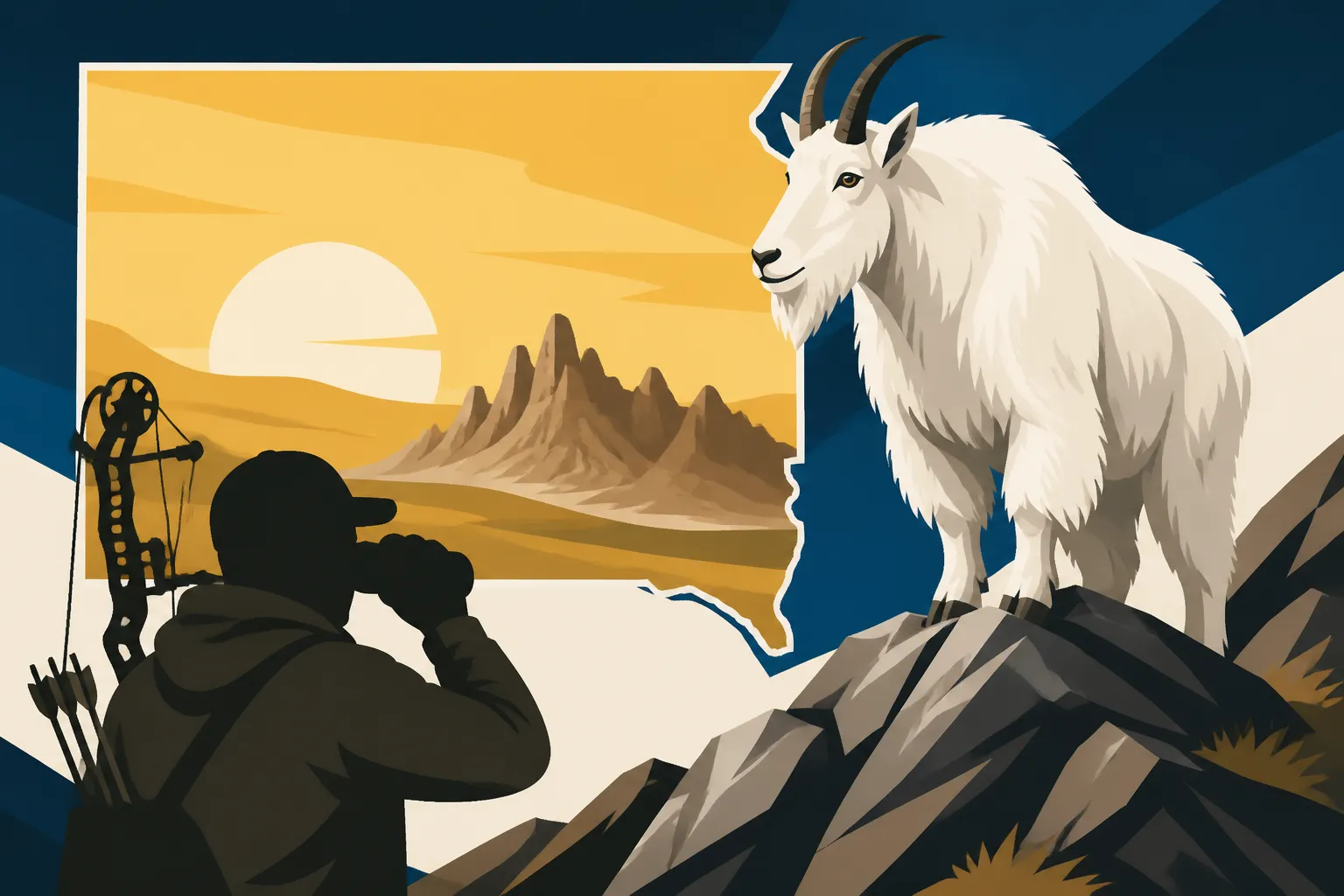
South Dakota's mountain goat population is almost exclusively found within the steep, rocky terrain of the Black Hills National Forest. These aren't creatures of the prairie or river bottoms; they thrive in the high country, scaling sheer cliffs and navigating rugged peaks with incredible agility. While not native to the Black Hills, the herd established itself from escapees from Custer State Park in the 1920s and has since become a cherished, albeit small, part of the state's big game fauna. Their numbers are carefully managed to ensure herd health and prevent overpopulation, which directly impacts the number of tags available each year. This careful conservation means that the population can only sustain a very limited harvest, making every tag a golden ticket. Understanding their natural habitat is key, and you might find insights by researching Hunting Elk on Steep Black Hills Ridges, as the terrain challenges are quite similar.
Why Tags Are So Scarce
The South Dakota Game, Fish and Parks (GFP) issues an extremely limited number of mountain goat tags annually, often ranging from just one to five tags statewide. These tags are distributed across one or two very specific units within the Black Hills, making the pool of successful applicants incredibly small. The primary reason for such scarcity is conservation. Mountain goats are sensitive to pressure, and their habitat is specific and finite. Over-harvesting even a few animals could have significant long-term impacts on the herd's stability and genetic diversity. Furthermore, it's a "once-in-a-lifetime" tag, meaning if you are lucky enough to draw and harvest a goat, you cannot apply for another one in South Dakota. This particular restriction is detailed further in guides like Once-in-a-Lifetime Tags in South Dakota, which also covers other prized species.
Managing Expectations for This Hunt
Given the minuscule number of tags and the once-in-a-lifetime status, it's crucial to approach the South Dakota mountain goat draw with realistic expectations. For many hunters, this will be a decade-long (or more) pursuit of building bonus points. It's a game of patience and perseverance, not a guarantee. Don't go into it thinking you'll draw in your first or second year. Instead, view each application as an investment in a long-term dream. The excitement comes from the possibility, however slim, and the continuous effort to put your name in the hat. This hunt represents the pinnacle of challenging western big game, and even the application process itself becomes part of the journey.
Navigating the South Dakota Game, Fish and Parks Application Process
The actual steps to apply for a South Dakota mountain goat tag are relatively straightforward, but missing a deadline or misunderstanding a requirement can cost you a precious year of accumulating points. Careful attention to detail is paramount.
Key Application Deadlines and Requirements
The application period for South Dakota mountain goat tags typically opens in late March or early April and closes in late April or early May. These dates are firm, and late applications are not accepted. You'll apply online through the South Dakota GFP website.
Here's a breakdown of what you'll typically need:
- Social Security Number (SSN): Required for all applicants for identification purposes.
- Proof of Hunter Education: If you were born on or after January 1, 1967, you must have successfully completed a hunter education course to purchase a hunting license in South Dakota. This applies even if you're just applying for the draw, as a license will be issued upon success. Details on this can be found in resources like South Dakota Hunter Education and Licensing.
- Residency Status: You'll need to declare whether you are a resident or non-resident. Non-resident fees are significantly higher, and non-residents often have fewer tags allocated to them, if any, for certain draws. For goats, tags are so limited that there might not be separate allocations, but your status is always required.
- Application Fee: There's a non-refundable application fee. If successful in the draw, you'll then be charged the full tag fee. Be sure your payment method is up-to-date and has sufficient funds.
Important Tip: Always double-check the official South Dakota GFP website for the exact dates each year, as they can shift slightly. Mark your calendar well in advance!
Understanding the Once-in-a-Lifetime Tag System
The South Dakota mountain goat tag falls under the "once-in-a-lifetime" category, much like bighorn sheep and certain elk hunts. What this means is simple: if you draw a mountain goat tag and harvest an animal, you are no longer eligible to apply for a mountain goat tag in South Dakota ever again. This system ensures that more hunters get a chance at these incredibly unique experiences over time.
This also impacts how points accumulate. Instead of a traditional preference point system where higher points grant you priority in the draw, South Dakota's once-in-a-lifetime tags operate on a bonus point system. Each year you apply unsuccessfully, you accrue a bonus point. When the draw occurs, your name is entered into the lottery multiple times: once for your current application, and then an additional time for each bonus point you possess. So, if you have 5 bonus points, your name goes into the digital hat 6 times (1 for the current year + 5 bonus points). This system rewards persistence and application longevity, increasing your mathematical odds over time without guaranteeing a tag. This is a critical distinction from the preference point system used for some deer tags, as explained in South Dakota Preference Points Explained.
Utilizing the GFP Website for Application
The South Dakota Game, Fish and Parks website (gfp.sd.gov) is your one-stop shop for everything related to applying.
Here’s a general walkthrough:
- Create or Log In to Your Account: If you’re a new applicant, you’ll need to create a profile. Returning hunters will log in using their existing credentials.
- Navigate to the Big Game Draw Section: Look for sections related to "Licenses & Permits" or "Big Game Draws."
- Find the Mountain Goat Application: Select the mountain goat application from the list of available draws.
- Fill Out the Application: Carefully input all required personal information, confirm your hunter education status, and acknowledge the once-in-a-lifetime terms.
- Select Your Unit (if applicable): While mountain goat tags are often for broad Black Hills units, there might be options for specific sub-units. Be sure to review these carefully.
- Review and Submit: Before finalizing, thoroughly review all your entries. Mistakes here can lead to a rejected application or a lost year.
- Payment: Provide your payment information for the non-refundable application fee. The full license fee will only be charged if you are successful in the draw.
The GFP website is generally user-friendly, but if you encounter any issues, don't hesitate to contact their licensing department. It's better to ask a question than make an error on such a high-stakes application.
Decoding South Dakota's Mountain Goat Draw System
Understanding the mechanics of the draw system is key to managing expectations and making informed decisions, even when the odds are stacked against you. While it can seem complex, it's essentially a weighted lottery designed to give long-term applicants a better chance.
The Bonus Point System for Once-in-a-Lifetime Tags
As mentioned, South Dakota uses a bonus point system for its once-in-a-lifetime tags. This means that for every year you apply for a mountain goat tag and are unsuccessful, you receive one bonus point. These points accumulate over time and are added to your application for future draws.
Let's illustrate how it works:
- Year 1: You apply. Your name is entered once into the draw. If you are unsuccessful, you earn 1 bonus point.
- Year 2: You apply. Your name is entered twice into the draw (1 for the current application + 1 bonus point). If unsuccessful, you now have 2 bonus points.
- Year 3: You apply. Your name is entered three times into the draw (1 for the current application + 2 bonus points). If unsuccessful, you now have 3 bonus points.
This process continues indefinitely. If you draw a tag and successfully harvest an animal, your bonus points for mountain goats reset to zero, and you cannot apply again. This system ensures that while luck plays a huge role, consistent application over many years will significantly, albeit slowly, increase your statistical probability of drawing this coveted tag. Many hunters find tools and data from sources like GoHunt invaluable for tracking historical odds and understanding how these points translate into real-world chances across different species.
Draw Odds and How They Are Calculated
Calculating precise draw odds for South Dakota mountain goats can be tricky due to the extremely low number of tags and the fluctuating number of applicants. However, the basic principle is:
Draw Odds = (Number of Tags Available) / (Total Number of Application Entries)
Where "Total Number of Application Entries" includes all the current year's applications plus all the accumulated bonus points from past applicants.
For example, if 3 tags are available and there are 1,000 unique applicants with a combined total of 5,000 bonus points:
- Total entries = 1,000 (initial applications) + 5,000 (bonus points) = 6,000 entries.
- Odds per entry = 3 / 6,000 = 0.0005, or 0.05%.
This translates to roughly 1 in 2,000 entries. If you have 10 bonus points, your 11 entries would give you a slightly better individual chance, but it's still extremely low. These numbers are illustrative; actual figures will vary annually based on GFP's tag allocations and the number of hunters applying.
Many hunters use platforms like GoHunt to track historical draw odds. These services often compile data, analyze trends, and present them in a user-friendly format, helping you understand the real competition. They might show the number of applicants, the number of tags issued, and the average number of bonus points held by successful applicants, offering a clearer picture than raw numbers alone. This kind of data can be invaluable for any South Dakota Big Game Draws and How to Apply.
Strategies for Improving Your Draw Chances
Since it's a bonus point system, the primary strategy to improve your chances is simply consistency. Apply every single year without fail. Missing an application year means you lose out on accumulating a bonus point, effectively pushing your potential draw date further into the future.
Beyond consistency, here are a few other considerations:
- Unit Selection: If there are multiple units offered (which is rare for goats but sometimes happens for other species), research which units might have slightly better odds. Sometimes, a unit that is perceived as more rugged or less accessible might have fewer applicants, slightly tilting the odds in your favor. However, for mountain goats in South Dakota, the units are often broad "Black Hills" designations with very little variation in odds.
- Non-Resident Quotas: Be aware that non-resident tag quotas are often lower than resident quotas, or there might not be any non-resident tags at all if the total tag allocation is extremely small. If you're a non-resident, your odds will inherently be lower. Reviewing South Dakota Nonresident Licence Costs can help you prepare for the financial aspect of the application.
- Stay Informed: Keep an eye on GFP announcements regarding herd health, population surveys, and any changes to the draw system. Wildlife management is dynamic, and policy shifts can impact future tag availability.
Ultimately, the best strategy is diligent application and embracing the long-term journey. The mountain goat hunt is a marathon, not a sprint.
| Feature | South Dakota Mountain Goat Draw | Other Common SD Big Game Draws (e.g., Deer) |
|---|---|---|
| Tag Rarity | Extremely low (1-5 tags statewide) | Moderate to high (hundreds/thousands of tags) |
| Draw System | Bonus Point System | Preference Point or Bonus Point (varies by species/unit) |
| Point Accumulation | 1 bonus point per unsuccessful application | 1 preference point per year (can purchase point-only) |
| Point Use in Draw | Entries = 1 + accumulated bonus points | Higher preference points mean priority in draw tiers |
| Once-in-a-Lifetime | Yes, upon harvest | No, can draw annually (with points or luck) |
| Application Period | Late March – Early May (typically) | Varies (e.g., Deer: late March/June) |
| Non-Resident Quotas | Very limited, often none due to scarcity | Dedicated non-resident quotas available |
Preparing for a Potential Black Hills Mountain Goat Hunt
While drawing the tag is the first monumental hurdle, it's just the beginning. A mountain goat hunt in the Black Hills is physically demanding and requires meticulous planning. Starting your preparation before you even draw the tag is a smart move.
Unit Selection and Research
South Dakota's mountain goat tags are typically issued for specific units within the Black Hills. These units often cover large, rugged portions of the Black Hills National Forest, including areas around Mount Rushmore, Harney Peak (Black Elk Peak), and the surrounding wilderness. Once you are successful in the draw, you'll want to dive deep into researching your specific unit.
Consider the following for your research:
- Topography: Use topographical maps (like those available through apps like onX Hunt or desktop GIS software) to identify steep slopes, rocky outcroppings, and potential bedding areas. Mountain goats prefer the most inaccessible terrain.
- Access Points: Determine legal access points, forest roads, and trail systems. The Black Hills has a good network of Black Hills Forest Roads and Access, but many goat areas will require significant off-trail hiking.
- Water Sources: Identify natural springs or creeks, as goats will frequent these areas.
- Historical Sightings/Data: Look for any public information on where goats have been seen or harvested in the past. Wildlife biologists can sometimes provide general areas of higher goat concentrations.
- E-Scouting: Utilize tools like Google Earth and high-resolution satellite imagery (often integrated into apps like GoHunt) to e-scout potential glassing points and approach routes. This can save you valuable time and effort once you're on the ground. E-scouting is a skill vital for many hunts, as covered in E-Scouting Walk-In Areas Before the Season.
Remember, a Black Hills mountain goat hunt is not a walk in the park. The terrain is unforgiving, and the weather can change rapidly. Thorough unit research is the cornerstone of a successful hunt.
Physical Demands of a Mountain Goat Hunt
A mountain goat hunt is arguably one of the most physically demanding big game hunts in North America, even in the "relatively" smaller mountains of the Black Hills compared to true Rockies. You will be climbing steep, uneven terrain, often at high altitudes (Black Elk Peak is over 7,200 feet). This isn't just about hiking a few miles; it's about vertical gains, scrambling over rocks, and enduring conditions that would challenge most people.
To prepare for such a hunt, you need to commit to serious physical conditioning:
- Cardiovascular Fitness: Focus on exercises that build endurance, such as running, hiking with a weighted pack, stair climbing, and cycling. Aim for workouts that simulate sustained exertion.
- Strength Training: Emphasize core strength, leg strength (quads, hamstrings, calves), and back strength to carry heavy packs in rugged country.
- Balance and Agility: Incorporate exercises that improve balance and ankle stability, as you'll be navigating unstable rocky terrain.
- Practice with Gear: Hike with the boots you'll be wearing, a loaded hunting pack, and your rifle. This helps you break in gear and identify potential discomforts before the actual hunt.
Neglecting physical preparation can not only jeopardize your success but also put your safety at risk in remote, steep country. This kind of preparation is similar to what's needed for other challenging Black Hills hunts, such as Black Hills Elk Hunting Tactics.
Gear and Logistics Considerations
Once you've drawn that coveted tag, your gear list and logistical planning become critical. Here's a look at key areas:
- Optics: High-quality binoculars (10x-15x), a spotting scope (20-60x or higher), and a sturdy tripod are non-negotiable. Mountain goats are often spotted at extreme distances in tiny white specks against granite.
- Rifle and Ammunition: A flat-shooting, accurate rifle in a cartridge capable of ethical long-range shots is important. Calibers like 6.5 Creedmoor, .270 Win, .30-06, or .300 Win Mag with premium hunting bullets are common choices. Practice shooting from various field positions, especially prone and supported off a backpack.
- Clothing System: Layering is essential due to the variable mountain weather. Think breathable base layers, insulating mid-layers (fleece, puffy jacket), and a waterproof/windproof outer shell. Bring good gloves, a warm hat, and gaiters to keep debris out of your boots.
- Footwear: Sturdy, waterproof, broken-in mountain hunting boots with excellent ankle support and aggressive tread are crucial.
- Backpack: A comfortable, durable pack capable of carrying essential gear for day hunts and potentially packing out meat and hide. A pack frame might be beneficial if you're attempting a DIY pack-out.
- Navigation Tools: GPS device, compass, and detailed topographical maps. Don't rely solely on your phone, as cell service is often spotty in the Black Hills, as highlighted in Cell Coverage in West River Country.
- Safety Gear: First-aid kit, emergency shelter, fire starter, headlamp, and communication device (satellite messenger/PLB) are essential.
- Game Care: Field dressing kit, game bags, and knowledge of how to properly cape and quarter an animal in the field are crucial. Cooling the meat quickly in rugged terrain can be a challenge.
Logistically, consider where you'll base camp, how you'll access your hunting areas, and how you'll retrieve your animal. Given the difficulty, many successful applicants consider hiring an experienced guide for a mountain goat hunt, even if they typically hunt DIY for other species. An outfitter can provide invaluable local knowledge, expertise in navigating treacherous terrain, and assistance with game retrieval.
Hunting a mountain goat in South Dakota is truly a once-in-a-lifetime endeavor, requiring immense dedication from the application stage through to the demanding hunt itself. Good luck!
Disclaimer
This article provides general informational guidance on South Dakota mountain goat applications and hunting. Regulations, deadlines, and draw systems are subject to change by the South Dakota Game, Fish and Parks (GFP). Always consult the official South Dakota GFP website and current hunting regulations handbook for the most accurate and up-to-date information before applying or hunting. Hunting involves inherent risks, and safety should always be your top priority.