Packing Meat Up a Steep Draw
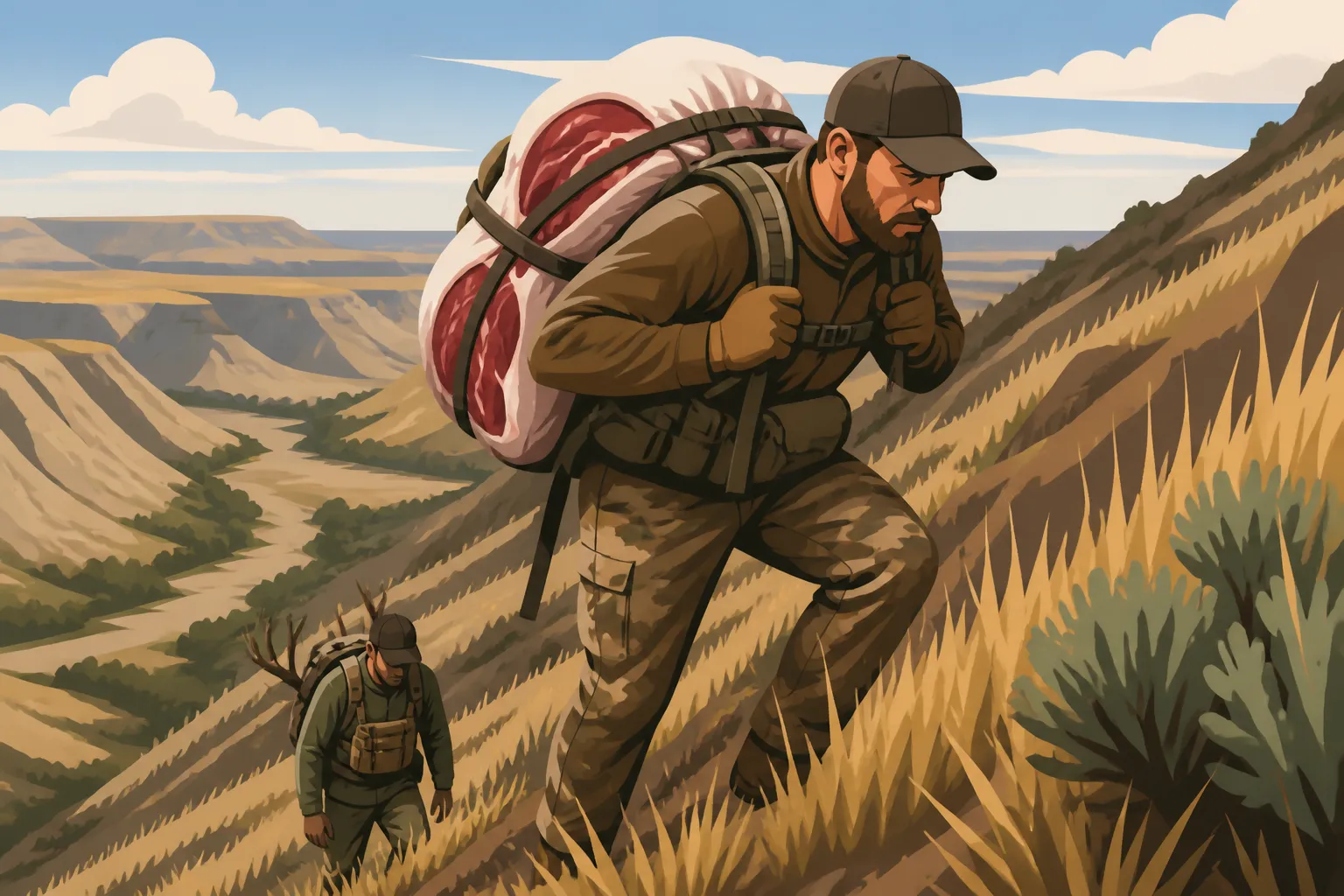
You've just dropped a magnificent mule deer buck in a deep, brushy draw on South Dakota's West River breaks, or maybe anchored a hefty whitetail down in the timbered bottom of a Cheyenne River tributary. The adrenaline is still pumping, the congratulations are flowing, but then reality sets in: that animal is way down there, and it's not going to walk itself out. Packing meat up a steep draw in South Dakota is one of those challenging but incredibly rewarding aspects of hunting that can quickly turn into a grueling nightmare if you're not prepared. This guide will walk you through the strategies and techniques to get your hard-earned venison from the kill site to the cooler, even when gravity seems determined to work against you.
Assessing the Situation and Planning Your Pack Out
The moments immediately following a successful harvest in tough terrain are critical. Before you even think about lifting a quarter, you need a solid plan. Rushing into it is a recipe for exhaustion, injury, and potentially compromised meat.
The Initial Field Dressing and Cooling Imperative
First things first: get that animal field dressed quickly. Especially in South Dakota's often warm early season, or even a mild fall day, meat spoilage is a real concern. Internal organs hold a lot of heat, and removing them is the absolute priority. For larger animals like a mule deer or whitetail, you'll want to consider quartering the animal. This means breaking it down into smaller, more manageable sections – typically the four quarters, the backstraps, and the tenderloins, often referred to as a "gutless method" approach when leaving the guts behind. This method is incredibly efficient for getting meat cooled down and off the ground, even in difficult spots. I've seen too many hunters try to drag an entire deer out of a deep coulee, only to burn themselves out and potentially damage the meat. To fully grasp this, you might want to review how to handle Field Dressing in Warm October Weather. Learning how to properly manage heat is paramount to good table fare.
Mapping the Terrain and Exit Routes
Once the animal is cooling, take a breath and study your surroundings. This is where modern technology really shines. Pull out your GPS or a mapping app like GoHunt. Zoom in on the topo lines. Are there any natural ramps, benches, or less steep sections in the draw? Is there a drainage that leads to a gentler slope further away? Often, the path of least resistance isn't a straight line up. Look for areas with less dense brush or fewer downed trees. Identifying your exit route before you start packing is crucial. You might find that traversing a bit along the bottom of the draw to a specific spot makes the climb much easier overall. Consider the direction of the nearest road or vehicle access point. Sometimes the closest path out might be the steepest, and a slightly longer but more gradual route will save you a ton of effort and prevent potential slips or falls. For a deeper understanding of terrain, check out Reading Prairie Coulees for Mule Deer. It can give you insights into how the land lays out.
Group Size and Gear Assessment for the Haul
Before lifting a single pound, consider who you're hunting with and what gear you have available. Are you alone, or do you have a hunting partner or two? This makes a massive difference. Two hunters can share the load, shuttle gear, and provide support. If you're solo, you'll need to be even more strategic with your quartering and load management.
Take inventory of your packing gear. Do you have a dedicated pack frame or a sturdy hunting backpack with a meat shelf? Are your game bags clean and ready? What about knives, a small saw, headlamps, water, and emergency supplies? A good pack frame is worth its weight in gold for hauling heavy, awkward loads up steep inclines. Brands like Mystery Ranch, Kifaru, or Stone Glacier are popular for their robust designs, but even a quality external frame can make a huge difference. Don't forget ample water and high-energy snacks; you'll be burning calories like crazy. A well-equipped First Aid Kit for a Prairie Hunt is non-negotiable, given the potential for scrapes, sprains, or worse when navigating tough terrain with heavy loads.
| Quartering Method | Pros for Steep Draws | Cons for Steep Draws | Average Weight Per Quarter (Mule Deer) |
|---|---|---|---|
| Bone-In Quarters | Protects meat, easier to separate from carcass, can be quicker initially. | Significantly heavier, awkward shape, less flexible for packing. | 40-60 lbs |
| Boneless Meat | Lighter overall, more compact, easier to fit into pack, cools faster. | Takes longer to process in the field, requires more skill, less protection for meat. | 25-45 lbs |
| Backstraps/Tenderloins | High-value meat, relatively light, easy to pack. | Does not significantly reduce main quarter weight. | 5-15 lbs (total) |
Techniques for Efficient Meat Packing Uphill
Once your plan is set, it's time to get down to the physical work. Proper technique is not just about strength; it's about smart movement and load management to conserve energy and ensure safety.
Quartering Strategies for Steep Terrain
The decision of whether to pack meat bone-in or bone-out is a big one, especially when you're facing a steep ascent.
-
Bone-In: This is often the fastest method in the field. You separate the four quarters at the joints, remove the backstraps and tenderloins, and maybe the neck meat. The bones provide structural integrity, which can protect the meat. However, the added weight of the bone is substantial, and the awkward shape of a bone-in quarter can be a real challenge to secure to a pack frame, especially on a steep, uneven trail. It also takes up more volume in your pack. If you're physically strong, have good packing equipment, and the climb isn't too extreme, bone-in can work. But for genuinely steep draws, it quickly becomes a hindrance. If you want a visual on this, consider referencing Quartering a Deer in a Coulee.
-
Boneless (De-boning): This is generally the preferred method for steep, rugged country. It takes more time and skill in the field, as you're carefully stripping all the meat from the bones. However, the payoff is huge: a significantly lighter load, more flexible meat chunks that conform better to your pack, and faster cooling once in game bags. You'll typically end up with several large chunks of meat (e.g., muscle groups from the hindquarters and front shoulders), plus the backstraps and tenderloins. This method reduces the total weight by 20-30%, which can be a game-changer when every pound feels like 10 on a steep incline. It also allows you to fill game bags more efficiently and spread the weight evenly across multiple trips or hunters.
No matter which method you choose, make sure your game bags are breathable to aid in cooling and protect the meat from dirt and insects. Keep your knives sharp, and use a small bone saw if you're taking bone-in quarters to make clean cuts.
Utilizing Pack Frames and Proper Loading
A good pack frame is designed to transfer weight efficiently from your shoulders to your hips, which is crucial when hauling heavy loads uphill.
- Secure the Meat: Place your game bags directly against the frame, close to your back. For boneless meat, you can often put multiple bags into a larger dry bag or a dedicated meat shelf on the pack. For bone-in quarters, position them carefully to minimize awkward protrusions. Use compression straps to cinch the load down tightly to the frame. Any shifting or flopping of the load will throw you off balance and exhaust you faster.
- Weight Distribution: Aim to have the heaviest part of the load positioned in the middle to upper part of your back, resting on your lumbar region. This helps maintain an upright posture and uses your powerful leg muscles. Too low, and it pulls you backward; too high, and it can become top-heavy. Adjust your shoulder straps, sternum strap, and hip belt until the weight feels balanced and stable. The hip belt should bear the majority of the weight, typically 70-80%.
- Test Walk: Before committing to the climb, take a few steps around the kill site. Jiggle, bend, and twist slightly to ensure nothing shifts unexpectedly. Make final adjustments to the straps. This small step can prevent major discomfort and potential falls later. When you're dealing with the uneven ground typical of the West River country, stability is everything. Using mapping tools like GoHunt can help you identify routes where the grade isn't consistently brutal.
The "Yukon Carry" and Other Methods for Steep Grades
When the going gets truly steep, standard walking might not cut it.
- The "Yukon Carry" (or "Hunter's Rest"): This is less a carrying method and more a philosophy of movement. It's about taking small, deliberate steps, stopping frequently to rest, and utilizing your trekking poles or even the butt of your rifle as a third point of contact. Instead of pushing through until you're completely gassed, you take 10-20 steps, lean forward onto your poles or rifle, take a few deep breaths, and then repeat. This conserves energy, manages your heart rate, and prevents muscle failure. It might feel slow, but it's often faster and safer in the long run than trying to power through.
- Side-Hilling: Sometimes the steepest part of a draw can be mitigated by traversing at an angle, or "side-hilling." This requires careful foot placement and can be taxing on your ankles and knees, but it can reduce the direct uphill effort. Use trekking poles for stability, planting the uphill pole first.
- Hand-Over-Hand Climbing: In extreme cases, you might need to use your hands to pull yourself up short sections. This is where a stable pack is absolutely critical. Ensure your hands are free for grabbing roots, rocks, or sturdy brush.
Teamwork and Relaying Loads
If you're lucky enough to have hunting partners, leverage teamwork.
- Shared Loads: Divide the meat evenly among the group. Even if one person is stronger, spreading the weight prevents any single individual from getting completely worn out.
- Leapfrogging or Shuttling: This is a highly effective tactic for steep, difficult terrain. One person carries a load a short distance uphill, drops it, and returns for the next load or helps another hunter. Or, two hunters can move one load forward, return, and move another. It’s slow, but it guarantees steady progress without pushing anyone past their breaking point.
- Pace Setting: The strongest hunter should not necessarily set the fastest pace. The pace should be dictated by the slowest or most burdened person in the group. Consistent, steady movement is far better than bursts of speed followed by long, recovery breaks.
Safety Considerations and Unexpected Challenges
Packing meat out of a steep draw isn't just about physical exertion; it's about navigating potential hazards and being prepared for the unexpected in the wild South Dakota landscape.
Hydration, Nutrition, and Physical Limits
This kind of work drains you faster than almost anything else in hunting. You'll sweat, you'll burn calories, and you'll get tired.
- Stay Hydrated: Carry plenty of water, even if it adds weight. Dehydration can lead to cramping, dizziness, and impaired judgment, which are all dangerous when carrying a heavy pack on uneven ground. Consider electrolyte tablets for longer hauls.
- Keep Eating: High-energy snacks like trail mix, energy bars, or jerky are essential. Fuel your body consistently. Don't wait until you're bonking to eat.
- Know Your Limits: Pushing yourself past your physical limit isn't brave; it's foolish and dangerous. Take breaks, assess your fatigue, and don't be afraid to take multiple trips or even cache meat overnight if necessary, provided it's cold enough and you've taken precautions against scavengers. Remember, a broken ankle is a far worse scenario than a delayed pack out.
Weather and Environmental Factors
South Dakota weather can change rapidly, and a pleasant morning can quickly turn into a challenging afternoon.
- Rain and Mud: Rain turns steep dirt slopes into slippery death traps. Mud can make every step treacherous and add weight to your boots. If rain is forecast, factor in significantly longer pack-out times and increased hazard. Sometimes, it's safer to wait out a heavy rain before attempting a steep ascent. Wet conditions can also contribute to Mud Roads After a Prairie Rain, making vehicle access to certain areas even more difficult.
- Snow and Ice: Late-season hunts bring the challenge of snow and ice. Steep, snow-covered ground can hide hazards, and ice patches are a major fall risk. Wear appropriate footwear with good traction, and use trekking poles religiously. Read up on Late-Season Hunting in South Dakota Snow for more insights on cold-weather preparations.
- Heat: Conversely, hot weather accelerates meat spoilage and increases the risk of heat exhaustion. Early morning or late evening pack-outs are preferable in warmer conditions. Shade is your friend for resting.
Wildlife Encounters and Self-Protection
A gut pile or freshly killed animal can attract scavengers and predators.
- Coyotes and Other Scavengers: While not typically dangerous to humans, coyotes, foxes, and various birds will quickly move in on a gut pile or exposed meat. They generally pose little threat to hunters, but keeping meat in game bags and off the ground helps protect it.
- Mountain Lions and Bears: While less common in most of South Dakota, especially East River, mountain lions are present in the Black Hills and have been seen in West River areas, and black bears occasionally make appearances. If you're hunting in areas where these predators exist (particularly the Black Hills), be aware. Make noise, especially if you're alone. Carry bear spray if you're truly concerned, though a firearm for self-defense is also an option if legal and you're comfortable with it. The primary goal is to be alert and avoid surprising an animal feeding on your kill.
Emergency Preparedness and Communication
Being stranded in a deep draw with a heavy load and no way to call for help is a serious situation.
- Communication Devices: Cell service can be spotty, especially in deep draws or remote areas of West River country. Carry a satellite messenger or a personal locator beacon (PLB) like a Garmin inReach or a Zoleo. These devices allow you to send SOS messages and communicate with loved ones even without cell service.
- Leave a Trip Plan: Always inform someone reliable of your hunting plans, including your general location and expected return time. This simple act can be a lifesaver if something goes wrong. If you need a refresher, consider the importance of Leaving a Trip Plan Before a Hunt. It's a small step that can make a huge difference.
- Basic Repair Kit: Duct tape, zip ties, and a small multi-tool can fix a broken pack strap or other gear emergencies in the field.
Post-Pack Out Care and Considerations
You've made it! The meat is off the hill, but your work isn't done. Proper care after the pack out is just as vital to ensure your venison is prime table fare.
Cooling and Transporting the Meat Efficiently
The race against time isn't over until the meat is properly cooled.
- Cooler Management: Once the quarters are back at your vehicle, get them into coolers with ice as quickly as possible. Don't just dump them on top of the ice. For best results, keep the meat out of direct contact with meltwater by using elevated racks or ensuring the drain plug is open. Change ice as needed. The goal is to rapidly drop the internal temperature of the meat. This rapid cooling is paramount for preventing bacteria growth and ensuring quality. For more on this, consult Getting Meat Cooled in Warm Weather and Coolers and the Drive Home. These resources will guide you on maintaining prime conditions for your harvest.
- Butcher or Process: Depending on your skill and preference, you'll either take your quarters to a professional processor or begin butchering them yourself. Either way, ensure the meat stays cool during transport.
Gear Cleaning and Maintenance
Your pack frame, game bags, and knives have just worked incredibly hard. Show them some love.
- Game Bags: Wash game bags thoroughly to remove all blood and debris. A good soak with an enzymatic cleaner can help with stubborn stains and odors. Ensure they are completely dry before storing to prevent mildew.
- Pack Frame and Pack: Wipe down your pack frame and pack with a damp cloth. Check all straps, buckles, and zippers for damage. Air out your pack to prevent lingering odors.
- Knives and Tools: Clean and sharpen all your knives and saws. Store them properly to prevent rust and maintain their edge.
Packing meat up a steep draw is never easy, but with careful planning, proper technique, and a strong dose of grit, you can turn a potential ordeal into another successful chapter in your South Dakota hunting adventures. It’s a true test of a hunter, but the reward of knowing you earned every ounce of that meat makes it all worthwhile.
Disclaimer
The information provided in this guide is for general informational purposes only and does not constitute professional advice. Hunting involves inherent risks, and conditions in the field can vary greatly. Always prioritize safety, follow all applicable hunting regulations, and be prepared for potential emergencies. Consult with experienced hunters or professional guides for personalized advice regarding specific situations.