Where Roosters Sit at Midday
Ever spent a perfect South Dakota morning stomping through prime pheasant cover, only to have the birds seemingly vanish by 10 AM? It's a common frustration that can make you feel like all your hard work was for naught. When the crisp morning air gives way to the warming sun, many hunters wonder where those wily roosters disappear to, leaving fields that were just alive with cackles feeling utterly silent. This guide will dive deep into understanding pheasant behavior during the midday lull and reveal the key habitats where they seek refuge, helping you stay in the action when others head for lunch.
Understanding Midday Rooster Behavior: The Lull and the Logic
Pheasants, like many wild animals, operate on a fairly predictable schedule influenced by light, temperature, and feeding needs. The early morning hours are often prime time, as birds leave their roosts to feed. But as the sun climbs higher and temperatures rise, especially during the warmer early season, their priorities shift. They become less active and more focused on seeking comfort and safety.
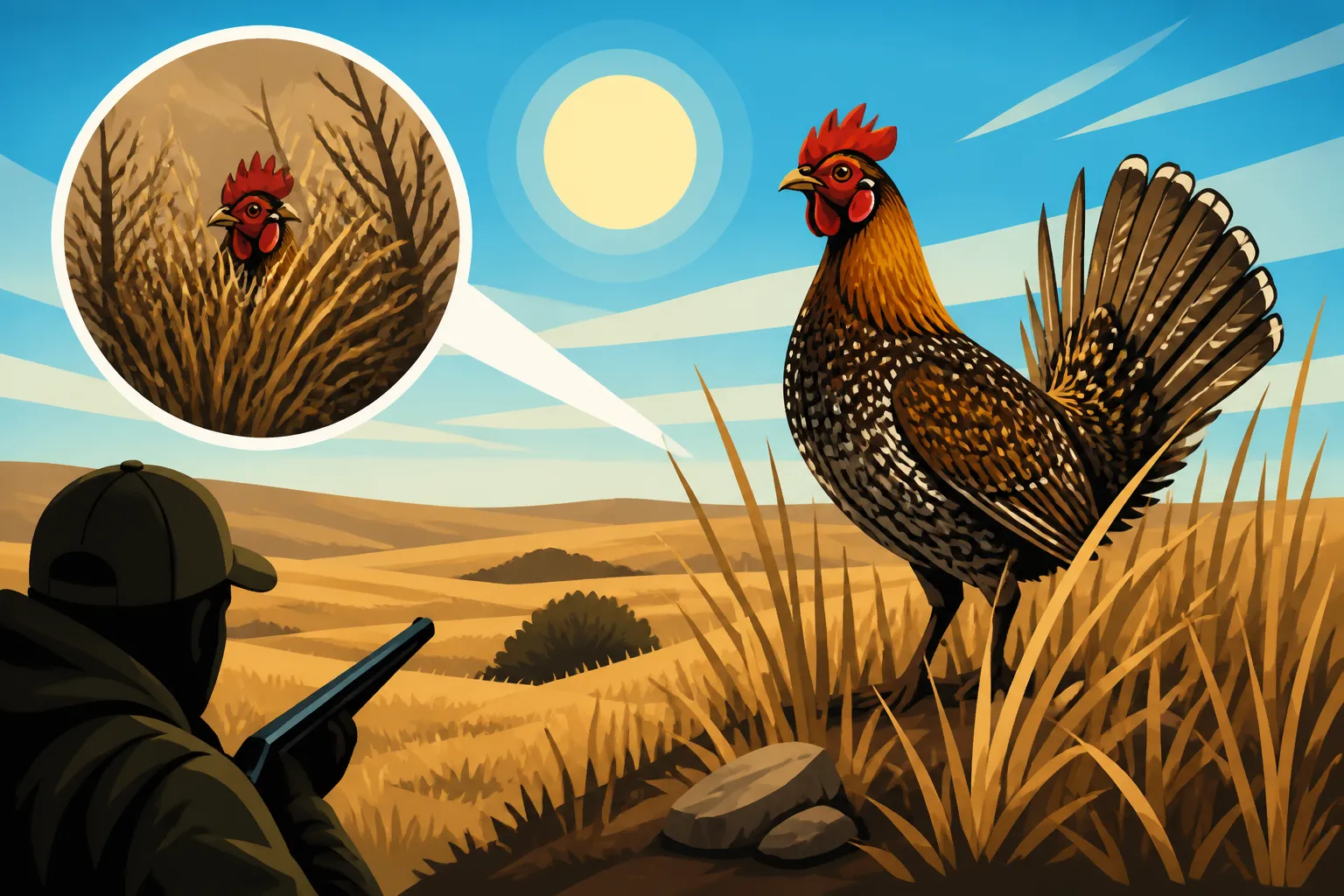
This "midday lull" isn't a myth; it's a physiological necessity for the birds. They're trying to conserve energy, avoid predators when visibility is high, and regulate their body temperature. This means they'll seek out the densest, coolest, and safest cover available. For hunters, understanding this shift is crucial because it dictates where you should be focusing your efforts instead of pounding empty fields. You need to think like a rooster—where would you go to escape the heat, hide from hawks, and relax without being bothered?
It's also worth considering that sustained hunting pressure, particularly from the opening weekend onward, teaches birds quickly. They learn that wide-open spaces or easily accessible edges are dangerous during daylight hours. Therefore, even if a spot looks ideal on a map, if it's been hit hard, those roosters will be buried deep or have moved on to more secure locations. This behavioral adaptation is a key reason why your early morning spots might be devoid of birds come noon.
Why Pheasants Go Silent and Seek Cover
The primary reasons pheasants go quiet and disappear during midday are thermoregulation, predator avoidance, and energy conservation. On a warm, sunny day in October, a rooster can easily overheat if it's out in the open or moving too much. Dense cover provides shade and a slightly cooler microclimate, acting like natural air conditioning. They'll burrow into thickets or deep grass, where the ambient temperature is a few degrees lower and the sun's direct rays can't reach them.
Beyond temperature, safety is paramount. The midday sky is often clear, making pheasants vulnerable to aerial predators like hawks and eagles. Heavy cover acts as a visual shield, camouflaging them from above. On the ground, predators like coyotes and foxes are also active, and the dense vegetation makes it harder for them to spot a pheasant, providing critical escape routes if detected. A rooster in a thick cattail slough or a dense shelterbelt feels far more secure than one loafing in a short stubble field.
Finally, conserving energy is an underlying driver. Hunting can be physically demanding for both man and dog, and it's no different for the birds. By resting during the hottest part of the day, pheasants save energy for late afternoon feeding or evading pursuit. This is why you often see a surge of activity closer to evening as temperatures drop and the birds prepare for their evening feed before roosting. It's a cycle that hunters can learn to predict and exploit.
The Impact of Hunting Pressure on Midday Roosting
South Dakota's pheasant season opener is a high-energy affair, with hunters and dogs hitting the fields in droves. This intense pressure quickly teaches birds where the safe zones are. Fields that might hold birds in the early morning can be completely empty by midday simply because every hunter and their dog has pushed through them. Roosters are smart; they learn to avoid obvious, easy-to-access cover. They'll shift into the nastiest, hardest-to-reach pockets of habitat.
This pressure often forces birds into what we call "refuge cover"—places hunters typically avoid due to density, difficulty of access, or sheer effort required. This could be the deepest part of a cattail slough, the center of a massive plum thicket, or a remote corner of a public walk-in area that requires a significant hike. For hunters, this means adapting your approach. You can't just hunt the edges and expect success. You need to commit to the tough stuff, understanding that the birds are in there precisely because most other hunters won't go there.
The cumulative effect of hunting pressure throughout the season only reinforces this behavior. By late season, the surviving roosters are incredibly wary and will seek out the absolute thickest, most impenetrable cover available, often only flushing as a last resort. This is why understanding Late-Season South Dakota Pheasants in Heavy Cover becomes so important. It's a game of hide-and-seek, and the roosters are masters of the hiding part, especially during the midday hours when they feel the most vulnerable.
Midday Sanctuaries: Where South Dakota Pheasants Disappear
When the sun is high and the fields feel quiet, roosters aren't gone; they're simply in hiding. Their choice of midday sanctuary is almost always dictated by density and proximity to water or food, offering both concealment and comfort. Knowing these preferred hideouts is key to successful midday hunting.
One of the most classic pheasant hideouts in South Dakota are the expansive cattail sloughs. These watery trenches provide an incredible amount of overhead and lateral cover, insulating birds from both cold and heat, and making them almost invisible. Similarly, dense shelterbelts and tree lines, particularly those with a thick understory of plum bushes, cedar trees, or other brushy growth, offer fantastic cover from the elements and predators. These are typically places hunters might skirt around rather than dive into, which is precisely why the roosters favor them.
Beyond these obvious choices, don't overlook areas that might seem less traditional. Steep creek bottoms with heavy brush, especially those that have a southern exposure providing shade, can be gold mines. Even small, isolated pockets of thick cover that might seem insignificant can hold birds, especially if they're surrounded by lighter cover or heavily hunted areas. The birds will gravitate towards anything that offers a perceived advantage in safety and comfort.
The Lure of the Cattail Slough
Cattail sloughs are truly a rooster's paradise during midday. These marshy areas provide a unique microclimate that is often cooler and more humid than the surrounding dry fields, offering relief from the heat. The dense, upright stalks create an almost impenetrable fortress of concealment, both from above and from ground-level predators. A rooster burrowed deep into a mature cattail stand is incredibly difficult to spot and even harder to flush.
Hunting these areas effectively requires a different approach than typical field hunting. You can't just walk in a straight line; you need to understand Walking and Blocking South Dakota Cattail Sloughs. It's often a team effort, with some hunters pushing through the thickest parts while others post as blockers at the ends or along strategic escape routes. Dogs are absolutely essential here, as they can scent birds that are holding tight and flush them from the depths of the cover. Without a good flushing dog, you'll walk past countless birds.
When you're looking at a map, perhaps using a tool like GoHunt, pay close attention to the size and shape of these sloughs. Long, narrow sloughs can be pushed more easily than large, sprawling ones. Also, consider the edges—where does the cattail meet a cornfield or a grass waterway? These transition zones are often where birds will break out when pressured. Remember that even seemingly small patches of cattails, if dense enough, can hold a surprising number of birds.
Shelterbelts and Brushy Draws
Beyond the sloughs, shelterbelts and brushy draws are another prime midday holding cover, especially if they are mature and neglected. A well-established shelterbelt with a mix of deciduous trees, conifers like cedar, and a thick undergrowth of plum thickets or dogwood creates an incredible thermal and visual barrier. These linear features offer roosters a secure place to loaf, often running the length of the cover ahead of hunters rather than flushing.
Often, the densest parts of these shelterbelts are the most overlooked by hunters. We tend to walk the edges or the thinnest sections. But roosters, particularly those that have been educated by hunting pressure, will be buried in the thickest middle sections, sometimes in tangles of multiflora rose or wild grapevines. These are the spots that provide maximum concealment and make it difficult for dogs to penetrate, giving the birds an advantage. This is where Shelterbelt Ends That Hold Late Birds often prove their worth.
Brushy draws and coulees, especially those with steep sides and deep pockets of woody cover, serve a similar purpose. They offer shade, protection from wind, and excellent visual obstruction. On the West River side, these draws can be incredibly extensive and connect larger pieces of cover, acting as travel corridors and midday sanctuaries. Learning to read these topographical features, perhaps by using aerial imagery tools, can help you identify prime midday holding spots far from the typical field edges.
Agricultural Fields with Residual Cover
While pheasants are known to feed in crop fields, they rarely loaf in wide-open stubble during midday. However, specific types of agricultural fields with residual cover can be excellent midday spots. Unharvested standing corn, for instance, provides both overhead cover and a cooler environment thanks to the shade and trapped humidity within the rows. Roosters will often run ahead for long distances in these fields, making them challenging but rewarding to hunt.
Food plots, especially those designed with taller, thicker grains like sorghum, can also serve as fantastic midday cover. These plots are specifically planted to attract and hold birds, and their density provides the security pheasants crave when the sun is high. If a food plot is adjacent to a cattail slough or a brushy draw, it becomes even more appealing as birds can easily transition between different types of cover. Understanding Working Food Plots at Midday is essential, as birds will often run the rows, requiring strategic blocking.
Another subtle but critical type of agricultural cover is unharvested portions of fields or areas with heavy weed growth. Sometimes a farmer might leave a corner of a cornfield unpicked, or a wet spot might prevent harvesting, leaving a small island of thick cover. These overlooked spots, especially if surrounded by picked fields, become magnets for birds seeking refuge. It's all about finding those dense, secure areas that offer a sense of safety from both predators and human activity.
Factors Influencing Midday Roosting Spots
Pheasants don't just randomly pick a spot to hang out. Their choices are heavily influenced by environmental factors such as weather, time of season, and local topography. A mild, cloudy day will see different behavior than a bright, hot one, and early season birds will act differently than those after a November cold snap. Paying attention to these nuances can dramatically improve your midday success.
Temperature is perhaps the most significant factor. On hot days, birds will prioritize shade and coolness, burrowing into the densest, shadiest cover. On colder days, especially in late season, they might seek out south-facing slopes that catch the sun or areas that offer a break from the wind. Wind, too, plays a crucial role. Pheasants often prefer to sit with their backs to the wind, giving them a better sense of approaching danger.
The time of the season also impacts where roosters sit. Early season birds, less educated and often less wary, might use slightly thinner cover than their late-season counterparts. As hunting pressure mounts and the season progresses, birds become increasingly reclusive, opting for the nastiest, most impenetrable cover available. This continuous adaptation by the birds means hunters must constantly adjust their strategies.
The Role of Weather and Temperature
Weather conditions are paramount in determining where roosters seek refuge during the midday hours. On warm, sunny South Dakota days, especially during the pheasant opener, birds will prioritize dense, shady cover to escape the heat. They'll bury themselves in the thickest cattails, plum thickets, or the deepest parts of shelterbelts where the sun's rays can't penetrate and the air is naturally cooler. If there's standing water nearby, they might even find microclimates that offer a bit of humidity for relief. This is also when you need to be mindful of Keeping a Dog Cool on an Early Opener.
Conversely, as the season progresses into late fall and early winter, colder temperatures and strong prairie winds become the primary drivers. On these days, roosters will seek thermal cover that offers protection from the wind and ideally captures some sunlight. South-facing slopes with heavy grass or brush, dense conifer stands, or the leeward side of large shelterbelts become prime locations. They might also hunker down in deep grass that's matted down by snow, creating small, insulated pockets.
A good hunter considers the day's forecast hourly. Is it warming up fast? Expect birds to dive deep into thick, cool cover. Is a cold front moving in with stiff north winds? Focus on protected, south-facing cover. The birds are simply trying to be comfortable and safe, and your job is to anticipate where that comfort and safety can be found based on the prevailing weather.
Proximity to Food and Water
Even though midday is generally a resting period, proximity to food and water sources still plays a significant role in where pheasants choose to loaf. A rooster isn't going to fly a mile just to get a drink or a quick bite to eat. So, their midday hideouts are often within a reasonable distance of a reliable food source, like a cornfield or a food plot, and a water source, be it a cattail slough, a creek, or even a dug-out stock dam.
Imagine a large, dense cattail slough that borders a standing cornfield. This combination is almost irresistible to pheasants. They can feed in the corn during early morning, retreat into the cool, protective cover of the cattails for the midday lull, and then pop back out into the corn for an evening meal. This minimizes their exposure and energy expenditure, making it an incredibly efficient setup for them. Mapping tools like onX Layers for South Dakota Land Status can help identify these prime habitat interfaces.
Similarly, a brushy draw that meanders through a section of CRP grass and ends near a small stock pond creates an ideal environment. The birds can access water, find insects or seeds in the CRP, and then quickly duck into the brushy draw for security. When scouting, look for these "habitat complexes" where multiple resources—food, water, and dense cover—are all within a short, safe distance of each other. That's often where the midday roosters will be holding tight.
Tactics for Turning Midday Lulls into Success
Many hunters throw in the towel by noon, assuming the birds are simply not moving. But with the right tactics and a willingness to tackle challenging cover, midday can be incredibly productive. It's all about shifting your mindset from easy walking to focused, methodical hunting of the birds' preferred sanctuaries.
This is where having a good dog, particularly a strong flusher, becomes invaluable. A dog can penetrate thick cover and find birds that you would walk right past. For hunters, it means slowing down, being more deliberate, and not being afraid to get into the nastiest stuff. It also means potentially changing your hunting party's formation to effectively push dense areas, as you might do when Pushing a Cattail Slough With Blockers.
Furthermore, patience is a virtue during midday. Birds will often hold tight, running ahead of dogs and hunters until they are almost stepped on. Being prepared for a close-quarters flush and quick shot is essential. Don't rush, anticipate escape routes, and always be ready when hunting these dense midday hideouts.
Slowing Down and Hunting Thick Cover Thoroughly
The biggest mistake hunters make during midday is treating heavy cover like open stubble fields. You can't just stroll through a dense cattail slough or a plum thicket and expect birds to jump. You need to slow way down, almost to a crawl, allowing your dog to work every inch of cover thoroughly. Roosters in these areas are often holding incredibly tight, preferring to let you walk past rather than flush into the open.
Think of it as dissecting the cover. If you're working a shelterbelt, don't just walk the outer edge. Get inside, especially in the thickest sections. Walk parallel lines, overlapping your coverage. If you have multiple hunters, spread out to cover more ground, but maintain communication. This methodical approach might feel slow, but it's far more effective than a fast sweep that misses birds. Remember, a rooster only flushes when it feels its hiding spot is completely compromised.
This slow, deliberate pace also gives your dog the best chance to scent and work the bird. Dogs can get tangled and frustrated in heavy cover, so giving them time to navigate and follow scent trails is crucial. If you're pushing a particularly nasty spot, consider taking breaks to let your dog rest and rehydrate, especially on warmer days. A tired dog will miss birds, and you'll miss opportunities.
Utilizing Dogs for Midday Flushes
A good hunting dog is your most valuable asset when hunting midday roosters in their dense sanctuaries. Whether you run flushers or pointing dogs, their ability to cover ground, penetrate thick cover, and follow scent is unparalleled. Without a dog, trying to extract birds from the deep recesses of a cattail slough or a sprawling plum thicket is an exercise in futility. The birds will simply run out the back or hold so tight you'll literally step on them.
Flushing dogs are particularly effective for midday hunts in heavy cover. Their relentless drive and willingness to dive into the nastiest tangles force birds to take flight. A strong flusher, like a Labrador or a Springer Spaniel, will work the cover systematically, pushing scent cones and forcing roosters into the air. When Pointing Dogs Versus Flushers on Wild Birds is debated, midday in South Dakota often leans towards the flushing dog for sheer productivity in dense stuff.
Even pointing dogs, while they excel at holding birds for a shot in lighter cover, can be adapted for dense midday hunting. They might "creep" on a bird holding tight in thick brush, or require you to push ahead of their point to put the bird up. Regardless of breed, ensure your dog is well-conditioned and hydrated, as these hunts are physically demanding. Remember to bring plenty of Dog Water and Burrs on the Prairie, as burs are a constant nuisance in dense South Dakota cover.
Strategic Blocking and Escape Routes
Hunting dense midday cover, especially large blocks of it, often benefits from strategic blocking. Roosters, when pressured, will almost always try to run before they fly. If you're pushing a long shelterbelt or a wide slough, birds will simply run ahead of the advancing line of hunters and dogs, often escaping out the far end without ever flushing.
To counter this, a common tactic is to position blockers at the end or along the sides of the cover where birds are likely to escape. These blockers need to be visible to the drivers, aware of safe shooting lanes, and ready for fast-flying birds. The drivers then walk slowly and deliberately through the cover, pushing the birds towards the blockers. This forces the roosters to either flush within shooting range of the drivers or fly out towards the blockers.
Using a mapping application, perhaps like GoHunt, helps immensely in identifying potential escape routes and planning your strategy. Look for thinner sections of cover, points where the cover narrows, or areas where the cover transitions to open ground. These are prime spots for blockers. Communication between drivers and blockers is absolutely vital for safety and success, ensuring everyone knows where everyone else is at all times.
Table: Midday Rooster Sanctuaries and Hunting Tactics
Here's a quick overview of common midday pheasant hideouts and effective tactics to approach them:
| Midday Habitat Type | Why Roosters Love It | Best Hunting Tactics | Dog Preference | Key Considerations |
|---|---|---|---|---|
| Cattail Sloughs | Cool, dense, visually impenetrable, water nearby | Slow, methodical push; blockers at ends/sides | Flusher | Very physically demanding; muddy; dog conditioning |
| Dense Shelterbelts | Shade, windbreak, thick understory; linear escape route | Push interior, not just edges; blockers at ends | Flusher/Pointer | Roosters run long; check both ends; communication |
| Brushy Draws/Coulees | Shade, wind protection, topography breaks line of sight | Work slowly from high side down; check thickest pockets | Flusher/Pointer | Steep terrain; watch for elevation changes; good footing |
| Standing Corn/Food Plots | Overhead cover, food, thermal insulation | Strategic lines; blockers at far end; be ready for runners | Flusher | Birds run before flushing; wind direction important |
| Isolated Plum Thickets | Extremely dense, thorny, near escape cover | Aggressive push, encircle if small; close-range flushes | Flusher | Difficult for dogs; wear heavy pants; close shots |
Disclaimer
Hunting is an inherently dangerous activity. Always prioritize safety, follow all local and state regulations, and ensure you have the appropriate licenses and permits. This guide provides general information and should not replace professional advice or personal judgment. Be mindful of your surroundings, respect private property, and practice ethical hunting.