Buffalo Gap National Grassland Acres
For many hunters, the quest for vast, open public land in South Dakota can feel like searching for a needle in a haystack, especially when you're dreaming of big game opportunities away from crowded pheasants fields. This comprehensive guide is here to unravel the often-misunderstood Buffalo Gap National Grassland, detailing its incredible size, where it lies, what you can hunt, and how to effectively plan your adventure on this truly expansive public resource.
Understanding the Sheer Scale of Buffalo Gap National Grassland
When we talk about public land in South Dakota, the conversation often gravitates towards Game Production Areas or the ubiquitous Walk-In Areas. While these are invaluable resources, they often don't provide the sense of raw, untamed vastness that many big game hunters crave. That's where the Buffalo Gap National Grassland steps in, offering a landscape so immense it can feel overwhelming at first glance, but incredibly rewarding for those willing to learn its secrets.
The Vast Acreage and Its Significance
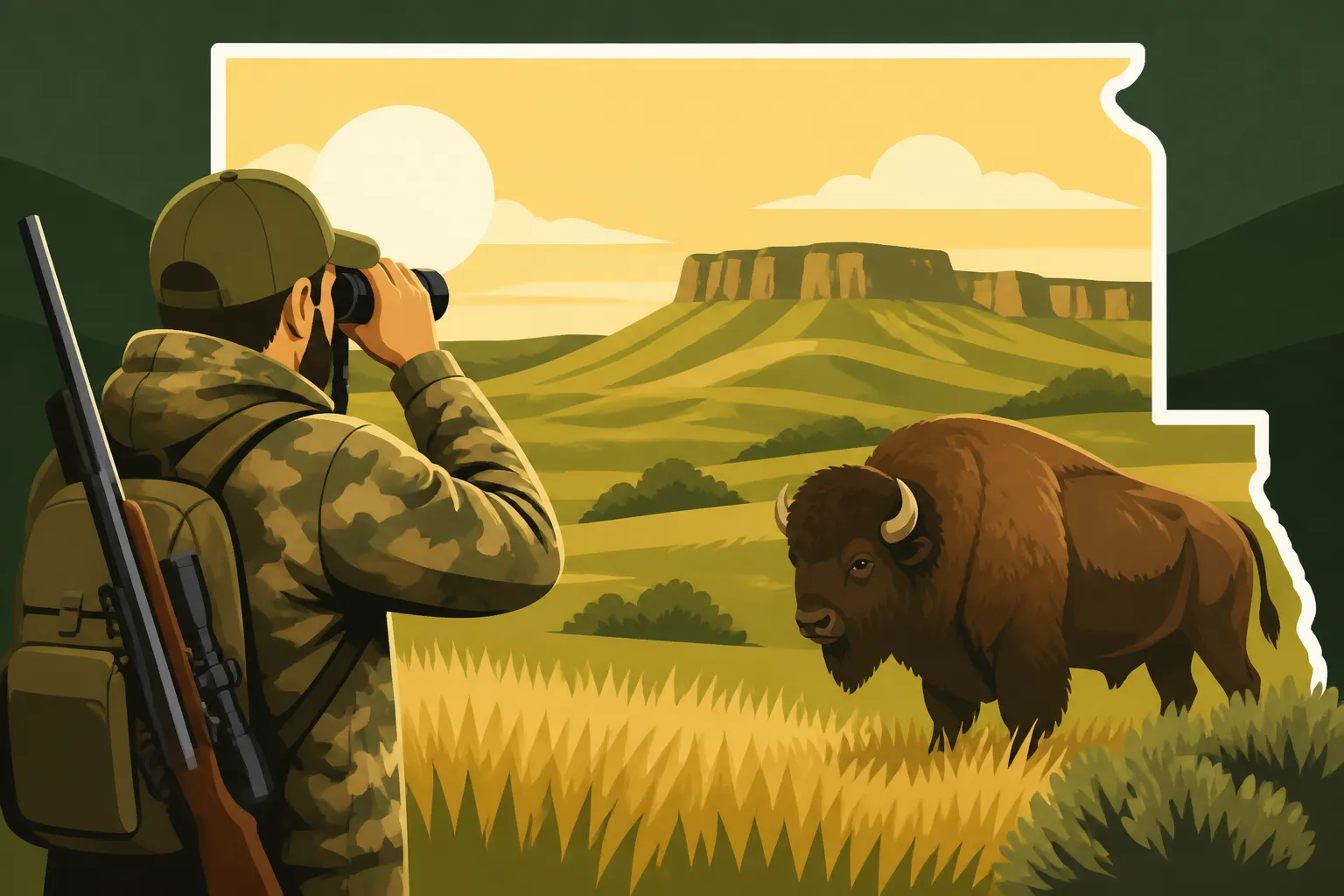
The Buffalo Gap National Grassland isn't just a large parcel of land; it's a monumental expanse, covering well over half a million acres. To put that into perspective, imagine an area larger than some small states, all dedicated to multiple uses, including hunting. This isn't one contiguous block, mind you, but a sprawling patchwork managed by the U.S. Forest Service, primarily across southwestern South Dakota. This sheer scale is a game-changer for hunters. It means you can often find true solitude, trek for miles without seeing another soul, and chase game animals that behave much more naturally than those accustomed to constant human pressure. Unlike smaller public access points where you might bump into other groups repeatedly, Buffalo Gap allows for extended stalks and drives where you feel truly immersed in the wilderness. It's a place where the landscape forces you to slow down, to glass patiently, and to adapt to the immense horizons.
The significance of this acreage extends beyond just finding elbow room. It provides incredibly diverse habitat. From rolling prairie hills dotted with sagebrush and yucca to deep, winding coulees carved by ancient water flow, and even pockets of scattered ponderosa pine, this varied terrain is crucial for supporting robust populations of mule deer, whitetails, and pronghorn antelope. A mild winter or a spring with good moisture can translate into excellent forage across these vast lands, allowing game to thrive and disperse. However, the sheer size also demands respect and preparation, as getting turned around or facing unexpected weather can quickly become a serious challenge in such an enormous, remote environment. Understanding the land means understanding its challenges, which are as grand as its opportunities.
Navigating the Checkerboard: Public vs. Private
One of the biggest frustrations, and perhaps the primary reason some hunters shy away from the Buffalo Gap, is its infamous "checkerboard" pattern of land ownership. Unlike a solid block of national forest, the Buffalo Gap is often intermingled with private ranch land, school trust land, and other state-owned parcels. You might be walking across public land, only to find the next section over is private, unmarked by a physical fence line or clear boundary. This can be incredibly confusing and lead to accidental trespassing if you're not careful, which nobody wants to do.
This is precisely where modern mapping tools become absolutely non-negotiable. Apps like onX Hunt are an absolute lifesaver here, with their clear color-coded land ownership layers. You can instantly see where public land ends and private land begins, even in the most remote corners of the grassland. I've heard countless stories of hunters, myself included, who thought they knew where they were, only to pull out their phone and realize they were just steps from a private boundary. With onX Hunt, you can confidently walk a contour, follow a game trail, or make a stalk knowing exactly where you stand. This checkerboard pattern, while challenging, also creates unique hunting scenarios. Game animals, especially deer, will often bed down on adjacent private land and feed onto public areas, or vice-versa. Understanding these movements, often by glassing from a public vantage point and then planning a route that stays on public ground, is key to success. It allows for a dynamic style of hunting where terrain features, game movement, and property boundaries all play a strategic role in your approach. onX Layers for South Dakota Land Status can provide further insight into maximizing the effectiveness of these tools.
Where Buffalo Gap National Grassland Stretches Across South Dakota
The Buffalo Gap National Grassland isn't just one big, amorphous blob on the map; it's a collection of districts and units spread primarily across the western half of South Dakota. Understanding its geographic spread is crucial for planning your hunting trip, as different areas can offer varied terrain, game concentrations, and access challenges.
The Geographic Footprint of Buffalo Gap
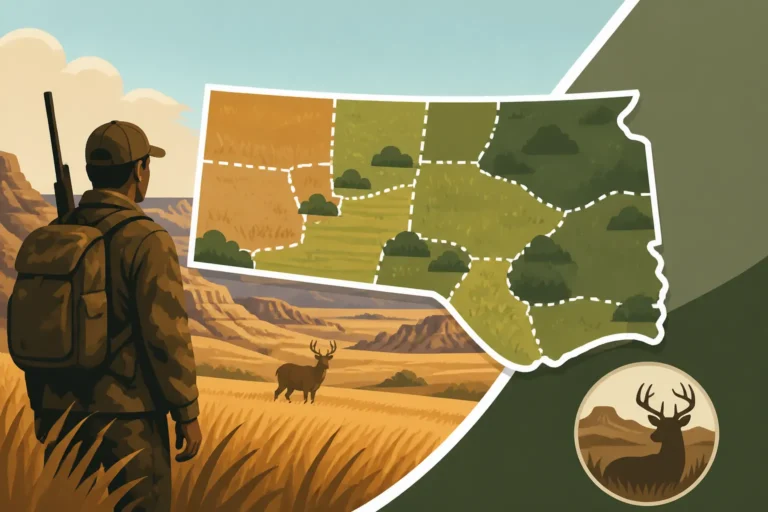
The vast majority of Buffalo Gap National Grassland lies south of the Badlands National Park, extending primarily through Pennington, Jackson, Fall River, and Custer counties. It's truly "West River" country, characterized by rolling mixed-grass prairie, deep draws, and dramatic badlands formations in certain areas that provide incredible cover and escape routes for big game. While it's all part of the same National Grassland system, these various units can feel quite distinct. For example, some areas might be dominated by vast, open prairie perfect for Spot-and-Stalk Antelope on Open Prairie, while others feature more broken terrain, deep canyons, or even scattered trees, creating excellent habitat for mule deer.
You'll find larger contiguous blocks of public land in some areas, while others are more heavily interspersed with private holdings. The region south of Wall, near Scenic, or extending towards Interior, offers significant public ground that feels truly remote. Further south, towards the Nebraska border, you'll encounter more of the same expansive grasslands. Each section has its own unique character, and what works in one area for deer might not be the best tactic in another. This geographic diversity is what makes Buffalo Gap so compelling for hunters looking for different experiences, but it also necessitates thorough e-scouting and map study before you ever set foot on the ground. You'll want to cross-reference your hunting unit boundaries with the Buffalo Gap boundaries, often found on the Using the South Dakota Public Hunting Atlas, to ensure you're in the right place at the right time.
Access Points and Entry Considerations
Accessing the Buffalo Gap National Grassland varies greatly depending on which section you intend to hunt. For the most part, access is via county and Forest Service roads, many of which are well-maintained gravel roads. However, there are also countless two-track trails that spiderweb across the landscape. Some of these two-tracks are excellent and lead to fantastic hunting areas; others can quickly become impassable with wet weather, turning into sticky gumbo that can swallow even a four-wheel-drive vehicle. Always be prepared for changing road conditions, especially if rain or snow is in the forecast. It's a good idea to carry recovery gear, a shovel, and even traction boards, because cell service can be spotty to non-existent in many remote parts of the grassland.
Beyond vehicular access, much of the true "getting away from it all" hunting on Buffalo Gap requires walking. You might park on a county road and then hike a mile or two back into a promising coulee or across a sage flat. Respect designated parking areas and avoid blocking gates or private driveways. Ethical access also means being mindful of where you leave your vehicle, especially on busy weekends. I've seen areas where hunters park right on the edge of the cover they intend to hunt, which often spooks game before anyone even steps out of the truck. Consider parking a bit farther away and walking in before legal shooting time. A little extra effort at the outset can make a huge difference in your hunting success and overall experience. Remember, this is open range for cattle, so you'll also encounter fences and gates. Always leave gates as you found them – if it was closed, close it behind you.
Hunting Opportunities Within Buffalo Gap's Expansive Borders
The true allure of Buffalo Gap National Grassland for many hunters lies in its diverse game populations. While South Dakota is globally renowned for its pheasants, Buffalo Gap offers a different kind of hunting experience, one focused on the challenge and reward of pursuing big game and other prairie species across a truly wild landscape.
Big Game: Mule Deer, Whitetails, and Antelope
Buffalo Gap is primarily known for its excellent populations of mule deer, whitetails, and pronghorn antelope. The vast, undulating terrain, punctuated by draws, sagebrush flats, and scattered pockets of trees, provides ideal habitat for all three.
- Mule Deer: You'll find mule deer often favoring the more broken terrain, the deep coulees, and areas with taller sagebrush for cover. They are masters of using topography to their advantage, disappearing into seemingly shallow depressions or blending seamlessly into a brushy hillside. Hunting mule deer here often involves a lot of glassing. Early mornings and late evenings are prime times to Glassing South Dakota Breaks at First Light, carefully scanning every fold and crease in the landscape for a tell-tale ear flick or the distinct silhouette of a buck. Once spotted, a patient Stalking a Bedded Mule Deer Buck using the terrain to hide your approach is often the next step.
- Whitetails: While often associated with river bottoms and timber, whitetails have adapted remarkably well to the prairie environment of Buffalo Gap. They tend to stick to the deeper, brushier draws, creek bottoms (even dry ones), and areas with more dense cover. You might find them in the same general areas as mule deer, but they'll often utilize the thickest pockets of brush. They can be incredibly elusive in this open country, making precise shot placement crucial.
- Pronghorn Antelope: The sheer openness of much of Buffalo Gap is perfect pronghorn habitat. These incredible animals are built for speed and long-distance vision. You'll often see them grazing in large herds on the vast, flat prairie. Spotting them is rarely the issue; closing the distance is the challenge. Stalking pronghorn requires immense patience and creativity, often using the slightest rise in ground, a small draw, or even the cover of a single yucca plant to get within range. Techniques like How Close You Can Stalk a Pronghorn are vital here. Rifle calibers suitable for long prairie shots, such as those discussed in Rifle Calibers for South Dakota Antelope, are also critical considerations for this particular hunt.
The hunting pressure on big game within Buffalo Gap can vary significantly. During the archery seasons, you might feel like you have the prairie to yourself. However, once the rifle seasons open, especially for deer, you can expect to see more hunters, though the vastness of the land still allows for plenty of space. Knowing the unit boundaries and regulations is paramount, and resources like GoHunt can be invaluable for researching historical draw odds and harvest reports to set realistic expectations for your hunt.
Small Game, Predators, and Upland Birds
Beyond the headline big game species, Buffalo Gap offers fantastic opportunities for small game, predators, and upland birds, adding another dimension to a hunting trip or providing an alternative if big game tags are hard to come by.
- Prairie Grouse: Both sharp-tailed grouse and greater prairie chickens call Buffalo Gap home. These native birds thrive in the expansive grasslands. Hunting them often involves covering a lot of ground on foot, especially in the mornings and evenings when they're feeding. Knowing their preferred habitats—dense grass near food sources—is key. A good bird dog can be incredibly helpful for flushing these birds, which tend to hold tight.
- Predators: Coyotes are abundant across Buffalo Gap, providing thrilling hunting opportunities throughout the year. Calling coyotes on this open terrain is a real chess match, as they can spot you from incredible distances. Setting up with the wind in your favor, using natural contours for concealment, and employing various calls can lead to exciting encounters. For information on specific tactics, you might review Coyote Calling on Open Grassland.
- Other Small Game: Depending on the specific area and habitat, you might also find opportunities for cottontail rabbits and jackrabbits. While not always the primary target, they can provide additional sport and challenge.
- Furbearers: Beyond coyotes, red fox and badgers are also present, offering additional predator/furbearer hunting or trapping opportunities for those with the appropriate licenses and skills.
The beauty of hunting small game and predators on Buffalo Gap is that it can often be done without drawing a specific tag, relying instead on the general small game or predator licenses. This means you can extend your time in the field, practice your stalking and shooting skills, and simply enjoy the solitude of the prairie, even if you don't have a big game tag in your pocket. The diversity of species ensures that there's always something to pursue, making the Buffalo Gap a truly versatile hunting destination.
Planning Your Hunt on Buffalo Gap National Grassland
Hunting on an area as immense and diverse as Buffalo Gap National Grassland requires thoughtful preparation. It's not the kind of place you just show up to without a plan. The right tools, a clear understanding of the environment, and a commitment to responsible outdoor ethics are all crucial for a safe and successful trip.
Essential Tools for the Grasslands Hunter
The modern hunter has an incredible array of tools at their disposal, and for Buffalo Gap, some are absolutely non-negotiable.
First and foremost, a reliable GPS device or, more commonly these days, a smartphone app like onX Hunt, is absolutely paramount. As discussed, the intermingled public and private land boundaries can be confusing, and onX Hunt provides real-time land ownership data right in your pocket. It allows you to create waypoints, track your movement, and navigate with confidence, ensuring you stay on public ground and avoid trespassing. Always download offline maps before you leave home, as cell service is often nonexistent in large swaths of the grassland. Another excellent resource for data-driven hunters is GoHunt. While more focused on western big game draws, it provides detailed information on units, draw odds, and harvest data that can help you select the best areas within Buffalo Gap for your target species.
Beyond mapping, a good pair of binoculars (10×42 or 10×50 are excellent choices for this open country) and a spotting scope are indispensable for glassing the vast landscapes. You can cover so much more ground with your optics than you can with your feet, allowing you to spot game from a distance and plan your approach. Hydration is also critical; this is arid country, and even in cooler weather, you can dehydrate quickly while walking miles. Carry more water than you think you'll need. A robust first aid kit, extra layers (the weather can change dramatically and quickly on the prairie, as discussed in Layering for South Dakota Wind), and reliable, comfortable boots designed for long walks are also essential. Shooting sticks or a bipod are highly recommended for stable shots in the open, windy conditions you're likely to encounter. This isn't timber hunting; flat, stable shooting platforms are rare.
Respecting the Resource and Other Users
Hunting on public land like Buffalo Gap is a privilege, and with that comes a responsibility to respect the land, its wildlife, and other users. The "Leave No Trace" principles are your guiding star: pack out everything you pack in, and leave the area cleaner than you found it. This includes spent shell casings, food wrappers, and anything else that doesn't belong.
Buffalo Gap is actively used by ranchers for grazing livestock. This means you'll encounter cattle, barbed wire fences, and gates. Always leave gates as you find them (closed if closed, open if open), and be mindful of cattle. Give them a wide berth and don't harass them. While they are a common sight, they are not your target. The grassland is also popular with hikers, photographers, and other outdoor enthusiasts. Be courteous, share the space, and always prioritize safety, especially regarding firearm discharge and muzzle control. During peak hunting seasons, certain accessible areas can see increased Hunting Pressure Patterns on Walk-In Areas, even on the vast grasslands. If you arrive at an area and see several other vehicles, consider moving to a different spot or walking much farther in to find less disturbed ground. The vastness of Buffalo Gap usually allows for this, rewarding those willing to put in the extra effort. By being a responsible and respectful user, we ensure that these incredible public hunting opportunities remain available for generations to come.
Disclaimer
This article is for general informational purposes only and does not constitute professional advice. Laws, prices and regulations vary by location and change over time. Consult a qualified professional for guidance on your specific situation.