Finding Legal Access in South Dakota
Navigating the world of public and private land access for hunting in South Dakota can feel like deciphering a secret code, especially for those new to the state or trying to expand their hunting horizons. It's incredibly frustrating to see promising habitat on a map only to realize you're unsure if it's legal to hunt, or worse, inadvertently find yourself on private ground without permission. This guide is here to untangle the complexities, offering a realistic, comprehensive look at finding legal hunting access across the diverse landscapes of South Dakota.
Understanding South Dakota's Public Land Landscape
South Dakota is famous for its wide-open spaces, and thankfully, a good chunk of that is open to public hunting. However, it's not a one-size-fits-all situation. The term "public land" encompasses a variety of designations, each with its own nuances, rules, and best uses. Knowing the difference is key to a successful and legal hunt.
The Variety of Public Ground
When you start looking at maps, you'll quickly discover that South Dakota offers more than just the widely advertised Walk-In Areas. This diversity is actually a huge benefit, as it provides different habitats and hunting experiences, but it also means you need to pay close attention to the specific land designation. Ignoring these distinctions can lead to unintended trespass or missed opportunities.
Game Production Areas (GPAs) are a fantastic resource. These are lands that the state Game, Fish and Parks (GFP) department has purchased and actively manages specifically for wildlife habitat and public hunting. Think of them as dedicated wildlife havens, often featuring excellent cover like dense grasslands, food plots, and tree belts. You'll find GPAs scattered across the state, from prime pheasant country in the east to deer habitat in the west. They are generally well-maintained and clearly marked, making them relatively straightforward to navigate.
Waterfowl Production Areas (WPAs) are another crucial piece of the public land puzzle, especially for those who love chasing ducks and geese. These areas, managed by the U.S. Fish and Wildlife Service, are designed to protect and enhance wetland habitats for nesting waterfowl. While their primary focus is ducks and geese, many WPAs also offer opportunities for upland birds and even deer in the surrounding uplands. It's important to remember that WPAs often have more specific rules, especially concerning things like non-toxic shot requirements and sometimes even differing shooting hours. Always double-check the regulations for the specific WPA you intend to hunt.
Then there are School and Public Lands. These lands were granted to the state by the federal government to generate revenue for public schools and other institutions. Hunting access on these lands can be a bit more complex. Some School and Public Lands are indeed open to hunting, but others may be leased for agricultural purposes or grazing, and their hunting status can vary. It’s absolutely critical to verify the current access status for any specific parcel of School and State Trust Land in South Dakota you're considering. The GFP Public Hunting Atlas is an invaluable tool for this, as it generally indicates whether School and Public Lands are open or closed to hunting.
General Rules and Regulations on Public Land
Just because land is designated as "public" doesn't mean it's a free-for-all. Every type of public hunting land in South Dakota comes with its own set of rules and regulations, and it's your responsibility as a hunter to know and abide by them. Failing to do so can result in citations, fines, and potentially even the loss of your hunting privileges.
One of the most common regulations across public lands concerns vehicle access. Most Walk-In Areas and many WPAs are strictly "foot traffic only," meaning you cannot drive off established public roads onto the property. Even on GPAs or National Grasslands where vehicle access might be allowed on certain roads, it's crucial to stay on designated routes and never create new tracks. Leaving no trace, packing out all your trash, and respecting fences and gates are universal principles that apply to all public ground, ensuring it remains accessible and enjoyable for everyone.
Beyond access, general hunting regulations like weapon restrictions, legal shooting hours, and tag requirements apply uniformly across all public lands. For example, specific units might have archery-only or muzzleloader-only seasons for deer, regardless of whether you're on a GPA or National Grassland. It's also vital to remember blaze orange requirements during certain seasons, especially for pheasant hunting, where bright colors are mandatory for safety during drives. These aren't just suggestions; they are laws designed to ensure both hunter safety and fair chase.
Ultimately, the onus is on the individual hunter to consult the most current South Dakota hunting handbook and verify any specific rules pertaining to the type of public land you're on and the game you're pursuing. Regulations can change from year to year, and what was permissible last season might not be this season. Always err on the side of caution, and if in doubt, contact the GFP or a local conservation officer for clarification.
Navigating Walk-In Areas and Similar Programs
South Dakota's Walk-In Area (WIA) program is a hunter's best friend, especially for those targeting pheasants without access to private land. It's a testament to the state's commitment to providing access, and understanding how it works is fundamental to planning a successful hunt.
What Are Walk-In Areas
The South Dakota Walk-In Area program is truly a cornerstone for public hunting access, particularly if your passion lies in chasing pheasants. It was developed to open up private lands to public hunting by compensating landowners for allowing foot access, essentially creating thousands of additional acres for hunters without requiring a private land lease or permission fee. For many, especially nonresident pheasant hunters, understanding How South Dakota Walk-In Areas Work is the first step in planning a trip.
These areas are essentially private lands leased by the state, clearly marked with distinctive yellow signs that designate them as Walk-In Areas. You can't miss them once you know what to look for. These signs typically indicate the allowed activities and, most importantly, will tell you "Foot Traffic Only." This means you'll be lacing up your boots and putting in the miles, as vehicles are strictly prohibited beyond the public road right-of-way. This "foot traffic only" rule, outlined further in Foot Traffic Only Rules on South Dakota Walk-In Areas, is crucial for preserving the habitat and maintaining a fair chase environment.
The habitat found within WIAs is often exceptional. Landowners who enroll in the program often maintain dense cover like cattail sloughs, CRP grasslands, and sometimes even standing food plots, making them prime habitat for upland birds. While pheasants are the main draw, these varied covers also frequently hold deer, especially whitetails, and offer excellent opportunities for predator hunting after the bird seasons close. They truly are diverse landscapes, providing cover, food, and escape routes for a variety of game, reflecting the landowners' commitment to wildlife conservation.
Controlled Hunting Access Program (CHAP) and CREP Lands
While WIAs are the most widespread, South Dakota also offers other state-managed access programs that provide additional opportunities, albeit sometimes with different access rules or application processes. These programs further expand the hunting landscape for those willing to do a bit more research.
The Controlled Hunting Access Program (CHAP) is one such avenue. Unlike the general access of WIAs, CHAP often involves more limited, sometimes draw-based, hunting opportunities on specific parcels of land. These might be private lands opened for a limited number of hunters for a particular species, or unique areas requiring managed access to prevent over-pressuring the game. While not as universally available as WIAs, applying for a CHAP hunt can provide a more controlled, often higher-quality, hunting experience on ground that sees less general pressure. Information about South Dakota's Controlled Hunting Access Program is vital for those looking for these specific opportunities.
Then there are lands enrolled in the Conservation Reserve Enhancement Program (CREP). Similar to the broader CRP program, CREP pays landowners to take environmentally sensitive land out of agricultural production and plant beneficial conservation covers. Many of these CREP lands, especially those bordering waterways, are invaluable for wildlife. Critically for hunters, some of these CREP acres are also enrolled in public access programs, making them available for hunting. However, it’s essential to verify their status, as not all CREP land is open to public hunting. Detailed information on South Dakota CREP Land Access can guide you to these specific parcels.
It's important to understand the distinctions between these programs. WIAs are generally open access, first-come, first-served, and primarily foot traffic. CHAP, on the other hand, often requires an application or specific booking, offering a more managed experience. CREP lands, when open, might be part of a WIA or have their own specific signage. Always check the official GFP hunting atlas or specific signs on the property to confirm the exact access rules before you plan your hunt, preventing any confusion or accidental trespass.
| Public Land Type | Primary Purpose | Typical Game Species | Access Method | Vehicle Access | Key Feature |
|---|---|---|---|---|---|
| Walk-In Areas (WIA) | Lease private land for public hunting | Pheasants, Deer, Predators | Foot traffic only | Restricted | Clearly marked yellow signs on private land |
| Game Production Areas (GPA) | State-owned for wildlife habitat & hunting | Diverse game, often pheasants, deer | General public access | Limited roads | State-managed, high-quality habitat |
| Waterfowl Production Areas (WPA) | Wetland protection for waterfowl | Ducks, Geese, Upland Birds | General public access | Restricted | Federal, focus on wetlands & uplands |
| School & Public Lands | Revenue generation for public education | Varies, can be deer, upland | Varies by parcel | Varies | Check atlas for open/closed status |
| National Grasslands | Managed federal lands for grazing, wildlife | Mule Deer, Antelope, Grouse | General public access | Designated roads | Vast, open West River country |
| Black Hills National Forest | Federal forest land | Elk, Deer, Turkey | General public access | Forest roads | Mountainous, timbered terrain |
| Corps of Engineers Land | Managed land around major reservoirs | Whitetail Deer, Waterfowl | General public access | Varies | River breaks, timber, shoreline access |
Exploring National Grasslands and Forest Opportunities
Beyond the cultivated fields and wetlands of East River, South Dakota's western half offers a completely different hunting experience, defined by vast stretches of prairie and the unique ecosystem of the Black Hills. These federal lands provide massive tracts of public hunting ground, but they come with their own set of considerations.
Hunting the National Grasslands
For those dreaming of wide-open spaces, spotting mule deer across vast horizons, or chasing prairie grouse, South Dakota's National Grasslands are an absolute must-explore. These expansive federal lands, primarily in West River country, offer a truly wild hunting experience, far removed from the concentrated pheasant habitat of the east. Understanding the nuances of National Grasslands Hunting in South Dakota is key to navigating these impressive landscapes.
The Buffalo Gap National Grassland, in particular, is an enormous tract that stretches across parts of southwestern South Dakota. It's a land of rolling prairies, sagebrush flats, and dramatic badlands formations, providing critical habitat for mule deer, pronghorn antelope, and various prairie grouse. Hunting here is a game of glassing, long walks, and often, long shots. While vehicle access is generally allowed on established two-track roads, much of the prime hunting requires getting out on foot to truly explore the countless coulees and draws that hold game.
Further north, you'll find the Fort Pierre National Grassland and the Grand River National Grassland. Fort Pierre is particularly known for its sharp-tailed grouse and prairie chickens, offering a classic prairie bird hunting experience. Grand River, located in the far northwest, holds good numbers of deer and antelope, often in a more rugged, broken terrain. While all share a similar "grassland" designation, each offers subtle differences in habitat and hunting focus. Always be aware of designated roads and areas, as some parts might have specific restrictions.
Black Hills National Forest Hunting
Stepping into the Black Hills National Forest is like entering a different state entirely compared to the open prairie. This island of mountains, timber, and canyons in western South Dakota offers a unique array of hunting opportunities, primarily for elk, whitetail, and Merriam's turkeys. It's a completely different kind of public land hunting.
The Black Hills National Forest Hunting experience is characterized by dense Ponderosa pine forests, steep ridges, and deep canyons. This is not open-country hunting; it's often a much more physically demanding pursuit, requiring stealth, patience, and a good understanding of timber dynamics. Elk hunting, for example, often involves calling in thick timber or still-hunting through dark forest pockets. Whitetail deer here behave more like their eastern counterparts, utilizing thick cover and terrain features to evade hunters.
Navigating the Black Hills requires detailed maps, especially Motor Vehicle Use Maps (MVUMs), to understand legal access points and forest road systems. Many roads are gated seasonally or permanently, and respecting these closures is paramount. Knowing the terrain, finding areas of less pressure, and being prepared for varied weather conditions are all essential elements of hunting in this unique national forest.
Beyond the major game, the Black Hills also offers opportunities for various small game and predators. The change in elevation and vegetation means you'll find different species and different challenges. Whether you're chasing a wary Black Hills gobbler or patiently still-hunting for a mature whitetail buck, this public land offers a distinctive and rewarding hunting adventure, far from the familiar prairie.
Hunting Along South Dakota's Mighty Missouri River
The Missouri River, a true artery of the plains, carves a powerful path through South Dakota, creating incredible and often overlooked hunting opportunities. The four major reservoirs—Oahe, Sharpe, Francis Case, and Lewis and Clark Lake—and the lands surrounding them are a hunter's paradise, especially for whitetail deer and waterfowl.
Corps of Engineers Lands and Reservoirs
Along the vast stretches of South Dakota's Missouri River reservoirs, you'll find substantial tracts of public land managed by the U.S. Army Corps of Engineers. These lands were typically acquired during the dam construction projects and are often open to public hunting. The sheer scale of these areas, as detailed in Missouri River Hunting Access in South Dakota, can be daunting, but with a bit of research, they offer excellent prospects.
These Corps lands are incredibly diverse, featuring a mix of mature timber stands, rugged river breaks, dense cedar thickets, and even some tillable food plot areas. This mosaic of habitat makes them ideal for various game species, primarily robust populations of whitetail deer, turkeys, and, of course, a plethora of waterfowl utilizing the river's main channel and backwaters. The opportunities range from setting up a tree stand overlooking a timbered draw to sneaking through brushy points for deer, or even setting out a decoy spread for ducks on a quiet cove.
Access to these areas can vary significantly. While some locations offer easy roadside pull-offs, many of the best spots require boat access, allowing you to reach secluded islands or remote shoreline areas that see far less pressure. Understanding the specific regulations for hunting directly adjacent to the water, or on actual islands within the reservoirs, is crucial. These might include rules about shooting distances from shore, or specific non-toxic shot requirements if waterfowl hunting. Always consult the Corps of Engineers rules for the specific area you plan to hunt, in addition to GFP regulations.
River Bottoms and Timber Strips
Beyond the immediate reservoir shorelines, the Missouri River and its numerous tributaries create intricate networks of river bottoms and narrow timber strips that are prime habitat for South Dakota's whitetail deer. These areas, though sometimes challenging to access due to interspersed private land, can be incredibly productive for the patient hunter.
Hunting whitetails in the dense Hunting Whitetails in South Dakota's Missouri River Timber is a completely different game than hunting open prairie. Here, thick underbrush, mature cottonwoods, and intricate sloughs provide excellent cover, making deer feel secure even with significant human presence nearby. Hunters need to focus on identifying natural funnels, pinch points, and established deer trails that wind through the timber. Understanding the prevailing wind currents in these river corridors is critical, as swirling winds can quickly give away your position.
One of the biggest challenges in these river bottoms is navigating the patchwork of private and public land. While the Corps of Engineers manages extensive public acreage, many of the prime timber strips deeper in the river bends or along smaller tributary creeks might be privately owned. This means diligent scouting and utilizing mapping tools like onX Hunt to identify property lines is essential to avoid accidental trespass. Sometimes, the best spots might be landlocked public parcels requiring an approach through private land with permission.
Despite the access challenges, these timber strips and river bottoms offer some of the most rewarding deer hunting in the state. During the rut, bucks will cruise these areas constantly, seeking out does, making them hotbeds of activity. Persistence, careful scouting, and adapting your tactics to the dense cover are key to success in these often-overlooked whitetail havens. For a deep dive into tactics, consider reading Hunting Narrow Timber Strips.
Gaining Access to Private Land: The Art of the Ask
While South Dakota offers a wealth of public hunting opportunities, vast amounts of prime hunting ground are still privately owned. For many, especially those targeting pheasants in the fertile East River region, gaining access to private land is often the desired path. However, this requires more than just showing up; it requires respect, preparation, and a solid understanding of the law.
Understanding South Dakota Trespass Law
Before you even think about approaching a landowner, it is absolutely paramount to understand South Dakota's trespass laws. This is not a state where "it's only trespassing if you get caught" holds any water, and frankly, that mindset erodes the goodwill that allows private land hunting to exist. In South Dakota, all private land, whether posted with signs or not, requires permission to hunt. There are no exceptions.
While the presence of "posted" signs (typically red with white lettering) explicitly warns you that hunting or trespassing is prohibited, their absence does not imply permission. This is a critical distinction, as some states operate under different principles. Here, if you step onto private land without explicit permission, you are trespassing, plain and simple. Even retrieving game that runs onto private property requires permission from the landowner before you cross the fence. Violating these laws can lead to significant fines, confiscation of game or equipment, and the loss of your hunting license – not a headache any hunter wants.
The South Dakota GFP Public Hunting Atlas and mapping apps like onX Hunt can be invaluable here. They often display property boundaries and ownership information, allowing you to confidently identify whose land you are on or approaching. Always err on the side of caution. If you are unsure about a boundary or ownership, do not cross it until you've verified access. Reading up on South Dakota Trespass Law and Posted Land will give you a solid foundation and help prevent any costly mistakes.
Approaching Landowners for Permission
Asking a landowner for permission can feel intimidating, but it's a time-honored tradition and often the best way to gain access to prime hunting ground. The key to success lies in respect, preparation, and presentation. Remember, you're asking for a favor, and building a good relationship is crucial.
Before you even knock on the door, do your homework. Use mapping tools to identify the landowner (if possible) and pinpoint the specific fields or cover you're interested in. Have a clear, concise request ready. When you approach, be polite, introduce yourself clearly, and explain why you're there. Avoid appearing aggressive or entitled. Asking during busy times like planting or harvest can be a quick way to get a "no," so try to time your visit when farmers or ranchers might have a moment to talk, perhaps during midday or early evening. Many successful hunters will drive out well before the season starts to make these connections. Asking a South Dakota Landowner for Permission is a skill worth developing.
Be prepared to offer something in return. This doesn't always have to be money; sometimes, offering to help with a chore, fix a fence, or even just sharing some of your harvested game can go a long way. Always ask about their specific rules: what gates need to be closed, where you can park, which areas are off-limits (like around buildings or livestock), and whether they prefer written permission. Adhere to every rule they give you, no matter how small. Showing genuine respect for their land and livelihood will increase your chances of getting permission and, more importantly, securing future hunting opportunities.
Leasing vs. Day Fees
While the dream of getting "free" permission from a friendly farmer is still alive, the reality for much of South Dakota's prime hunting ground, particularly for pheasants and quality deer, often involves some form of financial arrangement. Understanding these models – leasing and day fees – is important for setting realistic expectations.
Leasing hunting rights involves a formal agreement, typically for a season or multiple years, where hunters pay a fee for exclusive access to hunt a specific property. This is particularly common for deer and goose hunting, where a consistent, low-pressure environment is highly valued. The cost of a lease can vary wildly depending on the quality of the habitat, the size of the parcel, and the game populations it holds. While it can be a significant investment, a lease guarantees access and the ability to manage the property for optimal hunting conditions, making it attractive for serious hunters or hunting groups. Factors like habitat quality, location, and game density all play a role in determining South Dakota Hunting Lease Costs.
Day fees, or paying a per-day rate, are more prevalent in the pheasant hunting world, especially with outfitters and lodges. In this model, hunters pay a set amount for each day they hunt, often including guided services, meals, and lodging. This offers a convenient, all-inclusive package for those looking for a high-volume pheasant experience without the long-term commitment of a lease. While convenient, it's essential to understand exactly what's included in the price – are birds guaranteed? Is cleaning included? Knowing the full scope of a South Dakota Lodge Day Rate Per Hunter ensures you're getting what you expect. Both leasing and day fees offer legitimate ways to access private land, and choosing between them depends on your budget, hunting style, and desired level of commitment.
Tools and Technology for Locating Hunting Ground
In today's hunting world, technology has become an indispensable asset for finding and navigating hunting grounds. Gone are the days of relying solely on paper maps and word-of-mouth. Modern tools can save you countless hours of scouting and, more importantly, help you stay legal.
Utilizing the South Dakota Public Hunting Atlas
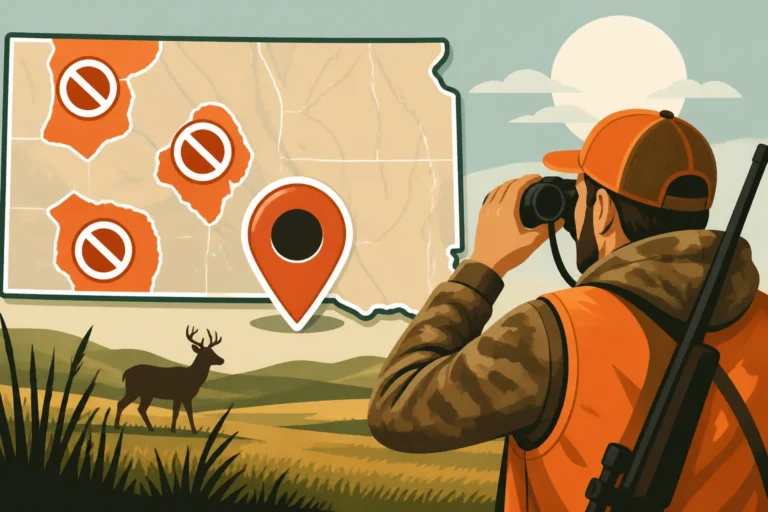
For any hunter setting foot in South Dakota, the GFP Public Hunting Atlas is not just a useful tool; it's an absolutely essential one. This resource, available both online and in a physical book format, is your definitive guide to public hunting access across the state. It lays out every WIA, GPA, WPA, and accessible School and Public Land parcel, often with the specific rules for each.
The online version of the Using the South Dakota Public Hunting Atlas is particularly powerful. It's an interactive map that allows you to zoom in on specific areas, filter by county or land type, and get detailed information about each parcel. It clearly marks property boundaries and indicates whether a piece of land is open for public hunting. You can scout from your couch, identifying potential spots, understanding the surrounding private land, and planning your entry and exit routes. It truly is the first, most crucial step for planning any public land hunt in South Dakota.
It's vital to remember that the atlas is updated annually, as WIA leases and other land designations can change. Always ensure you have the most current version, whether you're using the online map or a printed copy. Relying on an outdated atlas could lead to accidental trespass or missed opportunities on newly opened lands. Combine your atlas study with other scouting efforts to get the most comprehensive picture of your chosen hunting area.
Mapping Apps and GPS Devices
The advent of GPS mapping apps for smartphones and dedicated handheld devices has revolutionized how hunters navigate the field and confidently identify legal hunting boundaries. These tools are far more than just navigation aids; they are powerful land management resources.
Apps like onX Hunt have become industry standards for a good reason. They overlay public/private land ownership information directly onto high-resolution satellite imagery, allowing you to see exactly where you are in relation to property lines in real time. This means you can walk a fence line with confidence, knowing you're not accidentally straying onto private property. The app often includes features like landowner names, parcel numbers, and even property line alerts that notify you if you're approaching a boundary. Understanding onX Layers for South Dakota Land Status can quite literally save your hunt.
Beyond preventing trespass, these apps offer numerous other benefits. You can mark waypoints for scouting locations, game sightings, or where you parked your vehicle. You can track your movements, measure distances, and save maps for offline use, which is critical in West River country where cell service can be spotty. While onX Hunt is a prominent example, other mapping services exist, and each hunter finds what works best for them. Some, like GoHunt, offer additional features tailored for big game hunters, providing unit data, draw odds, and more in-depth planning tools, although the core land ownership overlay remains a universal benefit.
Scouting and Aerial Imagery
While technology provides incredible mapping capabilities, it's crucial to remember that it's a complement, not a replacement, for good old-fashioned scouting and learning to "read" the land. Combining mapping apps with careful aerial imagery analysis and on-the-ground reconnaissance creates the most robust hunting plan.
Using aerial maps, whether through a dedicated app or online satellite views, allows you to meticulously study the terrain for subtle nuances that might hold game. Look for changes in vegetation, patterns of cover, water sources, and natural funnels or pinch points that could serve as travel corridors for deer or escape routes for pheasants. Identifying potential bedding areas in dense cattails, or noting where a tree belt meets a creek bottom, can be done before you ever step foot in the field. Reading Aerial Imagery for Cattail Cover is an art that improves with practice and can give you a significant advantage.
Once you've done your digital scouting, physical, on-the-ground scouting is the next logical step. If possible, walk the property, looking for fresh sign, rubs, scrapes, or recent tracks. This confirms what the maps show and provides an invaluable understanding of how game actually uses the habitat. It allows you to feel the terrain, judge the density of cover, and identify potential stand or blind locations. Scouting South Dakota Public Ground Before the Season can make all the difference, especially when pressure builds during opening weekend. The combination of high-tech mapping and old-school woodsman craft is truly the most effective approach to finding and successfully hunting legal access in South Dakota.
Disclaimer
This article is for general informational purposes only and does not constitute professional advice. Laws, prices and regulations vary by location and change over time. Consult a qualified professional for guidance on your specific situation.