Foot Traffic Only Rules on South Dakota Walk-In Areas
One of the most common frustrations hunters face in South Dakota, especially when looking for those prime pheasant spots, is figuring out where you can actually put boots on the ground without running afoul of trespass laws. It’s tough, trying to balance eager anticipation with the need to be respectful and legal. This guide is going to clear up the often-misunderstood "foot traffic only" rules governing South Dakota's Walk-In Areas, giving you the clarity and confidence to hunt these crucial public-access lands effectively and responsibly.
Understanding South Dakota's Walk-In Area Program
South Dakota's Walk-In Area (WIA) program is a godsend for hunters, offering millions of acres of private land opened up for public hunting access. It’s a unique partnership between private landowners and the state, designed to expand hunting opportunities, particularly for small game like pheasants, but also for deer, antelope, and other species where available. These areas are marked by distinctive yellow signs that clearly state "Walk-In Area – Hunter & Pedestrian Access Only" – and that "foot traffic only" part is where a lot of questions come into play.
The Philosophy Behind "Foot Traffic Only"
The core idea behind the "foot traffic only" rule is quite simple: to minimize impact on private land and enhance the hunting experience by encouraging fair chase and a more immersive connection with the landscape. Landowners who enroll their property in the WIA program are often doing so with the understanding that the increased traffic will be managed in a way that doesn't disrupt their agricultural operations or create excessive wear and tear on their land. Allowing vehicles, even ATVs or UTVs, could lead to rutted fields, damaged fences, and a host of other issues that would deter landowners from participating in the program in the first place.
Moreover, the "foot traffic only" rule inherently spreads hunters out. If everyone could drive right to their desired hunting spot, the best cover would quickly be overwhelmed. By requiring hunters to walk in, it favors those willing to put in the effort, rewarding them with potentially less pressured game and a more solitary hunting experience. It also means the hunter is more intimately connected to the land, moving slowly, observing the subtle changes in cover, and truly hunting the area rather than just driving through it. This helps preserve the quality of the hunt and ensures the program remains viable for years to come. You can learn more about the program's origins in How South Dakota's Walk-In Program Started.
How Walk-In Areas Differ from Other Public Lands
It's easy to lump all public hunting ground together, but South Dakota's WIAs have distinct characteristics that set them apart from other types of accessible land. Understanding these differences is crucial for navigating them correctly. Unlike federal lands such as National Grasslands, or even state-owned Game Production Areas (GPAs), WIAs are, at their heart, private land with a temporary public access easement. This means the rules can sometimes be a bit more specific or restrictive, especially concerning how you access them.
On a National Grassland, for instance, you'll often find a network of established roads and two-tracks where vehicle travel is permitted, allowing you to cover vast distances and often drive right to the edge of the cover you intend to hunt. Similarly, South Dakota Game Production Areas often have designated parking areas with relatively easy access, and while vehicle use beyond the parking lot is typically restricted, the parking itself is designed for convenience.
WIAs, by contrast, demand a different mindset. They are explicitly marked for pedestrian access only, meaning your vehicle stays on the county road or in a designated parking area outside the WIA boundaries. This distinction isn't just a suggestion; it's a fundamental rule of the program. Breaking it jeopardizes not only your hunt but the future of the entire WIA program by potentially causing landowners to withdraw their enrollment. The table below illustrates some key differences in access.
| Public Land Type | Primary Land Ownership | Vehicle Access Inside Unit | Primary Access Method | Notes on Access |
|---|---|---|---|---|
| Walk-In Areas (WIAs) | Private | No (Foot Traffic Only) | Walking | Leased private land, clearly signed. |
| Game Production Areas (GPAs) | State | Limited (Designated Parking) | Walking | State-owned land, often with maintained parking. |
| National Grasslands | Federal | Yes (Designated Routes) | Driving & Walking | Vast federal tracts, check MVUMs for roads. |
| School & State Trust Lands | State | Varies | Varies | Rules can be site-specific, check maps. |
| Corps of Engineers Land (Missouri River) | Federal | Limited (Designated Parking) | Walking & Boating | Access along reservoirs, often shoreline. |
Navigating Walk-In Areas Legally and Ethically
Hunting on Walk-In Areas isn't just about knowing the "foot traffic only" rule; it's about understanding the practicalities of adhering to it and doing so in a way that's respectful to the landowner and fellow hunters. This means carefully planning your approach, understanding what constitutes legal access, and always being mindful of the boundaries.
Vehicle Restrictions and Parking Considerations
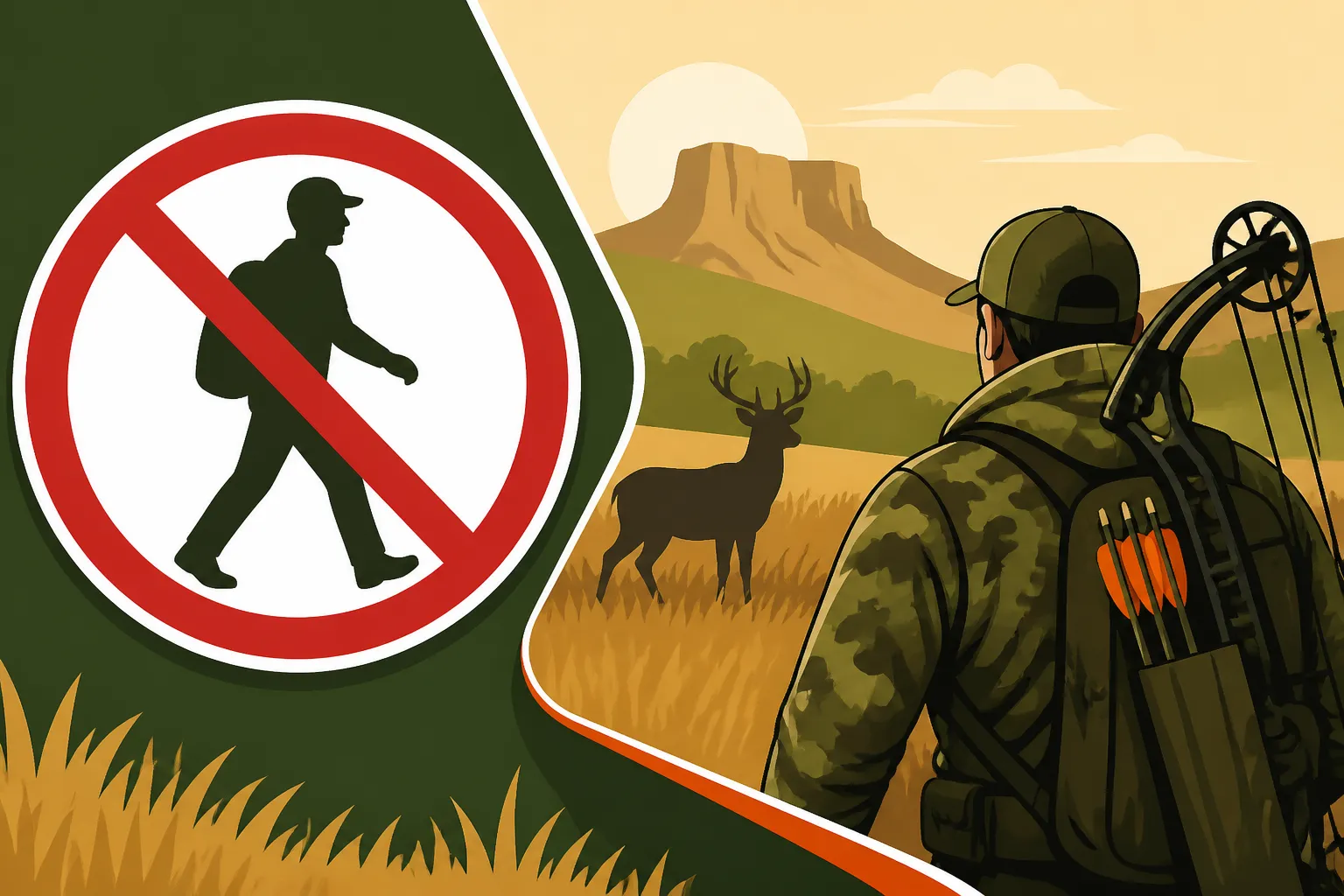
The "foot traffic only" rule means exactly what it says: no motorized vehicles, no ATVs, no UTVs, no e-bikes, no bicycles within the boundaries of the posted Walk-In Area. Your vehicle must remain on a public road or in a designated parking area outside the WIA boundary. Often, these parking areas are simply wide shoulders along a county road, or a small, mown pull-off clearly marked by the yellow WIA signs.
This requires you to think differently about how you approach your hunting spot. You might need to park a good distance from the best cover and then walk in, which can add significant time and physical exertion to your hunt. Always ensure your vehicle is completely off the main travel lane of any road and not blocking any gates or private driveways. Nothing sours a landowner faster than having their access impeded or their fields rutted by hunters trying to squeeze in "just a little bit closer." Being considerate with your parking is the first step in showing respect for the private land you're temporarily allowed to access.
Acceptable Forms of Transportation
Since motorized vehicles are out, what is acceptable? Your own two feet, primarily. This is why WIAs are such a great place for those who enjoy the challenge of a true walk-in hunt. Beyond walking, dogs are explicitly allowed on WIAs for hunting purposes, which we'll delve into shortly. However, any other non-motorized forms of transport like horses or bicycles are generally not permitted unless specifically indicated otherwise, which is rare. The emphasis is on minimal impact and traditional hunting methods.
This focus on foot traffic also means you need to be realistic about the distances you plan to cover. A 200-acre WIA might seem small on a map, but walking it thoroughly, especially in heavy cover or snow, can be a multi-hour endeavor. Factor in the walk back to your vehicle, potentially with game in tow, and you quickly realize why physical conditioning and proper gear are so important for hunting these areas. This commitment to walking in often leads to finding unpressured birds or deer deeper in the property, rewarding the hunter who embraces the challenge.
Respecting Boundaries and Posted Signs
The yellow Walk-In Area signs are your guide. They clearly delineate the boundaries of the accessible private land. It is your responsibility as a hunter to know where these boundaries are at all times. This means utilizing mapping tools like onX Layers for South Dakota Land Status or GoHunt, which show public land boundaries and WIAs in detail. Don't assume that if one field is a WIA, the adjacent one is too. Always double-check your maps and the physical signage.
Accidental trespass is still trespass, and it can lead to serious legal consequences, not to mention damaging the invaluable relationship between hunters and landowners. If you're unsure of a boundary, err on the side of caution. It's better to stay clearly within the marked WIA than to risk stepping onto private land that isn't enrolled in the program. Pay particular attention to corners, fence lines, and changes in cover. Sometimes, only one side of a road might be a WIA, while the other is strictly private. Understanding South Dakota Trespass Law and Posted Land is critical, and the "foot traffic only" rule is a key component of respecting that law on these specific parcels.
Practical Implications for Hunters on Foot
Embracing the "foot traffic only" rule on South Dakota's Walk-In Areas means making some adjustments to your hunting strategy and preparation. It's not just about compliance; it's about optimizing your hunt for success and enjoyment within these parameters.
The Physical Demands of Foot Traffic Only
Let's be honest: walking miles through dense pheasant cover or across rolling prairie can be tough work. The physical demands are significant. You'll be traversing uneven ground, climbing over fences (where allowed and without damaging them), pushing through tall grass and cattails, and potentially hauling out game. This isn't a passive sport; it's an active pursuit that will test your endurance.
Proper footwear is paramount – sturdy, waterproof boots that offer good ankle support are non-negotiable. Layered clothing is also key, as your body temperature will fluctuate dramatically between periods of intense walking and quieter glassing or waiting. Staying hydrated is also crucial, even on cool days, as sustained physical activity leads to fluid loss. Don't underestimate the energy expenditure; a day of hunting WIAs is often more demanding than an equal amount of time spent on other public lands where vehicle access might shave off significant walking distances. Layering for South Dakota Wind is an internal link that might also be helpful.
Gear and Preparation for Extended Walking
Given the emphasis on foot traffic, your gear choices become even more critical. You need to carry everything you might need for several hours in the field, but without overpacking and weighing yourself down.
Essential items include:
- Water: More than you think you’ll need.
- Snacks: High-energy options to keep you fueled.
- Navigation: A reliable GPS device or a smartphone app like onX Hunt, with downloaded offline maps, is indispensable for knowing your precise location relative to WIA boundaries and property lines.
- First Aid Kit: For both you and your dog, if you have one.
- Game Carrier: A simple game vest for pheasants, or a sturdy backpack with straps for larger game like deer, will make the pack-out much easier. Dragging a pheasant for a mile is one thing; dragging a deer is another entirely.
- Weather Protection: Rain gear, even if the forecast looks clear, can be a lifesaver on the prairie where weather changes quickly.
For pheasants, a good game vest or backpack with a large game bag is vital. You don't want to be carrying multiple roosters by hand for a mile. For deer or antelope, a sturdy frame pack or a game cart (if the terrain allows and it's pulled by hand) can make the difference between an easy pack-out and an exhausting ordeal. Always remember that whatever you bring in, you must carry out.
Strategic Advantages of Being on Foot
While the "foot traffic only" rule adds physical demands, it also creates distinct strategic advantages for the observant and persistent hunter. Areas deep within large WIAs, far from road access, often see significantly less hunting pressure. This is where those wily, older pheasants tend to hold tight, or where deer feel more secure in bedding.
By being willing to walk further than others, you access these sanctuaries. You can also approach cover much more stealthily on foot, often surprising game that has grown accustomed to vehicle noise along the roads. Being on foot allows for slower, more deliberate hunting of cover, picking apart nuances that might be missed from a faster pace. You can truly work a cattail slough or a shelterbelt from end to end, pushing birds out rather than just bumping them. This deep dive into cover can be particularly effective when Walking and Blocking South Dakota Cattail Sloughs or Working South Dakota Shelterbelts for Roosters. The further you go, the more the landscape opens up, and the greater your chances of finding unpressured game.
Hunting with Dogs on Walk-In Areas
For many hunters, a trip to South Dakota for pheasants isn't complete without their canine companion. Fortunately, dogs are not only allowed but often essential for successful hunting on Walk-In Areas. However, there are still rules and considerations to keep in mind.
Rules for Dog Use and Training
The primary rule regarding dogs on Walk-In Areas is that they must be under your control at all times. This is a common-sense regulation across most hunting lands but becomes particularly important on private land. While training dogs is generally permitted within the legal hunting seasons for the species you are pursuing, it's not a free-for-all dog park. Off-season training is usually prohibited unless explicitly stated for specific areas. The intent of WIAs is for hunting, not just recreation or off-season dog work.
Always ensure your dog is well-behaved, retrieves reliably, and doesn't harass livestock if you encounter any (though WIAs are typically selected to minimize this interaction). Pick up after your dog, especially in designated parking areas. The goodwill of landowners is paramount, and any negative impact from dog owners can jeopardize the future of WIA access. Remember to bring plenty of water for your dog, especially on warm early season days. Dog Water and Burrs on the Prairie highlights specific challenges.
Managing Your Dog in Foot Traffic Only Zones
Because you're on foot and potentially pushing through dense cover, managing your dog requires active participation. If you're walking alongside other hunters, ensure your dog works in a manner that doesn't interfere with their shooting lanes or cause confusion. Keep them close in areas where you anticipate tight flushes, especially on those thick Late-Season South Dakota Pheasants in Heavy Cover.
On WIAs that border active farmsteads or livestock pastures, it's especially critical to keep your dog from straying. Even a well-meaning dog can cause stress to livestock, which is a quick way to lose landowner trust. Use a leash when moving between fields or along roadsides if your dog isn't perfectly steady. Communication with your dog, whether through voice commands or whistles, becomes your lifeline in these environments. It's not just about finding birds; it's about maintaining control and respect for the land and its occupants.
The Benefits of a Well-Trained Dog on Walk-In Areas
Despite the management considerations, a well-trained bird dog is an invaluable asset on a "foot traffic only" WIA. They can cover ground much more efficiently than a human, sniffing out pheasants in dense cover that you might otherwise walk right past. Their ability to retrieve downed birds saves precious time and prevents lost game, especially in thick cattails or tall grasslands where a fallen pheasant can disappear without a trace.
Whether you have a pointing dog that locks up on scent, allowing you to position for the shot, or a flushing dog that systematically cleans out a piece of cover, their presence enhances your success and overall enjoyment. A good dog truly embodies the spirit of these walk-in hunts, making the physical effort more rewarding by finding those birds that are holding tight. Just remember to keep them Keeping a Dog Cool on an Early Opener if you hit the field on warmer days.
Common Misconceptions and Troubleshooting
Even with the clearest rules, questions and challenges can arise on Walk-In Areas. Addressing these common issues can help ensure a smooth, enjoyable, and legal hunting experience for everyone.
Addressing "Landlocked" Public Land Concerns
One persistent concern among hunters, particularly with mapping apps showing various land ownership types, is the idea of "landlocked" public land – areas of public ground that can only be accessed by crossing private land. On Walk-In Areas, the rule is generally that you must access the WIA directly from public road right-of-way, or from another piece of public land that legally connects to it. The WIA program opens specific parcels for foot traffic, but it doesn't automatically grant an easement across other private property that isn't enrolled.
This is why mapping tools like onX Hunt and GoHunt are absolutely critical. They allow you to visualize land ownership boundaries and identify legal access points. If a WIA appears to be surrounded by private land with no direct public road frontage, it means the landowner has likely designated a specific access point, or it might be intended to be accessed from an adjacent public parcel. Always verify your access route before heading out. Finding Property Lines in South Dakota becomes incredibly important here to avoid any unintentional trespassing.
Interpreting the South Dakota Public Hunting Atlas
The South Dakota Game, Fish and Parks (SD GFP) Public Hunting Atlas is the definitive resource for identifying and navigating Walk-In Areas. It's available online and as a downloadable map for your smartphone. However, even with this fantastic tool, interpretation is key.
- Check Dates: WIA agreements can change annually. Always make sure you're using the most current atlas. A parcel that was a WIA last year might not be this year, and vice-versa.
- Zoom In: Don't rely on a broad overview. Zoom in to identify exact boundaries, public road access points, and any specific notes or restrictions for a particular WIA.
- Look for Signage: While the atlas is the guide, the physical yellow signs on the ground are the final word. If a parcel is marked as a WIA on your map but lacks signage, or vice-versa, always defer to the most conservative interpretation and seek clarification if truly uncertain. The atlas is an planning tool, but the posted signs define the legal access on the ground. You can get more details in Using the South Dakota Public Hunting Atlas.
What to Do if You Witness a Violation
It's unfortunate, but sometimes you might encounter hunters who are not adhering to the "foot traffic only" rule, or other regulations. Whether it's someone driving an ATV into a WIA, trespassing onto clearly marked private land, or otherwise acting unethically, it can be frustrating.
Your best course of action is generally not direct confrontation. This can escalate situations unnecessarily and put you in an unsafe position. Instead, quietly note down as much information as possible: vehicle description and license plate number, time and date, location, and a description of the alleged violation. Then, report it to the South Dakota Game, Fish and Parks law enforcement. They are the authorities responsible for enforcing these rules. By reporting violations, you help protect the integrity of the WIA program and ensure that these valuable hunting opportunities remain available for everyone who respects them. Good Pheasant Hunting Etiquette on Public Ground applies to everyone, not just those around you.
Disclaimer
This article is for general informational purposes only and does not constitute professional advice. Laws, prices and regulations vary by location and change over time. Consult a qualified professional for guidance on your specific situation.