South Dakota East River Counties for Pheasant Hunters
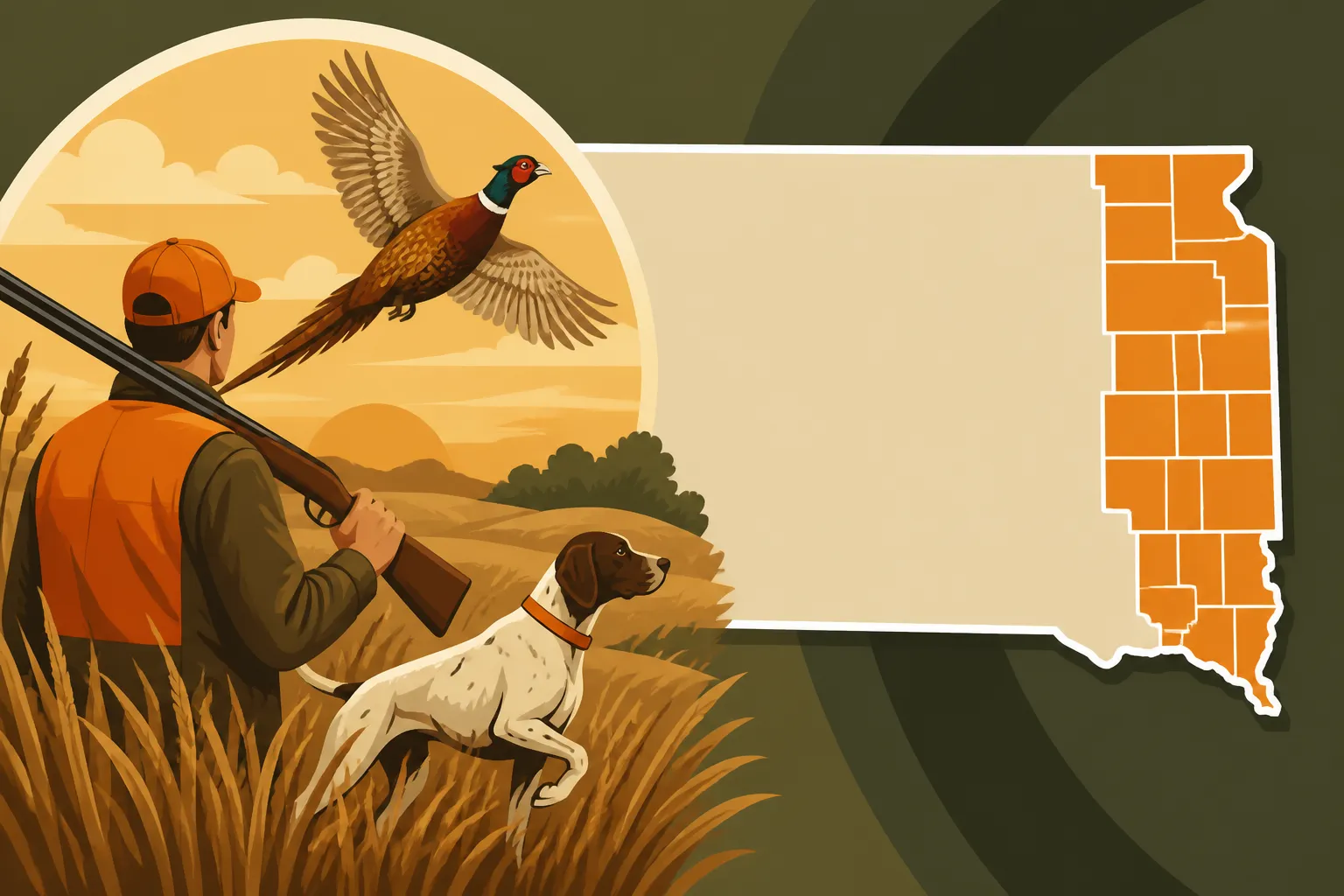
Hunting pheasants in South Dakota's East River country can feel like trying to crack a secret code. You hear all the legends of endless roosters, but when you hit the field, you might find yourself staring at vast stretches of private land or heavily pressured public spots, wondering where all those birds are hiding. This guide is here to unravel the mysteries of East River pheasant hunting, helping you understand the unique landscape, pinpoint the prime counties, and equip you with the knowledge to find those wily roosters, whether you're working public ground or seeking permission on private parcels.
Understanding the East River Pheasant Landscape
The East River region of South Dakota is legendary for a reason, but it's not a monolithic block of prime habitat. It's a complex tapestry woven from agriculture, wetlands, and conservation efforts, all of which influence where pheasants thrive. Knowing this landscape is the first step to unlocking its secrets.
The Habitat Mosaic of Corn, Grass, and Water
Unlike the more arid West River country, East River is characterized by its abundant water—glacial lakes, potholes, and sloughs—interspersed with highly productive agricultural land. This creates a perfect storm for ring-necked pheasants, providing everything they need for survival. Think about it: a cornfield offers vital food in the colder months, while an adjacent block of thick grass or a cattail-choked slough provides escape cover from predators and brutal winter weather. When these elements are close together, birds don't have to travel far, reducing their exposure and increasing their chances of survival. This creates the dense populations we all dream of.
However, this mosaic also means that prime spots can be incredibly localized. You might drive past miles of what looks like ideal habitat, only to find the birds concentrated in a few specific corners where all the elements align perfectly. It's about finding those convergence points, those pockets where food, water, and dense cover meet. This understanding helps in focusing your scouting efforts, rather than just driving aimlessly.
The Role of Agriculture and Conservation Programs
Agriculture is both a blessing and a challenge in East River. While corn, soybeans, and small grains provide a crucial food source for pheasants, intensive farming practices can sometimes reduce the permanent cover they need for nesting and roosting. This is where conservation programs like the Conservation Reserve Program (CRP) become absolutely critical. CRP acres are essentially retired farmlands planted with dense grasses and wildflowers, providing invaluable nesting habitat in the spring and secure loafing and roosting cover throughout the year. The more CRP acres a county has, generally, the better its pheasant numbers. CRP Acres and South Dakota Bird Numbers is a deep dive into this topic.
Beyond CRP, state-managed Game Production Areas (GPAs) and the federally funded Waterfowl Production Areas (WPAs) also play a massive role. These public lands are specifically managed for wildlife, often featuring a diverse mix of native grasses, food plots, and wetland habitats. They act as islands of consistent cover in a sea of agriculture, drawing birds from miles around, especially as crops are harvested and other cover disappears. Recognizing the signs for these public access areas on your maps, like those found on onX Hunt, can instantly point you towards areas with higher bird concentrations, even if they're small parcels.
Top East River Counties for Rooster Production
When hunters talk about South Dakota pheasants, certain East River counties always come up. These aren't just names on a map; they represent consistent habitat, strong bird numbers, and a rich hunting tradition.
Classic Pheasant Hotbeds and Their Allure
Some counties have simply earned their reputation as pheasant meccas. Take Faulk County, for instance. Known for its rolling hills, diverse agriculture, and numerous sloughs, it consistently produces high bird numbers. Hunters often describe Faulk County as having a fantastic balance of grassland and cropland, which is exactly what roosters need. McPherson County further north, bordering North Dakota, is another standout, with extensive cattail sloughs and productive agricultural ground that often holds phenomenal numbers of birds, especially later in the season when heavy cover is crucial. Similarly, Spink County in the central part of East River offers a similar mix, often seeing high hunter success due to its expansive public access and large tracts of prime habitat.
What makes these counties classic hotbeds isn't just one factor, but the synergy of several. It’s the sheer volume of quality habitat, the historic mild winters (though that varies!), and often, a strong culture of landowner cooperation with state and federal conservation programs. These areas are not just places where pheasants exist; they are places where they thrive, year after year, offering more consistent opportunities for hunters willing to put in the work. When you're planning a trip, starting your research with these well-known areas can give you a higher probability of finding consistent bird encounters.
Unearthing Lesser-Known Gems and Diverse Opportunities
While the "big name" counties are popular, they often come with increased hunter pressure, especially during the opener. This is where exploring some of the lesser-known or overlooked counties can pay dividends. Counties like Kingsbury, Clark, Sanborn, and Miner, for example, might not always make the headlines, but they offer excellent pheasant hunting, often with less competition. These areas typically have a good mix of corn, soybeans, and grasslands, along with scattered wetlands, creating that essential pheasant habitat. The key is that while they might not boast the absolute highest densities in every single square mile, they offer enough quality cover and birds to make for a fantastic hunt, often with more breathing room.
One advantage of these "hidden gems" is that you might find different types of hunting opportunities. For instance, some of these counties might have more fragmented cover, meaning smaller blocks of grass and smaller sloughs that are perfect for a single hunter and a dog, or a small group. This contrasts with the massive fields and heavy sloughs of the prime areas that sometimes demand larger blocking parties. Best Way to Push a Cattail Slough explores some of the intricacies of hunting heavy cover. Using detailed mapping tools like onX Hunt can help you identify these smaller, perhaps less obvious, pockets of cover within these counties, allowing you to scout effectively and find ground that others might overlook.
Navigating Public Access in East River Country
Finding a place to hunt is arguably the biggest challenge for many nonresident (and even resident) pheasant hunters in South Dakota. East River counties, while rich in birds, are predominantly privately owned. Understanding the public access options and how to utilize them effectively is paramount.
Maximizing Walk-In Areas and Game Production Areas
South Dakota's Walk-In Area (WIA) program is a godsend for public land hunters, and East River counties have a significant share of them. These are private lands that the state leases for public hunting access, typically marked with distinctive yellow signs. WIAs often encompass diverse habitats, from native grass and CRP to cattail sloughs and food plots. The key to success on WIAs is diligent scouting and an understanding that not all WIAs are created equal. Some are small, some are vast, and their bird numbers can fluctuate year to year based on habitat conditions and surrounding land use. Using the South Dakota GFP Public Hunting Atlas, or an app like onX Hunt which integrates WIA boundaries, is essential for identifying these areas and planning your approach.
Beyond WIAs, Game Production Areas (GPAs) are state-owned public lands managed specifically for wildlife habitat. These areas are often larger and more consistently managed than WIAs, providing stable, high-quality cover. Many East River counties boast significant GPA acreage. For example, Game Production Areas Near Huron and Game Production Areas near Watertown are great starting points for identifying substantial public grounds. Remember that GPAs can sometimes see heavy pressure, especially on opening weekend, so be prepared to walk further, or hunt during weekdays or later in the season. Learning to read the topography and cover from aerial maps can help you find overlooked corners within these popular areas.
Respecting Private Land and Seeking Permission
While public land is a fantastic resource, the reality in East River is that much of the prime pheasant habitat remains on private property. This means that if you want to expand your hunting opportunities, engaging with landowners is often necessary. The frustration is real: driving past fields brimming with birds only to see "No Hunting" signs. However, a polite, respectful approach can often open doors. Start by identifying farms that have desirable habitat – perhaps a CRP field next to a cornfield, or a large slough that looks like ideal winter cover. Then, and this is the crucial part, knock on the door, introduce yourself, and ask if you might be able to hunt.
Timing and etiquette are everything when seeking private land access. Avoid knocking during busy farming times like planting or harvest. Dress respectfully, leave your shotgun in the truck, and be prepared for a "no." If granted permission, offer to share game, clean up after yourself, and perhaps even offer a small token of appreciation. Remember, you're a guest. Building these relationships takes time and trust, but the rewards can be immense. Many of the most memorable hunts happen on private ground with a gracious landowner. It's about being a good ambassador for hunters and respecting their property, understanding that this often leads to future opportunities.
Tailoring Your Tactics to East River Cover
East River South Dakota throws a variety of cover types at you, and successful pheasant hunting means adapting your approach to each. What works in a sprawling cattail slough won't be effective in a narrow shelterbelt, and vice-versa.
Working the Crop Edges and Food Plots
As the pheasant season progresses and farmers harvest their crops, the remaining standing cornfields, particularly along their edges, become magnets for pheasants. These areas provide both food and excellent overhead cover. When hunting corn, especially during midday, pheasants often move into the thickest parts of the field. A common tactic is to push through rows or along the field edge, being mindful that birds will often run ahead of you before flushing. Sometimes, a well-placed blocker at the end of a corn strip can make all the difference, forcing running birds to take flight. Hunting Food Plots and Corn Edges offers more detailed strategies for these areas.
Food plots, whether planted by private landowners or on public GPAs, are also invaluable. These plots of corn, sorghum, or other grains are specifically designed to attract and hold wildlife. Hunting these requires a keen eye for escape routes. Pheasants will use any adjacent cover—a grass field, a slough, or even a fence line—to escape pressure. Therefore, planning your approach to cut off these escape routes, often by having a couple of blockers positioned strategically, can greatly increase your success rate. A single hunter might zigzag through a smaller plot, or walk the perimeter, pushing birds towards an open edge.
Conquering Cattail Sloughs and Shelterbelts
Cattail sloughs are iconic pheasant cover in East River and are often where the largest numbers of birds congregate, especially as the season wears on and temperatures drop. These dense, wet areas provide unparalleled protection from predators and the elements. However, hunting them is physically demanding and requires a strategic approach. Large sloughs often demand a team effort, with drivers pushing birds towards blockers positioned on the ends or sides. Effective communication and a clear understanding of your roles are crucial here. Dogs, especially strong flushers, are invaluable for rooting out birds that would otherwise hold tight in the impenetrable cover. Walking and Blocking South Dakota Cattail Sloughs is a must-read if you plan to tackle these challenging areas.
Shelterbelts, those linear strips of trees planted for windbreaks, offer another distinct type of cover. They can be incredibly productive, especially during colder, windier days, providing a thermal barrier for birds. Often, pheasants will hold tightly in the middle of a shelterbelt, only flushing once you're almost on top of them. Like sloughs, a coordinated effort with drivers pushing birds down the length of the belt and blockers at the ends or "knees" (bends in the belt) can be very effective. It's not uncommon for a single shelterbelt to hold dozens of pheasants, making it a high-reward, high-excitement hunt. Working South Dakota Shelterbelts for Roosters provides detailed advice for maximizing your chances in these linear habitats.
Strategic Planning for Your East River Hunt
A successful South Dakota pheasant hunt isn't just about showing up; it's about meticulous planning, from understanding seasonal bird behavior to packing the right gear and using the best tools to find your hunting grounds.
Timing Your Trip for Optimal Success
The South Dakota pheasant season opens with much fanfare, typically on the third Saturday in October. The early season, running from opener through mid-November, is characterized by abundant cover still standing, milder weather, and generally less pressured birds. Hunters often enjoy high success rates, and dogs don't have to work as hard in the heat. However, there's also more competition on public lands. South Dakota Pheasant Season and Licences outlines the general season dates. As the season progresses into the late period (December and January), conditions change dramatically. Most crops are harvested, leaving fewer places for birds to hide. Weather can become severe, with snow and freezing temperatures forcing pheasants into the densest available cover—think massive cattail sloughs and heavy CRP. This late season can offer incredible hunting for hardy individuals willing to brave the elements, as birds are concentrated, but they are also much warier. Understanding the nuances of South Dakota Pheasant Season Structure can significantly influence your success.
Many hunters find a sweet spot in mid-November, after the initial rush of the opener, but before the brutal winter weather typically sets in. During this time, enough cover is often still standing, but birds have begun to concentrate, and public land pressure has subsided slightly. It's a balance of conditions that can lead to excellent results. Regardless of when you go, monitoring weather forecasts in the weeks leading up to your trip is crucial. A warm, dry spell will mean different bird behavior and cover availability than an early blizzard.
Essential Gear and Scouting Tools
Having the right gear is non-negotiable for a South Dakota pheasant hunt. Beyond the obvious shotgun and ammunition, durable, waterproof boots are paramount, especially if you plan to tackle wet sloughs or walk through frosty fields. Layered clothing is also key, as prairie weather can change dramatically throughout the day, swinging from chilly mornings to warm afternoons, and then back to freezing winds. Blaze orange is a legal requirement and a safety essential, ensuring you are visible to other hunters in the field. Don't forget a good bird vest or game bag, plenty of water for yourself and your dog, and a well-stocked first aid kit for both humans and canines. Layering for South Dakota Wind is an important read for preparing your clothing.
Perhaps even more important than physical gear are your scouting and navigation tools. A reliable GPS unit or a smartphone app like onX Hunt is absolutely indispensable. These tools allow you to identify public land boundaries, navigate through complex parcels, mark bird flushes, and even find access points and parking spots. Apps like GoHunt can also provide valuable insights into tag opportunities, drawing odds, and unit information for various species, which while primarily geared towards big game, can offer a broader understanding of land access in the state. Utilizing aerial imagery to identify cover changes, potential bird holding areas, and access routes before you even set foot in the field can give you a significant advantage, helping you to pinpoint Where South Dakota Pheasants Concentrate and avoid wasting precious hunting time.
Key East River Counties and Their Habitat Characteristics
To give you a clearer picture, here’s a look at some representative East River counties, highlighting their general characteristics for pheasant hunting. Remember, conditions can vary greatly from one piece of ground to the next, even within the same county.
| County | Primary Habitat Mix | Public Land Access (General) | Notes for Pheasant Hunters |
|---|---|---|---|
| Faulk | Rolling cropland, extensive grasslands, many sloughs | Good WIA & GPA coverage | Classic, high bird numbers, good balance of cover. Can be pressured. |
| McPherson | Large cattail sloughs, prairie grasslands, grain crops | Very Good WIA & GPA coverage | Excellent late-season potential in heavy cover. Remote feel. |
| Spink | Fertile cropland, CRP, scattered wetlands | Good WIA & GPA coverage | Consistent producer, diverse opportunities. Central location can draw crowds. |
| Kingsbury | Mix of crop fields, wetlands, and smaller grass blocks | Moderate WIA & GPA coverage | Good choice for smaller groups; often less pressure than the "big three." |
| Clark | Similar to Kingsbury, good pothole region | Moderate WIA & GPA coverage | Known for good waterfowling too, often find pheasants around wetland edges. |
| Sanborn | Strong agricultural focus, good shelterbelts, some CRP | Moderate WIA coverage | Smaller county, but can hold surprising numbers, especially in shelterbelts. |
| Brule | Missouri River breaks influence, good timbered draws | Limited public access | More whitetail-focused, but good pheasants can be found, especially away from the river. |
This table provides a snapshot, but always refer to the most current South Dakota GFP Public Hunting Atlas for precise boundaries and current WIA offerings.
Disclaimer
This article is for general informational purposes only and does not constitute professional advice. Laws, prices and regulations vary by location and change over time. Consult a qualified professional for guidance on your specific situation.