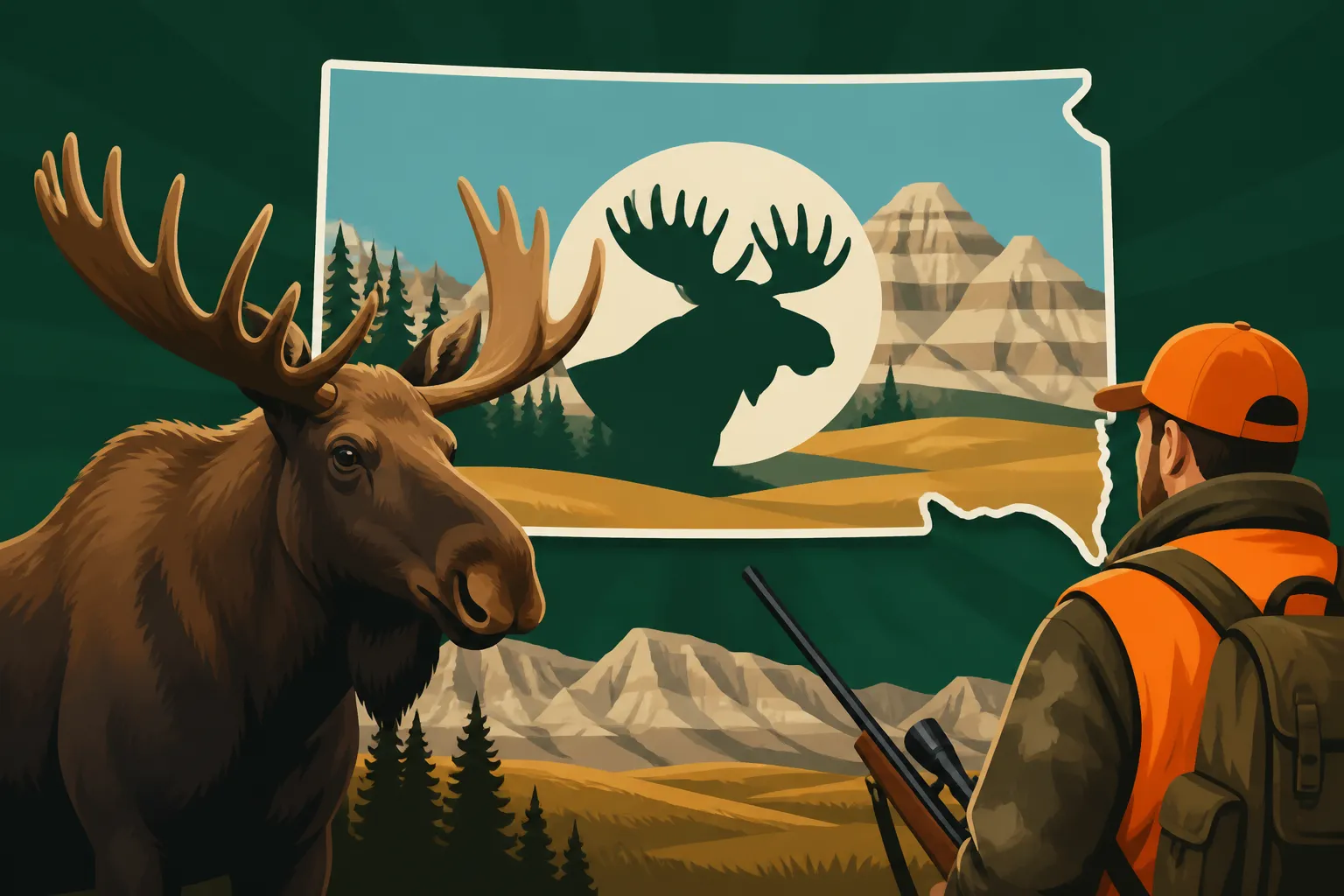
Are There Moose in South Dakota?
It's a question many hunters and outdoor enthusiasts ponder, especially when exploring the vast landscapes of South Dakota: could a moose be lurking in those river bottoms or timbered draws? While the idea might seem far-fetched to some, there's a genuine curiosity about these majestic giants gracing our prairie and Black Hills. This guide will dive deep into whether South Dakota truly hosts moose, what historical records or anecdotal evidence suggests, and why, for the most part, these magnificent creatures typically call other states home.
The Allure and Mystery of Moose in the Dakotas
There's something inherently captivating about a moose. Their sheer size, those colossal antlers, and their somewhat prehistoric appearance make them stand out even among other impressive big game animals. When you’re out in the wilds of South Dakota, where you can spot everything from a massive whitetail buck to a soaring eagle, it’s only natural to wonder if such an iconic northern creature could also find a home here.
Why People Ask About Moose in South Dakota
Many folks associate moose with the deep, dark forests of Canada, the swampy bogs of Minnesota, or the rugged mountains of Montana and Wyoming. So, why does the question about South Dakota pop up so often? I think it stems from a couple of factors. First, South Dakota's landscape is far more diverse than many outsiders imagine. We have the dense timber of the Black Hills, the vast Missouri River breaks, and the surprisingly lush river bottoms that crisscross the eastern prairie. When you’re hunting South Dakota Whitetail Hunting in River Bottoms or Black Hills Elk Hunting Tactics, you’re already in areas that feel wild and remote enough to support something as grand as a moose.
Second, we have other large cervids that sometimes get misidentified, or simply spark the imagination. Elk are certainly present, especially in the Black Hills, and a big bull elk can look pretty imposing from a distance. Then there are those massive South Dakota Mule Deer Population bucks and thick-necked whitetails that can easily tip the scales, sometimes making people wonder if they're seeing something even bigger. It’s an understandable jump in thought for anyone who cherishes wild spaces and dreams of spotting something truly unique. The yearning to see something new and wild is a powerful motivator for these questions.
The Nearest Established Moose Populations
To really understand why moose aren't a common sight in South Dakota, it helps to look at where their established populations do thrive. Generally speaking, moose are animals of the boreal forest and northern climes. You'll find robust populations in northern Minnesota and Michigan, across much of Canada, Alaska, and into New England. In the western states, places like northwestern Montana, northern Idaho, and significant portions of Wyoming (especially in the Greater Yellowstone Ecosystem) have healthy moose numbers. Even eastern North Dakota, particularly along its major river systems and in its Pembina Hills region, has a small but persistent moose population.
What do these areas have in common that much of South Dakota lacks? They typically offer expansive, undisturbed tracts of forest, abundant water sources, and a prevalence of specific browse like willows, aspen, and aquatic vegetation that moose absolutely depend on. They also often experience colder, longer winters, which moose are biologically adapted to handle, but can sometimes be a challenge in South Dakota's often milder winters and hot summers.
Documented Moose Sightings in South Dakota
Given their preferred habitat, it's fair to say that South Dakota is not, by any stretch of the imagination, "moose country." However, that doesn't mean a moose has never stepped hoof onto our soil. The reality is far more nuanced, marked by occasional, isolated incidents rather than thriving herds.
Sporadic and Isolated Incidents
When we talk about moose in South Dakota, we're almost exclusively talking about transient individuals. These are almost always young, typically male moose that are in the prime of their dispersal phase. Like many young mammals, as they mature, they strike out from their birth territories to find new grounds, new mates, and new resources. This exploratory instinct can lead them far from established populations. These adventurous wanderers might travel hundreds of miles, following river systems or stretches of timber, often from neighboring states like North Dakota or Wyoming. They aren't looking to establish a permanent residence in South Dakota; they're simply passing through, often looking for something that just isn't here in abundance.
These sightings are incredibly rare, perhaps one or two confirmed reports every few years, if that. They are certainly not indicative of a resident population, and it would be a mistake to interpret them as such. Think of it like a human explorer—someone might pass through an unfamiliar town, but that doesn’t mean they’ve moved there.
Where These Lone Wanderers Tend to Show Up
If a moose does make its way into South Dakota, there are certain logical travel corridors it’s likely to use. The most prominent are our major river systems. The Missouri River, with its expansive timbered bottoms and relatively continuous cover, acts as a natural highway for dispersing wildlife. A moose traveling south from North Dakota would find the Missouri a somewhat suitable path for a good stretch. Likewise, the Cheyenne River and its tributaries, particularly in the western part of the state, might draw in an animal dispersing from Wyoming.
These river systems provide not only cover but also critical water and some of the necessary browse moose prefer, even if it's not as extensive as true boreal forest. Sightings might also occur in the extreme northeastern or northwestern corners of the state, bordering areas where moose populations are closer. Reports usually come from very rural, isolated areas where human disturbance is minimal, but even then, these animals rarely linger. When using an app like GoHunt to scout potential hunting areas, you might mark a particularly dense river bottom and think about deer or even elk, but a moose would still be an exceedingly rare sight even in the thickest cover.
How These Sightings Are Confirmed (or Not)
Given the rarity, every potential moose sighting in South Dakota garners significant attention. Local residents might spot something unusual, capture a blurry photo on a game camera, or even get a fleeting glimpse while driving a back road. The South Dakota Game, Fish and Parks (GFP) Department is usually the agency tasked with confirming these reports. Wildlife biologists will investigate, looking for tracks, scat, or further visual confirmation.
Often, initial reports turn out to be misidentifications – a particularly large whitetail, a juvenile elk, or even a domestic animal. However, every so often, a genuine, albeit temporary, moose sighting is confirmed. These confirmations are typically met with a mix of excitement and scientific interest, as they provide valuable data on wildlife dispersal patterns. It's a testament to the resilience and wanderlust of young moose that they can travel such distances, even if South Dakota isn't quite their cup of tea for long-term residency.
Why South Dakota Isn't Moose Country (Yet)
While the occasional moose might decide to visit South Dakota, the state fundamentally lacks the critical elements needed to support a permanent, breeding population. It boils down to a few key ecological factors that are simply not prevalent enough here.
Habitat Requirements for a Thriving Moose Population
Moose are highly specialized animals when it comes to their habitat needs. They require vast expanses of forest, particularly those with a significant component of young deciduous trees and shrubs like willow, aspen, and birch, which make up the bulk of their diet. They are prodigious browsers, consuming huge quantities of woody vegetation daily. Crucially, they also need abundant access to water, not just for drinking, but for feeding on aquatic plants during warmer months, which are a vital source of minerals and nutrients. Dense cover is also essential for thermal regulation, providing shade during hot summers and protection from severe winter winds.
When you look at South Dakota, while we have some incredible river bottoms with good willow growth and pockets of aspen in the Black Hills, these areas are generally not extensive enough to sustain a large, healthy moose population. The majority of the state is characterized by open prairie, agricultural land, or more open Ponderosa pine forests, none of which offer the continuous, high-quality browse and thermal cover that moose require. Even in the Black Hills National Forest Hunting areas where elk thrive, the habitat is quite different from what a moose would ideally seek.
Competition with Other Big Game Species
South Dakota is home to a robust and diverse array of big game. We have healthy populations of whitetail deer across the state, especially along our river corridors. Mule Deer on the West River Breaks thrive in the more arid, rugged western regions. And, of course, the Black Hills supports a significant elk herd. These species all occupy ecological niches and compete for resources to varying degrees.
Moose, being highly specialized feeders, wouldn't just be competing for space; they'd be competing for specific types of forage with deer and elk. While moose browse high on woody vegetation, and deer and elk often prefer grasses and forbs, there is still overlap, especially in areas with limited resources. Introducing or attempting to establish moose populations in areas already saturated with other successful big game species could lead to undue stress on the habitat and potential population issues for all involved. It’s a delicate balance, and nature tends to fill niches with the species best adapted to them.
Climate and Landscape Challenges
Let’s be honest, South Dakota summers can be scorching, especially on the open prairie. Moose are built for cold. Their large body mass, thick coats, and relatively low surface-area-to-volume ratio are adaptations for retaining heat in frigid environments. They struggle significantly in prolonged periods of heat. Heat stress can lead to reduced foraging, increased susceptibility to disease, and reproductive issues. Our relatively milder, shorter winters in the eastern part of the state, while not always extreme, also wouldn't offer the consistent, deep snow cover that sometimes benefits moose by making it harder for predators like wolves to pursue them.
Furthermore, the vast, open nature of much of the South Dakota landscape presents a challenge. Moose prefer areas where they can melt into dense cover, moving through the landscape without constant exposure. While we have incredible South Dakota Walk-In Areas Explained and National Grasslands Hunting in South Dakota that offer diverse hunting opportunities, these areas often lack the continuous, dense forest canopy and boggy wetlands that moose truly depend on for survival and breeding success. It's a question of both quality and quantity of suitable habitat.
What to Do if You Believe You See a Moose
It’s rare, but not impossible, to encounter a moose in South Dakota. If you are one of the fortunate few who spots one of these magnificent animals, knowing how to react is important for both your safety and the animal's well-being.
Reporting a Sighting to Game, Fish and Parks
The first and most important step after ensuring your own safety is to report the sighting to the South Dakota Game, Fish and Parks (GFP). While they are fully aware that moose are not residents here, every confirmed sighting is valuable data. It helps wildlife officials track dispersal patterns from neighboring states and understand potential movements across the landscape. Don't assume someone else will report it; your direct observation is crucial.
When you report, try to provide as much detail as possible:
- Exact Location: GPS coordinates are ideal, but a precise description of roads, landmarks, and nearest towns is also very helpful.
- Time and Date: When did you see the animal?
- Description of the Animal: Was it a bull (with or without antlers?), a cow, or a calf? How big did it appear? What color was it?
- Behavior: What was the moose doing? Was it feeding, running, standing still, or acting strangely?
- Photos or Video: If you were able to safely capture any images or video, these are incredibly valuable for confirmation. Remember, safety first!
The GFP team can verify the sighting, perhaps even dispatching a biologist if the location is accessible and the animal is still present. This helps them maintain accurate records and inform the public.
Safety Precautions Around Any Large Wild Animal
Moose, despite their seemingly docile appearance, are wild animals and can be incredibly dangerous, especially if provoked, cornered, or if a cow has a calf nearby. They are large, powerful, and surprisingly quick. If you encounter a moose, remember these critical safety tips:
- Maintain Distance: Never approach a moose. Use binoculars or a telephoto lens for viewing. Give them a wide berth. If you're in a vehicle, stay in it.
- Observe Behavior: Look for signs of agitation: ears laid back, hair standing up on the neck, head shaking, or stomping feet. These are warnings.
- Back Away Slowly: If a moose appears agitated, back away slowly and calmly. Do not run, as this can trigger a chase response.
- Find Cover: If a moose charges, try to get behind a large tree, a vehicle, or anything that can provide a barrier between you and the animal. They are not known for their agility around obstacles.
- Protect Your Head: If you are knocked down, curl into a ball to protect your head and vital organs.
While the chances of encountering a moose in South Dakota are slim, these safety precautions apply to any large wild animal, including elk or even aggressive whitetails during the rut. Staying vigilant and respectful of wildlife is always the best approach.
The Role of Observation for Wildlife Enthusiasts
For those of us who spend a lot of time outdoors, every observation counts. Whether you're tracking deer, searching for pheasants on Hunting South Dakota Walk-In Areas, or just enjoying a hike in the Black Hills, paying attention to the wildlife around you contributes to a larger understanding of our ecosystems. Even non-hunting enthusiasts can use tools like GoHunt to not only scout for hunting spots but also to log and track wildlife sightings, helping them build a personal database of animal movements and presence.
Your personal observations, especially of rare or unusual species, can be incredibly important. Wildlife agencies often rely on citizen science and public reports to supplement their own surveys and studies. So, if you do see something that makes you do a double-take, trust your instincts, get clear details, and report it. It's how we all contribute to the conservation and management of South Dakota's wild heritage. Even if it turns out to be "just" a big deer, the act of observation and reporting is a valuable habit for any outdoor enthusiast.
Moose vs. Other South Dakota Big Game: A Quick Comparison
To help distinguish a rare moose from our more common South Dakota big game, here's a quick comparison of key characteristics. This can be especially helpful if you catch a fleeting glimpse in heavy cover or at a distance.
| Feature | Moose | Elk (Wapiti) | Whitetail Deer | Mule Deer |
|---|---|---|---|---|
| Size | Largest cervid in North America; very tall, humped shoulders | Large, but smaller than moose; typical deer-like body shape | Medium-sized; smaller than elk/moose | Medium-large; robust, larger than whitetail |
| Antlers (Males) | Broad, palmated (paddle-like) with points on edges | Large, round tines, sweep back, then forward | Typically forward-curving main beam with tines coming off | Bifurcated (forking) antlers, no main beam |
| Color | Dark brown to black; lighter legs | Tawny body, darker head/neck, light rump patch | Reddish-brown in summer, grayish-brown in winter | Grayish-brown, light rump patch |
| Snout/Face | Long, distinctive "bell" (dewlap) under throat | Shorter, more equine-like face; no bell | Pointed snout; no bell | Broad forehead, large ears (mule-like) |
| Habitat | Boreal forest, wetlands, high mountains | Open forests, grasslands, mountains, river bottoms | Forests, river bottoms, agricultural edges | Arid plains, breaks, open timber, sagebrush |
| Tail | Very short, almost non-existent | Short, brown | Bushy, white underside (flag when alarmed) | Short, narrow, often white with black tip |
This comparison should give you a better idea of what to look for if you ever encounter something truly out of the ordinary in the South Dakota wilderness. The sheer bulk, dark color, and distinct snout of a moose are usually dead giveaways, even from a distance.
Disclaimer
This article is for general informational purposes only and does not constitute professional advice. Laws, prices and regulations vary by location and change over time. Consult a qualified professional for guidance on your specific situation.