West River Mule Deer Hunting in South Dakota
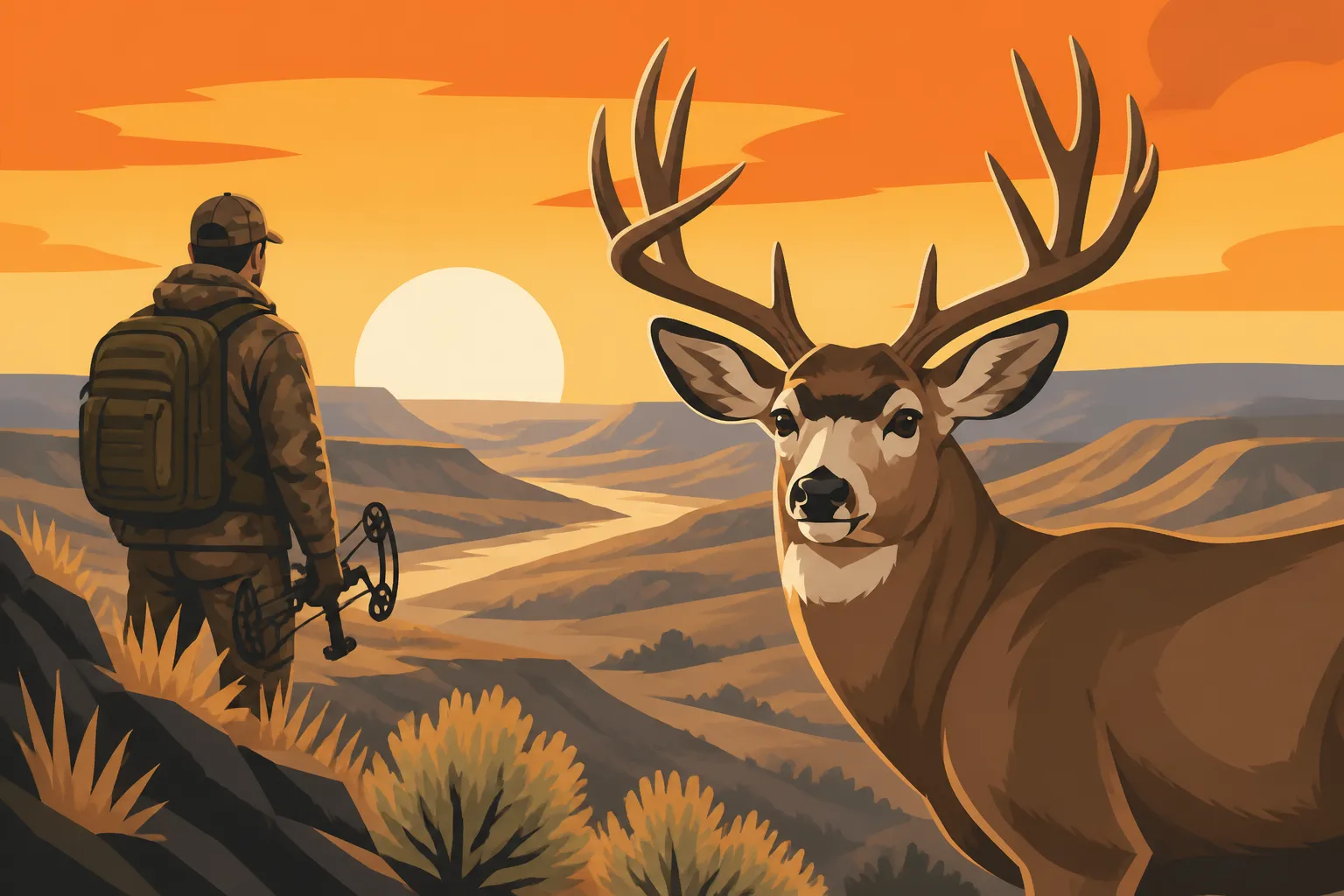
West River mule deer hunting in South Dakota presents a unique and incredibly rewarding challenge, distinct from the dense timber hunting often found elsewhere. The vast, open landscapes, punctuated by deep coulees, rolling sagebrush flats, and rugged badlands, demand a completely different approach. Many hunters, especially those new to this territory, feel overwhelmed by the sheer scale of the country and struggle to locate these elusive animals. This comprehensive guide is designed to help you navigate the intricacies of West River mule deer hunting, from understanding their habitat and behavior to mastering scouting and hunting techniques, ensuring you're well-prepared for a successful and memorable experience.
Understanding the West River Landscape for Mule Deer
The "West River" region of South Dakota is a sprawling expanse west of the Missouri River, a truly wild and captivating territory that’s a world away from the gentler, more agricultural East River. This is where the Great Plains truly begin to flex their muscle, revealing a rugged beauty that shapes every aspect of a mule deer's life. Understanding this unique environment is the cornerstone of any successful hunt here.
Topography and Habitat Types
When you think of West River South Dakota, picture a mosaic of diverse habitats. You've got vast, rolling grasslands that stretch to the horizon, but these aren't flat, monotonous plains. They're cut by countless draws, coulees, and deep canyons, often referred to as "breaks." These features are critical. The badlands formations, particularly around areas like the Badlands National Park and the surrounding Buffalo Gap National Grassland, offer incredibly rugged, broken terrain with steep slopes, eroded buttes, and hidden pockets. Further north and west, the Slim Buttes and Cave Hills areas provide timbered islands of ponderosa pine, which offer different cover dynamics. In between, you'll find sagebrush flats, mixed-grass prairies, and scattered cedar thickets, particularly along the edges of the breaks or within larger coulees. Mule deer, being creatures of broken country, thrive in this environment. They’ll use the deep cuts for bedding, thermal cover from the incessant prairie wind, and escape routes. The mix of sagebrush, various grasses, and forbs provides ample forage, and the varied terrain allows them to disappear with remarkable ease, even in seemingly open country. Truly understanding where West River Mule Deer Live is about appreciating this diverse tapestry of cover.
Water Sources and Their Importance
In a semi-arid landscape like much of West River, water is a precious commodity and often dictates where deer will concentrate, especially during drier periods. While some areas have perennial streams or rivers, many parts rely on intermittent drainages, stock ponds, and natural springs. During the early season, particularly in warmer September and October, deer will often be found within a reasonable distance of a reliable water source. Stock ponds, those man-made depressions designed to hold water for livestock, become absolute magnets for all wildlife, including mule deer. Knowing the location of these ponds, and understanding their reliability based on recent rainfall, can be a game-changer for your scouting and hunting strategy. During exceptionally dry years, the deer might be forced to consolidate near the few remaining water sources, making these areas highly productive but also potentially drawing more hunting pressure. Conversely, after a wet spring, water might be abundant everywhere, spreading the deer out and making them harder to pattern strictly by water. Pay close attention to these critical features when you're scouting, both virtually and on the ground.
Seasonal Changes and Deer Movement
The West River landscape experiences dramatic seasonal shifts, and mule deer movements are directly influenced by these changes. In the early fall, when the season opens, deer are often still in their summer patterns, frequently found higher on the benches and ridges, utilizing the sparse cover for bedding and feeding on lush grasses and forbs. As temperatures drop and the rut approaches in late October and November, their behavior becomes more erratic and focused on breeding. Food sources change too; while early season offers abundant green forage, later in the fall, deer might shift to browsing on woody vegetation or seeking out agricultural fields if they exist nearby. Winter, especially severe South Dakota winters, can force deer into lower elevations, particularly those deep, sheltered coulees and river bottoms that offer protection from brutal winds and heavy snow. Understanding these seasonal migrations and how they impact deer density in certain areas is key. For instance, a coulee that holds no deer in September might be packed with them in December, offering totally different challenges and opportunities for Late-Season Hunting in South Dakota Snow.
Mule Deer Biology and Behavior in South Dakota
To consistently find and successfully hunt West River mule deer, it’s not enough to just know the landscape; you really need to get inside their heads, so to speak. Understanding their innate biology and learned behaviors in this specific environment is crucial for predicting their movements and patterns.
Daily and Seasonal Movement Patterns
Mule deer in the West River country are creatures of habit, but those habits are fluid and heavily influenced by external factors like weather, hunting pressure, and food availability. Generally, they are crepuscular, meaning they are most active at dawn and dusk. During these times, you'll see them moving from bedding areas to feeding grounds, and back again. Their daytime activity, especially outside the rut, often involves bedding down in thick cover, typically on north-facing slopes to escape the sun, or in dense cedar pockets or deep coulees to avoid wind. As the sun begins to dip, they'll often emerge from these beds, slowly working their way towards foraging areas. During the middle of the day, particularly during warm weather, they might still move short distances to re-bed or grab a quick bite to eat, but these movements are usually minimal. However, during the rut, all bets are off. Bucks will be on their feet much more frequently, cruising for does, and their daytime movement can be extensive and unpredictable. This makes for exciting hunting, but also requires vigilance throughout the entire day.
Rut Behavior and Timing
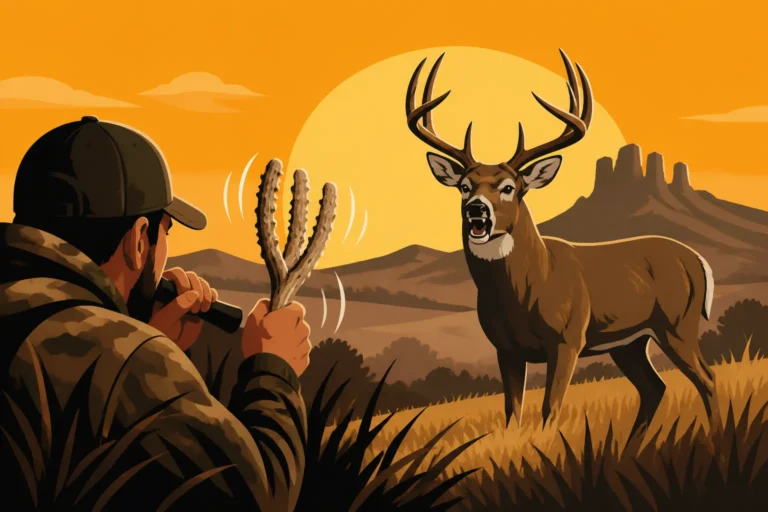
The mule deer rut in South Dakota’s West River region typically peaks in mid to late November, though some pre-rut activity can be observed starting in late October. This is a period of intense activity for bucks, where their primary focus shifts from feeding to breeding. Big bucks that were incredibly reclusive for most of the year suddenly become much more visible, often covering significant ground in search of does. You might observe them chasing does, sparring with other bucks, or simply "cruising" along prominent ridgelines or through wide-open country. This is also when you’re more likely to see multiple deer together, as bucks will gather small harems of does. Understanding the dynamics of the rut is critical for effective hunting. If you're hunting during this period, focus on areas where does are likely to be found, as the bucks will follow them. This could mean watching traditional feeding areas, prominent bedding cover, or even river bottom areas where does might congregate. Utilizing tactics like rattling and grunting can also be effective during this time, as bucks are highly responsive to anything that sounds like a rival or a receptive doe.
Foraging and Bedding Habits
Mule deer are primarily browsers, and their diet in West River country is quite varied, adapting to what's available seasonally. They'll feed on a wide array of forbs, grasses, and the leaves and twigs of shrubs like sagebrush, buckbrush, and sumac. Identifying these key forage plants can help you pinpoint feeding areas. Often, these will be on benches, along coulee edges, or on slopes with good sun exposure that allow for palatable growth. As for bedding, mule deer are masters of using topography to their advantage. They prefer beds that offer good visibility of their surroundings, allowing them to detect danger from a distance, while also providing concealment. North-facing slopes or the lee side of ridges offer excellent thermal regulation, protecting them from both sun and wind. They will often bed just below a crest, giving them a commanding view downhill while remaining hidden from above. Deep coulees with thick shrubbery or scattered cedars also serve as prime bedding locations, offering both visual cover and protection from the elements. When you're glassing, always pay close attention to these types of terrain features; chances are, a West River buck is tucked away there, watching the world go by.
Scouting Strategies for West River Bucks
Hunting mule deer in the expansive West River country is as much about finding the deer as it is about hunting them. Effective scouting, both from the comfort of your home and boots-on-the-ground, is absolutely essential. You can't just drive around hoping to spot a monster buck; you need a strategic approach.
E-Scouting and Topographical Maps
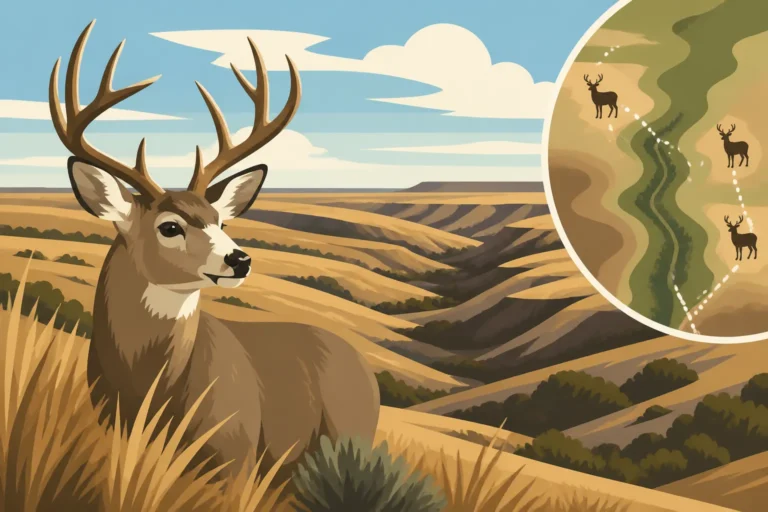
Before you ever set foot in South Dakota, your scouting should begin with e-scouting. This involves using online mapping tools, satellite imagery, and topographical maps to virtually explore your hunting units. Platforms like GoHunt are invaluable for this, offering detailed terrain features, public land boundaries, and satellite views that reveal hidden draws, potential water sources, and heavy cover that might not be obvious from a ground-level perspective. Look for patterns: where do the coulees converge? Are there isolated pockets of thick cover surrounded by open prairie? Which ridges offer good vantage points for glassing? Pay attention to pinch points, potential travel corridors between bedding and feeding areas, and any areas that offer unique features like rocky outcrops or deep cuts that could hold deer. You can also utilize layers that show vegetation types, which can help predict where deer will find preferred forage. Mark potential glassing points and access routes, especially when considering E-Scouting Walk-In Areas Before the Season A few hours spent meticulously analyzing maps at home can save you days of aimless wandering in the field.
Pre-Season Field Reconnaissance
While e-scouting is powerful, nothing replaces actual boots-on-the-ground reconnaissance. If possible, a pre-season trip to your chosen hunting area can be incredibly beneficial. This isn't about hunting; it's about learning the land. Drive the roads, hike into promising areas you identified during e-scouting, and get a feel for the scale and intricacies of the terrain. Look for deer sign: tracks, rubs, scrapes, and bedding areas. Pay attention to fence crossings and natural funnels that deer might use. This is also the time to identify good access points for different wind directions, and note any potential obstacles like uncrossable fences or private land boundaries. Walking key ridgelines and glassing the terrain, much like you would during the hunt, can confirm your e-scouting hypotheses and give you a critical advantage. Even if you can't make a dedicated scouting trip, arriving a day or two early before the season opens to do some field recon will significantly increase your chances of success.
Reading Sign and Identifying Travel Corridors
Mule deer leave clues everywhere if you know how to read them. Tracks are the most obvious sign; fresh tracks indicate recent activity. Pay attention to the size of the tracks—larger, splayed tracks can often indicate a mature buck. Droppings can also tell you about recent activity and diet. Rubs (where bucks rub their antlers on trees or shrubs) and scrapes (areas where bucks paw the ground and deposit scent) are clear indicators of buck activity, especially as the rut approaches. While rubs are less common in the open prairie, they can be found on scattered cedars or small brush patches. Bedding areas, often found in sheltered pockets or on sun-drenched slopes, will have matted grass or impressions in the soil.
More importantly, focus on identifying travel corridors. These are the natural pathways deer use to move between bedding, feeding, and water. These can be faint trails along the bottom of a coulee, game trails cutting across a flat, or paths through a brush line. Deer will naturally use the path of least resistance, but also one that offers cover or allows them to stay out of sight. A prominent ridge that connects two draws, a small saddle between hills, or a narrow strip of cover through open ground are all potential travel corridors. Look for the accumulation of tracks and droppings in these areas. Understanding these routes is critical for successful Spot-and-Stalk Antelope Hunting on Open Prairie, and it's no different for West River mule deer.
Hunting Methods: Spot-and-Stalk Techniques
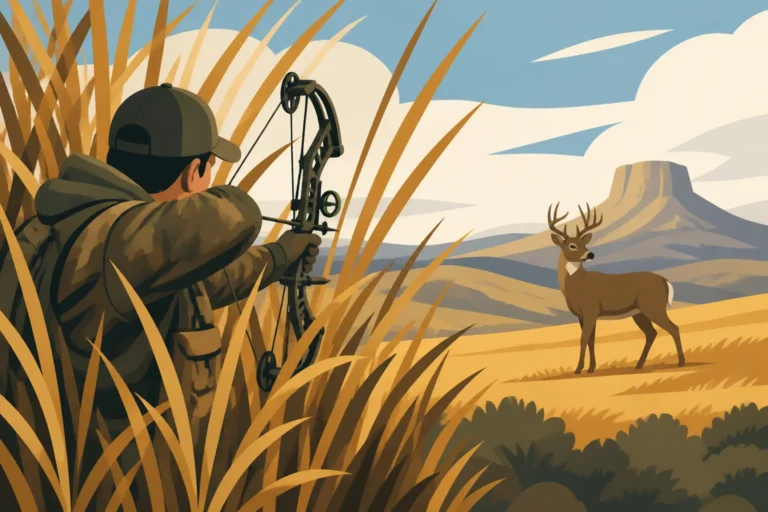
Mule deer hunting in West River South Dakota is synonymous with the spot-and-stalk method. Unlike hunting whitetails in dense forests, you'll spend most of your time glassing vast expanses, trying to locate a buck, and then meticulously planning and executing a stalk to get within shooting range. It's a game of patience, stealth, and calculated movements.
Glassing for Deer on Open Prairies
Effective glassing is arguably the most critical skill for West River mule deer hunting. You'll spend hours, often days, behind your binoculars or spotting scope. Find a high vantage point that offers expansive views of coulees, draws, and ridges. Use your GoHunt topo maps to pick out these strategic spots. Start glassing just before first light and continue through the morning, and again in the late afternoon. Don't just scan; grid the landscape methodically. Divide the terrain into small sections and scrutinize each one. Look for horizontal lines, patches of contrasting color, or anything that just "doesn't quite belong." Mule deer often blend in incredibly well, so you might only spot a flicker of an ear, a patch of antler, or the dark shadow of a bedded deer. A quality spotting scope, like those from Vortex or Kowa, with a sturdy tripod, is an absolute necessity for picking apart distant hillsides. When you spot something, don't immediately drop your glass; study it to confirm it's a deer, and if possible, evaluate its size. Often, what looks like a small doe at 2,000 yards turns into a decent buck at 1,000 yards under closer inspection. For more on this, check out Glassing South Dakota Breaks at First Light.
Executing a Successful Stalk
Once you've spotted a buck and decided to make a move, the real challenge begins. A successful stalk is a careful chess match against the deer's senses and the terrain. First, analyze the terrain between you and the buck. Identify any cover that can conceal your approach: draws, washes, ridges, or even isolated clumps of sagebrush. Your goal is to get within comfortable shooting range, typically 300-400 yards or less, while remaining completely undetected. This often means taking a circuitous route, sometimes even moving away from the deer initially to get into better cover. Use every fold in the ground, every bush, and every rock to your advantage. Move slowly, deliberately, and quietly. Avoid making sudden movements or sounds. If the deer raises its head or seems agitated, freeze immediately and wait for it to settle down. This is where patience truly pays off. Remember, the deer has three senses working against you: sight, sound, and smell. You must defeat all three. For a deeper dive, consider Stalking a Bedded Mule Deer Buck.
Wind Direction and Scent Control
Of the three senses, wind direction is usually the hardest to consistently manage, and arguably the most crucial. Mule deer have an incredible sense of smell, and if they catch your scent, the stalk is over. Always, and I mean always, approach a deer with the wind in your face or quartering across your path, never at your back. Before starting a stalk, check the wind constantly using a wind checker. Even a slight shift can ruin an otherwise perfect approach. If the wind isn't right, you have two choices: find a different approach or abandon the stalk and try again later or elsewhere. No amount of scent-eliminating spray or special clothing will entirely mask a hunter's odor if the wind is blowing it directly to the deer. Therefore, understanding Wind Direction on a Prairie Stalk, and having a strategy for dealing with unpredictable gusts, is non-negotiable. Beyond wind, personal scent control, while perhaps less critical than wind in open country, still helps. Shower with scent-free soap, wash your hunting clothes in scent-free detergent, and store them in airtight bags. While these measures won't overcome a direct downwind approach, they can help in marginal situations or when the wind swirls unexpectedly.
Rifle, Optics, and Gear for West River Hunting
Hunting West River mule deer is an equipment-intensive endeavor, and the vast, open terrain dictates specific choices for your rifle, optics, and other essential gear. You need reliable tools that can perform under challenging conditions and at extended ranges.
Caliber and Ammunition Choices
The wide-open spaces of West River often mean longer shots than you might be accustomed to in more timbered environments. For this reason, flat-shooting cartridges with good energy retention are highly favored. Popular choices often include the .270 Winchester, .30-06 Springfield, 7mm Remington Magnum, and .300 Winchester Magnum. Newer cartridges like the 6.5 Creedmoor, 6.5 PRC, and .300 PRC have also gained significant traction due to their excellent ballistic performance. The key is to choose a caliber you are proficient and comfortable shooting accurately out to at least 400-500 yards, as these distances are not uncommon.
| Caliber | Pros | Cons | Typical Effective Range (Deer) |
|---|---|---|---|
| .270 Winchester | Flat trajectory, moderate recoil, readily available ammo | Less energy than magnums at long range | 400-500 yards |
| .30-06 Springfield | Versatile, good knockdown power, common ammo | More rainbow trajectory than flatter rounds | 350-450 yards |
| 6.5 Creedmoor | Excellent accuracy, low recoil, flat trajectory | Less kinetic energy than larger calibers | 500-600 yards |
| 7mm Rem Mag | High velocity, excellent long-range performance | Significant recoil, more expensive ammo | 600+ yards |
| .300 Win Mag | Powerful, good for large deer/elk, flat shooting | Heavy recoil, expensive ammo | 600+ yards |
Whichever caliber you choose, practice, practice, practice! Know your rifle's capabilities and your own limitations. Use high-quality, bonded or monolithic hunting bullets designed for controlled expansion and deep penetration. For more specific advice, consider exploring Rifle Choice for West River Mule Deer.
Optics for Long-Range Visibility
Your optics are your most important tools for hunting West River mule deer. You'll need three main components: binoculars, a spotting scope, and a reliable rifle scope.
- Binoculars: A good pair of 10×42 or 12×50 binoculars are indispensable for general glassing and spotting deer at moderate distances. Brands like Swarovski, Zeiss, Leica, Maven, and Vortex offer excellent clarity and light transmission, which is crucial during low-light conditions at dawn and dusk.
- Spotting Scope: For picking apart distant hillsides and evaluating bucks at ranges beyond what binoculars can manage (often 1000+ yards), a high-quality spotting scope (e.g., 20-60x or 27-60x power) mounted on a sturdy tripod is essential. This allows you to differentiate antlers, judge body size, and confirm whether that tiny speck is indeed a mule deer.
- Rifle Scope: Your rifle scope needs to be robust, reliable, and capable of precise adjustments. Variable power scopes with a magnification range from roughly 3-15x or 4-20x are common. Features like a clear reticle, reliable turrets for dialing elevation, and potentially a ballistic reticle or custom turret designed for your cartridge are highly advantageous for making those longer shots. Leupold, Nightforce, Zeiss, and Vortex all make excellent rifle scopes suitable for this kind of hunting. A rangefinder is also a non-negotiable item, allowing you to accurately determine distance to target.
Essential Gear for the Prairie Hunter
Beyond your firearm and optics, several other pieces of gear are crucial for a comfortable and successful hunt in West River:
- Clothing: Layering is key. South Dakota weather can be highly unpredictable, with warm sunny days quickly turning cold and windy. Pack moisture-wicking base layers, insulating mid-layers, and a waterproof/windproof outer shell. Blaze orange is often required for specific seasons and should always be worn for safety.
- Footwear: Comfortable, durable, and broken-in hiking boots are essential for traversing rugged terrain and covering many miles. Look for good ankle support and waterproof features.
- Backpack: A comfortable day pack is needed to carry water, snacks, extra layers, a first-aid kit, game bags, and your optics. If you're planning to debone a deer in the field, a larger pack with a sturdy frame might be advisable.
- Navigation: While e-scouting tools on your phone or GPS are great, always carry a physical map and compass as a backup, especially in areas with limited cell service. GoHunt apps with offline map capabilities are invaluable here.
- Shooting Sticks/Bipod: These are essential for stable shooting in the open prairie. Prone shots are common, but uneven terrain or tall grass might require you to shoot from a kneeling or sitting position, where sticks or a bipod provide crucial stability.
- Water and Food: Pack plenty of water, more than you think you’ll need, and high-energy snacks. Dehydration can quickly become a serious issue in the dry, windy environment.
- Game Bags: If you're successful, you'll need sturdy game bags to protect the meat from dirt, insects, and quickly cool it down.
Shot Placement and Post-Shot Protocol
The moment of truth arrives when you've successfully closed the distance on a West River mule deer. What happens next, from shot placement to recovery, is critical for an ethical and successful harvest.
Ethical Shot Placement on Mule Deer
Ethical hunting demands a clean, humane kill. For mule deer, the primary target area is the "kill zone" — the vital organs including the heart and lungs. This area is located just behind the deer's shoulder. A broadside shot, aiming directly through the middle of the chest, slightly above the elbow of the front leg, is generally considered the ideal shot. This shot will typically pass through both lungs and potentially the heart, leading to a quick and humane death. Quartering-away shots can also be effective, aiming to penetrate the vitals and exit through the opposite shoulder. However, avoid steep quartering-to shots, as these present a small target area to the vitals and a high risk of wounding. Head and neck shots are generally discouraged by most hunters due to the small target area and the high probability of wounding if not perfectly executed. Before the hunt, spend time at the range practicing different shooting positions (prone, kneeling, sitting with sticks) to ensure you can confidently place a shot when the opportunity arises.
Following Up a Marginal Shot
Even the most experienced hunters can occasionally make a less-than-perfect shot. If you suspect a marginal hit – perhaps the deer didn't react as expected, or the shot felt off – the protocol is clear: give the deer time. Do not immediately rush in. If you suspect a gut shot or a leg hit, backing off for several hours, even overnight if conditions allow (cool temperatures are key), significantly increases your chances of recovery. A gut-shot deer, if pushed, can travel for miles, making recovery nearly impossible. If left alone, it will often bed down nearby and stiffen up.
Before you begin tracking, take a moment to mark the exact spot where the deer was standing when you shot, and the last place you saw it. Look for any immediate signs of a hit: blood, hair, or bone fragments. When you start tracking, move slowly and methodically. Look for blood, broken branches, disturbed ground, or other signs of passage. For more on this challenging but vital skill, refer to Blood Trailing Through Prairie Cover. If you lose the trail, expand your search in concentric circles from the last known sign. Having a hunting partner to help with the grid search can be invaluable.
Field Dressing and Meat Care in Remote Areas
Once you've recovered your mule deer, proper field dressing and meat care are paramount, especially in the remote and often warm conditions of early season West River. The goal is to cool the meat down as quickly as possible to prevent spoilage. Immediately after the kill, field dress the deer. This involves removing all internal organs to allow air to circulate and the body cavity to cool. If you're far from your vehicle, you may need to quarter the deer in the field. This means breaking the deer down into its four primal quarters, backstraps, and tenderloins, making it much easier to pack out. Use good quality game bags to protect the meat from dirt, insects, and flies.
In warm weather, consider taking extra steps:
- Get the hide off: Removing the hide helps the meat cool even faster, exposing it directly to the air.
- Elevate the carcass/quarters: If possible, hang the quarters from a tree or prop them up on rocks to allow air circulation all around.
- Pack out quickly: Get the meat to a cooler with ice as soon as possible. Never let quarters sit directly on ice or water; keep them elevated on grates or in sealed bags to prevent waterlogging. For handling meat in warm conditions, practical advice from Getting Meat Cooled in Warm Weather, or even Field Dressing an Antelope Fast, can be highly relevant.
Dealing with Hunting Pressure and Public Land Access
Hunting West River mule deer often means hunting public land, whether it’s vast National Grasslands or smaller Walk-In Areas. With increasing hunter numbers, navigating pressure and understanding access rules are critical for a successful and ethical experience.
Finding Secluded Spots on Public Lands
Public lands in West River South Dakota, while extensive, can still see significant hunting pressure, particularly during opening weekend and peak rut. The key to finding secluded spots is simple, but often challenging in execution: go where others aren't willing to go. This typically means walking further, hiking into steeper or more rugged terrain, or accessing areas that are less obvious from main roads.
- Walk Deep: Utilize the extensive tracts of National Grasslands (like Buffalo Gap or Fort Pierre) or large Block Management Areas (BMAs) where you can hike miles away from vehicle access. Most hunters won't venture more than a mile or two from their truck.
- Target Rough Terrain: Those deep, gnarly coulees and badlands breaks that look intimidating on a map often hold bucks that have been pushed out of easier-to-access areas. They offer plenty of escape cover and seclusion.
- Utilize E-Scouting: Before you go, use your mapping apps, perhaps from GoHunt, to identify "dead ends" or areas that look difficult to access, but which might provide a secluded sanctuary. Look for areas with limited road frontage, or those surrounded by private land but with a small public access point. Understanding Hunting Pressure Patterns on Walk-In Areas, and knowing when and where crowds gather, is a big part of this strategy.
Managing Other Hunters in the Field
Encountering other hunters on public land is an almost inevitable part of West River hunting. How you manage these encounters can impact your hunt and everyone else's.
- Be Polite and Respectful: A simple wave, a nod, or a friendly "Good morning" goes a long way. Remember, everyone is out there for the same reason.
- Communicate When Necessary: If you're stalking a deer and see another hunter heading in the same direction, a quiet, non-confrontational conversation can prevent both parties from ruining a potential opportunity. "Hey, just letting you know, I've got a buck spotted down in that draw and I'm trying to work on him."
- Adjust Your Plans: Sometimes, the best course of action is to simply adjust your plans if you encounter another party already working an area. There's plenty of country out there, and pushing deer into another hunter's lap or risking a dangerous situation isn't worth it. Move to your second or third planned spot.
- Avoid "Sky-Lining": When moving across ridges, stay below the crest to avoid silhouetting yourself, which could spook game and also make you visible to other hunters who might mistake you for an animal.
- Parking Away From the Cover You Hunt: This simple tactic can create a sense of remoteness even on pressured lands. Park legally, but perhaps a bit further down the road from the most obvious entry point to a promising looking draw.
Understanding South Dakota's Access Rules
South Dakota has a variety of public access programs, and understanding the nuances of each is essential.
- Walk-In Areas (WIAs): These are private lands leased by the South Dakota Game, Fish and Parks (GFP) for public hunting access. As the name implies, access is typically foot traffic only. These areas are signed with distinctive yellow "Walk-In Area" signs. Make sure to consult the annual Public Hunting Atlas (available online and in print) for WIA locations and specific rules. It's crucial to know that while you can walk in, driving on a South Dakota Walk-In Area is typically prohibited.
- Game Production Areas (GPAs): These are lands owned and managed by the GFP specifically for wildlife habitat and public hunting. They are generally open for all legal hunting seasons.
- National Grasslands: Managed by the U.S. Forest Service, these vast tracts (e.g., Buffalo Gap, Fort Pierre, Grand River) offer extensive public hunting opportunities for deer, antelope, and prairie grouse. Be aware of private inholdings and follow all USFS regulations.
- State Trust Lands/School Lands: Some of these lands are open to public hunting, but rules can vary, and permission might be required. Always consult the GFP atlas or specific county regulations.
- Road Right-of-Way: South Dakota law allows hunting from the public road right-of-way (the ditch and fence line) under specific conditions, as long as you're not shooting across private land without permission, and are a safe distance from dwellings. However, for mule deer, this is generally a low-percentage strategy and often frowned upon ethically. It's always best to be firmly on land where you have clear permission or public access.
The South Dakota Public Hunting Atlas, or using mapping apps like onX Hunt with South Dakota land ownership layers, are indispensable tools for navigating these access points and ensuring you're always hunting legally.
Legal Considerations and Tagging Requirements
Successfully harvesting a West River mule deer means you've completed a significant challenge, but your responsibilities aren't over. Understanding South Dakota's licensing, tagging, and carcass transportation regulations is crucial to ensure a legal and smooth experience after the shot.
South Dakota Mule Deer Licenses and Draws
Hunting mule deer in South Dakota, especially as a nonresident, is largely a draw-based system. South Dakota offers various deer licenses, often separated by East River and West River designations, and by weapon type (archery, rifle, muzzleloader).
- Nonresident Deer Tags: Nonresidents typically apply for specific West River deer units through an annual lottery draw. These units are often buck-only, and draw odds can vary significantly based on the unit and current mule deer populations. Many nonresidents accrue preference points to improve their odds over multiple years. For example, knowing How Many Points to Draw West River Deer, and how many points you can accumulate in a year, is vital for long-term planning. The application deadlines are strict, so make sure you mark your calendar for the South Dakota Deer Application Deadline.
- Resident Deer Tags: South Dakota residents have more tag options and better draw odds, often with general season licenses available over the counter or with higher success rates in the draw.
It's imperative to visit the South Dakota Game, Fish and Parks (GFP) website well in advance of the season to review current regulations, license types, application periods, and draw odds. Regulations can change annually.
Tagging and Transporting Your Harvest
Once you've harvested a mule deer, legal tagging procedures must be followed immediately.
- Tagging: Your deer license will come with a physical tag. You must complete this tag (date of kill, unit, etc.) and attach it to the animal as specified by GFP regulations (usually to the antler or leg) before moving the carcass. This tag must remain with the deer until it reaches its final destination for processing or consumption.
- Transportation: When transporting a deer, it must be visible from the outside of the vehicle or covered in a way that doesn't conceal the attached tag. Ensure you have all necessary documentation with you, including your hunting license and tag. If you are taking the deer to a processor, the tag remains with the meat. If you're transporting it across state lines, be aware of specific regulations regarding carcass parts (especially concerning Chronic Wasting Disease). For general advice on getting large game out of tough terrain, information from Getting a Deer Out of a South Dakota Coulee, might be helpful.
CWD and Carcass Movement Regulations
Chronic Wasting Disease (CWD) is a serious concern for deer and elk populations across North America, including South Dakota. To help prevent its spread, South Dakota has specific carcass transportation regulations:
- Carcass Restrictions: Generally, you cannot transport whole carcasses or specific high-risk parts (brain, spinal cord, lymph nodes, etc.) out of certain CWD-positive areas or across state lines. The allowed parts typically include deboned meat, quarters with no spinal column or brain material attached, hides without the head, clean skull plates, and antlers.
- Testing: While mandatory CWD testing for hunters might not be required in all units, GFP often has voluntary testing stations or opportunities to submit samples. Participating in these efforts helps wildlife managers monitor the disease.
- Check Before You Go: These regulations can change frequently. Always consult the most current South Dakota GFP hunting regulations and specific rules for any units you plan to hunt, especially if you intend to transport your deer out of state. Contact your home state's wildlife agency as well, as they may have inbound restrictions on deer carcasses from South Dakota. Compliance with these rules protects wildlife and ensures you don't face legal penalties.
Disclaimer
The information provided in this guide is for general informational purposes only. Hunting regulations, seasons, and licensing requirements in South Dakota are subject to change. It is the responsibility of every hunter to consult the most current South Dakota Game, Fish and Parks (GFP) regulations and laws before planning and embarking on any hunting trip. Always prioritize safety, ethical hunting practices, and respect for wildlife and private landowners.