South Dakota Record Book Whitetails
The dream of chasing a record book whitetail in South Dakota is a powerful one, often fraught with the challenge of finding those elusive, mature bucks in a landscape known for its sheer volume of deer. It's easy to feel overwhelmed by the vastness of the prairie and timber, wondering where to even begin looking for that truly exceptional animal. This guide is dedicated to helping you understand what it takes to find, harvest, and officially recognize a South Dakota whitetail that truly stands out from the herd, walking you through the habitat, the scoring process, and the strategies for success.
Understanding South Dakota's Whitetail Potential
South Dakota might be world-renowned for its pheasants, but don't let that overshadow the incredible whitetail hunting opportunities available across the state. From the river bottoms of the east to the breaks of the west, big bucks roam. However, knowing where to focus your efforts and what factors contribute to antler growth can make all the difference in turning a good hunt into a legendary one.
The Allure of East River vs. West River Whitetails
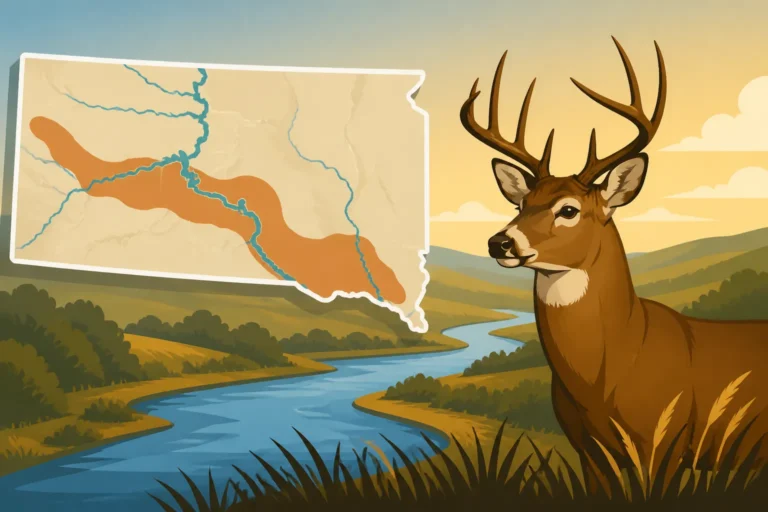
When people talk about South Dakota whitetails, they often implicitly divide the state into "East River" and "West River," referring to the Missouri River as the dividing line. Both regions offer fantastic hunting, but they present very different challenges and types of deer. East River whitetails often thrive in agricultural landscapes, utilizing shelterbelts, creek bottoms, and dense pockets of cover amidst corn and soybean fields. Here, deer can grow exceptionally large due to abundant food sources. You'll find these deer hugging the timbered edges of the James River or tucked deep into sloughs. Hunting in these areas often involves shorter drives, more broken cover, and sometimes navigating significant hunting pressure during peak times.
On the West River side, particularly in the river breaks and more rugged terrain, whitetails tend to be tougher, more self-reliant animals that have adapted to a drier, more open environment. While the overall deer densities might be lower in some areas compared to the fertile East River, the bucks that survive and thrive here often possess incredible resilience and robust genetics. You might not see as many deer per square mile, but the potential for a truly ancient, wide-racked buck is very real. These hunts often demand more glassing, longer walks, and a greater emphasis on using terrain to your advantage. Understanding Whitetail Density Along River Corridors can help you pinpoint high-potential areas, whether you're focused on the Missouri River or smaller tributaries.
Key Factors for Antler Growth
A record book whitetail isn't just about luck; it's a combination of crucial factors that align perfectly over several years. The primary drivers behind impressive antler growth are nutrition, age, and genetics. Good nutrition means consistent access to high-quality forage throughout the year, which helps a buck reach its full potential. South Dakota's agricultural bounty, especially in the eastern half of the state, provides a rich diet of corn, soybeans, and alfalfa that fuels antler development. Even in the West River country, pockets of lush browse and forbs within coulees and river bottoms provide critical nutrients.
Age is arguably the most critical factor. A buck needs to reach maturity – typically 4.5 years old or older – to fully express its antler genetics. Younger bucks simply haven't had enough time for their bodies to allocate the necessary resources to growing truly massive racks. This is why disciplined herd management, even on private land, often focuses on letting young bucks walk to mature. Finally, genetics play a role. While you can't control the genetics of wild deer, certain regions and populations simply have a higher genetic predisposition for larger antlers. This is why areas known for producing big deer continue to do so, year after year. For those specifically targeting larger bucks, understanding Antler Size on West River Bucks can offer valuable insights into what to expect from deer in different regions.
The Official Scorecard: Boone and Crockett, Pope and Young, and South Dakota's Records
Once you've set your sights on a potential record book whitetail, it’s important to understand what makes a deer qualify and how the official scoring systems work. It's not just about how big it looks on the hoof; there's a precise methodology involved to truly determine its place in the record books.
What Qualifies a Record Book Whitetail
When hunters talk about "record book" deer, they are usually referring to animals that meet the minimum scoring criteria for organizations like Boone and Crockett (for firearms and muzzleloader harvests) or Pope and Young (for archery harvests). These organizations maintain meticulous records of North American big game, serving as benchmarks for exceptional trophies. For whitetails, there are two main categories: typical and non-typical. A typical whitetail has symmetrical antlers with points growing in a standard pattern from the main beams. Deductions are made for any abnormal points or asymmetry. A non-typical whitetail, on the other hand, embraces those unique, often impressive, abnormal points, drops, and clusters. While deductions for asymmetry still apply to the typical frame, the non-typical points add to the overall score.
South Dakota also has its own state record book program, often managed by the state wildlife agency or a hunter's association, which might have slightly different or additional categories, sometimes recognizing animals that don't quite make the national minimums but are exceptional for the state. Knowing these distinctions is key, as a buck that might not hit the national Boone and Crockett minimum could still be a state record. This is a common aspect of record keeping, and understanding the nuances can sometimes be the difference between a recognized trophy and one that isn't.
The Scoring Process
The scoring process is highly standardized to ensure fairness and consistency across all entries. After a 60-day drying period (to allow for any shrinkage in the antlers), an official measurer will take a series of measurements. These include the length of the main beams, the length of each typical point, four circumference measurements along each main beam, and the inside spread. For non-typical antlers, all abnormal points are measured and added to the score.
The "net score" for a typical antler is calculated by subtracting any deductions for asymmetry from the gross score. For non-typical antlers, the non-typical points are added to the gross typical frame score, creating a higher overall score, and then deductions for asymmetry on the typical frame are still applied. It's a precise, sometimes intricate process. For example, if your buck has a particularly unique drop tine, that will contribute to a higher non-typical score. Many hunters spend years trying to understand Boone and Crockett Minimums for Pronghorn and other species, so it’s worth familiarizing yourself with these details for whitetails too.
Here's a simplified look at the minimum entry scores for adult whitetails:
| Record Book / Category | Minimum Net Score (Typical) | Minimum Net Score (Non-Typical) | Weapon Type |
|---|---|---|---|
| Boone and Crockett | 170 | 195 | Firearms, Muzzleloader |
| Pope and Young | 125 | 155 | Archery |
| South Dakota State (TBD) | Check state regulations | Check state regulations | All lawful methods |
Note: Always consult the official scoring organization's current rules and South Dakota Game, Fish and Parks for the most up-to-date minimums and requirements for their specific record programs, as these can be updated.
Strategies for Pursuing a South Dakota Record Book Whitetail
Hunting a record book whitetail isn't just about being in the right place at the right time; it's about meticulous preparation, understanding deer behavior, and applying smart hunting tactics. South Dakota offers diverse terrain, and tailoring your approach to the specific area you're hunting is paramount.
Scouting for Giants
The hunt for a trophy whitetail often begins long before opening day. Effective scouting is your most powerful tool. Start with digital reconnaissance using mapping tools like GoHunt, which can help you identify potential habitat features such as river bends, shelterbelts, pinch points, and secluded pockets of cover that older, wiser bucks prefer. Look for areas with diverse forage and dense bedding cover, especially near water sources in drier West River landscapes. Pay close attention to public land boundaries and access points, as sometimes the best bucks will utilize private land during the day and public land in low-light conditions.
Once you have a few promising locations marked, it's time for boots on the ground, but be mindful of your scent and impact. Look for rub lines, which can indicate the travel corridors of mature bucks. Scrapes, especially large primary scrapes, are like a buck's calling card. Most importantly, identify mature buck sign: large tracks, heavy-bodied deer sightings, and shed antlers from previous seasons. Setting up trail cameras in key areas, particularly near food sources, pinch points, or waterholes, can help you inventory the local deer population and identify specific bucks, track their movements, and understand How Buck Movement Changes Through the Rut. Utilizing tools for E-Scouting Walk-In Areas Before the Season is a great way to narrow down your focus, saving valuable time and effort in the field.
Hunting Tactics for Mature Bucks
Harvesting a record book whitetail demands patience, discipline, and often, an adaptive hunting style. Mature bucks are incredibly wary and learn quickly from pressure. During the early season, focusing on food sources near bedding areas, especially during low-light hours, can be productive. As the rut approaches and peaks, bucks become more active and less cautious, making this a prime window for a trophy. Understanding When the Rut Peaks in South Dakota is crucial for timing your hunt. Bucks will be cruising for does, actively checking scrapes, and responding to calls.
For East River hunting, especially in agricultural areas, Treestand Setups on Narrow River Timber or other strategic ambush points near cornfields or brushy creek bottoms can be incredibly effective. Consider using ground blinds where natural cover allows, especially if you're hunting smaller, isolated pockets of cover. In West River country, where the landscape is more open, longer-range glassing from elevated positions, followed by a careful stalk, is often the most productive method. Patience is key; it might take several days of sitting in a stand or glassing from a ridge before that elusive buck makes a mistake. Minimize your scent, enter and exit stands quietly, and always play the wind. Remember, a single mistake can educate a mature buck for the entire season. For those hunting the large river systems, specific tactics for Hunting Whitetails in South Dakota's Missouri River Timber might be invaluable.
After the Shot: Preserving Your Trophy and Reporting It
The moment you harvest a deer that you believe might be a record book contender is incredibly exciting, but the work isn't over. Proper field care is essential to preserve the rack and cape, ensuring your trophy can be accurately measured and mounted.
Field Care for Record Book Potential
Once your buck is down, immediate and careful field care is paramount, especially if you plan to get the antlers officially scored and the deer mounted. First, focus on getting the deer field dressed quickly to cool the meat, which is vital for quality, particularly in warm October weather. Field Dressing in Warm October Weather is a skill every hunter needs to master. Once the deer is field dressed, pay close attention to the cape if you plan a shoulder mount. Make a generous cut far down the chest, allowing plenty of hide for the taxidermist. Avoid cutting into the brisket or neck area that would be used for the mount.
Most importantly, be extremely careful with the skull plate and antlers. Do not cut through the skull plate; rather, skin around it, leaving plenty of hide attached to the skull to protect the antler bases. Avoid dragging the deer directly by the antlers, which can damage points or rub off burrs. If you need to move the deer, pull it by the legs or neck, or ideally, get it onto a cart or ATV. Keep the antlers out of the dirt and free from damage. After reaching your vehicle, ensure the entire animal, especially the cape and head, is kept cool. Getting Meat Cooled in Warm Weather applies to the cape as well to prevent hair slippage.
Submitting Your Whitetail for Official Scoring
If you believe your buck has the potential to make the record book, the first step after the hunt and proper field care is to initiate the 60-day drying period. This allows the antlers to stabilize and prevents shrinkage from affecting the final score. During this time, you can reach out to official measurers. Many states, including South Dakota, have certified scorers listed on the Boone and Crockett and Pope and Young websites, as well as through their own state record programs. You can find a local taxidermist who might also be a certified scorer, or they can direct you to one. For those in South Dakota looking for taxidermy, knowing Taxidermists in South Dakota Hunting Towns can be a great starting point.
When the 60 days are up, schedule an appointment with a certified measurer. They will meticulously measure all aspects of the antlers, just as described previously. Be present during the scoring process if possible, so you can learn and understand how the measurements are taken. After the score is determined, they will guide you through the submission process, which usually involves filling out forms, providing harvest details, and potentially sending photos to the respective record keeping organization. If your buck makes the cut, it will be officially recognized, becoming a permanent part of the prestigious record books. For those wanting a shoulder mount, knowing the precise cuts for Caping a Buck for a Shoulder Mount will save you headaches and ensure a beautiful mount.
Disclaimer
This article is for general informational purposes only and does not constitute professional advice. Laws, prices and regulations vary by location and change over time. Consult a qualified professional for guidance on your specific situation.