Spinning Wing Decoys and Goose Spreads
We've all been there: you've put in the scouting, found the X, and meticulously set out your goose spread, only to watch flock after flock skirt the edges or, worse, flare at 300 yards. Geese, particularly the big Canada geese that frequent South Dakota's fields, are incredibly smart and wary, making it feel like you're playing a high-stakes game of chess. This comprehensive guide will peel back the layers of frustration, showing you exactly how spinning wing decoys and well-thought-out goose spreads can transform those frustrating high flyers into birds cupping their wings right into your lap.
The Magnetic Pull of Spinning Wing Decoys on Wary Geese
It's no secret that geese are visual creatures, and motion in a spread can be the ultimate convincer or the ultimate deterrent. For years, hunters relied on flags and static decoys, but the advent of spinning wing decoys introduced a whole new dimension of realism. These aren't just flashy gadgets; they tap into a goose's primal instinct, mimicking the subtle, lifelike wing beats of birds actively feeding or landing. In the vast, often static landscapes of a South Dakota corn stubble field, that little bit of movement can make all the difference.
Why Spinners Cut Through the Skepticism
Geese, especially those that have seen a few seasons, develop a keen sense for what looks "off." A spread of motionless full-body or shell decoys can look realistic to a passing flock, but it lacks the dynamic energy of a real feeding or resting group. Spinning wing decoys, with their motorized wings rapidly spinning, create a visual cue that shouts "active birds!" This movement, particularly on calm, sunny days when static decoys offer little attraction, creates a highly visible beacon that draws distant birds' attention. It's like a pulsating advertisement for a safe landing zone, making them investigate when they might otherwise pass you by. The flash from the spinning wings catches their eye from incredible distances, even in less than ideal light conditions, and that initial curiosity is what often brings them closer into your range.
Understanding the Different Types of Spinning Wing Decoys
Not all spinning wing decoys are created equal, and knowing the nuances can significantly impact your hunting success. The most common types are full-body spinners and more compact, ground-based or stake-mounted units. Full-body spinners, often resembling a goose in a landing or preening posture, tend to be larger and offer a more substantial profile, contributing to the overall realism of your spread. These might feature realistic feather detailing and come with sturdy bases that can withstand the notorious South Dakota wind.
Then there are the more minimalist designs, like the Mojo Outdoors "Floater" or similar concepts, which are essentially just the spinning wings mounted on a body. These are generally lighter, more portable, and easier to deploy quickly. Some models even feature remote controls, allowing you to turn them on and off as flocks approach, adding another layer of realism by simulating birds taking off or landing. Additionally, there are flapping wing decoys, which offer a different, more sporadic type of motion, mimicking actual wing beats rather than continuous rotation. Each type has its place, and often, a combination works best to create a varied, convincing scene for incoming waterfowl. When you're trying to figure out the Best Way to Push a Cattail Slough, considering what kind of motion might be most effective for wary birds exiting or entering that cover can be a game-changer.
Crafting Effective Goose Spreads with Spinners
Simply tossing a spinning wing decoy into an existing spread isn't enough; true success comes from thoughtfully integrating them into your overall setup. The goal is to create a dynamic, inviting tableau that looks utterly natural to a goose flying overhead. This means paying attention to how they interact with your static decoys, the wind, and your chosen concealment.
Seamlessly Integrating Spinners into Traditional Goose Spreads
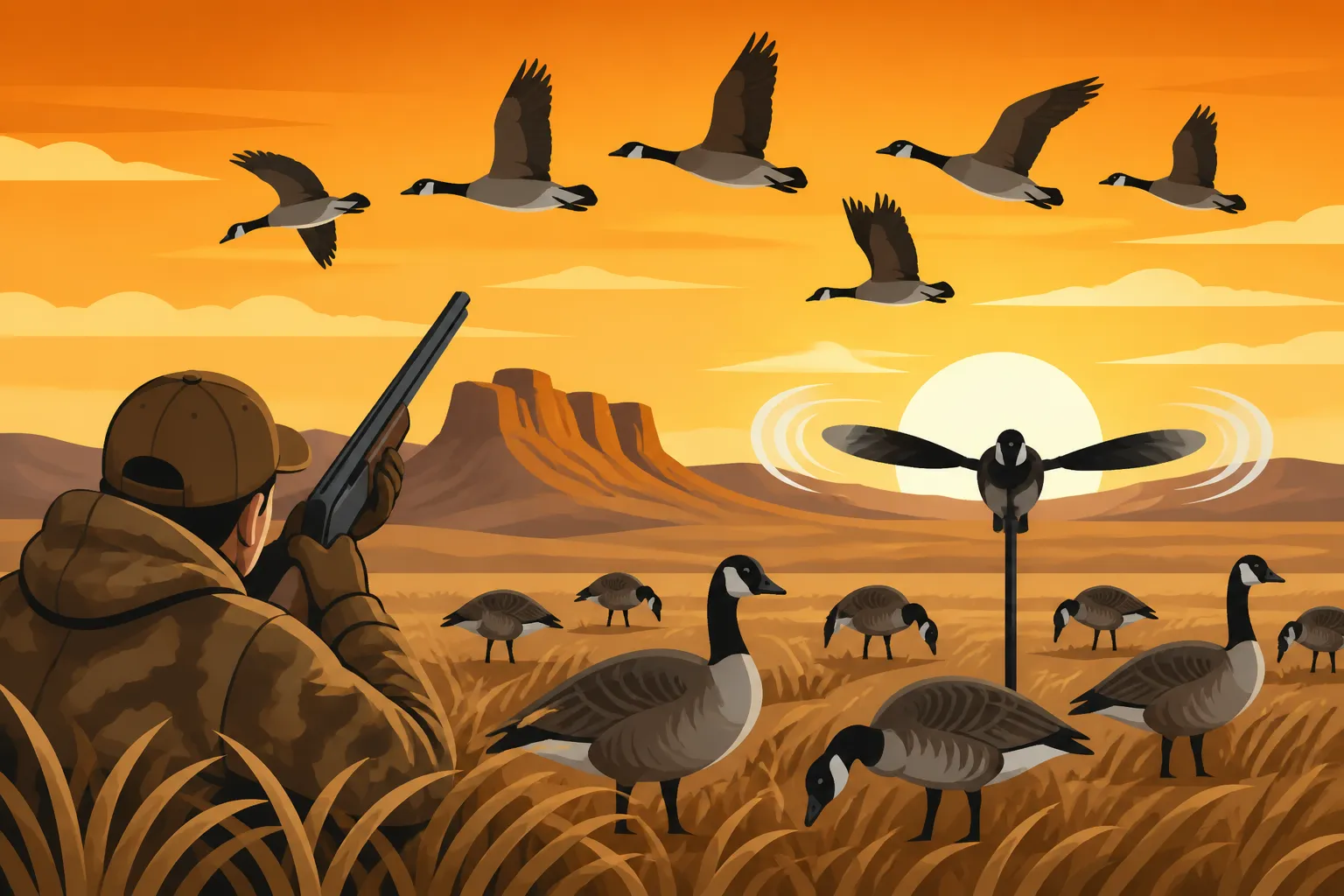
The key to a successful goose spread with spinners is creating harmony, not chaos. A common mistake is placing spinners right in the middle of your landing zone, causing geese to fixate on the unnatural constant motion and potentially flare. Instead, think of your spinners as eye-catchers and confidence builders, strategically positioned on the outer edges or slightly upwind of your primary landing hole. This allows distant geese to spot the motion, get curious, and then commit to the seemingly calm, static "safe zone" you've created in your kill hole.
Consider placing one or two spinners roughly 20-30 yards outside the edge of where you want birds to land. If you're running a main family group cluster of full-body decoys, the spinners should complement, not overpower, that central hub. For hunters working vast agricultural lands, understanding Field Hunting Geese in South Dakota Cut Corn means knowing how best to blend the spinners with the existing field topography and crop residue. Using mapping tools like GoHunt can help you visualize optimal placement relative to field edges, potholes, or subtle rises where you might conceal additional stationary decoys or even a few silhouetted feeders to enhance the illusion of a large, contented flock.
Common Goose Spread Formations Enhanced by Spinning Wings
Different spread formations lend themselves to various hunting scenarios, and spinners can enhance almost all of them.
The "J" or "U" Formation: This is a classic, creating a clear landing strip. Place your main body of decoys in a J or U shape, with the open end facing into the wind where you want the geese to land. Position one or two spinning wing decoys on the outside points of the "J" or "U," especially on the upwind side. Their motion will attract birds from a distance, guiding them towards the open, inviting "mouth" of your spread.
Family Groups or Clusters: Geese often feed in smaller family groups. Instead of one massive blob, try several smaller clusters of 5-7 full-body decoys. Place a spinner or two near the downwind side of one or two of these clusters, slightly offset. This gives the impression of multiple active feeding groups, making your spread look larger and more natural. This works particularly well for Late-Season South Dakota Pheasants in Heavy Cover in fields that also hold geese, as both species tend to bunch up in cold weather.
The "X" or Staging Area: For highly pressured birds, a more spread-out, less dense pattern can be effective. Think of this as a staging area where birds are loafing or just landing. Scatter your decoys more widely. Place a single spinner further out, almost as a lone sentinel, attracting attention from high fliers. As they commit, they'll see the broader spread, which appears less like a tight, suspicious trap. Using GoHunt to identify specific low spots or natural contours in a field can help you plan these subtle, scattered setups, making the most of available concealment for your Layout Blinds on South Dakota Stubble.
| Spinning Wing Decoy Type | Key Feature | Pros | Cons | Ideal Placement |
|---|---|---|---|---|
| Full-Body Spinner | Realistic full-size goose body with spinning wings. | High visibility, realistic profile, good for drawing attention from afar. | Heavier, more bulky, often more expensive. | Upwind, on outer edges of spread, slightly elevated. |
| Wing-Only Spinner | Minimalist body with only spinning wings. | Lightweight, very portable, good battery life. | Less realistic profile up close, might appear less "natural" to wary birds. | Mixed with full-bodies, further out, on the ground or low stake. |
| Flapping Wing Decoy | Wings mimic actual flapping motion, often sporadic. | Highly realistic wing beat, less "mechanical" look. | More mechanical parts, can be delicate, often more expensive. | Close to landing zone, to simulate landing birds, especially in calm wind. |
Tactical Considerations for Deploying Spinners and Spreads in South Dakota
Deploying your spread isn't just about throwing out decoys; it's about making calculated decisions based on the environment, the weather, and the behavior of the birds you're targeting. South Dakota's varied terrain, from wide-open stubble fields to pothole country, demands adaptability.
Harnessing Wind, Sun, and Decoy Placement for Optimal Attraction
The wind is your best friend in goose hunting, dictating how birds will approach and land. Geese, like all aircraft, prefer to land into the wind. Always set your spread so your primary landing zone is directly downwind of your blinds. This forces incoming birds to fly over your decoys and, ideally, right into your shooting lane as they fight the wind to set down.
Spinning wing decoys should be placed where they catch the maximum amount of sunlight. The flash from the wings is a huge attractant. On a sunny morning, position them to reflect the sun towards incoming flight paths. If the sun is at your back, place them upwind and slightly off to the side of your main decoy cluster, allowing their flash to be seen from afar. However, be cautious not to position them directly between you and the incoming birds, as this can silhouette them and look unnatural. Always observe the natural flight path of geese in the area; sometimes, they'll use a particular flyway or terrain feature as a guide, and your spread should reflect that. For more general considerations on how topography influences bird movement, remember that Waterfowl Hunting the South Dakota Prairie involves understanding these subtle land features.
Mastering Concealment and Hunter Blinds
Even the most perfect spread can be ruined by poor concealment. Geese have incredible eyesight. In South Dakota's often treeless prairie landscapes, layout blinds are king. They allow you to hide directly within your spread, giving the birds the illusion that the field is clear of danger. Ensure your blinds are well-brushed in with local vegetation – corn stalks, stubble, prairie grass – whatever matches the field you're hunting. A common mistake is using too little natural cover, leaving a "blob" of dark material in an otherwise light-colored field.
Consider the angle of the sun relative to your blinds. If the sun is in front of the birds as they approach, it will be harder for them to pick out your blinds. However, if the sun is behind them, your blinds will be fully illuminated. Position your blinds strategically, often in a slight "V" shape behind your landing zone, allowing for good shooting angles while minimizing your collective profile. When you're dealing with a consistent breeze, knowing how to achieve Layout Blind Concealment in Stubble is paramount for success, as movement in blinds can easily give away your position.
Adapting to South Dakota's Diverse Field Conditions
South Dakota offers a tapestry of agricultural landscapes, from vast cornfields to soybean stubble, and even winter wheat. Your spread needs to adapt. In tall corn stubble, full-body decoys and spinners on taller stakes might be necessary to ensure visibility. In a freshly cut soybean field, shorter stakes and a more spread-out, low-profile presentation might be better.
Also, be mindful of hunting pressure. Early in the season, geese might be less wary, and a simple spread with a few spinners can work wonders. However, as the season progresses and birds experience more hunting pressure, they become much harder to fool. This is where subtle changes, like rotating your spinner usage (turning them off as birds commit, or only using them intermittently) or adjusting your overall spread density, become critical. Tools like GoHunt can be invaluable here, helping you scout new fields and identify areas with less pressure. Understanding Hunting Pressure Patterns on Walk-In Areas can greatly inform your decisions on how aggressive or subtle your spread needs to be. Sometimes, less is more, especially when targeting late-season, educated birds.
Maximizing Your Goose Hunting Success with Advanced Spreads
Once you've mastered the basics, it's time to refine your approach. Advanced techniques involve not just what you use, but how you use it in conjunction with other hunting skills.
The Synergy of Calling and Spinner Usage
Spinning wing decoys are powerful, but they are not a replacement for good calling. In fact, they work best in conjunction with a skilled caller. Think of the spinner as the visual "hey, look over here!" signal, and your call as the auditory "come on down, it's safe!" invitation. When geese are distant, the flash of the spinner grabs their attention. As they turn towards your spread, your calls become crucial. Use confident, realistic greeting calls, feeding clucks, and moans to seal the deal.
As birds get closer and begin to commit, this is where timing becomes critical. Sometimes, turning off the spinner as birds drop their feet can be beneficial. The sudden cessation of motion can make the spread seem even more natural, as if the 'active' birds have settled in. Other times, especially on calm days, keeping the spinner going adds a continuous level of realism. The best approach often depends on the birds' reaction. Pay close attention to their body language. Are they looking at the spinner? Are they looking at the landing zone? Practice observing and reacting, and you'll soon develop an intuition for when to call loudly, softly, or when to let the decoys do the talking. When scouting new areas, a good understanding of Scouting South Dakota Public Ground Before the Season will help you anticipate bird behavior in those specific locations.
Advanced Spreader Tactics for Pressured Birds
Late in the season, or in areas with heavy hunting pressure, geese become incredibly wary. They've seen it all, and they've learned to avoid anything that looks even slightly out of place. This is where you need to get creative.
Sparse and Natural Spreads: Instead of a dense blob, try spreading your decoys out much more sparsely, mimicking how actual flocks might feed in a heavily grazed or picked-over field. Place your spinners further out from your kill hole, perhaps on the extreme edges of your spread, to act purely as distant attractants. The landing zone itself should be completely devoid of spinners, allowing birds to commit to a seemingly unthreatening open area.
Decoy Mobility and Rotation: Don't be afraid to move your spread throughout the day, or even between hunts. Geese notice patterns. If they've seen the same spread in the same field for several days, they'll become suspicious. Vary your formations, adjust your spinner placement, and even try moving to a different part of the same field if possible. Sometimes, a smaller, tighter spread with just a few extremely realistic full-body decoys and subtle motion from a flapping-wing spinner is more effective than a huge, flashy spread. For Decoy Spreads on a Prairie Pothole, for instance, a few floating spinners can make a huge difference, but over-doing it might spook birds. Also, consider the specific nuances of South Dakota Early Canada Goose Season, as early-season birds might react differently to advanced tactics compared to late-season veterans.
Ultimately, the goal is to make your spread appear as dynamic and natural as possible, adapting to the birds' changing behavior. By understanding the psychology behind spinning wing decoys and integrating them thoughtfully into your spread, you'll significantly increase your odds of a successful goose hunt in the beautiful, challenging landscapes of South Dakota.
Disclaimer
Hunting is an inherently dangerous activity. Always prioritize safety, understand and follow all local, state, and federal hunting regulations, and be familiar with your equipment. This article is for informational purposes only and does not endorse illegal or unsafe hunting practices. Consult the South Dakota Game, Fish and Parks official regulations for the most current and accurate information.