South Dakota Early Canada Goose Season
The anticipation for goose season in South Dakota can be almost unbearable, but sometimes, the traditional fall opener feels a lifetime away. Many hunters face the dilemma of limited time in the busy autumn schedule or simply long to get out earlier, before the deep cold sets in. That's precisely where the South Dakota Early Canada Goose Season steps in, offering a fantastic opportunity to chase those resident birds, hone your skills, and fill your freezer before the main migration even begins. This guide is all about equipping you with the knowledge and tactics to make the most of this unique window.
The Allure of Early Canada Goose Season in South Dakota
There's something uniquely satisfying about hunting Canada geese in the late summer and early fall here in South Dakota. It's a completely different ballgame compared to the later migration pushes, and it presents its own set of challenges and rewards. The weather is often pleasant, the crops are still standing or just coming off, and the local birds are usually in full swing, creating exciting opportunities.
Resident Birds and Local Opportunities
Unlike the later seasons when we're largely focused on migratory birds passing through, the early Canada goose season is primarily about targeting our local, resident populations. These are the birds that nested right here in South Dakota, often close to our towns and cities, or on various sloughs and reservoirs across the prairie. They're often less wary than their highly pressured migratory cousins, at least initially, though they get smart quickly once the season opens.
This focus on resident birds means you're often hunting over different types of habitat than you might later in the year. Instead of vast fields of cut corn that become primary feed sources for migrants, you might find yourself hunting smaller grain fields, pastures, or even golf courses and urban fringes (where allowed, of course). The patterns are typically more localized, tied to specific roosting water and nearby feeding areas. It’s a chance to really understand the daily movements of geese in a smaller, more intimate setting, and it can be incredibly rewarding when you dial into their routines. Plus, getting out earlier means you're often dealing with smaller flocks, which can sometimes be easier to decoy than a monstrous wave of thousands.
Enjoying Milder Weather Conditions
Let's be honest, hunting in South Dakota can often mean battling some pretty harsh conditions, especially later in the fall and winter. We've all shivered in layout blinds, trying to keep our fingers warm enough to work a call, or pushed through deep snow in search of birds. The early Canada goose season, typically running from early September into mid-September, offers a welcome reprieve from that.
The weather is generally much milder, often still feeling like late summer. This translates to more comfortable hunts, less bulky clothing, and a generally more enjoyable experience for both hunters and their dogs. You won't be breaking ice on decoys or worrying about frostbite, which can make a big difference in the overall mood of the hunt. However, milder weather also brings its own set of challenges, particularly the heat. You'll need to pay close attention to keeping your dogs cool and hydrated, as overheating can be a serious risk. Also, warmer temperatures mean proper game care is even more critical to ensure that delicious goose meat doesn't spoil. Thinking about a strategy for Getting Meat Cooled in Warm Weather is paramount during this early season.
Navigating South Dakota's Early Goose Season Dates and Zones
Understanding the specific dates and zones for early Canada geese in South Dakota is absolutely crucial. These seasons are designed to manage local populations and can have specific quirks that differ from the regular waterfowl seasons. Ignoring these details can quickly turn a fun hunt into a costly mistake.
Statewide and Special Unit Dates
South Dakota's early Canada goose season usually kicks off in early September, providing a fantastic head start on the waterfowl action. While a general statewide season exists, it's vital to check the current year's proclamation from South Dakota Game, Fish and Parks (GFP) as dates can shift slightly. Often, the statewide season runs for a couple of weeks, allowing hunters to target resident birds before the main duck and goose migrations really get underway.
However, it's not always a one-size-fits-all scenario. Some years, there might be special units or zones with slightly different regulations or extended seasons, particularly in areas with higher resident goose populations or specific management goals, such as urban zones. These special areas are designed to help control localized goose nuisances without impacting migratory birds. For instance, areas around larger cities might have unique parameters. Always consult the most recent South Dakota Waterfowl Season Dates for precise information, as these are subject to annual changes and provide the most accurate guide to when and where you can hunt. It's a small step that can save a lot of headaches later on.
Bag and Possession Limits
The bag limits for early Canada geese are typically quite generous, reflecting the season's focus on managing resident populations. For most of the early season, you can expect a daily bag limit of up to 15 Canada geese, with a possession limit of 45. This is a significant number compared to the regular season limits and allows hunters to really make a dent in the local population while also filling their freezers.
It's important to note that these limits apply specifically to Canada geese during the early season. Other goose species like light geese (snows, blues, Ross's) are not typically open during this early period, nor are other waterfowl. Always be sure of your target and confirm identification before pulling the trigger. The possession limit, which is three times the daily bag limit, refers to the maximum number of lawfully taken migratory game birds you can have on your person or stored. This doesn't mean you can shoot 45 geese in one day; it means you can accumulate up to 45 geese over multiple hunting days before needing to process or consume them to stay within legal limits. Always double-check these limits in the annual regulations.
Essential Licenses and Regulations for Early Season Geese
Just like any other hunting season in South Dakota, participating in the early Canada goose season requires adhering to specific licensing and regulatory requirements. Missing even one small detail can lead to fines or loss of hunting privileges, so it's critical to be fully prepared and compliant before heading afield.
State and Federal Stamp Requirements
To legally hunt Canada geese in South Dakota during the early season, you'll need several key licenses and stamps. First and foremost, you'll need a valid South Dakota hunting license. For non-residents, this typically means a nonresident small game license that covers various species, including migratory birds. Residents will need their appropriate resident hunting license.
Beyond the basic hunting license, migratory bird hunters, both resident and nonresident, are required to purchase a South Dakota Migratory Bird Certification. This is a state-specific requirement that helps fund migratory bird management and habitat work within South Dakota. On top of that, you absolutely cannot forget your Federal Duck Stamp. This stamp, purchased federally, is a nationwide requirement for hunting any migratory waterfowl, including Canada geese. It’s also an incredible investment in conservation, with 98 cents of every dollar going directly to acquire and protect wetland habitat for waterfowl and other wildlife. Make sure you sign your Federal Duck Stamp across the front, as an unsigned stamp isn't valid! Getting these in order well before the season opens is a smart move. Many hunters use platforms like GoHunt to streamline their licensing process, ensuring they have all the necessary permits easily accessible. You can also find detailed information about acquiring your South Dakota Federal Duck Stamp Rules directly from the GFP website.
HIP Registration and Other Rules
Another crucial, often overlooked, requirement for hunting migratory birds like Canada geese in South Dakota is the Harvest Information Program (HIP) registration. HIP is a federal program designed to collect harvest data on migratory birds. All migratory bird hunters (including those pursuing doves, ducks, geese, coots, snipe, and woodcock) must register annually. This is a free, quick process that asks a few simple questions about your previous year's hunting success. Upon completion, you'll receive a HIP registration number, which must be carried with your hunting license. It's not just a suggestion; it's a legal requirement.
Beyond licensing and HIP, there are other important regulations to keep in mind for early season geese. Shooting hours generally begin at sunrise and extend until sunset. Unlike the main pheasant season, there's no traditional 10:00 AM start time, so you can be out there at first light. You'll also need to ensure you're using a shotgun capable of holding no more than three shells in the magazine and chamber combined. This means a plug is required in your shotgun. Lastly, remember that any landowner permission rules still apply, whether you're hunting private land or designated public areas. Always be courteous, ask for permission, and respect property boundaries. Understanding South Dakota Hunter Safety Requirements is not just about personal safety, but also about knowing the regulations that keep hunting a safe and respected activity for everyone.
Effective Tactics for Early Canada Goose Success
Hunting early Canada geese requires a slightly different approach than the later migratory seasons. These local birds have their own routines, and the environmental conditions of early fall mean your scouting, decoy setups, and calling strategies need to be adapted.
Scouting Local Roosts and Feed Patterns
Scouting is, without a doubt, the most critical component of early Canada goose hunting success. These resident birds typically establish very consistent patterns, moving from a roosting water source to a feeding field and back again, often twice a day. Your job is to locate these patterns. Start by identifying potential roosts – large ponds, lakes, reservoirs, or even slower sections of rivers. Once you've found a roost, observe where the geese fly to feed. They'll often target harvested grain fields, particularly wheat, oats, or early-cut silage, but don't overlook lush green pastures or even alfalfa fields.
Unlike later in the year, when birds might fly miles, early season flights can be relatively short. Focus on fields within a few miles of a known roost. You'll need to pay attention to flight lines, how many birds are using a field, and what time of day they are there. Many hunters find aerial imagery tools, like those offered by GoHunt, invaluable for identifying potential roosts and feeding areas before ever setting foot on the ground. This kind of e-scouting can save hours of driving and legwork. Once you have a few promising spots, confirm their usage by observing from a distance with binoculars or a spotting scope. Remember, birds will typically hit a field until it's "cleaned out" or disturbed, then they'll move on to a fresh one.
Decoy Spreads and Blind Concealment
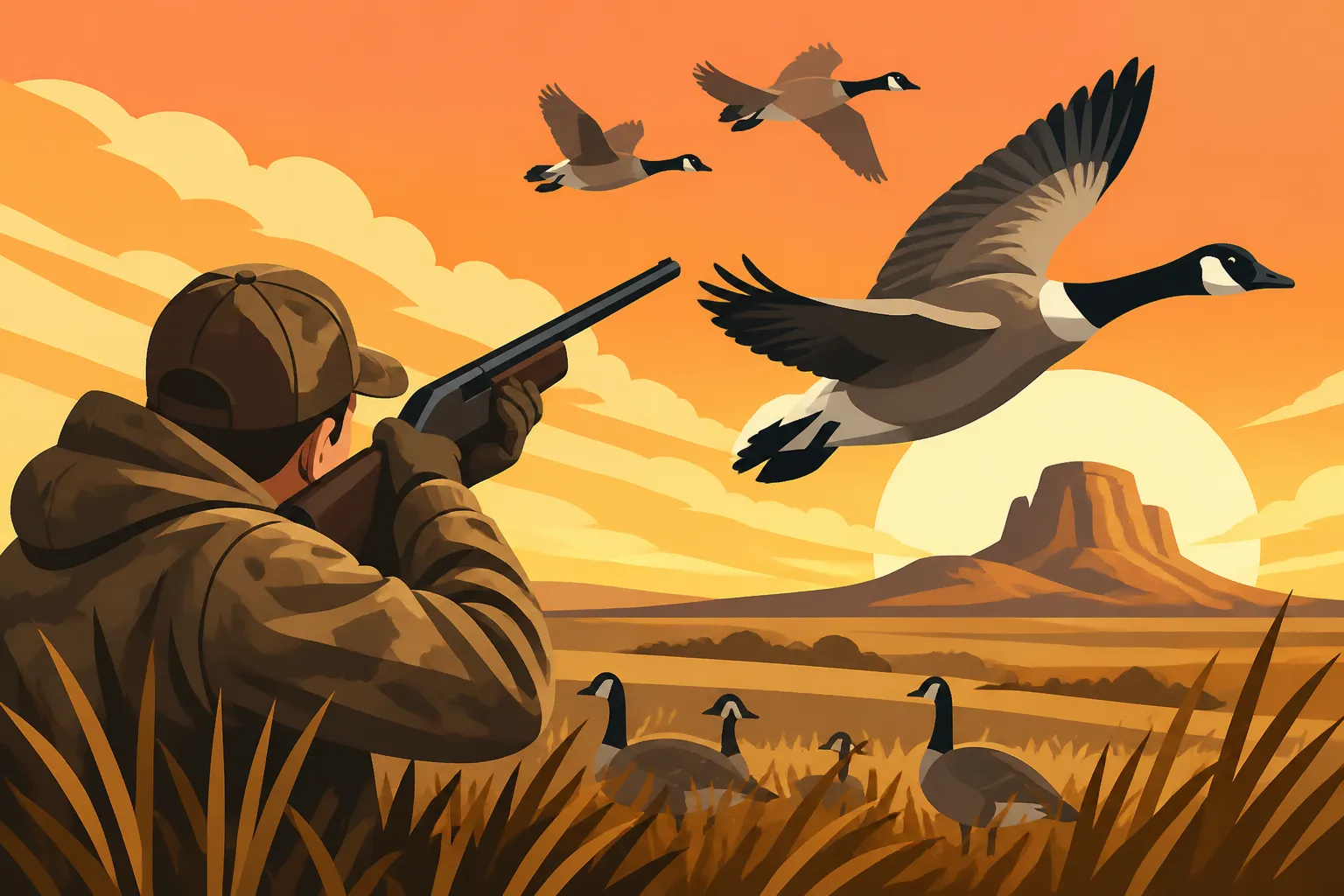
When it comes to decoy spreads for early Canada geese, simplicity and realism often trump sheer numbers. You're usually dealing with smaller, more family-oriented flocks, so a spread of 1 to 3 dozen realistic full-body or shell decoys can be incredibly effective. Focus on creating a natural-looking family group, perhaps with some sentries at the edges. A common and effective setup is a J-hook or U-shape, with the open end of the J or U facing downwind where you expect the birds to land. This creates a natural landing zone for incoming geese.
Concealment is paramount, especially as early season vegetation can be tricky. With many fields still green or freshly stubbled, you'll need to blend in seamlessly. Layout blinds are an excellent choice for field hunting, allowing you to disappear into the stubble. Ensure your blind is well-brushed with local vegetation – cut grass, stubble, or whatever surrounds you. Don't leave any dark spots or sharp edges that stand out. If hunting a fence line or treeline, a carefully constructed pit blind or a pop-up blind brushed with natural cover can work. The key is to break up your outline completely. Consider the sun's position and prevailing wind when setting up, as geese will almost always land into the wind. Getting your Layout Blinds on South Dakota Stubble perfected early in the season will pay dividends all year.
Calling and Retriever Management
Early season Canada geese respond well to calling, but often less aggressively than the big, migrating flocks of late fall. Focus on realistic, conversational calling rather than loud, frantic honks. Single honks, clucks, and murmurs that mimic feeding and contented birds are highly effective. A sharp comeback call can grab their attention, but then switch back to softer, reassuring sounds as they approach. Avoid overcalling, especially when birds are locked in and committed. Let your decoy spread do the work at that point.
Retriever management is another crucial aspect, particularly with the warmer temperatures of early September. Your dog needs to be well-hydrated, and you should bring plenty of water. Keep your dog in the shade if possible, or inside a cool blind, until it's time to retrieve. Over-excitement in the heat can quickly lead to overheating. Make sure your dog is steady to shot and only retrieves on command, minimizing disturbances to the spread or other incoming birds. Having a well-trained dog that can perform quick, efficient retrieves in the field is invaluable, not just for recovering birds, but also for preserving the hunt and ensuring the welfare of your canine partner. A dog that is well-prepared, like those discussed in Keeping a Dog Cool on an Early Opener, will enhance your hunting experience.
Optimizing Your Early Season Gear Selection
The gear you choose for early Canada goose season can significantly impact your comfort and success. While some items are universal for waterfowl hunting, the specific conditions of early September in South Dakota call for certain considerations and adjustments.
Clothing for Warm Weather and Variable Conditions
Forget the heavy parkas and insulated bibs you'll need in November. Early Canada goose season demands a layering system designed for warmth, breathability, and quick adaptation to changing conditions. Start with a moisture-wicking base layer to manage sweat, as temperatures can still climb significantly, especially by midday. Over this, a light long-sleeved shirt in a camouflage pattern or earth tones is ideal for sun protection and concealment.
A light vest or jacket might be useful for cooler mornings or evenings, but you'll likely shed it as the sun rises. Waterproof outer layers are still a good idea, as you never know when a pop-up shower might occur, or when you might need to crawl through damp stubble. Don't forget a wide-brimmed hat for sun protection and a good pair of sunglasses, essential for spotting birds against a bright sky. Comfortable, waterproof boots are also a must, even if you're primarily field hunting, as dewy fields or marshy edges can quickly soak your feet. Think about durable, supportive boots for long walks across the prairie, much like those you'd wear when Hunting South Dakota Walk-In Areas.
Decoys, Blinds, and Calls
For early Canada geese, realistic decoys are key. Full-body decoys are often preferred for their lifelike appearance, but high-quality shell decoys or even a mix can be effective. A spread of 1 to 3 dozen is usually sufficient. Focus on decoys with good motion if possible, such as those with motion stakes or wind-activated heads, to add realism. Keep your decoys clean; mud and grime can make them look unnatural and deter wary birds.
When it comes to blinds, stealth is your best friend. Layout blinds are the standard for field hunting and offer excellent concealment when properly brushed in. Make sure your blind's fabric blends with the prevalent field colors. If hunting near water edges or fence lines, portable panel blinds or even natural vegetation can be used, but always prioritize disappearing into the landscape. Don't forget ground blinds for concealment in open prairie, which is equally crucial for Spot-and-Stalk Antelope Hunting in South Dakota or other prairie pursuits. For calls, a good quality short-reed goose call is essential. Practice a variety of sounds – honks, clucks, murmurs, and greeting calls. A flute-style call can also be a valuable addition for its deeper tones and ability to carry sound. Having a lanyard that keeps your calls easily accessible is a small but important detail.
Miscellaneous but Important Items
Beyond the core gear, several other items are crucial for a successful and safe early goose hunt. A reliable rangefinder is invaluable for accurately judging distances to birds, especially on the wide-open South Dakota prairie. A good set of binoculars will aid significantly in scouting and identifying distant birds. Don't forget plenty of water for yourself and your dog, along with snacks to keep your energy up throughout the hunt. Bug spray can be a lifesaver in early September, as mosquitoes and other biting insects can still be active.
A first-aid kit, both for humans and dogs, is also a wise inclusion, addressing everything from minor cuts to burr removal. A quality cooler with plenty of ice is non-negotiable for preserving your harvested birds, especially in warm temperatures. Proper game care starts immediately after the shot. Finally, always carry a fully charged cell phone (though service can be spotty in remote areas) and let someone know your hunting plans and estimated return time. Many hunters also rely on GPS devices or mapping apps, like those from GoHunt, to navigate public land boundaries and mark scouting locations, ensuring you're always aware of where you are and where you can legally hunt.
| Item Type | Key Considerations for Early Season | Why it Matters |
|---|---|---|
| Clothing | Moisture-wicking base layers, light camo outerwear, wide-brimmed hat, waterproof light jacket | Manages sweat, prevents overheating, offers sun protection, adapts to temperature swings |
| Decoys | 1-3 dozen realistic full-bodies/shells, motion decoys | Matches smaller resident flocks, adds realism, creates inviting landing zone |
| Blinds | Layout blinds, well-brushed for local vegetation, breathable fabrics | Optimal concealment in field stubble, prevents overheating inside blind |
| Calls | Short-reed goose call (conversational sounds), flute call (deeper tones) | Mimics contented feeding birds, effective for less aggressive local flocks |
| Water | Ample supply for hunters AND dogs | Prevents dehydration and overheating for both during warm weather hunts |
| First-Aid | Kit for humans & dogs, burr removal tool | Addresses common injuries, dog care in the field |
| Cooler | Large capacity, plenty of ice | Essential for preserving game meat in warm temperatures |
| Mapping App | GPS functionality, public/private land layers (e.g., GoHunt) | Aids in scouting, navigation, staying legal on property boundaries |
Disclaimer
Hunting is an inherently dangerous activity. This guide is for informational purposes only and does not substitute for proper training, adherence to all local, state, and federal laws, and the exercise of sound judgment and safety practices. Always consult the most current South Dakota Game, Fish and Parks regulations before engaging in any hunting activities. The author and publisher are not responsible for any accidents, injuries, or legal infractions incurred while hunting.