Layout Blind Concealment in Stubble
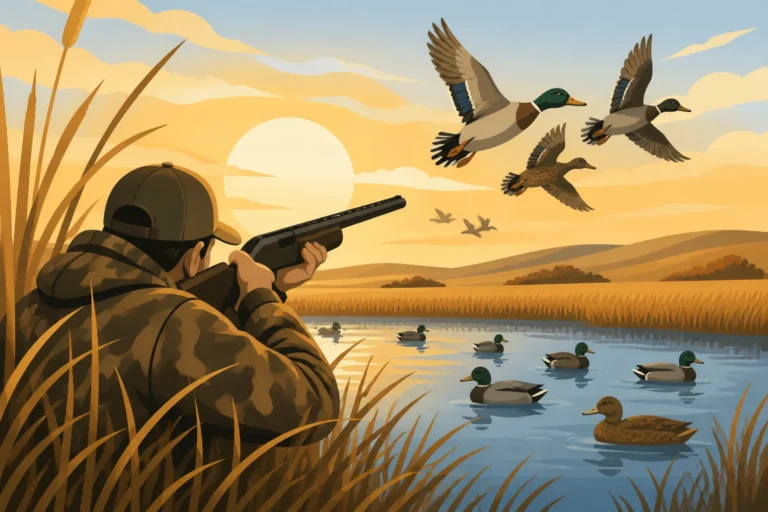
There's nothing quite like the feeling of watching a flock of mallards commit to your spread, or a wedge of honkers cupping their wings for a landing, only to pull up short at the last second. It's frustrating, isn't it? You've got the perfect call sequence, the decoys are looking pristine, but somehow, those birds just see you. This often boils down to one critical, yet frequently underestimated, factor in South Dakota waterfowl hunting: effective layout blind concealment in stubble fields. This guide is all about turning those last-second flares into feet-down finishers by mastering the art of disappearing into the prairie.
The Unique Challenges of Concealment in South Dakota Stubble
South Dakota offers some of the most phenomenal waterfowl hunting opportunities, particularly in its vast agricultural fields. But with those opportunities comes an equally vast challenge: how do you hide a human-sized coffin in a landscape that offers little to no natural cover? It's a question that plagues many hunters, leading to countless hours spent perfecting calling, yet neglecting the most fundamental aspect of the hunt.
The Unforgiving Eyes of a Duck and Goose
Waterfowl possess truly incredible eyesight. They spend their lives scanning the horizon from above, capable of spotting the slightest anomaly or unnatural shape in the vast expanse below. Think about it: they're constantly looking for danger. An uncamouflaged layout blind, no matter how low profile, presents a stark, foreign outline against the monotonous background of a cut cornfield or soybean stubble. They don't just see color; they see texture, shadow, and movement. A blocky, dark blind sticks out like a sore thumb to a flock circling at 300 yards, especially when the light is harsh or coming from behind your setup. Their elevated vantage point gives them an unfair advantage, allowing them to dissect your spread and pick out anything that screams "human." This is why blending seamlessly with the natural environment isn't just a suggestion; it's an absolute necessity for consistent success.
Different Stubble, Different Problems
Not all stubble fields are created equal, and each presents its own unique set of concealment hurdles. A field of cut corn, for example, often leaves behind sturdy, tall stalks that can offer decent vertical cover, but the uniform nature can make it difficult to break up outlines without looking too deliberate. Soybean stubble, on the other hand, is usually much shorter and sparser, demanding a more intensive brushing effort. Wheat stubble can be a nightmare; it’s typically short, light-colored, and offers almost no inherent cover.
Understanding the specific type of stubble you're hunting in is your first step. A strategy that works for corn won't necessarily cut it for beans. You need to adapt your brushing materials and techniques to match what's naturally present in that specific field. For instance, if you're Field Hunting Geese in South Dakota Cut Corn, you'll want to gather substantial corn stalks, but for a wheat field, you might need to supplement with other natural prairie grasses or even artificial stubble mats to achieve adequate concealment. This adaptability is key to fooling wary birds that have seen every trick in the book.
The Open Prairie Backdrop: A Hunter's Nemesis
The expansive, often flat, terrain of the South Dakota prairie means there's rarely a natural backdrop to help swallow your blind. You're not tucking into a treeline or a brush pile; you're typically out in the open, exposed to all angles of attack from incoming birds. This lack of natural relief means that every angle needs to be considered. Birds aren't just coming from one direction; they might swing wide, circle directly overhead, or approach from an unexpected quarter.
This vastness also amplifies any shine or unnatural shadows. A dark blind casting a sharp shadow in a brightly lit field is a glaring beacon to a high-flying flock. The low sun of early morning or late afternoon can create long, tell-tale shadows that betray your position. Furthermore, the absence of varied topography means that birds can often see you from a considerable distance, giving them ample time to analyze your setup. Utilizing resources like GoHunt can help you scout potential fields for subtle terrain features like swales, ditches, or even very slight rises that might offer a marginal advantage for blind placement, even on seemingly flat ground. Every little bit of natural depression helps.
Essential Principles for Effective Layout Blind Camouflage
Effective camouflage isn't just about throwing some stubble on your blind and calling it good. It's a thoughtful, deliberate process that requires understanding how birds perceive their environment and then meticulously working to disrupt that perception. By adhering to a few core principles, you can drastically improve your concealment game and significantly boost your success rates.
Matching Your Environment: Color and Texture are King
The most fundamental rule of camouflage is to blend in, not stand out. This means that your layout blind, once brushed, should look like a natural extension of the field around it. You need to match both the color and the texture of the surrounding stubble. If you're hunting in a golden-brown wheat field, bright green grass isn't going to cut it. Similarly, if the field is full of coarse corn stalks, finely chopped straw will look out of place.
The best materials for brushing in your blind are the ones you find on the ground in the field you're hunting. Collect corn stalks, soybean plants, wheat stubble, or prairie grasses directly from your chosen hunting spot. This ensures a perfect color match and consistent texture. Don't be afraid to pull up handfuls of weeds or other dead vegetation that naturally occurs in the field; variety helps. Remember, your goal is to make your blind disappear, not just to cover it. When you're dealing with different types of stubble, like in fields that might have some lingering cover from last season, applying layers that accurately reflect these variations is key. You might find some excellent pointers on how different types of fields present unique challenges in guides like Late-Season South Dakota Pheasants in Heavy Cover, which often involves diverse stubble types.
Breaking Up Your Silhouette: The Key to Disappearing
Even with perfectly matched colors and textures, a solid, rectangular object like a layout blind will still present an unnatural silhouette. Birds are looking for those distinct, straight lines and sharp angles that don't belong in a natural landscape. The key to true concealment is to break up that outline.
This means you shouldn't just lay stubble flat on your blind. Instead, aim to create an irregular, "shaggy" appearance that mimics the unevenness of a natural field. Use longer pieces of stubble to extend beyond the edges of your blind, creating shadows and disrupting its perfect rectangular shape. Angle some pieces differently, letting them stick up or out at various degrees. The goal is to make the blind look like a random pile of debris, not a manufactured hunting device. Think about how a natural pile of cornstalks might look after a combine has passed – it’s messy, irregular, and certainly not a perfect rectangle. When you're setting up your Layout Blinds on South Dakota Stubble, pay close attention to the way light and shadow play across your blind; even a perfectly brushed blind can cast a tell-tale shadow if its edges are too clean.
Minimizing Movement and Shine: The Final Touches
Even the best-brushed blind can be compromised by movement or shine. A subtle flicker of light off a piece of metal, a glint from a shotgun barrel, or a hunter shifting inside the blind can immediately catch a bird's attention, especially against the wide-open South Dakota sky.
Before birds are even in sight, ensure all reflective surfaces are covered. That shiny thermos, the metallic glint of your shotgun, or even a cell phone screen can be enough. Use dull, non-reflective tape on gun barrels or camouflage wraps. Inside the blind, minimize movement. While it's tempting to peek constantly, wait until birds are committed. If you absolutely must move, do so slowly and deliberately, keeping your movements below the level of the stubble you’ve built up. Even your face can be a giveaway; wear a face mask or face paint that blends with your blind. The less they see that isn't stubble, the better. Consider the conditions: on a clear, sunny day, shine is a bigger problem than on an overcast one. A good rule of thumb is to treat every piece of gear, and even your own exposed skin, as a potential reflection hazard. For those long days out in the field, remember to manage your body heat with proper Layering for South Dakota Wind to avoid fidgeting from discomfort, which can also give you away.
Step-by-Step Guide to Brushing in Your Layout Blind
Okay, so you understand why concealment is important. Now, let's get into the how. Brushing in a layout blind effectively is an art form, but with a systematic approach, anyone can master it. It takes time and effort, but the payoff in cupped wings and feet-down birds is absolutely worth it.
Gathering Your Materials: Don't Skimp on the Stubble
The first and most crucial step happens before you even open your blind bag: gather your brushing materials. As mentioned, the absolute best materials are those found directly in the field you intend to hunt. This means bringing a rake, a small garden hoe, or even just using your gloved hands to collect plenty of cornstalks, soybean plants, wheat stubble, or whatever local vegetation is abundant. Don't underestimate how much you'll need; it's always better to have too much than not enough.
Bring plenty of zip ties, bungee cords, or small pieces of twine. These are indispensable for securing the stubble to your blind's brushing straps or loops. Many modern layout blinds, like those from Avery, Rig’Em Right, or Final Approach, come with an abundance of straps specifically designed for this purpose, which is fantastic. Aim for pieces of stubble that vary in length and thickness to create that natural, irregular look. For corn, try to get pieces of stalk with some leaf remnants still attached. For beans or wheat, pull entire plants or large clumps. If the field is particularly sparse, you might need to find some taller native grasses from a nearby ditch or fence line, but always prioritize materials from within the field to ensure color and texture match. This initial effort can feel tedious, but it sets the stage for flawless concealment.
The Art of Layering: Building Your Disguise
Once you have your materials, it's time to transform your blind from an obvious structure into a seamless part of the landscape. The key here is layering, working from the bottom up and focusing on breaking up the blind's hard edges.
- Start with the Sides and Ends: Begin by securing longer, more substantial pieces of stubble to the bottom brushing straps around the perimeter of your blind. Let these pieces extend outwards and slightly upwards, obscuring the hard lines where the blind meets the ground. Think of it as creating a natural "skirt" around your blind. Use those zip ties to really cinch them down.
- Work Towards the Top: Gradually add shorter, denser pieces of stubble to the straps higher up on the blind. Overlap them slightly, mimicking how natural vegetation grows. Don't just lay them flat; create some vertical texture and depth. Vary the angles at which you attach the stubble, letting some pieces stand upright, others lie flatter.
- Focus on the Top and Lid: This is perhaps the most critical area, as it's what birds see most clearly from above. Pile a good amount of stubble on the blind's lid, again making sure to break up its rectangular shape. Let some pieces overhang the edges. If your blind has a face opening, ensure there's enough material around it to conceal your head when you sit up, but not so much that it interferes with your shot. The goal is to make the blind look like a random pile of crop residue, not a perfectly manicured rectangle.
- Check from All Angles: Once you think you’re done, step back. Walk around your blind, view it from different angles, and even crouch down to simulate a bird’s perspective. If anything looks too uniform, too sparse, or too obvious, add more material. Pay special attention to the corners and the highest points of the blind. A good method is to use a mapping application like GoHunt to mark your setup location and then walk a wide circle around it, simulating what the birds will see from 100-200 yards out. It's often surprising what stands out when viewed from a distance!
Integrating with the Decoy Spread: Becoming Part of the Field
Your blind shouldn't just be hidden; it should be integrated into the overall scene you're trying to create with your decoys. A perfectly hidden blind that's isolated from the rest of your Decoy Spreads on a Prairie Pothole can still look suspicious to wary birds.
Consider where your blind sits in relation to your decoy spread. Ideally, your blind should be positioned in a location that feels natural within the field. This might mean placing it just inside the edge of your main decoy spread, or even within a small clump of full-body decoys. The goal is to make your blind appear to be just another piece of the field, perhaps a small rise or a denser patch of vegetation that the geese are naturally drawn to. Sometimes, using an "X" or "V" pattern for your goose decoys, with the point of the "V" leading directly to your blind, can help to psychologically draw birds right into your kill hole. You want birds to focus on the decoys, not on your hide. Think of it as creating a cohesive, believable scene where your blind is just another, albeit slightly larger, part of the landscape.
Here's a quick comparison of brushing challenges:
| Stubble Type | Concealment Challenges | Best Brushing Strategy | Key Considerations |
|---|---|---|---|
| Corn Stubble | Tall, uniform stalks; can be too sparse in spots. | Use whole stalks, breaking them to create varying heights. Overlap for density. | Excellent vertical cover, but needs texture breakup. |
| Soybean Stubble | Very short, sparse, little natural height. | Requires significant volume of stubble. Mix with taller prairie grass if available. | Focus on breaking up silhouette on the ground. Can look too flat. |
| Wheat Stubble | Extremely short, very light in color, almost no inherent cover. | Heavily layer with wheat stubble. Consider adding straw bundles or artificial stubble mats. | Most challenging. Absolute minimal movement is crucial. |
| Prairie Grass | Varies widely in height and density. | Match native grasses precisely. Use longer blades to create a "shaggy" look. | Great natural blending potential if the field has this. |
Advanced Tips and Common Mistakes to Avoid
Even seasoned hunters can overlook subtle details that make a huge difference in concealment. Moving beyond the basics means incorporating a deeper understanding of bird behavior and meticulous attention to every aspect of your setup.
Thinking Beyond the Blind: Using Natural Terrain Features
While brushing your blind is paramount, truly next-level concealment involves leveraging the natural contours of the land. The South Dakota prairie, while often appearing flat, has subtle depressions, swales, and very slight rises. These aren't always obvious to the naked eye, but a bird soaring overhead will spot them.
Before you even unload your gear, take a few minutes to scout the field for these natural advantages. Look for a slight dip in the terrain, even a six-inch depression can help lower your blind profile significantly. A small swale or a barely perceptible ridge line can offer a critical break in the horizon, allowing your blind to nestle in rather than sit starkly on top of the ground. Sometimes, even the presence of a few lingering weeds or a larger pile of crop residue from the combine can be the perfect spot to tuck your blind. Using an app like GoHunt on your phone or studying aerial imagery beforehand can really help pinpoint these subtle features that might be missed on foot. A strategically placed blind that uses the land with its brushing will always outperform a heavily brushed blind sitting on perfectly flat ground.
The Human Element: Stillness, Orientation, and Gear Placement
You can have the most perfectly brushed blind in the world, but if you aren't camouflaged within it, it's all for naught. Birds have an uncanny ability to spot human movement, and the slightest shift or glint can send them flaring.
- Stillness is Gold: Once birds are in sight, become a statue. Resist the urge to peek or adjust your position. Wait until they are fully committed and within killing range before sitting up. If you're hunting with partners, communicate clearly and ensure everyone understands the importance of remaining absolutely still.
- Blind Orientation: Pay attention to the sun and wind. Ideally, you want the sun at your back so that approaching birds are looking into the glare, making it harder for them to pick out details. Position your blinds so that the wind is generally at your back or quartering, as birds prefer to land into the wind, bringing them directly towards your hide. This also helps with calling and decoy movement. For more on reading the wind, check out Reading Wind on a Big Water Set, which applies lessons even to field hunting.
- Gear Placement: Every piece of gear in your blind needs to be considered. Your gun, calls, shells, thermos, and anything else should be tucked away to prevent shine or accidental movement. Keep your shotgun low and angled, perhaps covered by a small piece of camo fabric until ready to shoot. Make sure your face mask and gloves are on well before birds commit. Remember, even a small detail like a bright orange shell peeking out of a shell belt can be a dead giveaway. Also, for those long hunts, comfort gear, while important, shouldn't compromise concealment; always consider how items like extra jackets, covered in Layering for South Dakota Wind, might snag on blind doors or create bulges.
Pre-Season Scouting and Practice: Knowing Your Spot
The best concealment isn't improvised on the morning of the hunt. It starts long before, with thorough scouting and, if possible, practice runs. Understanding your hunting ground intimately will give you a significant advantage.
Take the time to scout potential fields well before the season opens. Look at the type and density of stubble, the subtle terrain features, and where birds are naturally feeding. Scouting South Dakota Public Ground Before the Season is critical, and for private ground, it's just as important. Take notes or photos. If you're serious, you can even do a dry run: set up your blind, brush it in, and then walk away to observe it from different distances and angles. This practice run allows you to identify weak spots in your brushing and refine your technique without the pressure of approaching birds. It also helps you determine how much brushing material you'll realistically need. Think about it: an NFL kicker doesn't just show up on game day; they practice their craft repeatedly. Your concealment should be no different. This kind of preparation is as important as perfecting your Coyote Calling on Open Grassland or any other hunting skill.
Disclaimer
Please note: Hunting regulations and laws can change. Always consult the latest South Dakota Game, Fish and Parks regulations before heading into the field. This article is for informational purposes only and does not supersede official state regulations or professional safety advice.