South Dakota Mountain Goat Licence Numbers
For many hunters, the dream of a South Dakota mountain goat tag sits in a league of its own, an almost mythical pursuit given the extreme scarcity of these coveted licenses. It’s a profound frustration to pour over regulations, year after year, only to find the same minuscule numbers, making the entire application process feel like a shot in the dark. This guide aims to pull back the curtain on South Dakota's mountain goat license numbers, explaining just how rare these opportunities are, what factors influence their allocation, and what it truly means to pursue one of the state's most exclusive big game animals.
The Rarity of South Dakota Mountain Goat Tags
It’s no exaggeration to say that a South Dakota mountain goat tag is one of the hardest hunting permits to acquire in the entire country, let alone within the state. Unlike the relatively abundant pheasant or deer licenses, mountain goats are managed with an incredibly light hand, prioritizing the long-term health and stability of a small, unique herd. This scarcity is a direct reflection of the animals themselves and the specific habitat they call home.
Why Mountain Goat Tags Are So Limited
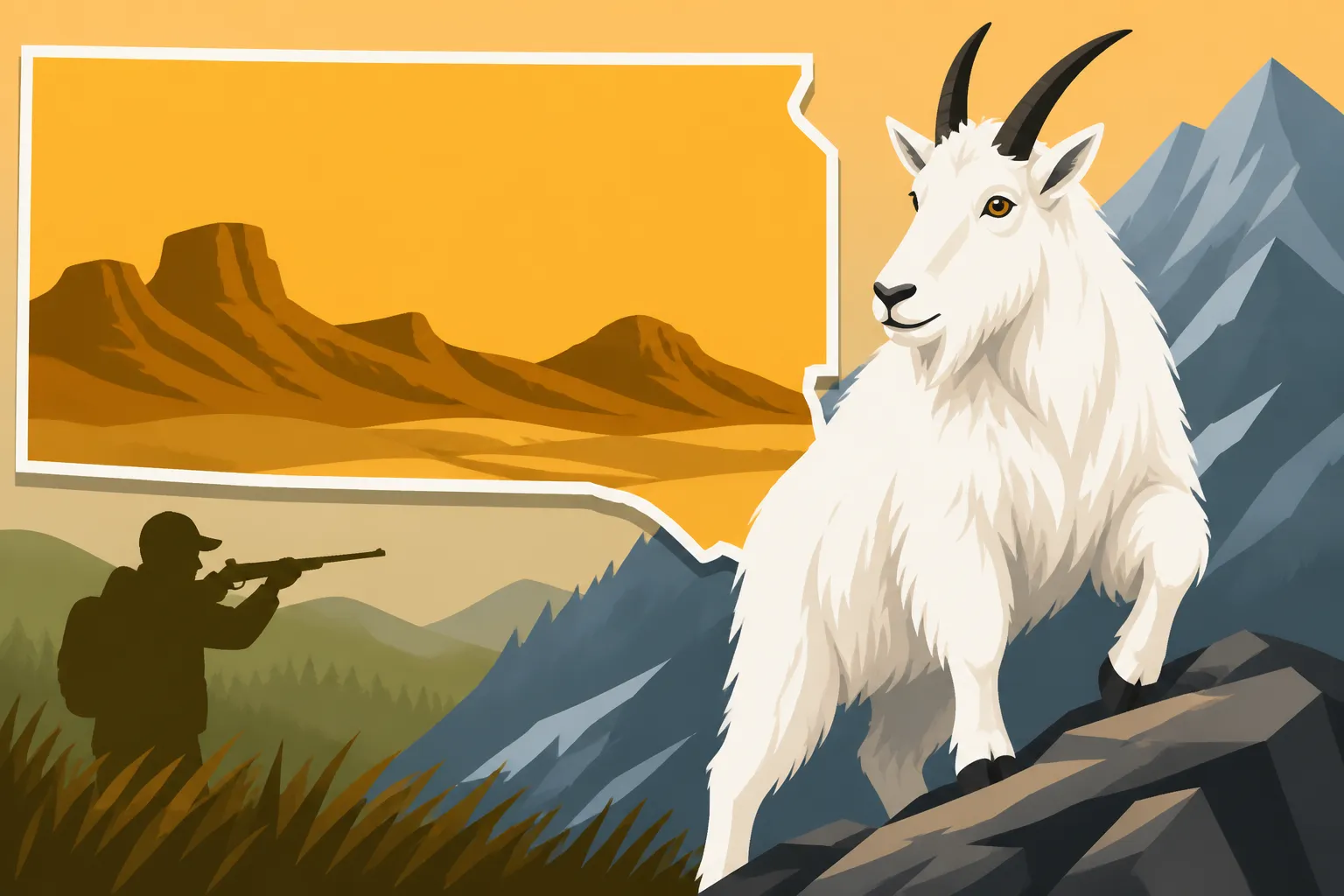
The story of South Dakota's mountain goats is quite fascinating and directly explains why their tags are so rare. Unlike many native species, the Black Hills mountain goat population didn't originate here. They are descendants of a small group of six goats that escaped from Custer State Park's zoo enclosure back in the 1920s. These hardy animals adapted remarkably well to the rugged granite peaks and cliff faces of the Black Hills, particularly in and around areas like Mount Rushmore, Sylvan Lake, and Harney Peak (now Black Elk Peak).
Because this population started from such a small founder group and lives in a limited, specialized habitat, the South Dakota Game, Fish and Parks (GFP) manages them very conservatively. The goal isn't to grow a massive herd for widespread hunting, but rather to maintain a healthy, viable population that exists as a unique wildlife viewing and, for a very select few, hunting opportunity. If you're looking for more details on their history, you might find our article on How Mountain Goats Reached the Black Hills quite interesting.
Contrast this with species like white-tailed deer, which thrive across vast areas of the state, or ring-necked pheasants, which benefit from extensive agricultural and conservation lands. Mountain goats require specific high-altitude, rocky terrain that simply isn't widespread in South Dakota. Their slow reproductive rate also means that even small population declines can take a long time to recover, making GFP extremely cautious with harvest numbers.
Understanding the Annual Allocation Process
Each year, the GFP conducts surveys to assess the health, distribution, and overall numbers of the Black Hills mountain goat herd. These aerial surveys, ground observations, and general health assessments are critical in determining how many, if any, licenses can be issued for the upcoming season. The numbers are almost always in the low single digits, a testament to the meticulous care taken with this rare resource.
Factors influencing these quotas include:
- Population Estimates: The most recent estimate of the total mountain goat population.
- Kid Survival Rates: How many young goats are successfully surviving to maturity.
- Overall Herd Health: Any signs of disease, such as pneumonia, which has severely impacted other bighorn sheep herds in the West.
- Habitat Conditions: The quality and availability of suitable habitat in the Black Hills.
- Previous Year's Harvest: To ensure that the removal of a few animals doesn't negatively impact future populations.
It's important to understand that these tags are truly managed as trophy tags, not as a means to control an overpopulated species. The quality of the hunt and the health of the herd are paramount, which means consistently low license numbers. You can learn more about general application processes for other big game in our South Dakota Big Game Draws and How to Apply guide.
Current and Historical Mountain Goat License Numbers
If you're dreaming of a mountain goat hunt in South Dakota, understanding the actual numbers involved is a sobering, yet necessary, reality check. The term "limited" barely begins to describe the availability.
Typical Annual License Quotas
Historically, and consistently in recent years, the number of mountain goat licenses issued by the South Dakota GFP hovers between one and two per year. In exceptional years, it might creep up to three, but this is rare. For instance, in 2023, only one license was available. In 2022, there were two. These are not "resident" and "nonresident" tags in the sense of a quota for each; they are often "either-sex" tags valid for the specific Black Hills units where goats reside. This means the lucky hunter can pursue either a ram or a nanny, though most trophy seekers will naturally target a mature ram.
Here's a snapshot of typical license allocation:
| Year (Example) | Number of Licenses Issued | Unit | Notes |
|---|---|---|---|
| 2023 | 1 | Black Hills | Either-sex tag, extremely competitive draw |
| 2022 | 2 | Black Hills | Either-sex tags |
| 2021 | 1 | Black Hills | Consistent with conservation-focused management |
| 2020 | 2 | Black Hills | |
| 2019 | 1 | Black Hills | |
| 2018 | 2 | Black Hills | |
| 2017 | 3 | Black Hills | One of the rare years with slightly more tags |
As you can see, the numbers are incredibly consistent and low. This table clearly illustrates the challenge. These few tags are allocated for hunting units within the Black Hills National Forest and its surrounding public and private lands where goats are present. Accessing these areas often requires significant effort, much like hunting other high-country species; our article on Black Hills Elk Hunting Tactics touches on similar challenges in the region.
Tracking Draw Odds and Success Rates
With only one or two tags available each year, the draw odds for a South Dakota mountain goat license are, predictably, astronomically low. It's not uncommon for several thousand applications to be submitted for these few permits. This means your chances are often less than 1 in 1,000, sometimes even closer to 1 in 2,000 or more, depending on the number of tags issued and applicants.
While the odds of drawing are slim, the success rates for those fortunate enough to draw a tag are typically very high. Why? Because the hunters who draw these tags are usually incredibly dedicated, experienced, and often invest heavily in guides and extensive scouting. A mountain goat hunt in the Black Hills is an intense, physically demanding endeavor, often requiring skills discussed in articles like Hunting Elk on Steep Black Hills Ridges. These hunters typically put in the time and effort to ensure success once they have the tag in hand.
For hunters looking to get a realistic picture of their chances, resources like GoHunt are invaluable. They provide detailed historical draw odds, application statistics, and unit-by-unit breakdowns for various big game species across the West, including South Dakota. While it won't make the odds better, it offers transparency and helps you manage expectations. You can use platforms like GoHunt to track historical trends, see how many applicants applied for those one or two tags, and truly understand the lottery you're entering.
Applying for a South Dakota Mountain Goat License
Navigating the application process for a mountain goat tag can feel daunting, especially with such slim odds. It's essential to understand the specific requirements and the "once-in-a-lifetime" nature of this particular draw.
The Application Process and Deadlines
Applying for a South Dakota mountain goat license is done through the South Dakota Game, Fish and Parks website. The application period typically opens in late winter or early spring, with a deadline usually around mid-April. For example, in recent years, the deadline has been around April 20th. It's crucial to mark these dates on your calendar, as missing the window means another year of waiting.
The most significant aspect of the South Dakota mountain goat draw is its "once-in-a-lifetime" status. This means if you are fortunate enough to draw a mountain goat tag and successfully harvest an animal, you are no longer eligible to apply for a mountain goat license in South Dakota ever again. This rule is in place to give as many different hunters as possible the chance at this truly unique experience, reflecting the rare nature of the hunt. This is a common feature for species like Bighorn Sheep as well, which you can read about in Once-in-a-Lifetime Tags in South Dakota.
Typically, these tags are resident-only. While it's always wise to check the current year's GFP Hunting Handbook for any changes, due to the extremely limited numbers, nonresident mountain goat tags are rarely, if ever, allocated. This further emphasizes the exclusivity of the opportunity for South Dakota residents.
Strategies for an Unlikely Draw
Let's be realistic: when only one or two tags are available for thousands of applicants, there's no secret strategy to guarantee success. It's a pure lottery. However, there are aspects of the South Dakota draw system that can slightly improve your odds over many years, though even these are tempered by the "once-in-a-lifetime" rule for mountain goats.
South Dakota does employ a bonus point system for many of its big game draws, often referred to as a "cubed" system where your points multiply year after year, increasing your entries. For species like mountain goat and bighorn sheep, while you accumulate entries, once you draw, you are out forever. So, while persistent application builds entries, it doesn't lead to a guaranteed draw. You can find more information about how this works in South Dakota Preference Points Explained. Essentially, the more years you apply unsuccessfully, the more entries you get in subsequent draws, but that single successful draw ends your eligibility for that species.
The best strategy is simply consistent application. If a South Dakota mountain goat hunt is a lifelong dream, you need to apply every year without fail. Beyond that, it's about managing expectations and enjoying the anticipation. For hunters who enjoy planning and data, GoHunt can help you keep track of your application history and compare it to others, giving you a sense of just how many other hopefuls are in the running alongside you. While you might be dreaming of a goat, don't forget to research other exciting opportunities, as seen in our guide to South Dakota Elk Draw and Units.
The Experience of a South Dakota Mountain Goat Hunt
For the few who beat the monumental odds and draw a South Dakota mountain goat license, the real work and adventure begin. This isn't a casual hunt; it's a physically demanding and mentally challenging pursuit in some of the Black Hills' most stunning, yet unforgiving, terrain.
Preparing for a Black Hills Mountain Goat Hunt
Drawing the tag is just the first step. The Black Hills, while not as high in elevation as the Rockies, present incredibly rugged, steep, and often densely timbered terrain where mountain goats thrive. Hunters will need to be in peak physical condition to navigate the granite outcroppings, climb steep slopes, and endure rapid weather changes common in the Black Hills. Articles like Black Hills National Forest Hunting can give you a general idea of the terrain.
Key gear considerations are paramount:
- Optics: High-quality binoculars and a spotting scope are indispensable for locating small, white targets against vast rock faces and timber.
- Rifle: A flat-shooting, accurate rifle suitable for mountain hunting is essential. Calibers like 6.5 Creedmoor, .270 Win, or .30-06 are popular choices.
- Boots: Sturdy, ankle-supporting, waterproof mountain boots are non-negotiable for stability and protection on rough terrain.
- Clothing: Layering is key, as conditions can swing from warm sunshine to cold rain or snow very quickly, especially at higher elevations.
- Backpack: A robust pack capable of carrying essential gear, water, and potentially meat after a successful harvest.
Many successful mountain goat hunters choose to hire a local guide. While the number of outfitters specializing in these incredibly rare hunts is small, their intimate knowledge of the Black Hills terrain and goat behavior can be invaluable. They can help with everything from glassing vast areas to planning difficult stalks, significantly increasing the chances of a successful and safe hunt.
Trophy Potential and Conservation
The South Dakota mountain goat herd, though small, produces some impressive animals. Mature rams in the Black Hills can offer substantial horns, providing a truly magnificent trophy that represents the pinnacle of Western hunting challenge and rarity. Knowing how to differentiate between a male and female, as detailed in Telling a Billy From a Nanny, becomes crucial in the field, especially if specific tag rules apply.
More importantly, the hunt is a profound experience rooted in the deep conservation efforts of the GFP. Every tag issued is a carefully considered decision designed to ensure the long-term health of this unique, introduced population. The success of the hunters, therefore, contributes to valuable data that helps wildlife managers continue to monitor and protect these incredible animals. It's a testament to good stewardship that such an exclusive opportunity exists at all. For the successful hunter, it's not just about the trophy; it's about the deep satisfaction of earning one of the most difficult and respected tags in South Dakota.
Disclaimer
Please note: Hunting regulations, license numbers, and application deadlines are subject to change annually. Always consult the official South Dakota Game, Fish and Parks (GFP) website and the current year's hunting handbook for the most accurate and up-to-date information before planning any hunt.