Prairie Elk Units in South Dakota
For many hunters, the word "elk" immediately conjures images of majestic animals bugling in towering mountain ranges. But here in South Dakota, there's a lesser-known, incredibly challenging pursuit that captivates a dedicated few: hunting prairie elk. These elusive giants, far from the Black Hills timber, present a unique set of frustrations and triumphs, requiring a completely different approach to scouting, drawing tags, and ultimately, the hunt itself. This guide will delve deep into the world of South Dakota's prairie elk units, helping you understand the landscape, navigate the draw, and develop the tactics needed to pursue these magnificent, grassland-dwelling beasts.
Understanding South Dakota's Elk Landscape Beyond the Black Hills
When people talk about elk in South Dakota, their minds almost universally jump to the Black Hills. And it’s true, that’s where the state’s largest and most well-known elk herds reside. But it's a huge misconception to think that's the only place these incredible animals roam. For those willing to look a little harder and embrace a different kind of challenge, there are elk to be found, albeit in much smaller, more scattered populations, out on the vast South Dakota prairie.
The Uncommon Presence of Prairie Elk Herds
It really is easy to assume South Dakota elk are only in the Black Hills, but that couldn't be further from the truth for a growing, albeit scattered, population. These "prairie elk" are descendants of reintroductions or animals that have expanded their range from core populations, carving out a life for themselves in habitats far removed from the typical mountainous elk country. You’ll find them in various pockets across the state's West River and East River prairies, often along major river corridors like the Missouri, Cheyenne, and White Rivers, or in other areas with sufficient cover and forage, even if that cover is just a deep, winding coulee or a dense cattail slough.
These herds are rarely large, cohesive units like those found in the Black Hills. Instead, they are often smaller, more isolated groups of a few dozen animals, sometimes just a handful, eking out an existence primarily on private lands. This makes them incredibly difficult to track and even harder to gain access to hunt. Their presence is a testament to the adaptability of elk and the resilience of South Dakota's varied landscapes, but it certainly doesn't make the hunter's job any easier.
Habitat and Behavior of Prairie Elk
The behavior and habitat preferences of prairie elk are vastly different from their Black Hills cousins. Forget steep, timbered slopes and high mountain meadows. Prairie elk have adapted to an environment dominated by wide-open grasslands, rolling hills, rugged river breaks, and agricultural fields. Their cover isn't dense pine forests but rather deep, brush-choked draws, extensive cattail sloughs, dense shelterbelts planted around farmsteads, or the narrow, sometimes timbered, bottoms of rivers and creeks. They are masters of using minimal terrain features to disappear, making them incredibly difficult to spot, even with powerful optics.
They're often most active at dawn and dusk, much like their mountain counterparts, but their daytime bedding areas can be surprising. You might find them tucked into the bottom of a seemingly insignificant depression in a pasture, bedded in a thick stand of sunflowers, or hidden deep within a drainage that looks impassable on a map. Their elusive nature is amplified by the sheer vastness of the prairie and the limited pockets of suitable cover. They become true ghosts of the grasslands, making every sighting a genuine accomplishment and every successful hunt a hard-earned reward.
Navigating the South Dakota Elk Draw for Prairie Units
Drawing an elk tag in South Dakota is tough, period. But if you’re setting your sights on a prairie elk tag, be prepared for draw odds that are, frankly, brutal. These are some of the most sought-after and limited tags in the entire state, and for good reason—the chance to hunt an elk in the wide-open expanse of the prairie is a truly unique experience.
Application Process and Unit Specifics
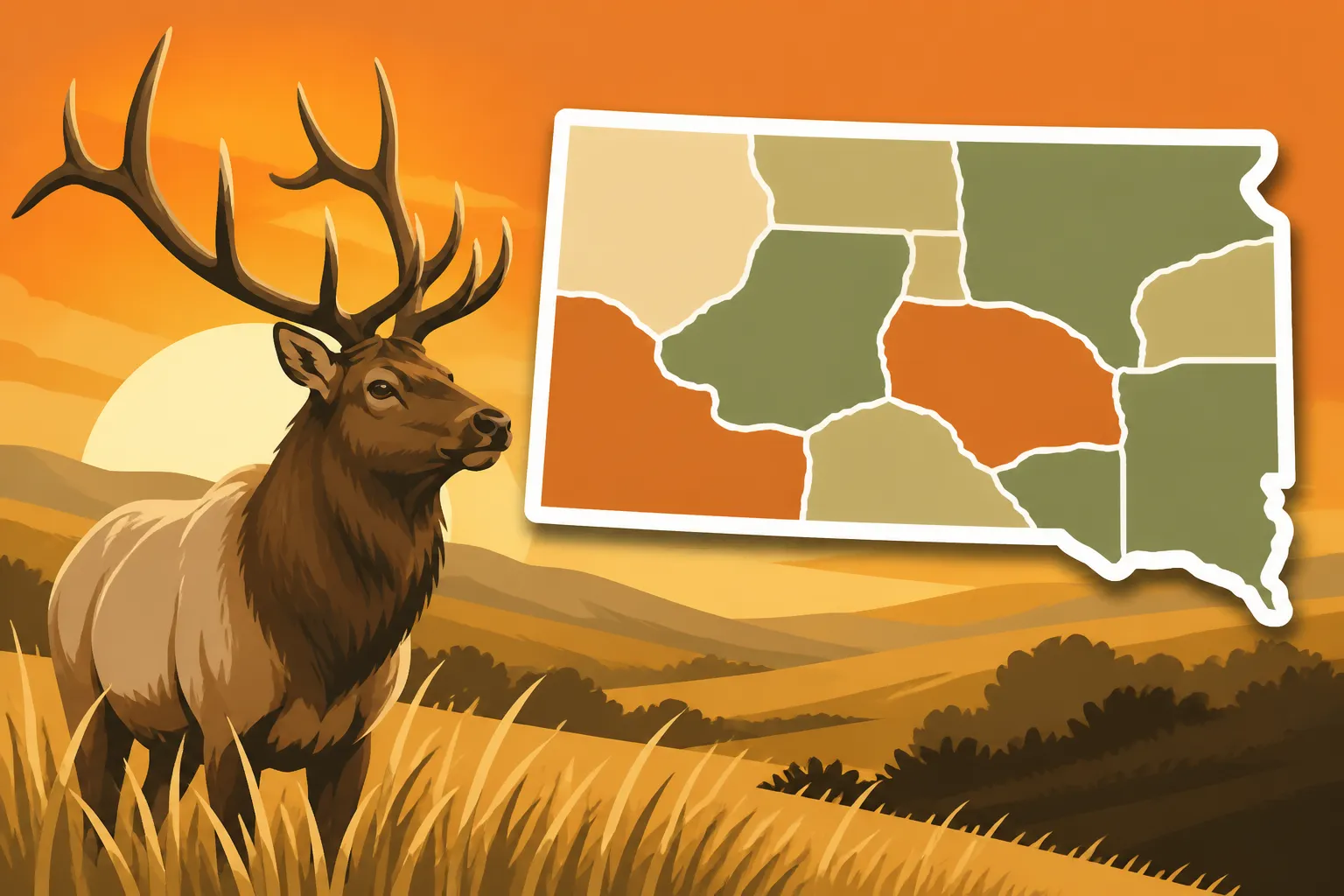
The South Dakota Game, Fish and Parks (GFP) outlines specific units for elk hunting, and you'll find that the "prairie" units are clearly distinct from the Black Hills units. These prairie units often encompass broad areas, sometimes multiple counties, where elk sightings and populations are known to exist, even if sparsely. Currently, prairie elk tags are available in specific West River units like Custer-Fall River, Perkins-Harding, and portions of Meade and Pennington counties outside the Black Hills, as well as East River units such as Gregory and Tripp counties. The specific unit names and boundaries can shift slightly from year to year based on population surveys and management goals, so always consult the latest GFP hunting handbook.
The draw itself is a pure lottery for elk. While other species might incorporate a hybrid system, for elk, your bonus points multiply your name in the hat, but a tag is never guaranteed. This means you could have max points and still walk away empty-handed, a frustration many dedicated hunters know all too well. Tools like GoHunt's Insider platform can be incredibly valuable here, as they provide historical draw odds and application data that can help you understand just how tough these units are and refine your strategy. It’s critical to thoroughly research the specific unit you plan to apply for, understanding its boundaries, historical success rates, and the number of tags typically issued.
The Preference Point System and Strategy
South Dakota uses a bonus point system for its elk draw, which means that for every year you apply unsuccessfully, you accumulate a point. These points are then cubed (multiplied by themselves) and added to your application for the following year, effectively increasing your odds. So, if you have one point, your application goes in twice (1 cubed + 1 base application); with two points, it's nine times (2 cubed + 1 base application); and with three points, it's 28 times (3 cubed + 1 base application). While this system does improve your chances over time, for prairie elk units, the sheer scarcity of tags means you’re still facing incredibly long odds.
It can feel like you're throwing money away year after year with how tough these draws are, but that persistent accumulation of points does eventually stack the deck a little. Many dedicated hunters buy a point every year, even if they can't commit to a hunt that season, just to keep their bonus points building. There's no guarantee, even with a substantial number of points, that you'll draw a prairie tag. However, a long-term strategy of consistently applying and accumulating points is the only way to significantly enhance your chances. It’s important to remember that once you successfully draw an elk tag in South Dakota, your accumulated bonus points are reset to zero for that species. You can find more detailed information on South Dakota Preference Points Explained on the GFP website.
Hunting Strategies for South Dakota Prairie Elk
So, you've beaten the odds and drawn that coveted prairie elk tag. Congratulations! Now the real work begins. Hunting elk on the prairie is a game of patience, stealth, and a deep understanding of how these animals use the subtle terrain and cover available to them. It’s not like Black Hills Elk Hunting Tactics with calling in timber; it's a completely different beast.
Scouting and Access Challenges
The single biggest hurdle to hunting prairie elk is often access. The vast majority of these animals reside on private land, which means your pre-season scouting needs to focus heavily on securing permission. Even with a tag in hand, without a place to hunt, it's just a trophy in your pocket. Start early, well before the season, by identifying potential elk hot spots using aerial imagery. Look for those deep river bends, significant draws, large shelterbelts, and dense cattail sloughs that could offer sanctuary. Then, it's time to hit the pavement and start knocking on doors.
Don't underestimate the power of respectful, face-to-face interaction with landowners. Explain your situation, offer to share meat, and assure them of your commitment to ethical hunting practices. Sometimes, local knowledge is gold, and landowners can offer invaluable insights into elk movement patterns. You can learn more about how to approach this by reading about Finding Private Land Access in South Dakota. Utilize mapping applications like GoHunt or onX to identify property boundaries and landowner names, which can streamline your permission-seeking efforts. It's also worth researching any scattered pieces of South Dakota Game Production Areas or Walk-In Areas that might hold elk, though these are rare for prairie elk and often see significant pressure.
Tactics for the Elusive Prairie Ghost
Once you have your access, the tactics shift dramatically from traditional timber elk hunting. Forget bugling contests in the pines; prairie elk are far too wary for that in most scenarios. Your primary tool will be your optics – a good pair of binoculars and a spotting scope are indispensable. You'll spend countless hours glassing vast expanses at dawn and dusk, searching for that telltale brown patch or a glint of an antler. Patience is not just a virtue; it's a requirement.
When you spot elk, the hunt becomes a strategic game of spot-and-stalk. Using the subtle contours of the land, draws, and any available cover, you'll need to close the distance without being detected. This is similar to Stalking a Bedded Mule Deer Buck on the prairie, but on a much larger, more wary animal. The wind is your absolute master in open country; a shift can blow your entire stalk. Pay careful attention to Wind Direction on a Prairie Stalk as you plan your approach. You'll need to be proficient with your rifle at longer ranges, as opportunities for close-range shots may be few and far between. A solid Rifle Setup for South Dakota Open Country is paramount, typically a flat-shooting caliber with quality optics. Practice prone and unsupported shots, as natural rests might be scarce.
| Feature | Black Hills Elk Hunting | Prairie Elk Hunting |
|---|---|---|
| Habitat | Ponderosa pine forests, steep ridges, Black Hills National Forest. | River bottoms, vast grasslands, deep draws, shelterbelts, private agricultural lands. |
| Herd Size/Density | Concentrated herds, higher overall population. | Smaller, more dispersed, often isolated pockets of elk. |
| Primary Challenge | Steep terrain, thick timber, navigating public land pressure. | Gaining private land access, finding elusive elk in vast, open country. |
| Hunting Style | Bugling, spot-and-stalk in timber, tracking. | Extensive glassing, long-range spot-and-stalk, extreme patience. |
| Draw Odds | Challenging, but generally better for residents than prairie units. | Extremely low odds for all applicants, very few tags issued annually. |
| Public Access | Significant public land (Black Hills National Forest, Custer State Park). | Primarily private land, very limited public ground opportunities. |
| Typical Range | Mountainous, timbered environments. | Flat to rolling prairie, river breaks, agricultural fields. |
What to Expect When You Finally Draw a Prairie Tag
Drawing a prairie elk tag isn't just winning a lottery; it's earning an invitation to one of South Dakota's most challenging and rewarding hunts. But, as with any truly special hunting opportunity, managing your expectations and preparing for the unique logistics involved will be key to a successful and enjoyable experience.
The Reality of a Prairie Elk Hunt
Let's be realistic: this isn't a Black Hills elk hunt where you might encounter multiple herds and hear bugles echoing through the timber. A prairie elk hunt is often a "hunt where you find them" scenario, requiring immense patience and flexibility. You might spend days driving, glassing, and talking to landowners without seeing an animal. These elk are incredibly smart and often move significant distances, making them hard to pattern. Your physical demands might be different too; less elevation, but often more miles walked over rough, uneven ground, through thick prairie cover, or across muddy fields after a rain.
Be prepared for variable weather conditions. Early season hunts can be surprisingly warm, requiring careful attention to meat care, while late-season hunts can quickly turn into frigid, windswept affairs. Having a Plan B, C, and D for different scenarios is vital. The sheer act of locating a prairie elk, let alone closing the deal, is a testament to perseverance. This hunt will test your resolve, but the reward of a South Dakota prairie bull or cow, taken from such an unlikely landscape, is an experience few get to claim. You'll appreciate every step of the journey, from the application process (which you can learn more about in South Dakota Big Game Draws and How to Apply) to the field dressing.
Meat Care and Logistics
Harvesting an elk on the prairie presents a whole new set of logistical challenges, particularly regarding meat care. An elk is a massive animal, and in South Dakota's often warm early season, getting that meat cooled down quickly is paramount. You'll need a solid plan in place for prompt field dressing and breaking the animal down into manageable quarters. Don't underestimate the time and effort this will take, especially if you're alone or with limited help.
Extracting a full-sized elk from a deep river bottom or a brush-choked drainage can be a monumental task. Unlike some mountain hunts where pack animals might be an option, on the prairie, it’s often a combination of brute force, game carts, or strategic vehicle access (if permitted by the landowner). Think of it as a scaled-up version of Getting a Deer Out of a South Dakota Coulee. Having a strong game cart, plenty of large game bags, and perhaps even a plan to call for extra hands are all smart considerations. Finally, have a processing plan ready. Whether you plan to butcher it yourself or take it to a local processor, knowing your next steps ensures that your hard-won meat is properly cared for from field to freezer.
Disclaimer
Always check the current South Dakota Game, Fish and Parks regulations and season dates before planning any hunt. Unit boundaries, application deadlines, and rules can change annually. This guide is for informational purposes only and does not supersede official regulations.