South Dakota Snow Goose Conservation Order
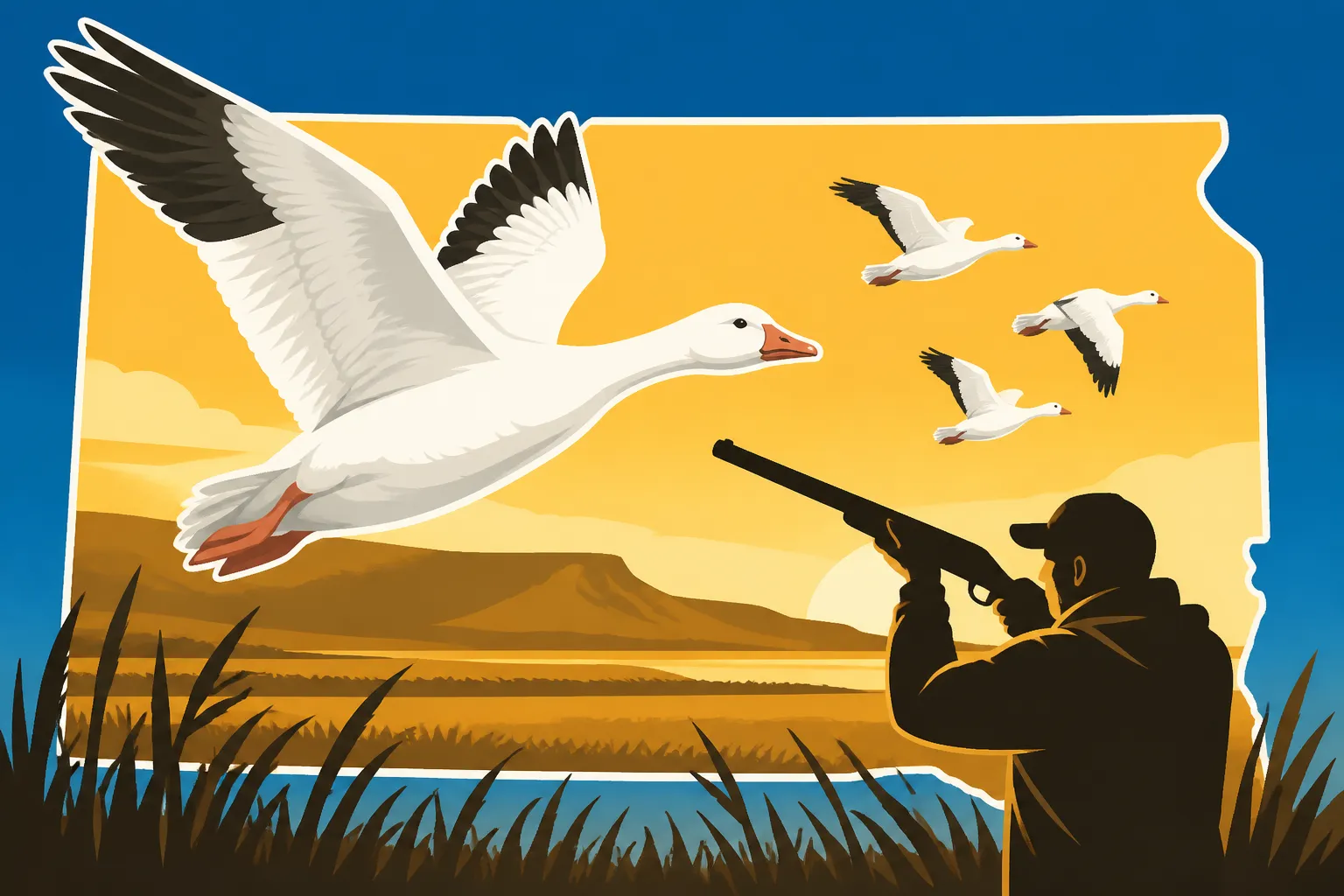
The sheer volume of snow geese descending upon South Dakota each spring can be both an awe-inspiring spectacle and a genuine headache for conservation efforts. Many hunters feel a real push and pull—they love the thrill of the hunt but also recognize the immense pressure these massive flocks put on fragile Arctic breeding grounds and agricultural fields. This guide is designed to cut through the confusion and give you the full scoop on South Dakota’s Snow Goose Conservation Order, explaining why it exists, how it works, and how you can be a part of managing this incredible resource while enjoying an unforgettable hunting experience.
Understanding the Snow Goose Conservation Order
When we talk about the Snow Goose Conservation Order, we're not just talking about another hunting season. This is a critical, continent-wide effort to address an ecological imbalance caused by a booming population of lesser snow geese and Ross's geese. For years, hunters and conservationists have watched their numbers swell to unsustainable levels, and South Dakota sits right in the heart of their migration route, making it a pivotal state for this unique hunting opportunity.
What Exactly Is the Conservation Order?
The Conservation Order is a special provision authorized by the U.S. Fish and Wildlife Service, implemented by state wildlife agencies like South Dakota Game, Fish and Parks (GFP). Its primary purpose is to reduce the population of mid-continent greater and lesser snow geese and Ross's geese through increased harvest. Unlike traditional hunting seasons with strict bag limits and equipment restrictions, the Conservation Order eases many of these rules to maximize hunter take. The goal isn't just sport; it's a direct, urgent call to action to prevent further habitat degradation in the Arctic breeding grounds and to mitigate agricultural damage in their migration corridors. Without this intervention, these geese literally eat themselves out of house and home, destroying tundra vegetation that takes decades to recover and impacting other wildlife species that rely on the same delicate ecosystems.
Why South Dakota is a Prime Location
South Dakota is undeniably a crucial link in the Central Flyway, making it a critical hub for migrating snow geese. As spring slowly melts the snows of winter, millions of snow geese move north from their wintering grounds in the southern U.S. to their nesting sites in the Arctic. South Dakota's vast agricultural fields, particularly the expanses of corn and stubble fields left over from the previous fall's harvest, offer an irresistible buffet of high-energy food. Coupled with the numerous prairie potholes and larger bodies of water that provide safe roosting sites, it creates a perfect storm for these birds to congregate in truly astonishing numbers. You'll witness skies darkened by thousands of birds, an experience that's both breathtaking and a clear indicator of the scale of the population issue at hand. Understanding South Dakota Snow Goose Numbers in Spring Migration can really drive home just how many birds pass through our state.
The Urgency: Why This Season Matters
The urgency behind the Conservation Order cannot be overstated. While it might seem counterintuitive to actively try and reduce a wildlife population, the science is clear: the snow goose population has far outstripped the carrying capacity of its Arctic breeding grounds. They are literally grubbing up the tundra, destroying vegetation and turning lush nesting areas into barren mudflats. This habitat destruction doesn't just impact snow geese; it affects other waterfowl and shorebird species that rely on the same fragile environment. Moreover, their massive numbers cause significant agricultural damage across the continent, frustrating farmers who see their crops devastated. Participating in the Conservation Order isn't just about enjoying a fantastic hunt; it's a direct, meaningful contribution to ecological balance and responsible wildlife management. It's a chance to put your passion for hunting to work for the greater good.
Key Dates, Regulations, and Special Provisions
Navigating the rules for any hunting season can be a challenge, but the Snow Goose Conservation Order comes with its own unique set of regulations designed to facilitate a higher harvest. It's vital to understand these differences from standard waterfowl seasons to ensure you're hunting legally and effectively.
Snow Goose Season Dates
The South Dakota Snow Goose Conservation Order typically kicks off in late February and runs through mid-May. These dates are specifically chosen to coincide with the major push of the spring migration as snow geese make their way north. While the exact opening and closing dates can vary slightly year to year based on waterfowl council recommendations and environmental factors, they generally fall within this late winter to late spring window. It's always a good idea to check the current year's South Dakota Game, Fish and Parks hunting handbook or their website as soon as it's released to confirm the precise dates. These extended periods give hunters ample opportunity to intercept different waves of migrating birds, adapting to weather patterns and the geese's northward progression. For a broader understanding of waterfowl seasons, you might also want to consult the guide on South Dakota Waterfowl Season Dates.
License and Stamp Requirements
This is where things get a little different from your typical duck or goose hunt. For the South Dakota Snow Goose Conservation Order, both residents and non-residents are typically required to possess a valid South Dakota hunting license. However, the federal duck stamp and the South Dakota migratory bird certification (which are mandatory for regular waterfowl seasons) are not required during the Conservation Order. This exemption is a key part of making the hunt more accessible and encouraging participation. You'll still need to register with the Harvest Information Program (HIP), a federal requirement for anyone hunting migratory birds. Making sure you're properly licensed and registered is the first step to a successful and legal hunt. For specific details on federal requirements, check out our piece on South Dakota Federal Duck Stamp Rules and for state registration, South Dakota HIP Registration is a great resource.
Special Hunting Methods Allowed
One of the most exciting aspects of the Conservation Order, and a major departure from regular waterfowl hunting, is the allowance of certain methods aimed at increasing harvest. Hunters are permitted to use:
- Electronic Calls: That's right, you can use recorded or amplified snow goose calls! This is a game-changer when trying to influence the flight path and commitment of thousands of birds. The sheer volume and realism an e-caller can produce is essential for a successful setup.
- Unplugged Shotguns: Forget the three-shell limit in your magazine during this season. You can use shotguns capable of holding more than three shells, allowing for more follow-up shots in high-volume situations.
- Extended Shooting Hours: While regular shooting hours end at sunset, the Conservation Order often allows for shooting from 30 minutes before sunrise until 30 minutes after sunset. This extension gives hunters more time in the field, particularly valuable during those often-epic evening flights.
These relaxed regulations are a direct reflection of the Conservation Order's objective: efficient and effective population reduction. They enable hunters to be far more impactful in their efforts.
Here's a quick comparison of the key differences:
| Feature | Regular South Dakota Waterfowl Season | Snow Goose Conservation Order (SD) |
|---|---|---|
| Federal Duck Stamp | Required | Not Required |
| SD Migratory Bird Cert. | Required | Not Required |
| HIP Registration | Required | Required |
| Electronic Calls | Prohibited | Allowed |
| Shotgun Capacity | Plugged (max 3 shells) | Unplugged (more than 3 shells allowed) |
| Shooting Hours | 30 min. before sunrise to sunset | 30 min. before sunrise to 30 min. after sunset |
| Daily Bag Limit | Species-specific, often restricted | No daily bag limit |
| Possession Limit | Species-specific, often restricted | No possession limit |
Essential Gear and Tactics for Conservation Order Hunting
Hunting snow geese, especially during the Conservation Order, is a unique endeavor that demands specific gear and tactics. These birds are incredibly wary, and their sheer numbers can make them both overwhelming and difficult to fool. Success often hinges on thinking big and being meticulous in your approach.
Decoy Spreads for Snow Geese
When it comes to snow geese, bigger is almost always better for your decoy spread. We're talking hundreds, sometimes even thousands, of decoys to truly create the illusion of a massive, safe feeding or roosting area. The most common types of decoys include:
- Silhouettes and Full-Bodied Decoys: These offer realism and structure, especially for the birds that are already committing. They can be expensive, but a solid core of these provides crucial drawing power.
- Windsocks and Rags: These are the bread and butter of large snow goose spreads. They're affordable, lightweight, and create a lot of motion with even a slight breeze. Deploying a few hundred windsocks can transform a field into a beacon for passing birds. You'll want to deploy these across a vast area, focusing on creating a "kill hole" where hunters are concealed. Learn more about effective deployments in Snow Goose Spreads in Spring.
- Rotary Wing Decoys: Also known as "rotary machines" or "spinners," these decoys with rotating wings simulate birds landing or flapping their wings, adding vital motion to your spread. Their visibility from a distance is unmatched, and they can pull birds from incredible altitudes. Place them strategically around the edges of your kill hole to grab attention.
The goal is to create a visual spectacle that convinces highly pressured geese that your field is a safe haven. Spread them out, create movement, and think like a goose looking for a place to rest and feed among thousands of its brethren.
Calling Strategies and Electronic Calls
Gone are the days of relying solely on your lung power for snow geese during the Conservation Order. While skilled mouth calling still has its place for finishing birds, electronic calls are your primary weapon. These sophisticated devices can broadcast a cacophony of authentic snow goose sounds—feeding chatter, excited honks, clucking, and distress calls—at volumes that rival real-life flocks.
- Volume is Key: With hundreds of thousands of geese in the air, your e-caller needs to cut through the natural background noise. Don't be shy with the volume, especially when birds are far out.
- Realistic Sound Sequencing: Many e-callers allow for programmable sequences. Mimic the natural progression of a flock – soft feeding sounds when birds are close, transitioning to louder, more excited calls as they approach, and even distress calls when they're directly overhead.
- Directional Calling: Position your speakers to project sound towards incoming birds, making it sound like the geese are directly in your spread.
Combining the persuasive power of a well-placed e-caller with a massive decoy spread is what truly makes Conservation Order hunting effective. It’s about creating an undeniable, irresistible illusion.
Concealment and Field Layouts
Snow geese possess incredible eyesight and are notoriously wary. Your concealment is paramount. During the spring migration, fields are often barren, making traditional cover scarce. This is where specialized layout blinds and camouflage become essential.
- Layout Blinds: These low-profile blinds allow hunters to lie prone in the field, blending in with the stubble or dirt. Choose blinds that match the local agricultural conditions, typically corn or wheat stubble. Distribute your blinds strategically around your kill hole, ensuring they're brushed in with natural vegetation from the field. Our guide on Layout Blinds on South Dakota Stubble offers excellent tips.
- White Suits/Camouflage: Many hunters also wear white camouflage suits or ghillie suits to blend in with the large white mass of decoys. If you're going to be a blocker or helping manage the spread, this can be incredibly effective. The goal is to disappear entirely into the landscape, becoming just another "lump" in the field from a goose's perspective.
- Field Scouting and Placement: Before setting up, thoroughly scout the area for existing cover, terrain features (like slight rises or depressions), and the prevailing wind direction. Geese almost always land into the wind, so your setup needs to account for this to bring them over your kill hole. You can gain a significant advantage by using mapping tools like GoHunt, which helps identify field boundaries, access points, and terrain features from your computer or phone, making scouting much more efficient.
The devil is in the details when it comes to concealment. Even a slight glint of sun off a gun barrel or an exposed face can flare a flock of a thousand birds. Patience and stillness within your blind are just as important as the blind itself.
Maximizing Your Success and Contribution
Successfully participating in the Snow Goose Conservation Order is a blend of strategic planning, effective execution, and a deep understanding of goose behavior. It's a high-stakes, high-reward endeavor that can lead to some truly memorable hunts while making a real difference.
Scouting for Success
You can have the best decoys and e-callers in the world, but if you’re not where the birds want to be, you’re just practicing. Scouting is absolutely non-negotiable for snow goose hunting. These birds are creatures of habit but will readily change their patterns based on food availability, hunting pressure, and weather.
- Locate Feeding and Roosting Areas: Drive rural roads, use binoculars or spotting scopes, and watch for large concentrations of geese. Pay attention to fields where they're actively feeding (especially cut corn, wheat, or bean fields) and large bodies of water where they roost at night. Look for the "white carpet" effect.
- Observe Flight Patterns: Note their flight lines between roosting and feeding areas. This will help you predict where they’ll likely travel. Understanding Reading Aerial Imagery for Cattail Cover might seem for pheasants, but the principle of understanding landscape features for bird movement is similar.
- Pressure Points: Geese get wise quickly. If a field has been hunted heavily, they might avoid it. Look for fresh fields or areas that have seen less pressure. Tools like GoHunt can be invaluable here, offering layers that show public land boundaries and sometimes even recent hunter activity, helping you find less-pressured spots. Remember, early morning flights or evening roosting flights are often the most predictable.
The Role of Collaboration
Snow goose hunting, particularly during the Conservation Order, is rarely a solitary pursuit. The scale of the operation—hundreds of decoys, large amounts of gear, and the sheer volume of birds—lends itself perfectly to group efforts.
- More Hands, Less Work: Setting up and taking down a large decoy spread is physically demanding. More people mean faster deployment and pack-up, allowing for more time scouting and hunting.
- Shared Costs: Decoys, e-callers, and fuel can add up. Splitting costs among a group makes the hunt more affordable for everyone.
- Increased Effectiveness: A larger group can cover more ground scouting, provide multiple shooters for high-volume flocks, and offer diverse skill sets, from experienced callers to strategic decoy placers. Some groups even employ "flaggers" or "blockers" strategically positioned outside the main spread to manipulate the flight path of incoming birds.
Collaborating with a reliable group of hunters not only enhances your success but also builds camaraderie and shared memories that last a lifetime. This cooperative approach is part of the tradition of Waterfowl Hunting the South Dakota Prairie.
Ethical Considerations and Contribution
While the Conservation Order is designed for high-volume harvest, ethical hunting practices remain paramount. The goal is to contribute to conservation, not to waste game.
- Clean Kills: Focus on making clean, ethical shots. With unplugged shotguns, it's easy to get excited, but accuracy is always more important than volume. Use appropriate steel shot sizes (BB, BBB, or T shot are common) to ensure enough knockdown power.
- Retrieval Efforts: Make every effort to retrieve downed birds. This can be challenging in large fields, especially if birds are scattering. Well-trained retrievers are invaluable, but even without a dog, a systematic grid search is essential.
- Respect for Landowners: Always obtain permission before hunting private land. A simple knock on the door, a polite request, and an offer to share some cleaned geese can go a long way. Leaving the field cleaner than you found it is also crucial for maintaining good landowner relations. This is especially true for Hunting South Dakota Walk-In Areas where respecting the rules is critical to the program's success.
- Processing Your Harvest: With no bag or possession limits, you might end up with a substantial number of birds. Be prepared to clean, package, and properly store your harvest. This meat is delicious when prepared correctly! Consider breasting birds in the field to save time and weight.
Participating in the Snow Goose Conservation Order is a unique opportunity to directly impact a significant conservation issue while enjoying an exhilarating hunting experience. Your efforts contribute directly to protecting fragile ecosystems and supporting healthy wildlife populations for future generations.
Disclaimer
Please note that hunting regulations, dates, and licensing requirements can change. Always consult the official South Dakota Game, Fish and Parks (GFP) website or their current hunting handbook before planning and embarking on any hunt to ensure you have the most accurate and up-to-date information. This guide is for informational purposes only.