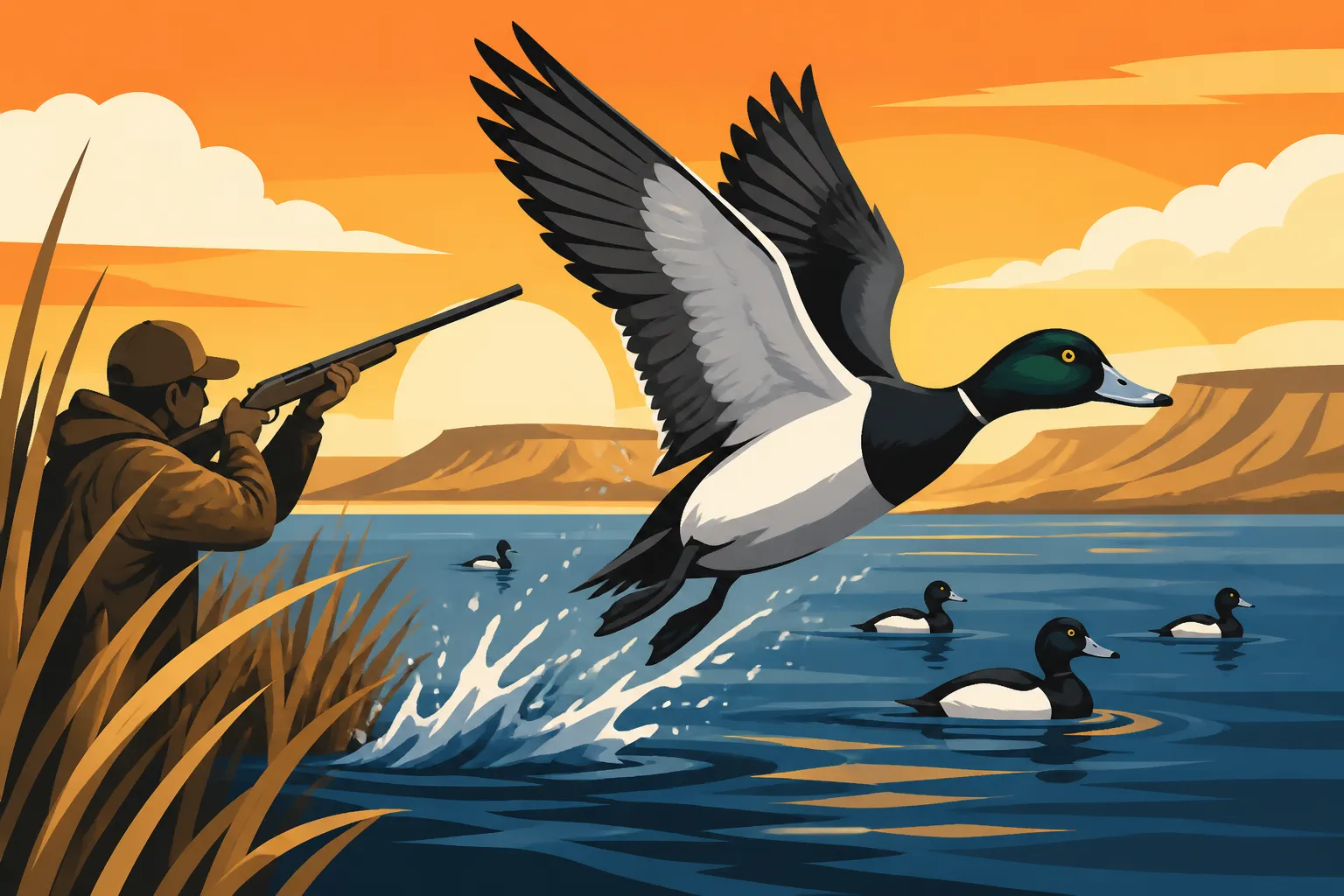
Diver Ducks on South Dakota Reservoirs
Hunting diver ducks on South Dakota's vast reservoirs presents a unique and often challenging experience, far different from jump-shooting a small prairie pothole or setting up for mallards in a stubble field. Many hunters find themselves frustrated by the sheer scale of these waters and the seemingly unpredictable movements of these fast-flying, deep-water ducks. This guide aims to demystify the art of chasing divers on our big lakes, providing comprehensive strategies, gear considerations, and safety advice to help you connect with these incredible birds.
Understanding Diver Duck Behavior on South Dakota Reservoirs
Diver ducks, unlike their puddle duck cousins, feed predominantly underwater. This fundamental difference shapes their habitat preferences, flight patterns, and how we, as hunters, need to approach them. South Dakota's large reservoirs, particularly those along the Missouri River, offer the expansive, deep-water environments that divers thrive in, especially during migration.
Key Diver Species and Their Habits
Several species of diver ducks make South Dakota's reservoirs their temporary home during the fall migration. Understanding their individual quirks is crucial for success.
- Canvasbacks: Often considered the king of ducks, canvasbacks are powerful flyers and voracious eaters. They prefer large, open bodies of water with abundant submerged aquatic vegetation, diving deep to feast on tubers. You'll often see them flying in long, V-shaped lines or irregular bunches, hugging the contours of the main lake body. They are incredibly wary, and getting them to commit to a spread in clear weather can be a masterclass in decoy placement and concealment.
- Redheads: These striking birds are strong flyers but often appear a bit more frenzied in their flight than canvasbacks. They also prefer larger, shallower parts of reservoirs and are particularly fond of sago pondweed. Redheads are more prone to decoying than canvasbacks and often arrive in larger, looser groups, making for exciting shooting opportunities. They can be found in bays or along shorelines where the water isn't excessively deep but still provides ample food.
- Scaup (Bluebills): Both Greater and Lesser Scaup, commonly called bluebills, are abundant migrants. They are highly gregarious, often forming massive rafts on open water. Bluebills are less particular about water depth than canvasbacks and redheads, feeding on a wider variety of aquatic invertebrates and vegetation. They are often seen flying in large, undulating flocks, wheeling and diving over the water. Decoying bluebills can be a numbers game, where large spreads often attract their attention.
- Goldeneyes and Buffleheads: These smaller divers are typically late-season arrivals, often showing up when the temperatures drop and ice begins to form. They're primarily fish and invertebrate eaters and are incredibly agile flyers. You'll often find them tucked into sheltered bays or along shorelines, especially near timber or rocky points. They are curious and will often buzz a spread, making for challenging, fast-paced shooting. They typically fly in small groups, or even singly, rather than large flocks.
Migration Patterns and Timing
Diver duck migration through South Dakota is largely dictated by weather fronts and food availability further north. Early season might see some redheads and a few scaup, but the real push often comes with the first hard freezes in Canada and the northern states. Peak migration for canvasbacks and scaup usually occurs from mid-October through November. Goldeneyes and buffleheads tend to show up later, often into December, especially on the larger, slower-to-freeze sections of the Missouri River reservoirs like Lake Oahe or Lake Sharpe. Knowing when to expect different species can help you fine-tune your scouting efforts. Checking weather patterns to the north is often a better indicator than just looking at the calendar.
Essential Gear and Strategies for Reservoir Diver Hunting
Hunting diver ducks on big water requires specialized gear and a methodical approach. This isn't your grandfather's pothole hunt with a half-dozen mallard decoys.
Boat and Water Safety Considerations
First and foremost, a reliable boat is non-negotiable. South Dakota's reservoirs can get incredibly rough, incredibly fast, especially with strong prairie winds. A boat capable of handling choppy water, ideally 16 feet or longer with a stable hull design, is essential. Always ensure your boat is well-maintained, with a reliable motor (and ideally a kicker motor for emergencies), sufficient fuel, and all required safety equipment: life jackets for everyone, throw cushions, fire extinguisher, sounding device, and navigation lights. South Dakota boating regulations are strictly enforced for good reason.
Beyond the boat itself, personal safety gear is paramount. Waders are common, but if you're venturing far from shore in freezing temperatures, a full floater suit or dry suit might be a wise investment. Hypothermia is a very real danger, even if you’re a strong swimmer. Always file a float plan with someone who isn't hunting with you, detailing your location and expected return time. Cell phone service can be spotty in some remote areas of the reservoirs, so consider a satellite messenger or marine radio.
Decoy Spreads and Numbers
Diver duck spreads are typically much larger than puddle duck spreads. While you can sometimes get away with a small setup on smaller divers like buffleheads in a secluded bay, for canvasbacks and redheads on open water, bigger is often better.
- Numbers: Aim for at least three to four dozen decoys, and often 6-10 dozen or more if you're serious about attracting large flocks of bluebills or working open water. The idea is to create a highly visible "raft" that looks enticing from a distance.
- Species Specificity: While a mixed spread can work, matching your decoys to the species you're targeting is ideal. Canvasback and redhead decoys are larger and more visible, while a dedicated bluebill spread can consist of many smaller decoys.
- Spread Patterns:
- J-Hook or Fish Hook: A common diver spread where the main body of decoys forms a "J" or hook shape, with the "bend" of the hook downwind, creating a landing zone in the open water inside the curve. The long arm of the J acts as a visibility magnet.
- V-Shape: Similar to the J-hook, but often wider, funneling birds into the pocket.
- Large Raft: Especially effective for scaup, a dense, natural-looking blob of decoys can mimic a resting flock.
- Motion: Divers are attracted to motion. Texas rigs or gang rigs allow decoys to move naturally with the current and waves. Adding a few jerk strings or even battery-operated swimming decoys (where legal) can greatly enhance realism. Make sure your anchor lines are long enough for the water depth you're hunting; strong currents can easily pull shorter lines.
- Visibility: Use a few white, high-visibility "confidence" decoys like swans or even white gallon jugs at the very end of your spread to draw attention from afar. These act as a beacon in the vastness of a reservoir.
Blind and Concealment
Concealment is critical when hunting wary divers on open water. Unlike marsh hunting, natural cover is often sparse or non-existent.
- Layout Boats: These low-profile boats are designed for open-water hunting, allowing hunters to lie flat, almost at water level, making them nearly invisible to overhead birds. They are exceptionally effective but require a larger "tender" boat for transport and safety. Hunting from a layout boat can be quite an experience, feeling completely immersed in the environment.
- Boat Blinds: If hunting from a larger boat, a well-constructed boat blind that blends into the background (e.g., cattails along a point, dead timber, or even bare dirt if hunting an exposed island) is necessary. The key is to break up the boat's outline and ensure hunters are completely hidden until it's time to shoot.
- Shore Blinds: Sometimes, divers will work sheltered bays or points closer to shore. If you can find such a spot, a natural blind built from brush or a carefully positioned portable blind can be effective. Always ensure your blind material matches the surrounding environment.
Shotgun and Ammunition
Diver ducks are tough birds, and they fly fast. Selecting the right shotgun and ammunition is crucial.
- Shotgun: A 12-gauge shotgun is the standard, often with a 3-inch or 3.5-inch magnum chamber for heavier loads.
- Choke: Modified or Improved Modified chokes are popular choices, providing a good balance of pattern density and spread for decoying birds. Sometimes, a Full choke is useful for those high, passing shots or when birds are working wide.
- Ammunition: Steel shot is legally required for waterfowl. For divers, heavier payloads and larger shot sizes are often preferred. #2 or #1 steel shot is common for canvasbacks and redheads, offering good energy transfer and pattern density at typical decoying ranges. For smaller divers like bluebills and buffleheads, #3 or #4 steel can be effective. Pattern your chosen loads with your shotgun and choke to see how they perform at various distances. Many hunters find Federal Black Cloud or Kent Fasteel to be reliable choices.
Finding and Accessing Prime Diver Duck Habitat
The sheer size of South Dakota's reservoirs can be intimidating, but careful scouting and understanding diver preferences can narrow down your search.
Scouting Techniques and Tools
Effective scouting is the bedrock of successful diver hunting. You can't just show up and expect birds to be everywhere.
- Glassing: High-powered binoculars (10×42 or 12×50) and a spotting scope are indispensable. Spend time at high vantage points overlooking large sections of the reservoir, especially at dawn and dusk, to identify flight paths and rafting areas. Pay attention to changes in wind direction and how it influences where birds congregate.
- Topographic Maps and Aerial Imagery: Tools like GoHunt can be incredibly valuable for e-scouting. Look for subtle changes in bottom contour, submerged points, shallow flats near deep water, and areas with identifiable vegetation beds. These digital maps allow you to mark potential hunting spots and access routes long before you ever launch a boat. Analyzing satellite imagery can reveal old river channels, submerged islands, or areas with different water clarity that might hold food.
- Boat Scouting: Once you've identified potential areas, get out on the water. Use your boat's depth finder to map out bottom contours and identify submerged weed beds or other food sources. Observe how birds use the area, where they raft, and their common flight lines. Remember, birds might be in one spot one day and miles away the next, depending on weather and pressure.
- Watching the Weather: Wind is perhaps the most critical factor for diver hunting. Strong winds create chop, which divers often enjoy, and also concentrate birds in certain areas or push them towards sheltered lee shores. Knowing the forecast allows you to predict where birds might be and plan your set. Reading Wind on a Big Water Set is an invaluable skill.
Identifying Key Reservoir Features
Divers aren't randomly scattered across the open water; they favor specific types of habitat.
- Submerged Points and Shoals: These underwater structures often create current breaks and concentrate food sources, making them magnets for divers. Birds will often feed on the shallower edges and raft in the slightly deeper water nearby.
- Large Bays and Flats: Expansive, shallower bays with good aquatic vegetation are prime feeding grounds for redheads and canvasbacks. These areas can offer some shelter from strong winds, making them attractive loafing spots.
- River Channels and Current Breaks: On the Missouri River reservoirs, where the river current still holds sway, divers will often feed in slower-moving sections or behind islands and sandbars where currents create eddies and deposit food. Pay attention to where the water changes character.
- Islands and Exposed Structure: Islands, whether natural or man-made, can provide a focal point for diver activity, especially if they offer some lee from the wind or have surrounding shallow feeding areas. Look for any exposed rock formations or timber that breaks up the open water.
Accessing Public and Corps of Engineers Land
Many of South Dakota's large reservoirs, especially the Missouri River chain, are bordered by public land managed by the U.S. Army Corps of Engineers. These areas offer excellent opportunities for public access, but knowing the rules is vital.
- Corps of Engineers Shoreline: Large stretches of shoreline along Lake Oahe, Lake Sharpe, and Lake Francis Case are publicly accessible. Hunters often launch boats from designated ramps and motor to remote points or islands. Always be aware of specific regulations regarding temporary blinds, vehicle access, and camping. Some areas may have restrictions or require special permits.
- Walk-In Access: While diver hunting is primarily a boat-based endeavor, some sheltered bays or smaller reservoirs might have Walk-In Area access or other public land that allows for shore-based hunting, especially for bluebills or goldeneyes. Using the official South Dakota Public Hunting Atlas (which can be integrated into apps like GoHunt) is essential to confirm boundaries and rules. Hunting South Dakota Walk-In Areas can sometimes extend to these big water environments.
- River Sections: Downstream from the main dams, the Missouri River itself offers unique diver opportunities, often with excellent public access along its banks or via boat ramps. These moving water sections require a slightly different strategy, focusing on current breaks and eddies.
Overcoming Challenges and Staying Safe on Big Water
Hunting diver ducks on South Dakota's reservoirs is exhilarating but comes with inherent challenges that demand respect and preparation.
Dealing with Weather and Water Conditions
The weather on the South Dakota prairie can change drastically and rapidly. What starts as a calm, crisp morning can quickly turn into a gale-force wind whipping up whitecaps.
- Wind and Waves: Always check the marine forecast before heading out. If high winds are predicted, consider hunting a more sheltered bay or postponing your hunt. High waves not only make boating dangerous but also make setting and retrieving decoys difficult and can compromise blind concealment. A big water hunter learns to read the wind and respect its power.
- Cold Temperatures: Late-season diver hunting means cold temperatures, often below freezing. Layering clothing is essential, starting with moisture-wicking base layers and adding insulating layers, topped with a waterproof and windproof outer shell. Hand warmers, insulated boots, and a thermos of hot coffee or soup can make a huge difference. Staying Warm in a December Blind is about more than just comfort; it's about safety.
- Ice Formation: As winter progresses, ice can become a major factor. Be extremely cautious when navigating around ice. Early thin ice can damage boats and be treacherous for retrieving birds. Later, large ice sheets can completely block access. Some hunters specifically target "open water holes" in otherwise frozen reservoirs, as these can become diver magnets, but this requires extreme caution and specialized equipment.
Ethics and Responsible Hunting
Respect for the resource, other hunters, and the environment is paramount.
- Decoy Spacing and Courtesy: If another hunter has a spread set up, give them ample room. Diving into someone else's space is poor etiquette and can ruin both hunts. Look for unoccupied points or bays, or communicate with other hunters if possible.
- Retrieving Cripples: Diver ducks are notoriously tough, and a crippled bird can swim and dive long distances. Always prioritize retrieving crippled birds immediately to minimize suffering and prevent waste. A good dog is invaluable for this, but if hunting without one, be prepared to chase down every bird.
- Bag Limits and Regulations: Know the current South Dakota duck season zones, daily bag limits, and possession limits. These can vary by species, so identifying your birds quickly is crucial. South Dakota Duck Bag Limits are important to understand before you head out.
- Leaving No Trace: Pack out everything you pack in. Leave your hunting spot cleaner than you found it. This includes spent shell casings, food wrappers, and any broken decoy lines. Maintaining good relationships with landowners and respecting public lands ensures access for future generations.
Hunting diver ducks on South Dakota's reservoirs is a challenging pursuit, but the rewards are immense. The thrill of watching a flock of canvasbacks cup their wings over a big water spread, or the fast-paced action of bluebills buzzing your decoys, is an experience unlike any other. With the right preparation, gear, and a healthy respect for the power of these vast waters, you can unlock some of the most exciting waterfowl hunting South Dakota has to offer.
Disclaimer
This article is for general informational purposes only and does not constitute professional advice. Laws, prices and regulations vary by location and change over time. Consult a qualified professional for guidance on your specific situation.