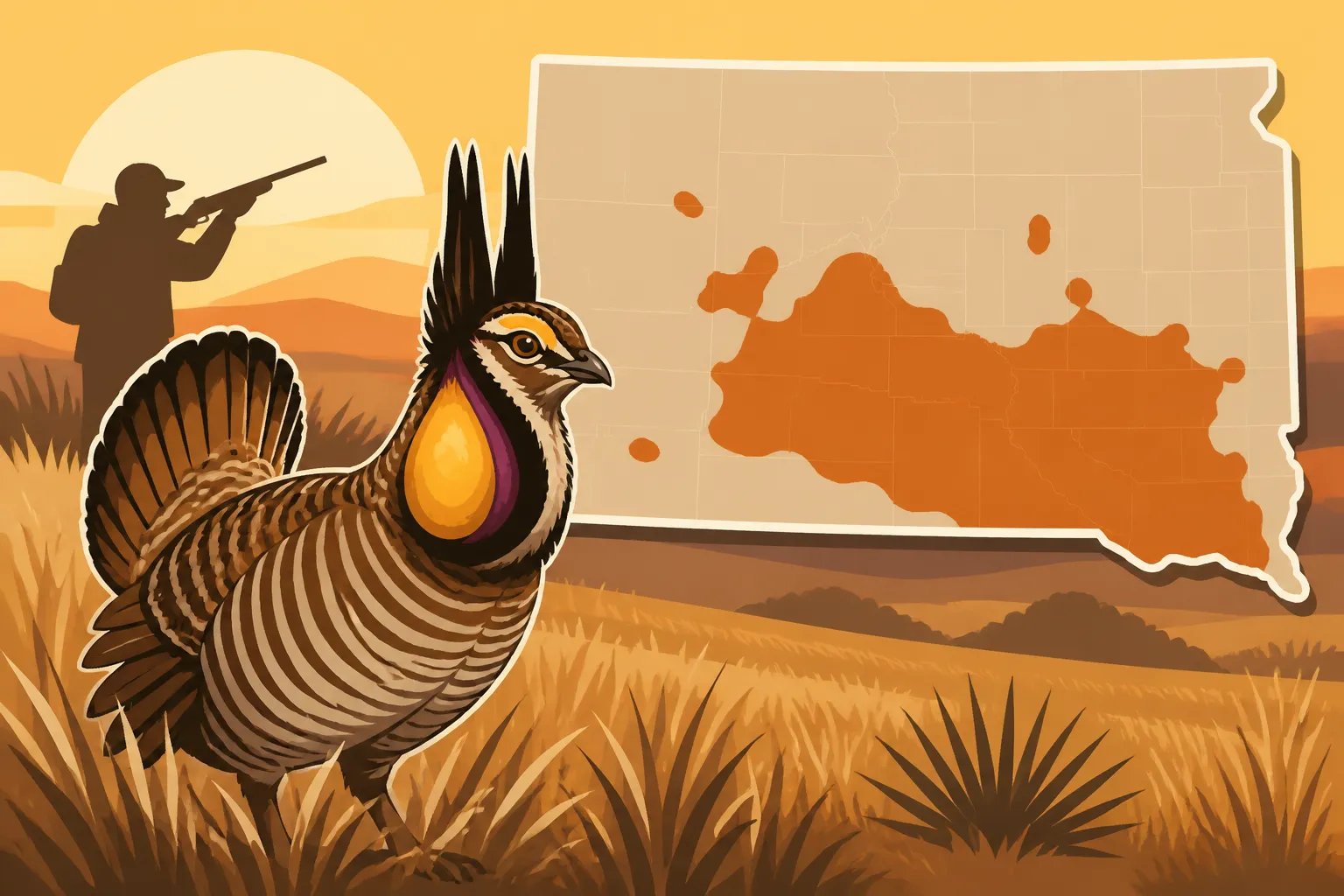
Greater Prairie Chicken Range in South Dakota
If you've ever found yourself daydreaming about hunting South Dakota, chances are pheasants dominate those visions. But for a certain kind of hunter, one drawn to the quiet grandeur of native grasslands and the challenge of truly wild birds, the greater prairie chicken holds a special allure. The real trick, though, is figuring out where these elusive birds actually call home in a state so vast and diverse. This guide is all about mapping out that range, understanding what makes it prime habitat, and offering insights into hunting these magnificent prairie dwellers.
Understanding the Greater Prairie Chicken's Native Domain
When we talk about the Greater Prairie Chicken in South Dakota, we're not just talking about any patch of grass. These birds are deeply tied to specific ecosystems, particularly the expansive, unbroken tracts of tallgrass and mixed-grass prairie that once dominated much of the central United States. While their range has shrunk considerably over the past century due to agricultural conversion, South Dakota remains a stronghold, especially in its central and eastern regions. It's a subtle landscape, often overlooked, but for the prairie chicken, it's everything.
The Heart of the Range: Central and East-Central South Dakota
The core of the Greater Prairie Chicken range in South Dakota primarily stretches across the central part of the state, often west of the Missouri River, but with significant pockets east of it as well. Think of counties like Hyde, Faulk, Hand, Jones, Lyman, and Brule. These areas are characterized by rolling hills, expansive native grasslands, and often include federal lands like the Fort Pierre National Grassland. It's here that you'll find some of the largest, most contiguous blocks of the habitat they need to thrive.
However, it's not a hard-and-fast line. As you move further east, where row crops become more dominant, the prairie chicken presence becomes spottier, often clinging to Conservation Reserve Program (CRP) lands, large pastures, or state Game Production Areas that mimic their preferred native habitat. Even in these fringe areas, finding a solid block of land where these birds can complete their entire life cycle – from booming grounds (leks) in the spring to nesting and brood-rearing cover in the summer, and winter survival in heavy grass – is key. Hunters often use tools like the South Dakota Public Hunting Atlas to pinpoint these crucial areas, layering various land types to identify potential hot spots.
Distinguishing from Sharp-tailed Grouse Habitats
It's crucial to understand that while Greater Prairie Chickens and Sharp-tailed Grouse often share portions of South Dakota, their primary habitat preferences, while similar at first glance, have distinct differences. Sharp-tailed Grouse are more adaptable, thriving in a wider variety of mixed-grass and even shrub-steppe environments, and can tolerate more broken landscapes. They're often found further west in South Dakota, in sandhills and more rugged, shorter-grass country.
Greater Prairie Chickens, on the other hand, are true aficionados of the deeper, taller native prairies. They need those expansive, dense stands of grasses for nesting and security, which often makes them harder to find if you're not specifically keying into their preferred cover. If you're seeing a lot of shorter, sparser grass mixed with more brush and small trees, you're likely in prime sharp-tail country. If it's endless waves of big bluestem, switchgrass, and Indian grass, you're getting closer to where a prairie chicken might be booming. Understanding these subtle differences is vital for both conservation efforts and for hunters trying to key into the right species. You can dive deeper into this distinction by exploring Telling Sharptails From Prairie Chickens.
The Essential Habitat Elements for Prairie Chickens
Prairie chickens aren't just looking for "grass." They have very specific needs that dictate their survival and, therefore, their distribution. Their entire annual cycle revolves around finding the right mix of cover for different life stages. When you understand these elements, you can better predict where you might find them and, conversely, why they might be absent from seemingly similar areas.
Tallgrass and Mixed-Grass Prairie Ecosystems
The cornerstone of prairie chicken habitat is intact tallgrass and mixed-grass prairie. This isn't just any pasture; it's a complex ecosystem defined by a diversity of native grasses and forbs that provide multiple layers of cover. In the spring, these dense stands offer concealment for booming grounds (leks), where males gather to perform elaborate courtship displays. Later, the same cover provides ideal nesting sites for hens, protecting eggs and incubating birds from predators and the elements.
During the summer, the structure of these grasses allows for easy movement for chicks while still offering overhead cover from raptors. The diverse plant life also supports a healthy insect population, which is a critical food source for growing chicks. Without large, contiguous blocks of this native prairie, prairie chickens struggle to maintain viable populations. This is why areas like the Fort Pierre National Grassland are so vital – they represent some of the last large remnants of this crucial habitat type. Hunters using mapping software, like those on GoHunt, often scrutinize satellite imagery for these signature unbroken blocks of native prairie.
The Importance of Undisturbed Nesting and Brood-Rearing Cover
Beyond just having tallgrass, the quality and undisturbed nature of that cover are paramount. Hens need several acres of dense, undisturbed cover to successfully hatch a clutch of eggs. Too much haying, heavy grazing, or constant human disturbance during the nesting season can devastate reproductive success. Brood-rearing cover, where chicks spend their first weeks, needs to offer a balance of dense cover for protection and more open areas rich in insects.
Think of it as a natural nursery. The grass needs to be tall enough to hide a hen on her nest, yet open enough at ground level for tiny chicks to navigate and forage for bugs. Areas enrolled in CRP (Conservation Reserve Program) can provide excellent substitute habitat, mimicking these conditions. These lands, often taken out of agricultural production, offer the dense, undisturbed cover prairie chickens desperately need. When scouting, especially with a tool like GoHunt, looking for these specific habitat types on public access areas or where you've secured permission is a significant step towards success.
Historical Declines and Conservation Efforts
The story of the Greater Prairie Chicken is one of dramatic decline, echoing that of many prairie-dependent species. Understanding this history helps underscore the importance of their remaining strongholds in South Dakota and the ongoing efforts to ensure their future. It also explains why finding them can be such a unique challenge.
The Impact of Agricultural Conversion and Habitat Fragmentation
The most significant factor in the prairie chicken's decline has been the widespread conversion of native prairie to agriculture, particularly row crops like corn and soybeans. These agricultural lands simply don't provide the diverse, undisturbed cover required for prairie chickens to complete their life cycle. What remains of their habitat is often fragmented into smaller, isolated patches, making it difficult for populations to thrive and for individual birds to disperse and find mates.
Imagine a vast ocean of grass shrinking to scattered islands. That's essentially what has happened to prairie chicken habitat. Each time a large tract of native prairie is plowed under, it's a little less ocean for these birds. While South Dakota still boasts significant acreage of native prairie, especially west of the Missouri River, the ongoing pressure to convert even marginal lands remains a constant threat. This fragmentation also makes them more vulnerable to predation and reduces genetic diversity within isolated populations.
Current Conservation Initiatives and Their Role
Fortunately, various conservation efforts are underway to protect and restore prairie chicken habitat. Programs like the Conservation Reserve Program (CRP) pay landowners to convert marginal cropland back into native grasses, creating crucial nesting and brood-rearing cover. These CRP fields often provide vital stepping stones and larger blocks of habitat that connect existing native prairies.
Organizations like Pheasants Forever and the National Wild Turkey Federation also play a role, working with private landowners and state agencies to implement habitat improvement projects, including prescribed burning, rotational grazing, and establishing native grass plantings. The South Dakota Game, Fish and Parks also manages numerous Game Production Areas that are specifically designed to provide high-quality habitat for prairie grouse. While the overall trend for prairie chickens across their historic range is still concerning, these targeted efforts in places like central South Dakota are critical for maintaining the populations that remain. Studying the habitat types available on public lands, sometimes visualized through applications like GoHunt, can illuminate where these conservation efforts are making the biggest difference.
Hunting Prairie Chickens within Their Range
Hunting prairie chickens is an experience steeped in tradition and the unique challenge of the prairie. It's not a high-volume shoot like pheasants, but rather a more nuanced pursuit that demands an intimate understanding of the birds' habitat and behavior. Success often hinges on knowing where to look within their defined range.
Key Areas and Public Land Opportunities
As discussed, the central and east-central regions of South Dakota are your best bets for finding Greater Prairie Chickens. Specifically, look to counties with large tracts of native grassland, often interspersed with CRP. The Fort Pierre National Grassland is arguably the most significant public land opportunity for prairie chickens, offering tens of thousands of acres of prime habitat. However, it's a huge area, and knowing how to break it down is key. Tools like GoHunt can be invaluable for e-scouting, allowing you to identify blocks of unbroken native grass, find potential water sources, and plan your access points.
Beyond the National Grasslands, many state Game Production Areas (GPAs) and Walk-In Areas (WIAs) also hold prairie chickens, particularly those managed for native prairie species. These areas can be smaller but often provide excellent habitat if they're part of a larger grassland complex. Always check the South Dakota Hunting Handbook Release for specific rules and regulations concerning these public access lands.
| Feature / Location | Primary Bird Species Targeted | Key Habitat Traits | Common Hunting Methods |
|---|---|---|---|
| Central SD Native Prairie | Greater Prairie Chicken | Tallgrass, dense cover, leks in spring | Walking large blocks, pointing dogs |
| West River Mixed-Grass | Sharp-tailed Grouse | Mixed-grass, shorter, some brush/sandhills | Walking draws, flushing dogs |
| Fort Pierre National GL | G.P. Chicken & Sharp-tail | Expansive mixed-grass, rolling hills | Walking, driving two-tracks, glassing |
| East River CRP Fields | G.P. Chicken & Pheasant | Dense standing grass, often near agriculture | Walking with dog, working edges |
| Black Hills Timber | Ruffed Grouse (rare) | Coniferous forest | Walking logging roads, dense timber |
Tactics for Locating and Approaching Prairie Chickens
Unlike pheasants that often flush close and hard, prairie chickens can be notoriously wary, often flushing far out of range. Locating them typically involves extensive walking over large areas of open grassland, often into the wind to give your dog the best chance to scent birds. Dogs, particularly wide-ranging pointing breeds, are incredibly valuable for finding these birds in such vast landscapes. For more on how different breeds perform, check out Pointing Dogs Versus Flushers on Wild Birds.
You'll want to focus on areas where the taller, denser grasses transition to slightly shorter cover, or along the edges of thicker stands that offer both protection and foraging opportunities. Early morning and late afternoon are generally the best times to find them actively feeding or moving. Midday can see them hunkered down in the densest cover, making them extremely challenging to locate. Some hunters also use binoculars to glass vast expanses from a vantage point, looking for movement or the distinctive silhouette of a bird on a small rise, before planning a stalk. For broader insights into finding prairie grouse, South Dakota Prairie Grouse and Partridge provides more information on their general behaviors.
A good mapping app on your phone or GPS, perhaps combined with a subscription service like GoHunt, can be a game-changer for navigating these huge, often featureless landscapes. It allows you to track your progress, mark bird flushes, and ensure you stay within public land boundaries or your permission. Always be prepared for long walks, unpredictable weather, and the quiet beauty of the South Dakota prairie – because hunting prairie chickens is as much about the experience as it is about the birds themselves.
Disclaimer
This article is for general informational purposes only and does not constitute professional advice. Laws, prices and regulations vary by location and change over time. Consult a qualified professional for guidance on your specific situation.