Belle Fourche River Access
For many hunters, the quest for promising new ground often leads them away from the well-trodden paths to places like the Belle Fourche River. This river system, winding through the western part of South Dakota, offers a different kind of challenge and reward compared to the more renowned Missouri River breaks or eastern prairie potholes. Figuring out exactly where you can legally access this ribbon of life through a landscape dominated by private holdings can be a real head-scratcher, leaving many feeling frustrated before they even leave the driveway. This guide is here to untangle the complexities of hunting access along the Belle Fourche River, helping you pinpoint those elusive public seams and navigate the nuances of gaining private land permission for a successful hunt.
Understanding the Belle Fourche River Hunting Landscape
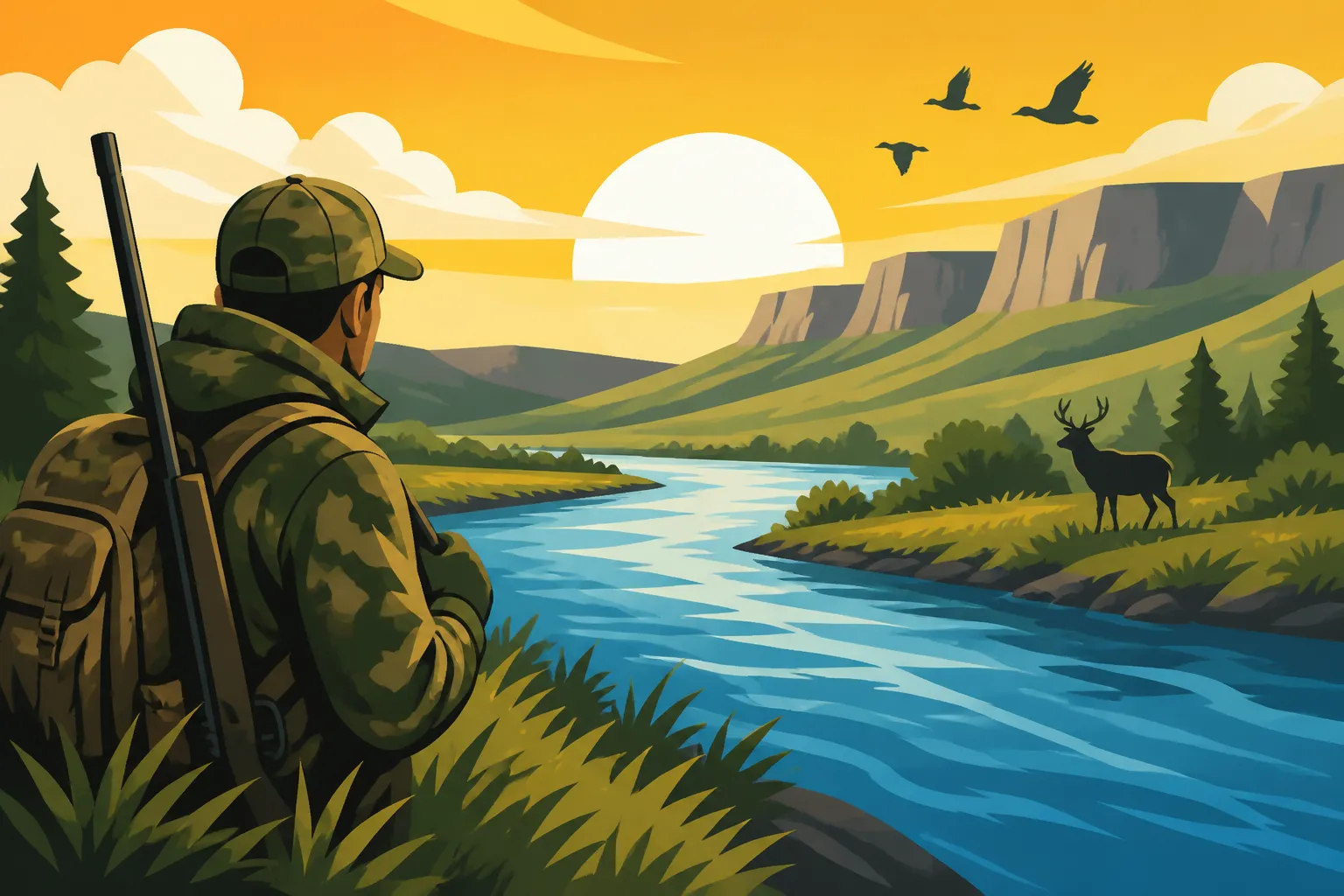
The Belle Fourche River is a vital artery in West River South Dakota, flowing eastward from Wyoming through rolling grasslands, badlands, and agricultural areas before eventually joining the Cheyenne River. This isn't a wide, navigable river like the Missouri; rather, it’s a more intimate, often meandering waterway, creating diverse habitats along its banks. For hunters, this translates into a mix of opportunities for big game, upland birds, and even some waterfowl, depending on the specific stretch of river and the surrounding land use.
The biggest hurdle for hunters looking at the Belle Fourche is the sheer dominance of private land. Much of the river’s length, particularly as it winds through ranching country, is bordered by privately owned property. This can make simply driving to the river and expecting public access a quick lesson in disappointment, as "No Trespassing" signs are a common sight. However, this private land tapestry also means that those who put in the effort to secure permission or find the less obvious public parcels often encounter less hunting pressure and a more pristine experience. The landscape changes as the river flows, from more rugged, broken country in its upper reaches to flatter, more agricultural zones downstream, each offering unique challenges and game concentrations.
Game Species Along the Belle Fourche River
The riparian corridor of the Belle Fourche River is a magnet for wildlife in an otherwise open landscape. This water source, combined with the often-dense cover of timber, brush, and tall grasses along its banks, provides critical habitat for several sought-after game species.
- White-Tailed Deer: These adaptable deer thrive in the dense cover and fertile grounds of river bottoms. The Belle Fourche provides consistent water, browse, and thermal cover, making it prime whitetail habitat. Hunters can expect to find them tucked into thickets, along oxbows, and feeding in adjacent agricultural fields, especially during the early morning and late evening hours. These river systems are key travel corridors for bucks throughout the rut, offering exciting opportunities for those willing to put in the time to scout. You'll find these whitetails exhibiting patterns similar to those described in White-Tailed Deer Across South Dakota.
- Mule Deer: While often associated with the wide-open breaks of West River, mule deer will utilize the draws and rougher country leading down to the Belle Fourche. They tend to prefer the more open, broken terrain adjacent to the river bottom, especially where sagebrush and junipers offer good bedding. Hunters might encounter them higher up on the ridges or filtering down to the water sources during dry periods. Learning to differentiate between these two deer species is also important, as their behavior can vary significantly. Understanding Mule Deer on the West River Breaks can help you recognize their preferred habitat in this transitional zone.
- Upland Birds: Pheasants can be found in suitable habitat along the river, particularly where agricultural fields meet denser cover. Think about the edges of corn or sunflower fields where they merge into cattails or thick brush along the river. Sharp-tailed grouse might also utilize areas with more native prairie grasses bordering the river breaks.
- Waterfowl: Depending on the time of year and water levels, stretches of the Belle Fourche River can attract various duck species. Small pockets of open water, sloughs, and back channels can be worth exploring, especially during migration periods.
Challenges of River Corridor Hunting
Hunting along any river system presents its own set of challenges, and the Belle Fourche is no exception. First and foremost is the often-rugged terrain. While some areas are relatively flat, many sections feature steep banks, deep cuts, and dense riparian vegetation that can be tough to navigate, especially with a dog or when packing out game. Water crossings can also be an issue during higher flows, limiting access to certain areas without specialized equipment.
Another significant challenge is the linear nature of the habitat. Wildlife, especially deer, will often follow the river, meaning they can quickly move from public land to private land or vice versa. This requires hunters to be acutely aware of property boundaries at all times. EHD outbreaks can also impact deer populations, so staying informed about local conditions is always wise. The river acts as a natural funnel and sanctuary, making it a desirable location for game, but also making access and ethical hunting practices paramount.
Navigating Public Access Points Along the Belle Fourche
While much of the land bordering the Belle Fourche River is privately owned, there are still crucial public access points available to hunters. Finding these can feel like searching for a needle in a haystack without the right tools and strategies. It requires diligent e-scouting, map study, and sometimes, good old-fashioned boots-on-the-ground reconnaissance.
Utilizing Online Mapping Tools
Modern hunting has been revolutionized by digital mapping applications. Tools like onX Hunt and GoHunt are absolutely indispensable for identifying public land parcels along the Belle Fourche River. These platforms overlay property ownership data onto satellite imagery, clearly delineating public lands (like National Grasslands, State Game Production Areas, and Walk-In Areas) from private parcels.
When using these apps, zoom in on the Belle Fourche River and look for color-coded public land segments. Pay close attention to:
- National Grasslands: While the major National Grasslands (like Buffalo Gap and Fort Pierre) are not directly on the Belle Fourche for significant stretches, smaller, fragmented federal parcels managed by the Bureau of Land Management (BLM) or US Forest Service might exist near the river, especially in the western parts of its course. These typically show up as green or light blue on mapping apps.
- State Game Production Areas (GPAs): South Dakota's Game, Fish and Parks (GFP) manages various GPAs across the state, and some might be strategically located along or near the Belle Fourche, offering prime habitat. These are specifically acquired and managed for public hunting access. You can learn more about these areas in South Dakota Game Production Areas.
- Walk-In Areas (WIAs): This program leases private land for public hunting access. WIAs are often fields, grasslands, or timber blocks that border private crop ground, and sometimes, river frontage. These can be goldmines for access. Always check the current year's South Dakota Walk-In Areas Explained maps, as WIA parcels can change annually based on landowner agreements.
When you're e-scouting, don't just look for large blocks of public land. Often, small, overlooked fingers or strips of public ground can provide foot access to adjacent private land where you've secured permission, or they can act as staging areas for morning hunts. Use the satellite view to identify cover, pinch points, and potential travel corridors for deer. Checking onX Layers for South Dakota Land Status can reveal easements and other public access opportunities not immediately obvious.
Scouting and Reconnaissance
After identifying potential public access points on your maps, the next step is usually physical scouting, if feasible. What looks like an easy access point on a map might be blocked by impassable terrain, dense brush, or a locked gate in real life.
- Drive the Roads: Drive the county and township roads that parallel or cross the Belle Fourche River. Look for public land signs, WIA placards, or Game Production Area markers. Pay attention to how the land lays, potential parking areas, and easy foot access routes.
- Observe Terrain: Note the topography. Are there draws, coulees, or natural funnels that lead into the river bottom? Where does dense cover meet more open areas? These are often prime spots for game movement.
- Look for Waterfowl Potential: If hunting ducks or geese, observe any backwaters, sloughs, or wider sections of the river that might hold birds. Identify potential blind locations or jump-shooting opportunities on lesser-traveled stretches.
- Access Routes That Don't Blow Out Birds: When you find a public access point, consider how you will approach your hunting area to minimize disturbance. Entering from downwind and staying concealed can make a huge difference, especially on pressured ground. Access Routes That Do Not Blow Out Birds is a useful guide for minimizing your impact.
| Access Method | Best Use Case | Pros | Cons | Key Tool |
|---|---|---|---|---|
| E-Scouting | Initial identification of public/private boundaries | Efficient, covers vast areas, reveals hidden access | Doesn't show real-world obstacles (fences, thick brush) | onX Hunt, GoHunt, Using the South Dakota Public Hunting Atlas |
| Road Reconnaissance | Verifying e-scouting, assessing physical access | Confirms ground truth, identifies parking, finds signs | Limited view, can't see far into cover, might disturb game | Vehicle, binoculars, maps |
| Boots-on-the-Ground | Detailed assessment of cover, trails, game sign | Most accurate, reveals specific hunting spots, finds sign | Time-consuming, limited by accessibility, can push game | GPS, good boots, keen observation |
| Asking Permission | Opening up vast private land opportunities | Access to unpressured areas, builds relationships | Requires time, social skills, potential for rejection | Map (to show landowner), respectful demeanor |
Gaining Private Land Access Along the Belle Fourche River
The reality for hunting the Belle Fourche River, particularly in many of its prime stretches, is that private land permission will likely be a significant factor. Don't let this discourage you! With a respectful approach and a bit of persistence, gaining access to private property is absolutely possible and often leads to some of the most rewarding hunts.
The Art of Asking for Permission
Approaching landowners requires patience, politeness, and preparation. Most ranchers and farmers are busy people, so timing is important. Avoid interrupting them during critical planting or harvest seasons. Late spring, early summer, or during the off-season can be ideal times to make contact.
- Be Prepared: Before you knock on a door, know whose land you're asking about. Use your mapping app (like onX Hunt or GoHunt) to identify the landowner's name if available, or confirm you're at the right address. Have a clear idea of the specific area you'd like to hunt and for what species.
- Dress Appropriately: While you don't need a suit, appearing tidy and respectable conveys seriousness. Leave the full camo outfit in the truck until you've secured permission.
- Introduce Yourself Clearly: State your name, where you're from, and why you're there. "Hi, my name is [Your Name], and I'm a hunter from [Your Town]. I was hoping to speak with you about the possibility of hunting deer on your property along the Belle Fourche River."
- Be Specific and Respectful: Ask for permission to hunt a specific type of game in a specific area. Offer to share your contact information. Reassure them you will respect their property, close gates, avoid driving on wet fields, and leave no trace. Offer to help them out if you see an issue on their property, like a downed fence. This builds trust and shows you're not just there to take. Read more about Asking a South Dakota Landowner for Permission.
- Understand "No": Be prepared for a "no" and accept it gracefully. Don't argue or pressure them. A polite "thank you for your time" can leave a positive impression for future encounters, or for friends of that landowner.
- Offer Something in Return: While not always expected, offering a small token of appreciation, such as helping with a chore (if appropriate and offered by the landowner), or offering some processed game meat after a successful hunt, can go a long way in building long-term relationships.
Landowner Permission and South Dakota Law
In South Dakota, it is generally illegal to hunt on private land without permission from the landowner or tenant. South Dakota Trespass Law and Posted Land outlines these regulations. Even if land is not explicitly posted with "No Trespassing" signs, permission is still required. This is a critical point that every hunter must understand and respect to maintain a positive public image and avoid legal issues.
Always carry written permission if possible, especially if the landowner grants it for an extended period or if you're hunting with a group. While not legally mandated in all cases, it provides clarity and protects both parties. When hunting along the river, be extra vigilant about property lines, as public and private parcels can be intermingled. A GPS unit with accurate mapping software is invaluable for knowing exactly where you stand.
Hunting Opportunities and Considerations on the Belle Fourche
Once you've secured your access, either on public ground or through private permission, the Belle Fourche River offers unique hunting experiences. Its diverse habitat and linear nature create interesting dynamics for pursuing various game species.
Tactics for River Bottom Whitetails and Mule Deer
The Belle Fourche River corridor is primarily excellent deer country. Both whitetails and mule deer will utilize the dense cover and water sources, though often in slightly different ways.
- River Bottom Whitetails: For whitetails, focus on the thickest cover in the bends and oxbows of the river. Look for deer trails leading from these bedding areas to agricultural fields or other food sources. Treestands or ground blinds can be effective, especially if you've done your scouting to identify natural funnels or pinch points where deer are likely to pass. During the rut, cruising bucks will often follow these river corridors searching for does. Hunting Whitetails in South Dakota's Missouri River Timber offers similar tactics that can be adapted to the Belle Fourche's riparian zones.
- Mule Deer on the Edges: Mule deer will often be found in the more open, broken country immediately adjacent to the river bottom, moving into the river for water and cover as needed. Glassing the coulees and draws leading to the river at first light can be very effective. A spot-and-stalk approach, using the terrain to your advantage, is often the most productive method for mule deer in this type of country. Glassing South Dakota Breaks at First Light is a great resource for developing your glassing strategy.
- Wind Direction is Key: No matter the species, understanding and playing the wind is critical in river bottoms. Swirling winds are common in varied terrain, so always be mindful of thermals, especially during morning and evening hunts.
- Access and Egress: Plan your entry and exit routes carefully to avoid spooking game. The linear nature of the river can make this challenging, as deer will often parallel the water. Consider parking well away from your intended hunting spot and walking in.
Upland Bird Hunting in Riparian Zones
While the Belle Fourche isn't primarily known as a pheasant hotbed like some East River counties, opportunities do exist, especially where the river bottom transitions into agricultural fields or grasslands.
- Target Edge Habitat: Pheasants will hold in thick shelterbelts, cattail sloughs, and dense plum thickets that often line the river. Focus your efforts on these edges, particularly where they provide easy access to food sources.
- Dog Power: A good pheasant dog is invaluable in this thick cover. Flushers can push birds out of heavy vegetation, while pointers can help locate those roosters hunkered down tight.
- Small Drives: If hunting with a group, small drives can be effective in pushing birds out of isolated pockets of cover along the river. Designate blockers on the ends and walkers pushing through the middle. Consider strategies like Pushing a Cattail Slough With Blockers for similar cover types.
Waterfowl Opportunities
Waterfowl hunting on the Belle Fourche can be hit or miss, but it's often overlooked, offering quiet hunting for those willing to scout.
- Pothole and Backwater Scouting: Look for small, isolated potholes, oxbows, or slow-moving backwaters along the river that might attract ducks. These can be prime jump-shooting spots, or you can set a small decoy spread if you find consistent use.
- Migration Periods: The best opportunities will likely occur during the fall migration, especially when other water sources freeze up, and ducks are looking for open water.
- Concealment: Natural blinds are often available in the riparian vegetation, but be prepared to build or enhance one if needed. Good concealment is paramount for successful waterfowl hunting.
Safety and Ethics Along the River
Hunting along the Belle Fourche, like any remote area, requires adherence to safety and ethical considerations.
- Know Your Backstop: Always be aware of what is beyond your target, especially in areas with varying terrain and potential for livestock or other hunters.
- Property Boundaries: Reiterate the importance of knowing precise property boundaries. A rangefinder with a mapping overlay can be useful here, or consistently checking your onX Hunt app.
- Respect Landowners: Even on public land, be mindful of adjacent private property. Don't leave trash, don't block access roads, and be courteous to anyone you encounter. This positive behavior contributes to maintaining access for all hunters.
- River Conditions: Be aware of river levels and currents, especially if you plan to cross or utilize a boat. Safety should always be your top priority. Leaving a Trip Plan Before a Hunt is always a good practice, especially in remote areas.
The Belle Fourche River, with its blend of open prairie, rugged breaks, and dense riparian habitat, offers a challenging yet incredibly rewarding hunting experience in South Dakota. Success here hinges on thorough preparation, skillful navigation of land access, and a deep understanding of the unique environment this beautiful river creates.
Disclaimer
This article is for general informational purposes only and does not constitute professional advice. Laws, prices and regulations vary by location and change over time. Consult a qualified professional for guidance on your specific situation.