The First Bighorns Brought to Custer State Park
If you've ever hiked the rugged, pine-scented trails of Custer State Park today and caught a glimpse of a majestic bighorn sheep ram silhouetted against a granite spire, you might assume they’ve always been a natural fixture of the Black Hills landscape. But the truth is, the story of bighorns in South Dakota, and particularly in Custer State Park, is one of loss, struggle, and dedicated conservation. This guide delves into the fascinating and sometimes heartbreaking history of the first bighorns brought back to Custer State Park, examining why they vanished and the ambitious efforts to restore them.
The Silence Before the Return: Bighorns Vanish from the Black Hills
It's hard to imagine the Black Hills without its iconic wildlife today, but there was a time when the magnificent Rocky Mountain Bighorn Sheep were completely absent from South Dakota. They once roamed these very peaks, their keen eyes surveying the dramatic terrain and their powerful hooves navigating cliffs with ease. Historical accounts and archaeological findings suggest that bighorns were native to the rugged canyonlands and mountainous areas of what is now western South Dakota, including the Black Hills. They were part of a rich tapestry of wildlife that thrived before extensive European settlement.
What Happened to the Native Herds?
So, where did they go? The disappearance of the native bighorn populations across much of their historic range, including South Dakota, was a complex tragedy driven by several factors that we now understand far better. First, uncontrolled hunting played a significant role. In the era of westward expansion, wildlife was often seen as an inexhaustible resource, and market hunting, along with subsistence hunting by settlers, put immense pressure on herds. Bighorns, with their tendency to remain in specific mountain ranges, were particularly vulnerable to overharvesting.
But even more devastating was the introduction of domestic sheep. As settlers brought their livestock west, domestic sheep carried diseases, particularly various strains of pneumonia, against which wild bighorns had no natural immunity. When wild bighorn populations came into contact with domestic sheep, the results were often catastrophic, leading to widespread die-offs. Habitat loss and fragmentation due to human development, ranching, and fencing also played a part, disrupting migration routes and isolating small populations, making them more susceptible to disease and inbreeding. The combination of these pressures proved too much, and by the early 20th century, the native bighorn sheep had completely vanished from South Dakota's landscape. The silence on the cliffs where their calls once echoed was profound.
The First Tentative Steps: Reintroduction to Custer State Park
The idea of bringing bighorns back to their ancestral home was a dream for many conservationists and wildlife managers. The Black Hills, with its steep, rocky terrain and ample forage, seemed like a perfect fit. Custer State Park, with its protected status and vast wild spaces, was naturally identified as a prime location for these ambitious reintroduction efforts. The first attempts to re-establish bighorn sheep in the Black Hills, specifically within Custer State Park, marked a pivotal moment in South Dakota's wildlife conservation history.
The Initial Stocking and Their Origins
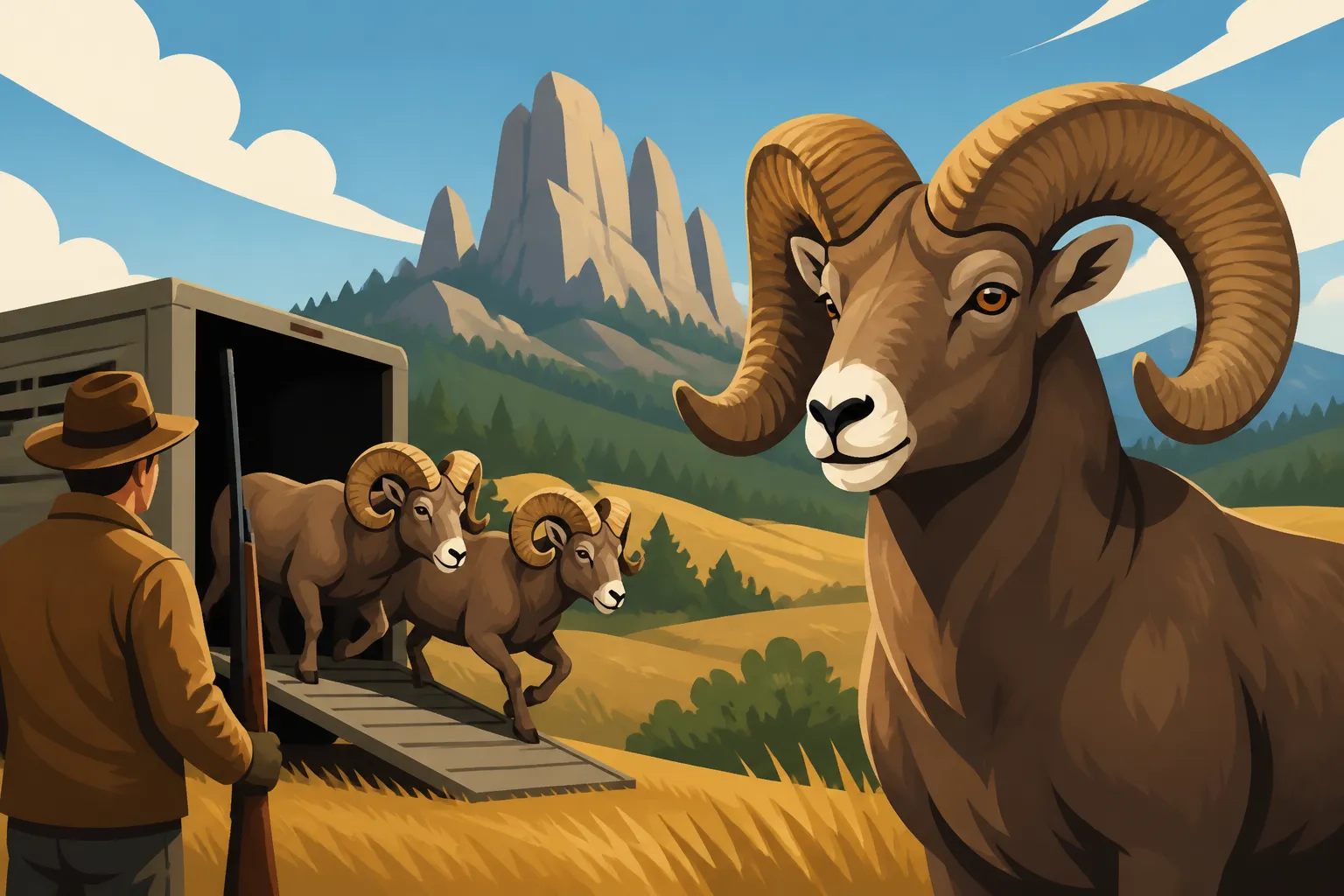
The exact timeline and origins can be a little hazy in historical records, but generally, the first significant reintroduction efforts in South Dakota began in the mid-20th century. These initial transplants were often a huge logistical undertaking, involving trapping wild bighorns from healthy, established herds in other states or Canadian provinces and transporting them, often by truck and sometimes even by air, to their new home in the Black Hills. Imagine the scene: wildlife biologists, often working in incredibly remote and rugged terrain, carefully capturing these powerful animals, ensuring their welfare during transport, and then releasing them into an entirely new environment.
These early bighorns brought to Custer State Park typically came from populations in states like Montana, Wyoming, or from Alberta, Canada. The goal was to source genetically diverse and robust animals that would have the best chance of survival. While the specific numbers varied with each release, these initial groups were often small, perhaps a dozen or two animals, carefully monitored by dedicated staff. The hope was that these small founding populations would establish themselves, reproduce, and slowly but surely expand to reclaim their former territory. It was a leap of faith built on scientific understanding and a deep desire to right a historical wrong. South Dakota Bighorn Sheep Reintroduction in South Dakota explains how these efforts continued over the decades.
Facing the Odds: Early Challenges and Setbacks
Even with the best intentions and careful planning, the path to successful bighorn reintroduction was far from smooth. The first bighorns released into Custer State Park faced a daunting array of challenges that often led to significant setbacks, testing the resolve of those committed to their return. Establishing a wild population is never as simple as just dropping animals into a new landscape and hoping for the best.
The Ever-Present Threat of Disease
One of the most devastating challenges, mirroring the reasons for their original disappearance, was disease. Bighorn sheep are incredibly susceptible to respiratory diseases, particularly pneumonia, which can be harbored by domestic sheep and goats. Even with precautions, unintended contact or lingering pathogens in the environment could decimate newly released herds. A single outbreak could wipe out years of effort, leaving biologists disheartened but determined. Bighorn Pneumonia and South Dakota Herd Setbacks details how persistent this issue has been. These disease events were often swift and lethal, highlighting the delicate balance required for bighorn health and survival.
Beyond disease, the bighorns had to contend with the rigors of a new environment, even if it was historically their home. They needed to adapt to new predators, find adequate forage and water, and navigate human infrastructure like roads and fences. The early groups were essentially pioneers, and their survival depended on their ability to quickly adapt. Predation from mountain lions and coyotes, particularly on vulnerable lambs, also took a toll. Moreover, the small size of the initial herds meant that genetic diversity was limited, making them more vulnerable to disease and environmental shifts. Understanding these complex ecological factors is crucial, and tools that compile wildlife data and habitat analysis, such as those that GoHunt offers, can provide incredible insight into historical herd performance and habitat suitability, helping biologists plan future efforts.
A Legacy of Perseverance: The Bighorns of Today
Despite the often-discouraging setbacks of the early reintroduction attempts, the perseverance of wildlife managers and conservationists eventually paid off. The lessons learned from those initial, often difficult, years were invaluable, shaping future strategies and leading to the successful establishment of the bighorn populations we see in the Black Hills today.
Building on the Early Foundations
Each failed attempt, each lost sheep, provided critical data and understanding. Biologists learned more about optimal release sites, the importance of minimizing contact with domestic livestock, and the genetic needs of small populations. They refined their capture and transport techniques, and gained a deeper understanding of bighorn ecology within the Black Hills. These continuous efforts, building on the foundations of the first bighorns brought to Custer State Park, ultimately led to more successful transplants in later decades. It wasn't one single, grand reintroduction that worked overnight, but a series of calculated, dedicated steps over many years.
Today, if you visit Custer State Park, you have a real chance to witness these magnificent animals thriving once again. The herds are a testament to what dedicated conservation can achieve. They remind us that even after a species has vanished, with enough effort, science, and public support, it is possible to restore the natural balance. For those interested in pursuing a bighorn tag, which is an extremely rare and highly coveted "once-in-a-lifetime" opportunity, understanding this history is crucial. Resources like GoHunt can be particularly helpful for researching the specific units where these animals reside, delving into population trends, and analyzing draw odds, providing aspiring hunters with valuable context for their application strategies. South Dakota Bighorn Sheep Licence Numbers and South Dakota Bighorn Draw Odds are topics many passionate hunters explore when dreaming of such a tag. The presence of bighorns today is a living monument to all those who never gave up on the dream of seeing them return.
Key Eras of Bighorn Presence in South Dakota
To put the history of bighorns in perspective, here's a simplified look at the major eras of their presence in South Dakota:
| Era | Bighorn Status | Key Characteristics | Challenges Faced | Outcome for Herds |
|---|---|---|---|---|
| Pre-1900s | Native, thriving populations | Widespread across the Black Hills and western rugged areas | Limited human pressure initially | Strong, self-sustaining populations |
| Late 1800s – Early 1900s | Rapid decline and local extinction | Unregulated hunting, disease from domestic sheep, habitat disruption | Intense hunting, rampant disease spread, habitat loss | Total extirpation from South Dakota |
| Mid-20th Century (First Reintroductions) | Initial reintroduction attempts (e.g., Custer State Park) | Small groups relocated from other states/provinces, careful monitoring | Disease outbreaks, acclimation issues, limited genetics | Often unsuccessful or short-lived herds; valuable lessons |
| Late 20th Century – Present | Subsequent reintroductions and growth | Improved management, disease mitigation, increased public and financial support | Ongoing disease risk, habitat pressures, limited expansion | Established, growing herds in specific Black Hills areas |
This table illustrates the long and winding road these magnificent animals have traveled to re-establish a foothold in their ancestral lands. The initial reintroductions, though perhaps not immediately leading to booming populations, laid the groundwork for the success stories we celebrate today.
Continued Conservation and Management
The work isn't over. While the bighorns are back, their populations require ongoing management and conservation efforts to ensure their long-term viability. This includes continued monitoring for disease, managing habitat, and ensuring that human activities don't inadvertently jeopardize the herds. Organizations and state wildlife agencies remain vigilant, often conducting aerial surveys, disease testing, and population counts to keep tabs on the health and size of the herds.
For anyone who cares about wildlife, the story of the first bighorns in Custer State Park is a powerful reminder of the resilience of nature and the impact that dedicated conservationists can have. It’s a story of hope, perseverance, and a deep connection to the wild places of South Dakota. Understanding the history of South Dakota Big Game Draws and How to Apply for these magnificent animals, or even the process for other species like South Dakota Elk in the Black Hills and Prairie, reveals the enduring commitment to managing these precious resources for future generations.
Disclaimer
This article is for general informational purposes only and does not constitute professional advice. Laws, prices and regulations vary by location and change over time. Consult a qualified professional for guidance on your specific situation.