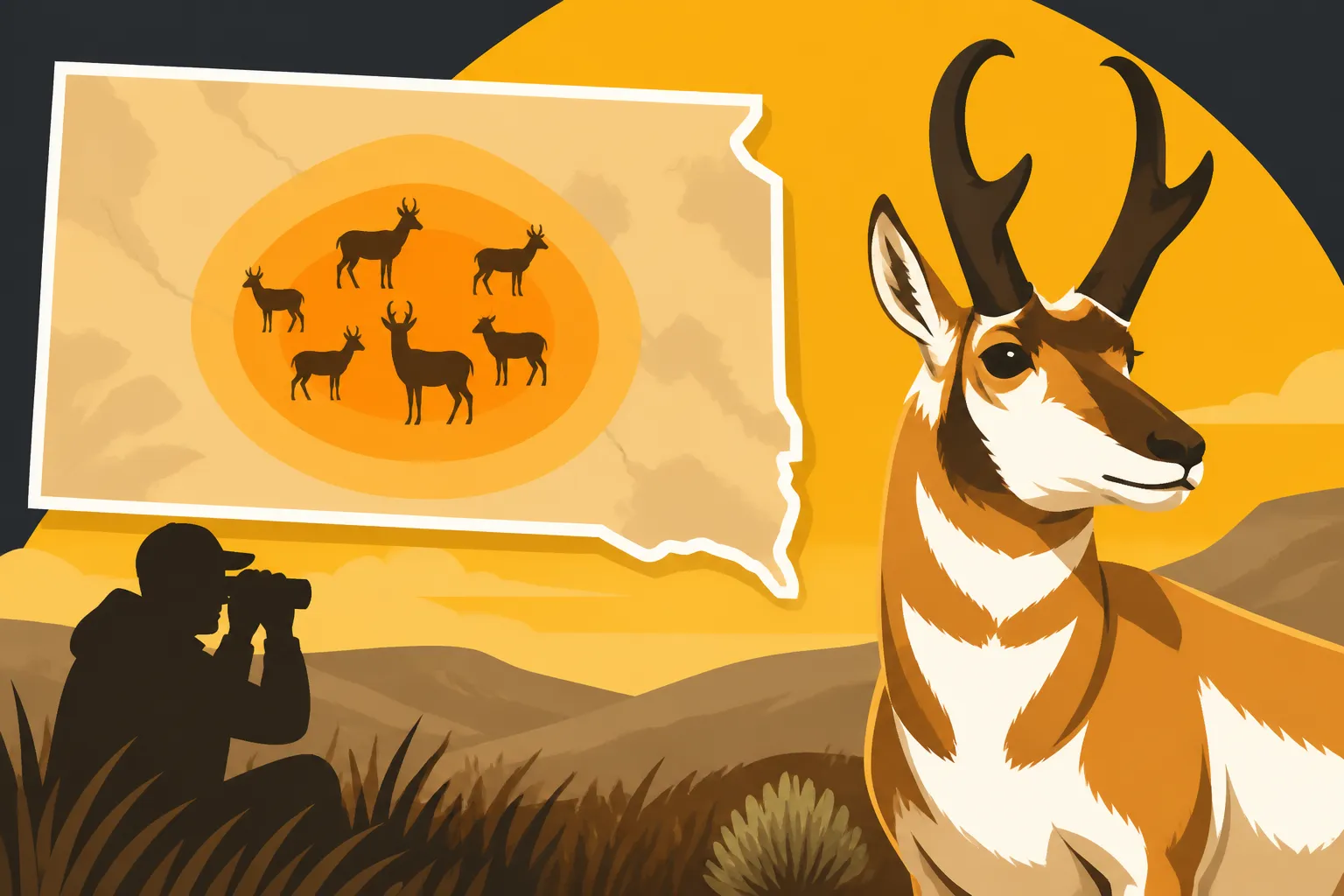
Where South Dakota Antelope Concentrate
If you've ever dreamt of chasing a South Dakota pronghorn, you know the challenge isn't just drawing a tag; it's figuring out where those elusive speedsters actually live. Unlike pheasants that hide in predictable cover or deer that favor specific timber, antelope are true creatures of the open prairie, and finding their concentrations often feels like searching for a needle in a haystack. This guide is all about pulling back the curtain on their preferred South Dakota haunts, giving you the insights you need to pinpoint where these incredible animals concentrate their numbers.
The Pronghorn's Perfect Home: Understanding Their Habitat Needs
Before you can truly find where South Dakota antelope concentrate, you need to get inside their heads a little, or at least understand their basic needs. Pronghorn aren't just randomly spread across the landscape; they meticulously choose areas that offer exactly what they need to survive and thrive on the open plains. It’s all about a combination of visibility, food, water, and subtle terrain features that allow them to be masters of their domain.
Wide-Open Spaces and Keen Senses
Pronghorn are often called "antelope," but they are actually a unique species, the last surviving member of a family that once roamed North America alongside mammoths. Their entire existence is built around the vast, unbroken expanses of the prairie. This isn't because they like the exposure; it's because their primary defense mechanism is their incredible eyesight – reputed to be eight times more powerful than a human's, allowing them to spot a threat from miles away – and their astonishing speed. They are the fastest land mammal in North America, capable of sustaining speeds over 50 miles per hour for long distances.
Because of this, they avoid dense cover like tall timber or heavy cattail sloughs. They need a clear line of sight, often preferring areas where vegetation is low-growing, like short-grass prairie, sagebrush flats, or areas with sparse, scattered shrubs. Imagine trying to run full-out through a thick forest; it just doesn't work. The same applies to pronghorn. They need unimpeded escape routes, which wide-open vistas provide. This is why you'll rarely find them deep in river bottoms or the Black Hills. Their comfort zone is where they can see danger coming from a long way off and then simply outrun it.
Forage and Water: Essential Prairie Elements
Even the fastest animal needs to eat and drink. Pronghorn are primarily browsers, meaning their diet consists largely of forbs (broad-leafed plants) and shrubs, with grasses making up a smaller portion, especially during the spring green-up. They have a remarkable ability to extract moisture from the plants they eat, allowing them to go without freestanding water longer than many other big game species. However, consistent and accessible water sources are still absolutely critical, particularly during the hot, dry South Dakota summers.
In West River country, where many antelope roam, water can be a scarce commodity. Therefore, areas with a reliable network of stock dams, natural springs, prairie potholes, or even artificial water guzzlers will often act as magnets for antelope herds. Think about how much more concentrated deer are around a food plot in the fall; antelope will similarly gather around the most reliable water and forage patches. When you're Scouting a South Dakota Unit From Home, these water features should be marked as potential hotspots. These spots become especially important during drought years when natural moisture is minimal.
Rolling Terrain and Escape Routes
While pronghorn crave open spaces, they aren't fond of flat, featureless plains either. They are incredibly adept at using subtle changes in elevation to their advantage. Gently rolling hills, shallow coulees, and the fringes of badlands breaks provide crucial benefits. These undulations offer pockets of shelter from harsh winds, especially in winter, and concealment from predators or hunters.
A pronghorn might be bedded down in a slight depression, completely out of sight from a mile away, only to bound up and vanish over the next rise if spooked. These subtle landforms create natural travel corridors and make it more challenging for a hunter to simply drive up and spot them. When you are on a Spot-and-Stalk Antelope on Open Prairie hunt, understanding how they use these terrain features is vital. They use these rises and dips not just for cover, but also as strategic escape routes, allowing them to disappear quickly and relocate to another vantage point.
Prime Antelope Country in South Dakota: West River Strongholds
When you talk about antelope in South Dakota, you're almost exclusively talking about the West River region. The vast, open grasslands west of the Missouri River provide the ideal conditions these unique animals need. While scattered pockets can be found elsewhere, the highest concentrations and best hunting opportunities are definitively out west.
The Heart of West River: Harding and Perkins Counties
If you're looking for the epicenter of South Dakota's antelope population, look no further than the far northwestern counties of Harding and Perkins. This region epitomizes the rolling, short-grass prairie landscape that pronghorn adore. Here, you'll find vast tracts of public land mixed with large private ranching operations, creating an expansive habitat that can support large herds.
The geography is characterized by expansive plains, interspersed with sagebrush, occasional dry creek beds, and numerous stock dams. The land is less broken by agricultural fields compared to East River, offering continuous habitat. Hunters often find success here, but the sheer scale of the landscape demands extensive scouting and patience. This area is home to some of the most consistent antelope numbers, making it a prime target for those with a coveted tag. For non-residents, understanding the South Dakota Antelope Draw Odds for these units is crucial before applying.
Southern West River: Custer, Fall River, and Shannon Counties
Moving south, the landscape changes slightly, but remains prime antelope territory. Counties like Custer, Fall River, and Shannon (often referred to as Oglala Lakota County) hold significant populations. This area often features the unique geology of the Badlands fringes, combined with sprawling national grasslands. The terrain can be more broken in places, with more pronounced coulees and draws, but still maintains the openness that antelope require.
Here, you'll find a mix of federal land, particularly the Buffalo Gap National Grassland, and vast tribal lands. It's imperative to understand the land ownership and regulations when hunting in this region, especially regarding tribal land boundaries and specific licensing requirements. The interface between the open prairie and the unique badlands formations creates diverse habitat, offering antelope both feeding grounds and areas of temporary seclusion. Public Ground Near Rapid City can often include parts of these regions, attracting more hunters.
National Grasslands: Public Access Antelope Havens
The national grasslands in South Dakota are jewels for public land hunters, and they are absolutely crucial for antelope concentrations. The Buffalo Gap National Grassland, stretching across parts of western South Dakota, is perhaps the best-known for its antelope opportunities. Its expansive, uninterrupted prairie habitat is ideal. The Fort Pierre National Grassland, located more centrally West River, also holds good numbers, though it might be slightly less rugged in places than Buffalo Gap. Further north, the Grand River National Grassland in Perkins and Corson counties also provides excellent habitat.
These federal lands offer incredible public access, making them a top choice for hunters who don't have private land connections. However, "public access" doesn't mean easy hunting. These areas are vast, and the antelope are wise. Utilizing modern mapping tools, like those from GoHunt, can help you dissect these huge areas, identify key terrain features, water sources, and access points. Understanding how to navigate and hunt these areas effectively is key to success on public land. For more insights on these areas, you can look into Buffalo Gap National Grassland Hunting and Fort Pierre National Grassland Hunting.
Missouri River Breaks and Adjacent Prairies
While the deep, timbered draws of the Missouri River breaks aren't classic antelope habitat, the adjacent open prairies and the less heavily timbered, more arid sections can hold good numbers of pronghorn. As you move west from the main river corridor, the landscape quickly transitions into more open, rolling prairie. Counties bordering the Missouri, particularly those on the west side with significant grassland acreage, should not be overlooked.
Antelope here might utilize the fringes of the breaks for shelter during harsh weather but will primarily be found grazing on the higher, flatter ground. The key is to look for areas where the timber gives way to expansive grasslands, often interspersed with sagebrush. This transition zone can sometimes surprise hunters, offering opportunities where they might not initially expect them. You'll want to focus on the truly open country within or adjacent to the breaks, rather than the heavily wooded draws that deer prefer.
Factors Influencing Antelope Distribution Throughout the Year
Antelope aren't static residents; their distribution can shift based on a variety of seasonal and environmental factors. Understanding these movements and influences is crucial for pinpointing where they might be at different times.
Seasonal Movements: From Rut to Winter Range
Like most big game, pronghorn have general seasonal patterns. During the spring and summer, does often spread out into smaller groups for fawning, seeking areas with good forage and some sense of seclusion. Bachelor herds of bucks might roam more widely, often found in larger groups until the rut approaches.
The rut, typically peaking in late September and early October, is when bucks become more visible and vocal, actively seeking out and defending harems of does. During this period, antelope can be found more predictably as they concentrate in areas with high doe densities and good visibility for displaying dominance. After the rut, herds may consolidate into larger groups as winter approaches, looking for forage areas that remain accessible even with light snow cover. While South Dakota winters can be severe, pronghorn are generally quite resilient to snow, provided they can access food. Severe Pronghorn Losses in Severe Winters typically occur when prolonged, deep snow makes foraging impossible.
Drought, Water, and Green-Up
Environmental conditions play a massive role in where antelope concentrate. In dry years, water becomes the ultimate determinant of their location. Natural springs, stock ponds, and even temporary puddles will become magnets. If you're hunting during a prolonged dry spell, focus your efforts heavily on identifying every available water source in your unit. Antelope will travel surprising distances for water, and finding these crucial points can reveal their current patterns.
Conversely, after periods of rain, new "green-up" areas will emerge, offering fresh, nutritious forage. Antelope will quickly shift to exploit these new food sources, which might be scattered across the prairie. E-scouting tools, especially those that can layer vegetation maps or recent satellite imagery (often found in advanced hunting apps like GoHunt), can help you identify these ephemeral green zones.
Hunting Pressure and Refuge
During hunting season, antelope can become incredibly wary, and their distribution will often reflect the amount of pressure they're receiving. Heavily hunted public lands may see antelope push into more remote, harder-to-reach corners, or even shift onto adjacent private lands where hunting pressure is lower.
Understanding Hunting Pressure Patterns on Walk-In Areas is critical. Antelope may become almost nocturnal in heavily used areas, or simply move further away from roads and known access points. This is why targeting areas that require more effort to reach, such as those several miles from a road or parking area, can often yield better results. Consider that what looks like a great spot on a map might be too easily accessible for a truly unpressured buck.
E-Scouting and On-the-Ground Tactics for Locating Herds
Finding antelope isn't about luck; it's about strategy, persistence, and leveraging the right tools. With their incredible senses and vast habitat, you need a multi-pronged approach.
Leveraging Technology: Maps and Data
Modern hunting has been revolutionized by technology. Before you even step foot in South Dakota, spend significant time e-scouting. Utilize online public land atlases, satellite imagery, and topographic maps. Services like GoHunt are excellent for this, offering detailed maps, overlaying public and private land boundaries, and even showing land ownership details. This allows you to identify:
- Public access points and boundaries (Game Production Areas, National Grasslands, Walk-In Areas).
- Water sources: Mark every stock dam, spring, or reservoir.
- Terrain features: Identify rolling hills, draws, and flat areas that offer clear lines of sight.
- Vegetation changes: Look for areas with a mix of short grass and sagebrush.
By meticulously marking these features on your map, you create a strategic plan for when you arrive. This type of pre-season research, much like Scouting a South Dakota Unit From Home, gives you a significant advantage, allowing you to focus your precious hunting time in the most promising areas.
Glassing Strategy: The Eyes of the Prairie Hunter
Once you're in the field, your most important tool will be your optics. High-quality binoculars (10x or 12x) and a spotting scope (20-60x or higher) are non-negotiable for antelope hunting. Because they are so spread out and often blend into the landscape, you need to systematically pick apart the terrain from a high vantage point.
Set up on a prominent hill or ridge at first light, or during the last hours of daylight, and methodically glass. Break the landscape into grids and scan each section slowly, looking for movement, a flash of white, or the distinct shape of an antelope. Don't just scan; truly study the landscape. Many hunters make the mistake of glassing too fast. Remember, antelope can appear as tiny specks at extreme distances. This is a crucial skill, often refined while Glassing South Dakota Breaks at First Light for other game, and it's doubly important for antelope.
Focus on Water and Food Sources
As discussed, water is a magnet for antelope, especially during warmer weather. Plan your initial scouting and hunting efforts around known water sources. During midday, when antelope are less active, they often bed down near these water holes or in depressions that offer a slight reprieve from the sun and wind.
Similarly, identify areas with abundant forbs and shrubs. These prime feeding areas, often on gently sloping hillsides or expansive flats, will draw antelope. While they don't typically "graze" in one spot for long, they will frequent these rich feeding grounds. Observing their feeding patterns will help you predict their movements and potential bedding locations.
Understanding South Dakota Draw Odds and Unit Research
It might seem obvious, but understanding the draw odds for specific units is part of knowing where antelope concentrate. Units with higher tag quotas often align with areas of higher antelope density. Before you apply, deep-dive into the South Dakota Game, Fish and Parks (GFP) website for past harvest reports and draw statistics. This data, along with personal accounts and resources like GoHunt, can illuminate which units consistently produce opportunities.
Knowing the South Dakota Antelope Draw Odds for different units helps you set realistic expectations and apply strategically. Some units are simply better than others, year after year, due to superior habitat and consistent populations. Combining this data with your e-scouting research will lead you to the most productive areas.
South Dakota Antelope Hotspots & Characteristics
To help summarize, here's a quick look at some key regions and what makes them tick for antelope.
| Region/County | Primary Habitat Type | Key Characteristics | Public Access Considerations |
|---|---|---|---|
| Harding & Perkins Counties | Rolling short-grass prairie, sagebrush flats | High antelope density, vast, remote, numerous stock dams | Extensive National Grasslands (Grand River), some Walk-In Areas (WIAs), private ranches |
| Custer & Fall River Counties | Mix of short-grass, badlands fringes, some pines | Good antelope numbers, unique terrain, can be more broken | Buffalo Gap National Grassland, some WIAs, private ranches |
| Shannon (Oglala Lakota) County | Open prairie, rolling hills, badlands fringes | Good populations, often less road density | Primarily tribal land (requires tribal permit), some Buffalo Gap NG |
| Corson & Dewey Counties | Open plains, Missouri River breaks fringes, some ag. | Consistent numbers, often in areas transitioning from breaks to open prairie | Some National Grasslands (Grand River), WIAs, private ranches |
| Meade & Ziebach Counties | Rolling prairie, some cultivated fields | Solid populations, often found where ag meets unbroken prairie, good visibility | WIAs, some private ranches |
Finding where South Dakota antelope concentrate isn't always easy, but with patience and a focused approach, you can drastically increase your chances of success. It's about understanding their world, utilizing the tools at your disposal, and putting in the effort to find these incredible prairie racers. Happy hunting!
Disclaimer
This article is for general informational purposes only and does not constitute professional advice. Laws, prices and regulations vary by location and change over time. Consult a qualified professional for guidance on your specific situation.