South Dakota Coyote and Fox Numbers
It can be incredibly frustrating to try and understand the true picture of predator populations in a vast state like South Dakota. You hear stories, see sign, and maybe even glimpse a coyote or fox, but trying to grasp their actual numbers, where they thrive, and what influences them feels like chasing smoke. This guide aims to pull back the curtain on South Dakota's coyote and fox populations, giving you a clearer picture of these cunning predators and what that means for hunters and wildlife enthusiasts alike.
Understanding South Dakota's Predator Landscape
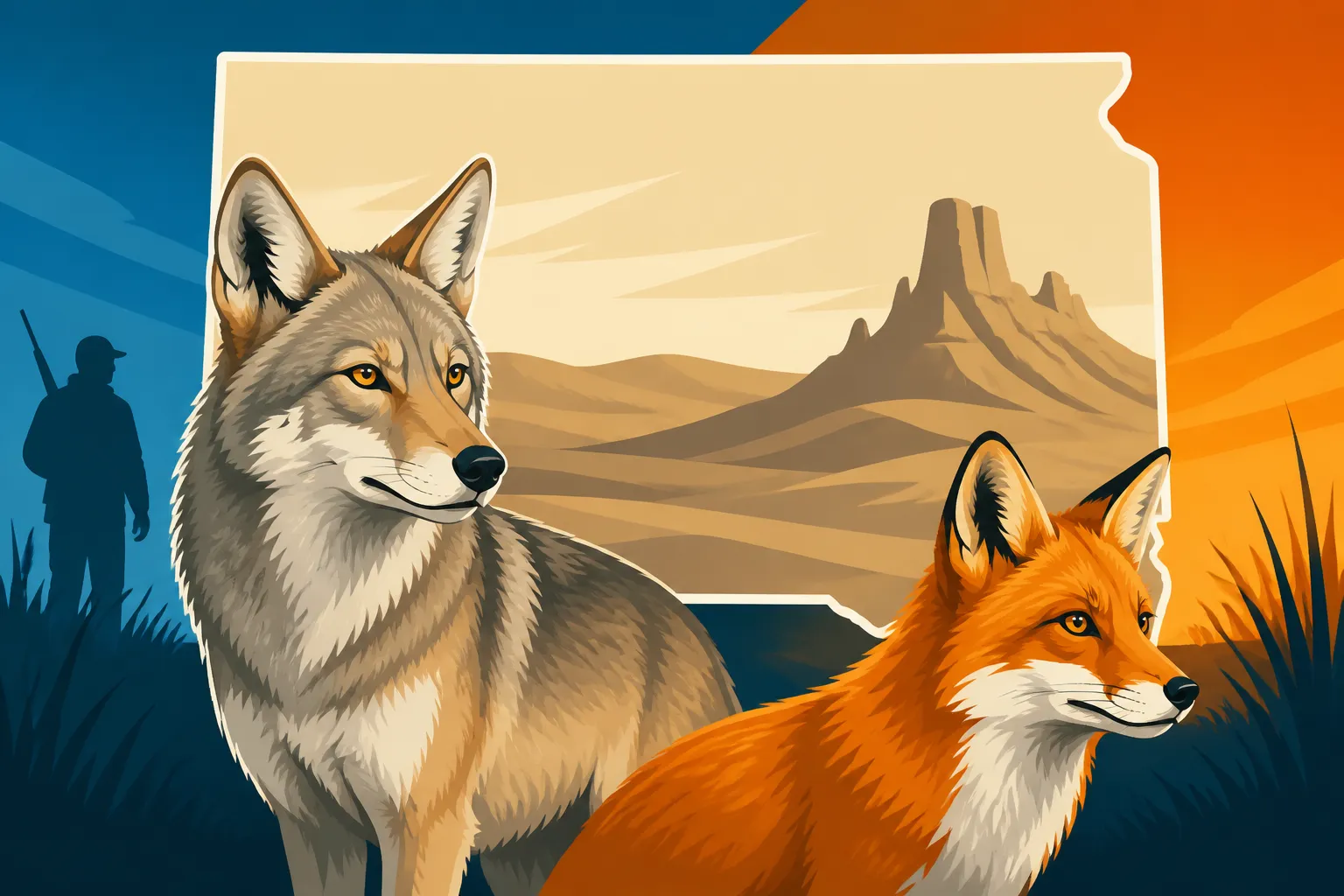
South Dakota is a diverse state, from the rolling grasslands of the West River country to the rich agricultural lands and broken timber of the East. This variety in landscape directly influences the types and numbers of predators that call it home. Coyotes are certainly the most ubiquitous, but red and swift foxes also play their unique roles in the ecosystem, each with their own preferences and challenges.
The Role of Coyotes in the Ecosystem
Coyotes, often dubbed "prairie wolves," are incredibly adaptable creatures that have truly made South Dakota their domain. You’ll find them everywhere, from the wide-open expanse of the Buffalo Gap National Grassland to the edges of cornfields near Watertown. Their diet is incredibly varied, making them resilient survivors. They'll readily prey on small rodents, rabbits, and even insects, but they're also opportunistic hunters of deer fawns and vulnerable pheasants, especially during harsh winters or nesting seasons. This broad diet means their numbers can remain relatively stable even when one particular food source experiences a downturn, which is why they are such a constant presence.
For landowners and hunters, understanding the coyote's pervasive nature is key. They aren't just out in the sticks; they're often much closer to human activity than many realize, using shelterbelts, drainage ditches, and even suburban fringes for cover and hunting grounds. Their impact on local prey populations, particularly young deer and game birds, is a frequent topic of discussion among those who value healthy populations of game species.
Red Fox and Swift Fox: A Closer Look
While coyotes dominate the predator conversation, two other canids, the red fox and the swift fox, also inhabit parts of South Dakota, each with distinct preferences. Red foxes are more associated with mixed agricultural and wooded areas, particularly in the eastern half of the state. They're smaller than coyotes, characterized by their reddish-orange fur, white-tipped tail, and black "stockings" on their lower legs. They primarily hunt smaller prey like mice, voles, and rabbits, often using their keen hearing to pinpoint critters under snow or grass. Their numbers tend to be more influenced by habitat fragmentation and competition with coyotes, who are larger and more dominant.
Then there's the elusive swift fox. This small, beautiful fox is a true prairie specialist, preferring the vast, untouched shortgrass prairies of extreme western South Dakota, often overlapping with areas like the Grand River National Grassland. They are significantly smaller than red foxes, with buff-orange fur and notably large ears. Swift foxes are listed as an endangered species in Canada and are a species of conservation concern in the US, making their presence in South Dakota a delicate balance. Their diet consists mostly of insects and small rodents, and they are much more vulnerable to coyote predation and habitat loss. If you’re lucky enough to spot one of these ghosts of the prairie, it’s a special moment. Learning to identify the distinct characteristics of each can help hunters and wildlife enthusiasts better appreciate the diversity of the state’s furbearer populations. For more details on these fascinating creatures, you can look into specific information on Red Fox and Swift Fox in South Dakota.
Factors Influencing Coyote and Fox Populations
Just like any wildlife population, the numbers of coyotes and foxes in South Dakota aren't static. They ebb and flow, influenced by a complex interplay of natural and human-related factors. Understanding these dynamics helps paint a more realistic picture of what you might encounter in the field.
Habitat and Prey Availability
The health of South Dakota's predator populations is intrinsically linked to the habitat available to them and the abundance of their prey. Coyotes, being generalists, can thrive in a wide range of environments. In the West River country, vast expanses of native prairie and rugged breaks provide ideal hunting grounds and denning sites. Here, they feed on prairie dogs, jackrabbits, and the occasional deer fawn. Further east, the mosaic of crop fields, shelterbelts, and smaller pockets of native grass offers different opportunities. Here, they might key in on corn rows for mice or hunt along creek bottoms for cottontail rabbits.
Red foxes also benefit from diverse habitats, especially those with edges where open fields meet dense cover. These transition zones offer both hunting opportunities and escape routes. The presence of dense pheasant cover, for instance, can provide a consistent food source for foxes during nesting season, impacting their local numbers. However, areas with abundant prey are also often areas with high coyote activity, which can suppress fox populations due to competitive exclusion. This intricate web of interspecies relationships constantly shapes the local predator density you might find.
Weather, Disease, and Human Impact
Severe weather can dramatically impact predator numbers. A harsh winter with deep, prolonged snow can make hunting incredibly difficult, leading to starvation for some individuals, particularly younger or weaker animals. Conversely, mild winters can allow more predators to survive, potentially boosting numbers in the following breeding season. Diseases also play a significant, if often unseen, role. Mange, rabies, and canine distemper can sweep through coyote and fox populations, causing significant localized die-offs. These natural controls are a part of the ecological balance, even if they're unpleasant to consider.
Human activity, specifically hunting and trapping, is another major factor. South Dakota has a very liberal approach to predator hunting, with year-round seasons and no bag limits on coyotes and foxes. This consistent pressure can certainly keep populations in check, especially in accessible areas. However, coyotes are notoriously resilient, and their breeding rates can often compensate for significant annual mortality, making it a constant challenge for those trying to reduce their numbers. Landowners and recreationists often seek to manage these populations, highlighting the ongoing tension between predator control and natural ecological processes. Hunters keen on pursuing predators should always be aware of the South Dakota Predator Hunting Licence Rules before heading out.
Tracking Predator Numbers in South Dakota
Unlike many game species that have formal population surveys, getting precise, statewide numbers for coyotes and foxes is incredibly challenging. These animals are elusive, wide-ranging, and highly adaptable, making traditional census methods difficult and expensive. However, wildlife managers and researchers use a variety of indirect methods to get a general understanding of population trends.
How South Dakota Monitors Populations
South Dakota doesn't typically conduct direct population counts for coyotes and foxes in the same way they might for deer or pheasants. Instead, much of the data comes from harvest reports, hunter surveys, and scientific studies on specific areas. Harvest data, collected through various means, gives a glimpse into the number of animals taken by hunters and trappers each year. While this doesn't directly tell you how many exist, consistent trends in harvest numbers can indicate if a population is generally stable, increasing, or decreasing. For example, if hunter effort remains constant but harvest numbers dip significantly, it might suggest a population decline.
Another method involves scent station surveys, where bait is placed at various locations and checked for predator tracks. The frequency of visits can provide an index of relative abundance across different habitats. Beyond formal surveys, anecdotal evidence from hunters, trappers, and landowners is invaluable. These on-the-ground observations, though not scientific, often provide timely insights into local population fluctuations. Organizations like GoHunt, with their extensive mapping capabilities, allow hunters to document their observations and scout areas more effectively, contributing to a broader understanding of where predators might be concentrating, even if it’s not official state data.
Interpreting Harvest Data and Trends
When we look at harvest data for coyotes and foxes, it's crucial to remember that it reflects more than just population size. It's also a strong indicator of hunter and trapper effort. If more people are out pursuing predators, harvest numbers might increase even if the actual population remains stable. Conversely, a decrease in harvest could mean fewer predators, or simply fewer people hunting them due to other factors like poor weather or low fur prices. The data usually indicates the total number of animals reported, but it's not a complete census.
South Dakota's annual harvest reports often provide a general picture, showing that coyotes are consistently the most harvested furbearer. Red fox harvest numbers are typically much lower, and swift fox are rarely, if ever, part of general harvest reporting due to their conservation status. These reports can show regional differences, for example, higher coyote harvest in West River counties known for their vast grasslands and ranching operations, where predator control is a common practice. Understanding these nuances helps us interpret the health of these populations without drawing hasty conclusions based solely on raw numbers. For those interested in deeper insights, analyzing the South Dakota Harvest Reporting Rules can provide more context on how this data is collected.
Regional Distribution of Coyotes and Foxes
The vastness and varied landscapes of South Dakota mean that coyotes and foxes aren't evenly distributed. Certain areas offer prime habitat, leading to higher concentrations, while others might see sparse populations or even an absence of certain species. Knowing where to expect them can significantly increase your chances of success if you're out to hunt them.
Coyote Hotspots Across the State
When it comes to coyotes, South Dakota is truly their playground. However, some regions stand out as consistent hotspots. The West River country, with its expansive rangeland, breaks, and coulees, is arguably the heartland of coyote populations. Areas like the Buffalo Gap National Grassland and the Fort Pierre National Grassland offer vast, uninterrupted habitat where coyotes can thrive, finding abundant prey and minimal human disturbance in many remote sections. This is prime territory for those looking to engage in Coyote Calling on Open Grassland. Ranchers in these areas often deal with coyotes preying on livestock, leading to higher control efforts and, consequently, higher harvest numbers. The sheer scale of the landscape provides endless opportunities for them to roam and hunt.
East River South Dakota also holds significant coyote populations, though they tend to be more concentrated in areas offering a mix of cover and food. You’ll find them along river bottoms, in large shelterbelts, and around dense cattail sloughs and wetland complexes that provide cover and access to small game. The more fragmented nature of the landscape here means coyotes often utilize smaller pockets of habitat, sometimes much closer to agricultural fields and human settlements. Understanding these regional differences is crucial for a successful hunt. Using mapping tools, like those offered by GoHunt, can help identify these prime areas and public access points across the state, even for tracking species like South Dakota Coyote Population.
Where to Find Red Fox and Swift Fox
Red foxes, while present statewide, tend to prefer the more diversified habitats found in East River South Dakota. They thrive in areas that offer a patchwork of agricultural fields, small woodlots, fence lines, and wetland edges. Counties with more timbered river corridors, such as those along the James or Big Sioux rivers, provide ideal denning sites and ample cover for hunting small rodents and birds. While they can coexist with coyotes, areas with very high coyote densities may see lower red fox numbers due to interspecies competition and predation.
The swift fox is a different story entirely. These truly wild, diminutive canids are far more restricted in their range. They are almost exclusively found in the remote, shortgrass prairie ecosystems of extreme western South Dakota, often in the counties bordering Wyoming and Montana. Think of vast, unbroken grasslands with very few trees and minimal human infrastructure. They require large expanses of this specific habitat and are particularly vulnerable to habitat fragmentation. Spotting a swift fox is a rare treat and usually indicates a healthy, undisturbed prairie ecosystem. Knowing these very specific habitat preferences is key if you ever hope to catch a glimpse of this unique South Dakota resident.
Predator Management and Hunting Opportunities
Predator management in South Dakota is a dynamic balance between ecological needs and human interests, particularly those of livestock producers and game bird enthusiasts. For hunters, it offers a challenging and rewarding pursuit, often outside the traditional big game and bird seasons.
Predator Hunting Regulations and Seasons
South Dakota offers some of the most liberal predator hunting regulations in the nation, which is good news for hunters and those looking to control populations. For coyotes and both red and swift foxes, there is typically a year-round hunting season. This means you can pursue them at any time of year, offering great flexibility. There are generally no daily or possession bag limits, meaning you can harvest as many as you legally can. However, it's crucial to remember that a valid hunting license is still required. For non-residents, this usually means a small game license, which also covers pheasants, grouse, and other small game. Residents will need a valid hunting license as well.
Night hunting for coyotes is also legal in South Dakota, provided you use an artificial light or night vision device. However, specific rules and local ordinances may apply, so always double-check the current regulations handbook for any recent changes or restrictions. The lack of strict seasons and bag limits reflects the state's recognition of coyotes and foxes as furbearers and, at times, nuisance animals. For those new to predator hunting, understanding these fundamental rules is the first step towards a successful hunt. Comprehensive details on what you need can be found by researching South Dakota Predator Hunting Licence Rules.
Strategies for Hunting South Dakota Predators
Hunting coyotes and foxes requires a blend of stealth, knowledge of their behavior, and often, patience. One of the most popular and effective methods is calling. Electronic calls loaded with distress sounds (rabbit, fawn, bird) or coyote vocalizations can draw curious or territorial predators into range. Mastering the art of the call, including proper volume and cadence, is critical. Decoying, especially with motion decoys, can add another layer of realism to your setup, distracting a wary coyote from your position. For more specific insights into this, check out tactics like Coyote Calling on Open Grassland.
Still hunting or spot-and-stalk can also be productive, especially in open country. This involves slowly moving through prime habitat, glassing extensively, and then attempting to close the distance on an animal you've spotted. This method is particularly effective in areas like the West River breaks, where terrain can be used to your advantage. Hunters often find great success using optics and practicing techniques for Glassing From a Vehicle Legally (where permitted) to spot animals at a distance before planning a stalk. For colder months, Winter Predator Hunting on Snow offers unique opportunities, as tracks can reveal recent activity and provide an easier visual contrast for spotting animals. Regardless of the method, attention to wind direction, concealment, and shot placement with a suitable Rifle Setup for South Dakota Open Country are paramount for ethical and effective predator hunting.
The Role of Technology in Predator Hunting
In today's hunting world, technology has become an indispensable tool, and predator hunting in South Dakota is no exception. From e-scouting applications to advanced optics, hunters have more resources than ever to increase their odds of success. Leveraging these tools wisely can make a significant difference in how you approach the vast and challenging landscapes of the state.
Mapping and E-Scouting for Predator Terrain
Before you even set foot in the field, modern mapping applications can be your greatest ally in predator hunting. Tools like GoHunt provide incredibly detailed aerial and topographical maps, allowing you to "e-scout" vast areas from the comfort of your home. You can identify potential denning sites, travel corridors, and ambush points by looking for features such as dense shelterbelts, deep coulees, water sources, and the edges of varying habitat types. These apps often include public land overlays, helping you to pinpoint legal hunting areas like National Grasslands Hunting in South Dakota or specific Public Hunting Land in South Dakota parcels.
By studying contour lines, drainages, and vegetation patterns, you can plan your approach to a calling setup, ensuring the wind is in your favor and you have good visibility while remaining concealed. For example, identifying a pinch point between two fields or a natural funnel along a creek bed can be a game-changer for intercepting a traveling coyote. The ability to mark waypoints, measure distances, and understand property boundaries can save you countless hours of unproductive scouting and help you avoid trespassing issues. For more on effective digital scouting, consider techniques outlined in E-Scouting Walk-In Areas Before the Season.
Understanding Predator Behavior Through Data
Beyond simply showing you the land, technology can help you understand why predators are in certain areas and when they might be most active. Many advanced mapping platforms allow you to overlay historical weather data, analyze moon phases, and even track general wildlife movements reported by other users (anonymously, of course). This kind of data can help you predict when coyotes might be more prone to respond to calls or when they might be moving between bedding and feeding areas.
For instance, knowing that coyotes often become more active after a cold front or during specific periods of the rut can inform your hunting schedule. You can also use these tools to scout for sign like scat or tracks, and then map those locations to identify patterns. Furthermore, for serious predator hunters, understanding the implications of something like Reading Snow for Deer and Predator Sign becomes much more manageable when combined with mapping technology that helps you cover ground more efficiently. While no technology can replace actual field experience, these digital aids empower hunters with a level of insight that was unimaginable just a few years ago, making them invaluable for targeting these intelligent and wary animals.
Coyote and Fox Comparison Guide
To help differentiate between these fascinating canids, here's a quick comparison of their key characteristics and habitats in South Dakota.
| Feature | Coyote | Red Fox | Swift Fox |
|---|---|---|---|
| Size | Medium-sized (20-50 lbs) | Small (7-15 lbs) | Very Small (4-7 lbs) |
| Color | Grayish-brown, tan, sometimes reddish; black-tipped tail | Reddish-orange body, white-tipped tail, black "stockings" | Buff-orange, large ears, often dark spot on muzzle |
| Habitat | Highly adaptable; grasslands, forests, agricultural, urban fringes statewide | Mixed agricultural, woodlots, river bottoms, wetland edges; primarily East River | Shortgrass prairie, very open country; extreme West River only |
| Diet | Opportunistic: rodents, rabbits, deer fawns, birds, insects, carrion | Rodents, rabbits, birds, insects, fruit | Insects, small rodents, birds |
| Activity | Primarily nocturnal/crepuscular; active anytime | Primarily nocturnal/crepuscular | Primarily nocturnal/crepuscular |
| Hunting Status | Year-round, no bag limit | Year-round, no bag limit | Protected (conservation concern), rarely hunted |
| Competition | Dominant predator, preys on foxes | Competes with coyotes, vulnerable to predation | Highly vulnerable to coyote predation |
Disclaimer
This article is for general informational purposes only and does not constitute professional advice. Laws, prices and regulations vary by location and change over time. Consult a qualified professional for guidance on your specific situation.