Chronic Wasting Disease in South Dakota
The growing concern around Chronic Wasting Disease (CWD) is a deeply unsettling reality for anyone who cares about South Dakota’s deer and elk, and it understandably casts a shadow over the excitement of hunting season. There's a real fear of what this disease means for the future of our herds and, let's be honest, for the meat we put on our tables. This guide aims to pull back the curtain on CWD in South Dakota, providing you with practical knowledge about what it is, how it's managed, and what you, as a responsible hunter, need to know and do to help.
What Exactly is Chronic Wasting Disease?
Chronic Wasting Disease (CWD) is a neurological illness affecting cervids, which include deer, elk, and moose. Unlike bacterial or viral infections, CWD is caused by abnormal proteins called prions. These aren't living organisms; they're misfolded proteins that cause normal proteins in the brain and nervous system to also misfold. It’s a bit like a bad apple spoiling the whole barrel, but on a microscopic, neurological level.
The Science Behind the Prion Threat
Imagine a complex machine where one tiny gear starts spinning incorrectly, and then it forces every other gear it touches to start spinning incorrectly too. That's essentially what happens with prions in CWD. They accumulate in the brain, spinal cord, and other tissues, slowly but relentlessly destroying nerve cells. This progressive damage leads to a variety of clinical signs you might observe in an infected animal. It’s a slow, insidious process, often taking months or even years from initial infection before symptoms become visible, which is part of what makes it so challenging to detect and manage in wild populations.
What CWD Does to an Infected Animal
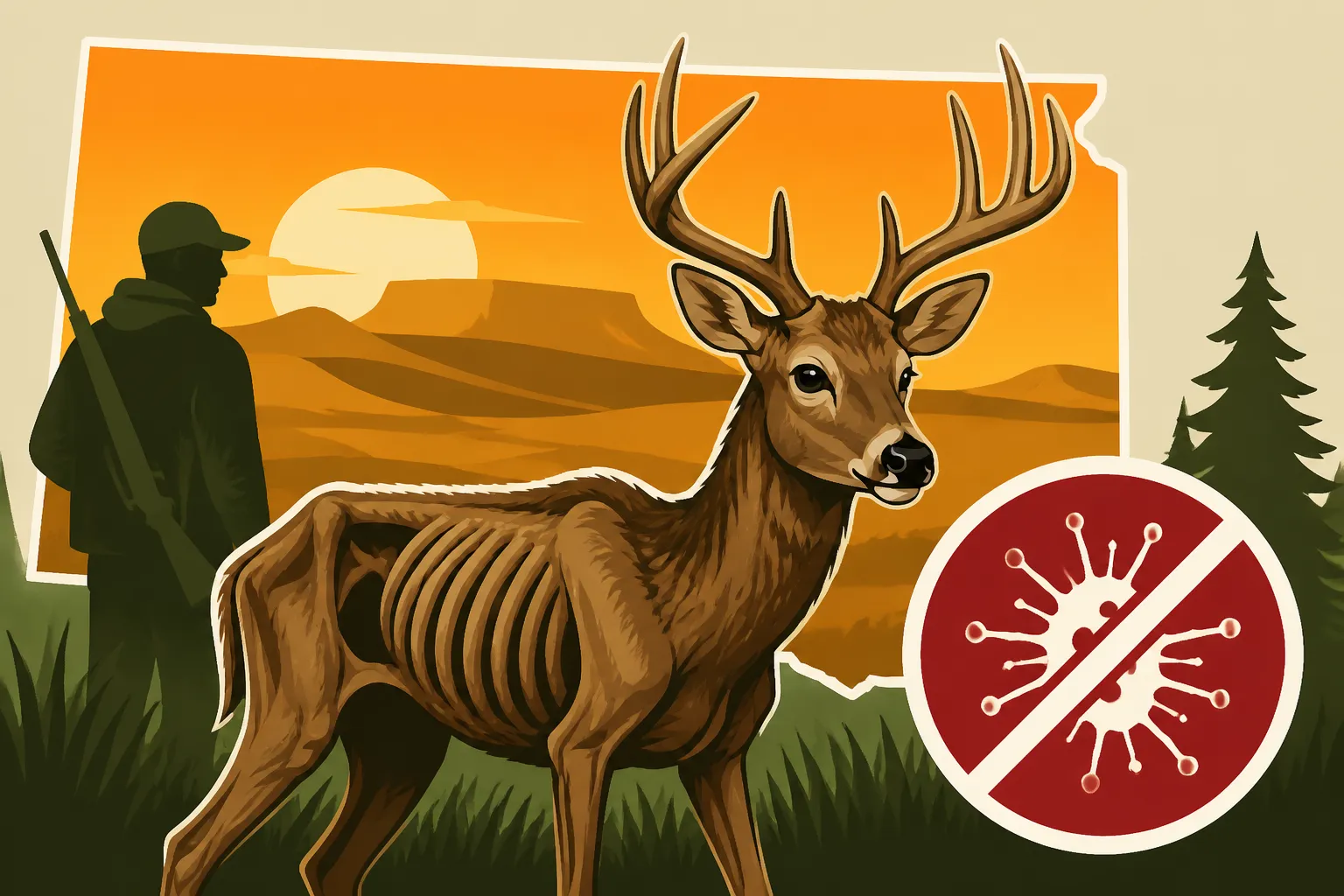
An animal suffering from CWD often exhibits a heartbreaking decline. Early signs can be subtle, easily mistaken for other ailments or simply an animal that's a bit "off." As the disease progresses, however, the symptoms become more pronounced and easier to identify, though by this point, the animal is far gone. You might see a deer or elk looking emaciated, hence the "wasting" in the name, with ribs and hip bones starkly visible. They often show behavioral changes, becoming less wary of humans, spending more time isolated, or displaying unusual head drooping. Excessive salivation, difficulty swallowing, increased thirst, and frequent urination are also common. Ultimately, CWD is always fatal; there is no known cure or vaccine. It's a terminal illness that spells a slow, painful end for any cervid unfortunate enough to contract it.
How CWD Spreads and Its Impact on Deer and Elk Populations
Understanding how CWD moves through the environment and among animals is crucial for both scientists and hunters. This isn't just about sick individual animals; it's about the long-term health and sustainability of our cherished wildlife populations. The stealthy nature of its spread makes it a particularly difficult adversary.
Routes of Transmission in the Wild
CWD is primarily spread through direct animal-to-animal contact, meaning close interactions between infected and healthy cervids. This could be through nose-to-nose contact, sharing food sources, or even during breeding season when deer and elk are in closer proximity. However, and this is where it gets really tricky, indirect transmission also plays a significant role. Infected animals shed prions through their saliva, urine, and feces. These prions can then contaminate the soil, water, and vegetation. So, an uninfected deer grazing in an area where an infected deer has been feeding or urinating can pick up the prions from the environment. This environmental persistence is a huge challenge because prions are incredibly resilient; they can remain infectious in the soil for years, possibly even decades, resisting decomposition, heat, and many disinfectants. This means that an area once contaminated can remain a source of infection long after the infected animal is gone.
Long-Term Effects on Herd Health and Numbers
The impact of CWD on a deer or elk population can be devastating, especially in areas where the disease has become endemic. In the short term, you might not see a huge difference in herd numbers, but over time, as prevalence rates increase, the consequences become clearer. CWD leads to increased mortality, particularly among older age classes, which are often the prime breeding animals. This can skew the age structure of the herd, leading to fewer mature bucks and bulls, and potentially fewer healthy fawns or calves.
Beyond direct mortality, the slow progression of the disease means infected animals are compromised for extended periods. They become more susceptible to predation, vehicle collisions, and other diseases, indirectly contributing to population decline. Think about a buck that's slowly wasting away; it's less likely to survive a harsh winter or escape a coyote attack. Eventually, if CWD prevalence becomes high enough, it can lead to significant population reductions and even local extinctions of deer or elk, permanently altering the landscape and the hunting opportunities we've come to enjoy.
Current CWD Status and Management in South Dakota
South Dakota has been actively monitoring and managing CWD for years, and while it's a constant battle, the South Dakota Game, Fish and Parks (GFP) is committed to understanding its spread and mitigating its impact. Hunters are absolutely vital in this effort, as their observations and cooperation provide critical data.
Known CWD Zones and Surveillance Efforts
CWD was first detected in South Dakota in a wild deer in Fall River County in 2000. Since then, it has slowly but surely spread, primarily in the western part of the state, particularly the Black Hills and surrounding counties like Fall River, Custer, Pennington, and Lawrence. More recently, detections have occurred in some West River prairie units, indicating continued expansion. While the core of the problem remains in the Black Hills, the creep eastward is a concern that GFP takes seriously.
GFP maintains an active surveillance program, relying heavily on hunter-harvested deer and elk for testing. They designate specific counties or management units as CWD "surveillance" or "positive" areas, often implementing special rules for hunters in these regions. For example, check stations might be set up during certain hunting seasons, or hunters might be encouraged to voluntarily submit heads for testing at specific drop-off sites. This extensive testing is how GFP tracks the disease's progression, identifies new areas of concern, and informs their management decisions. You can often find detailed maps and updates on the GFP website, which are regularly updated with new findings. Using tools like GoHunt can also help you quickly reference current regulations and CWD zones before you head out, ensuring you're up-to-date.
South Dakota's CWD Management Plan
The GFP's CWD management plan is multi-faceted, focusing on surveillance, education, and strategic harvest to slow the spread and minimize impact. One key component is mandatory or voluntary testing in high-prevalence areas, allowing biologists to gauge disease rates and identify hotspots. This is why you might encounter GFP staff asking for samples at deer check stations or see drop-off barrels during rifle seasons in certain units.
Another critical strategy involves carcass transport regulations. To prevent hunters from inadvertently moving prions to new areas, strict rules govern which parts of a deer or elk can be transported out of a CWD management zone. We’ll dive deeper into that shortly, but the basic idea is to leave high-risk tissues like the brain and spinal cord where the animal was harvested.
Furthermore, GFP uses regulated hunting to manage deer and elk populations, which can help control disease prevalence. Targeted harvest strategies might encourage the removal of older animals or a higher proportion of antlerless deer in CWD-positive areas, as these individuals are often more likely to be infected or contribute to higher population densities that facilitate transmission. The goal is not eradication, which is currently impossible, but rather containment and minimization of the disease's impact on healthy herds and future hunting opportunities.
Understanding South Dakota's CWD Testing and Carcass Transport Rules
These rules are not just bureaucratic hurdles; they are crucial preventative measures designed to protect the health of South Dakota's deer and elk. Ignoring them, even unintentionally, could have serious consequences for our wildlife.
Hunter Responsibilities for CWD Testing
As a hunter in South Dakota, you play a vital role in CWD surveillance. Depending on where and when you hunt, submitting your harvested animal for CWD testing might be mandatory or strongly encouraged. If you hunt in a CWD surveillance unit, especially during specific rifle deer or elk seasons, GFP may require you to submit your animal's head for testing. This usually involves taking the head, with at least 4-6 inches of neck attached, to a designated CWD sample collection site, such as a check station or a self-service freezer barrel. It’s a small inconvenience for the greater good of our herds.
For hunters outside of mandatory testing areas, voluntary submission is often available and highly recommended. If you harvest an animal that appears sick or emaciated, even if you’re not in a known CWD zone, please report it to GFP and consider submitting it for testing. It’s better to be safe than sorry, and your vigilance could help detect a new CWD hot spot before it spreads further. You can find detailed instructions on how to prepare a head for submission and a list of current CWD submission sites on the South Dakota GFP website. This proactive participation is what helps keep tabs on the disease.
Navigating South Dakota's Carcass Transport Regulations
Perhaps one of the most impactful CWD rules for hunters is the carcass transport regulation. This rule is designed to prevent the movement of CWD-infected materials from a positive zone to a CWD-free area. Imagine you harvest a deer in the Black Hills, a known CWD hotspot, and you want to take it back to your home near Sioux Falls. Without these rules, you could unknowingly transport infected brain or spinal cord tissue, and if that tissue somehow gets discarded in a new area, it could potentially introduce CWD there.
The general rule of thumb for CWD-positive units in South Dakota is that only certain parts of a cervid carcass can be transported out of the CWD management zone. This usually includes:
- Deboned meat
- Quarters or other large portions of meat with no part of the spinal column or head attached
- Hides and capes with no part of the head attached
- Clean skull plates (antlers attached) with all brain and nervous tissue removed
- Teeth
- Finished taxidermy mounts
- Completely clean bones (no meat or tissue attached)
Essentially, anything that could contain central nervous system tissue – the brain, spinal cord, eyes, and certain lymph nodes – must either be processed within the CWD zone or left behind. If you're butchering your animal yourself, you'll need to bone out the meat and dispose of the carcass waste responsibly within the CWD zone, preferably at a permitted landfill. If you use a processor or taxidermist, ensure they are located within the CWD zone or are aware of and adhere to the transport regulations.
Here's a quick reference table for clarity on carcass transport:
| Carcass Part | Transport Allowed Out of CWD Zone? | Notes |
|---|---|---|
| Deboned meat | Yes | All bones and nervous tissue removed. |
| Quarters (bone-in) | Yes | Must not have spinal column or head attached. |
| Hide/Cape | Yes | No part of the head attached. |
| Clean Skull Plate (antlers attached) | Yes | All brain and nervous tissue completely removed. |
| Antlers (no skull plate) | Yes | No tissue attached. |
| Teeth | Yes | |
| Finished Taxidermy Mount | Yes | No raw tissue present. |
| Whole Carcass (including head/spinal column) | No | Must be processed or disposed of within the CWD zone. |
| Head (with brain/nervous tissue) | No | Must be submitted for testing or disposed of within the CWD zone. |
| Spinal Column | No | Must be disposed of within the CWD zone. |
These rules are clearly laid out in the annual South Dakota Hunting Handbook and on the GFP website. It’s always a good idea to double-check the latest regulations before your hunt, especially if you're venturing into a new unit. For further reading, check out the information on Carcass Transport Rules for CWD.
Protecting Your Hunt and the Herd: Best Practices for Hunters
The responsibility of managing CWD doesn't fall solely on wildlife agencies; it’s a shared burden, and hunters are perhaps the most important frontline defense. Your actions in the field, from shot placement to how you handle a carcass, can make a tangible difference.
Minimizing the Spread of Prions
One of the most effective ways hunters can help is by minimizing the potential spread of CWD prions. If you harvest an animal in a CWD-positive area, perform as much field dressing as possible at the harvest site. This means gutting the animal where it falls, allowing digestive contents and high-risk materials (if applicable) to remain in the immediate vicinity. This significantly reduces the chances of transporting prions to new locations. If you’re quartering an animal, try to do it in the field as well. When you bring the carcass out, dispose of any remaining high-risk parts, like the brain and spinal column, within the CWD management unit. The best disposal method is often at a permitted landfill that accepts animal waste, or deep burial. Never leave high-risk tissues exposed where scavengers might pick them up and distribute them further, or where other cervids might come into contact with them.
For those planning a hunt, it's a good practice to thoroughly clean your gear, including knives, saws, and even your vehicle's cargo area, after handling a harvested animal, especially if it was taken from a CWD zone. While prions are incredibly tough, basic cleaning helps. Consider using a 10% bleach solution on non-porous surfaces, though mechanical removal of tissue is often the most important first step. Being aware and meticulous is key to preventing inadvertent spread.
Handling Meat from a CWD-Positive Animal
The question of whether to eat meat from a CWD-positive animal is a deeply personal one, and it's something many hunters wrestle with. While there have been no documented cases of CWD transmission to humans, the Centers for Disease Control and Prevention (CDC) and other public health organizations recommend against consuming meat from animals known to be infected with CWD.
If your harvested animal tests positive for CWD, the South Dakota GFP will notify you. At that point, the recommendation is to dispose of the meat. This can be a tough pill to swallow after a successful hunt, but it's a responsible choice for public health and peace of mind. If you choose to process your own meat, regardless of testing status, it's always wise to take extra precautions. Avoid consuming brain, spinal cord, eyes, spleen, tonsils, and lymph nodes, as these are the tissues known to accumulate prions in infected animals. Always use gloves when field dressing and processing, and wash your hands and tools thoroughly afterward. Understanding Field Dressing in Warm October Weather can also give you useful tips on hygiene and meat care, which indirectly helps mitigate any potential risks.
Avoiding High-Risk Areas and Situations
Part of responsible hunting means being informed about where CWD is prevalent and adjusting your hunting strategies accordingly. Before you plan your hunt, consult the South Dakota GFP website for the most current CWD distribution maps and surveillance units. Sites like GoHunt can also integrate this information into their mapping and unit data, making it easier to visualize. While it might be tempting to hunt a particular trophy unit, if it's known for high CWD prevalence, you might consider alternative units, especially if you're concerned about CWD in your harvest. For information on specific hunting locations, you might look into topics like South Dakota Deer Licence Types by Region to find regions with lower CWD rates.
Avoiding practices that concentrate deer and elk, such as baiting or supplemental feeding, is another critical step. When animals gather in close proximity, the risk of direct and indirect CWD transmission increases significantly. Concentrated saliva, urine, and feces at a bait site can create a "hot zone" for prions, facilitating the spread. Many states, including parts of South Dakota, have regulations against baiting precisely for this reason, as well as for general disease management and fair chase principles. Respecting these regulations and consciously avoiding practices that bring animals together unnaturally is a simple yet powerful way hunters can contribute to disease prevention. Knowing about EHD Outbreaks in South Dakota Deer can help you compare CWD to other diseases that also benefit from high animal densities.
The Future of CWD in South Dakota and What Hunters Can Do
The fight against CWD is a long-term commitment, one that requires continuous adaptation and cooperation. While the challenge is significant, there are always steps we can take to protect our hunting heritage.
Long-Term Outlook and Research Efforts
The reality is that CWD is here to stay in South Dakota, particularly in our West River deer and elk populations. Eradication is not currently feasible, but scientists and wildlife managers are constantly working on new strategies for containment and mitigation. Research continues into everything from understanding prion behavior in the environment to developing better live-animal diagnostics, and even exploring genetic resistance in cervids. South Dakota GFP actively participates in this larger scientific community, sharing data and learning from other states dealing with CWD. The goal is to develop more effective tools and strategies that can help manage the disease in a way that minimizes its impact on herd health and, by extension, on hunting opportunities. This ongoing South Dakota Wildlife Disease Monitoring is essential for future planning.
While it’s easy to feel disheartened, the long-term outlook depends heavily on consistent management efforts and hunter compliance. The more we learn about CWD and implement best practices, the better our chances of sustaining healthy cervid populations for future generations.
Hunter Involvement: Your Role as a Steward
Your involvement as a hunter goes far beyond simply following regulations; it's about being an active steward of our wildlife resources.
First and foremost, stay informed. Regularly check the South Dakota GFP website for the latest CWD updates, maps, and regulations before each hunting season. Understand the rules for your specific hunting unit, especially regarding carcass transport and testing. Knowledge is your most powerful tool.
Secondly, participate in surveillance efforts. If mandatory testing is required in your unit, comply willingly. If voluntary testing is available, strongly consider submitting your animal for testing, even if it looks healthy. Every sample provides valuable data to GFP biologists, helping them map the disease's spread and inform management decisions. Should you encounter an animal that appears sick or exhibits CWD symptoms, please take the time to learn Reporting a Sick Animal in South Dakota and contact GFP immediately. Do not harvest an obviously sick animal unless you are specifically instructed to do so by GFP for disease sampling.
Finally, practice responsible carcass disposal. This means disposing of high-risk tissues in approved landfills or by deep burial within the harvest unit. Never dump carcass parts indiscriminately, as this can easily spread prions to new areas and poses a risk to other wildlife. If you’re processing a deer from a CWD-positive area, cleaning your tools and vehicle thoroughly is a small but important step. Remember, our hunting traditions are built on healthy wildlife populations, and protecting those populations from threats like CWD is a shared responsibility that falls squarely on our shoulders as ethical hunters.
Disclaimer
This article is intended for informational purposes only and should not be considered legal advice. Hunting regulations, CWD management zones, and testing requirements in South Dakota can change. Always consult the official South Dakota Game, Fish and Parks (GFP) website or the current Hunting and Trapping Handbook for the most up-to-date and accurate information before planning or engaging in any hunting activities.